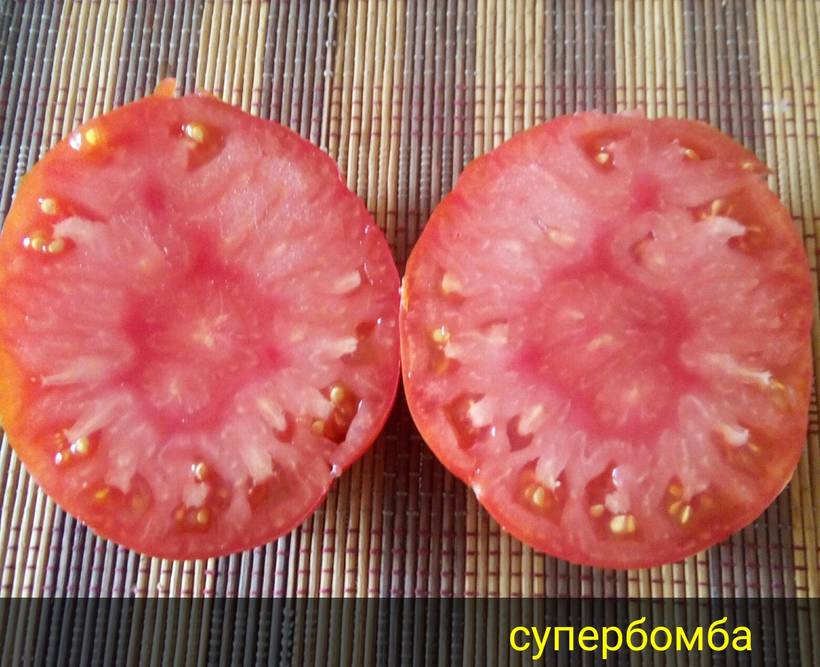
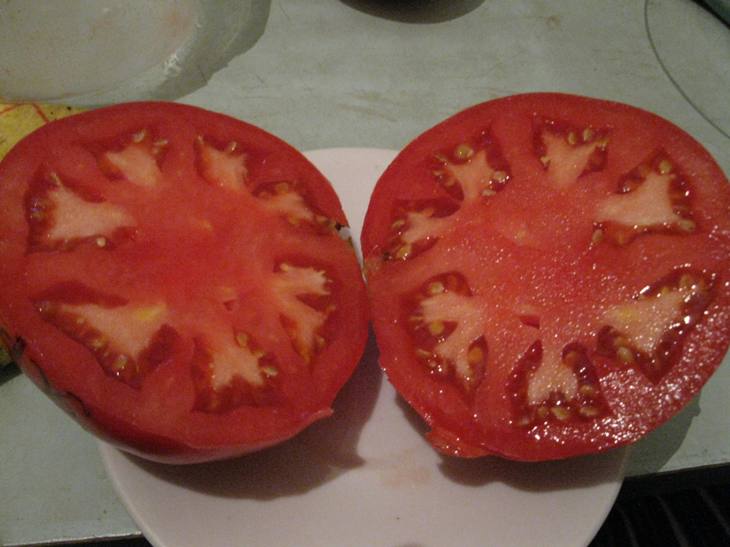
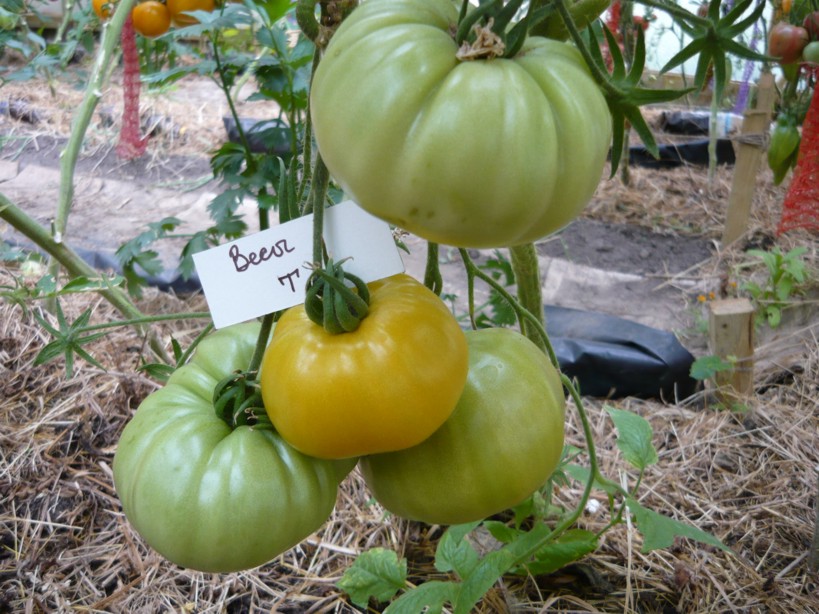
📌 Quick Summary (TL;DR): Cherokee Purple
- 🌍 Origin: A legendary pre-1890 heirloom from Tennessee, USA. According to lore, the seeds were originally given by the Cherokee Native American tribe. It was popularized in the tomato world by Craig LeHoullier, who received the seeds from J.D. Green in 1990.
- 🌿 Plant Habit: Indeterminate, though in some climates it behaves more like a semi-determinate, reaching about 1.2–1.5 meters (4-5 feet) tall. The true variety has Regular Leaf (RL) foliage, though Potato Leaf (PL) crosses exist.
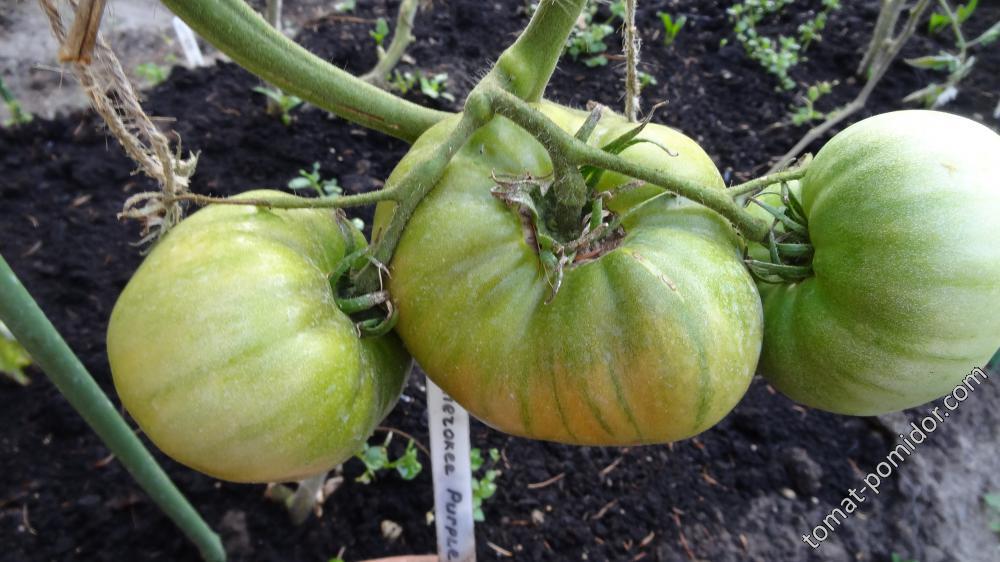
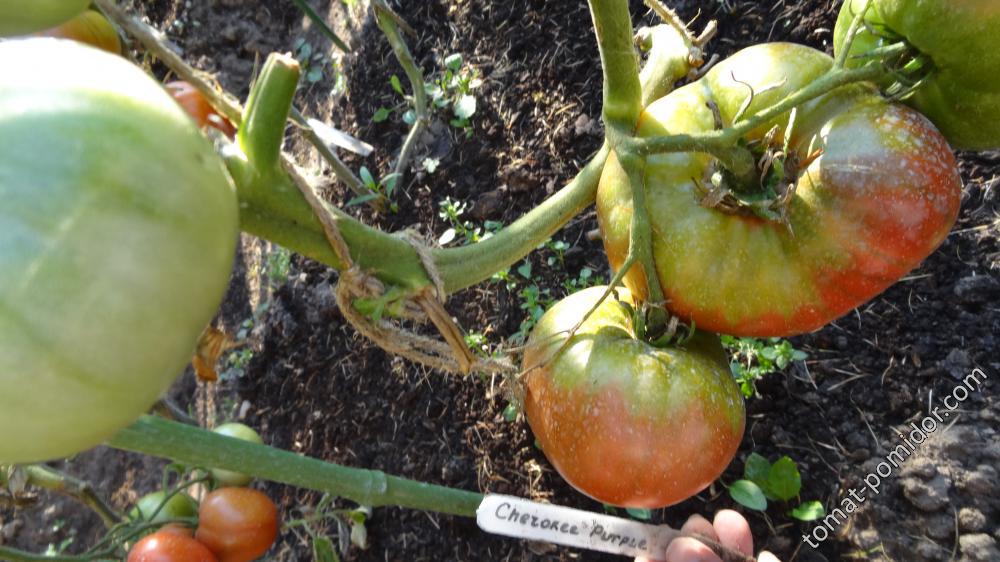
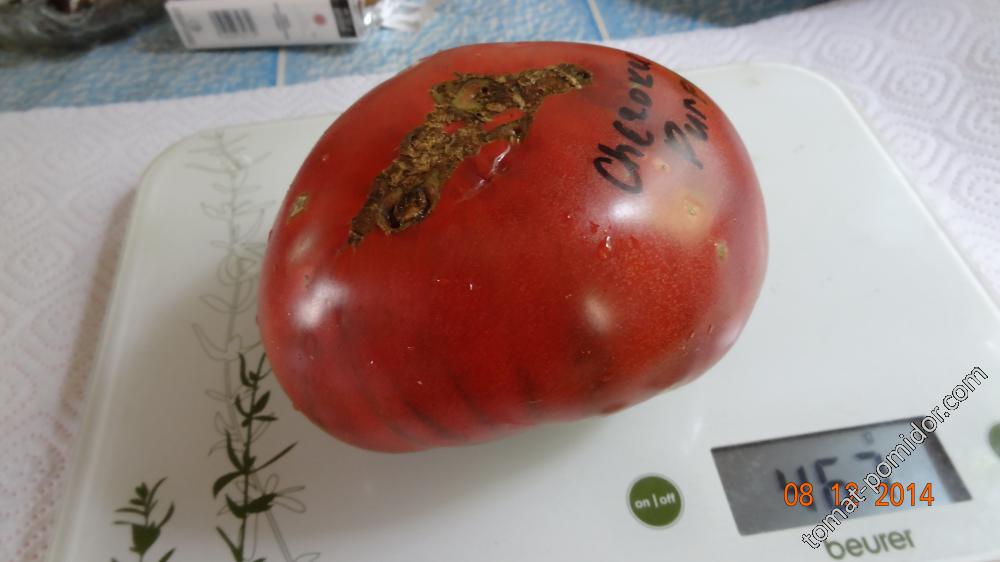
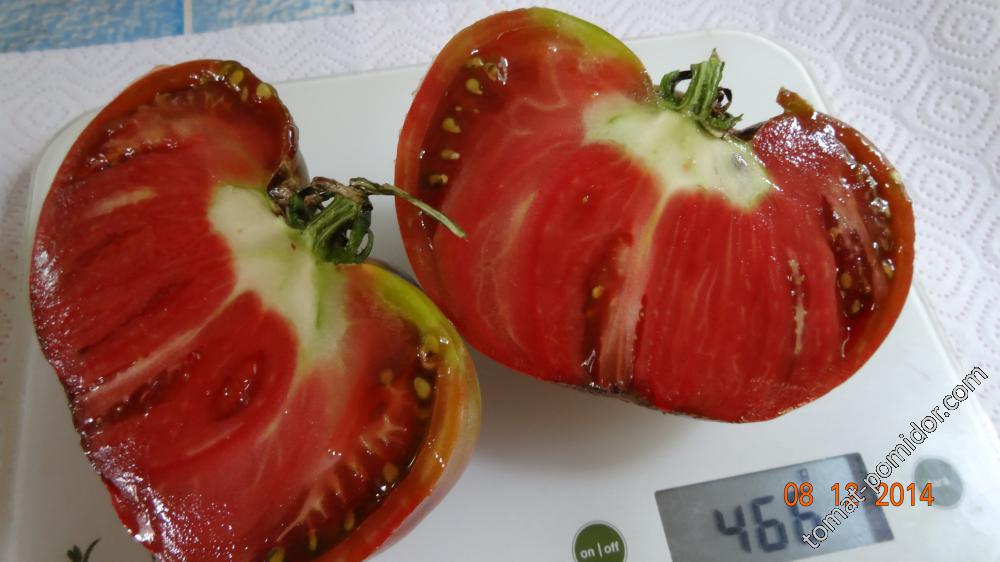
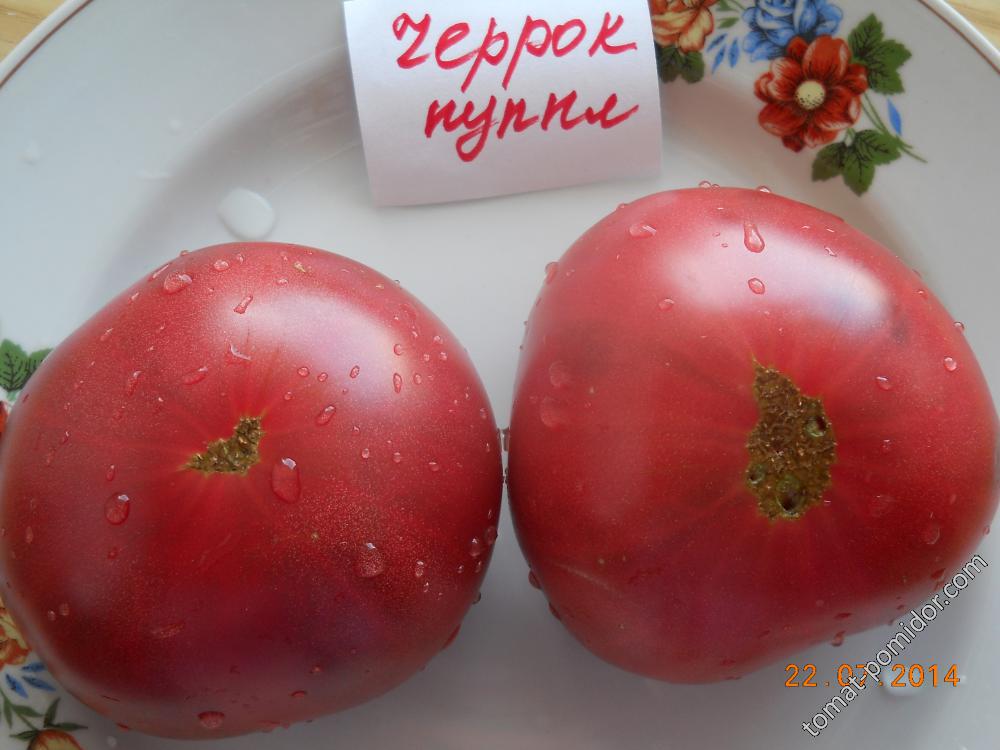
- 🍅 Fruit Characteristics: Dusky rose, brownish-purple beefsteaks weighing around 200-300 grams (7-10.5 oz) on average. Very meaty, juicy, and multi-locular.
- 👅 Flavor: Widely considered one of the best-tasting dark tomatoes in existence. It has a rich, complex, sweet, and smoky flavor profile.
- ⏳ Maturity: Mid-season (typically 75-90 days from transplanting).
A mid-season, productive, indeterminate variety. The fruits are juicy, multi-locular (with many seeds), weighing 200-300 grams (7-10.5 oz), and are of a brownish-red-purple color. Over the course of the summer, the taste evolved from “good tomato flavor” to “absolutely delicious.” It’s an unpretentious and heavy-yielding variety; I grew it outdoors in open ground.
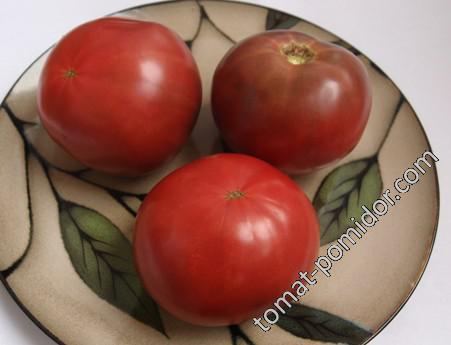
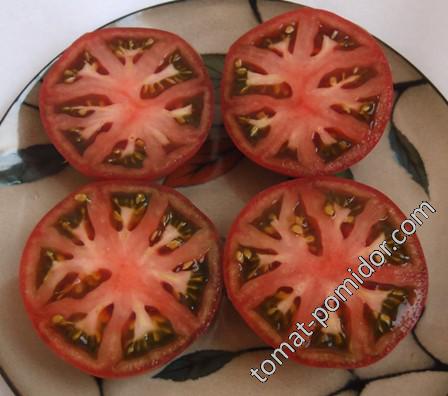
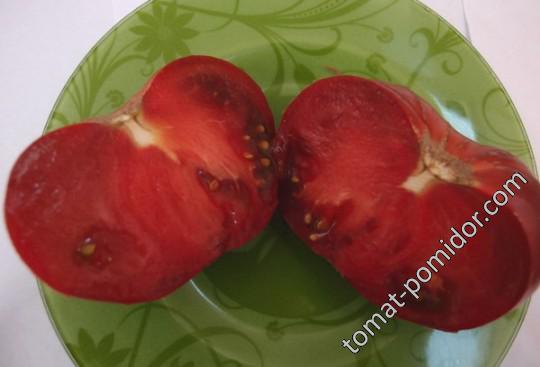
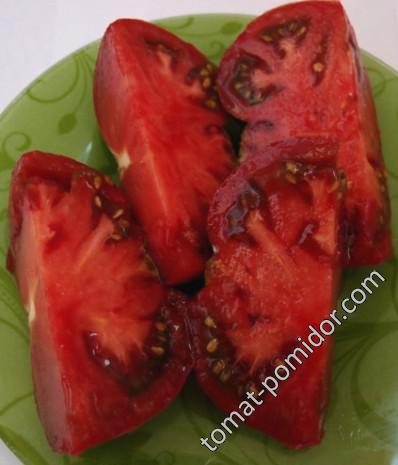
Edited January 29, 2017 by Drosera
I find it interesting — I grew “Early Cherokee Purple” from Gusev (a Russian seed vendor). Are these different varieties or just different names for the same one? I’m curious because I didn’t notice any particular “earliness” to it at all.
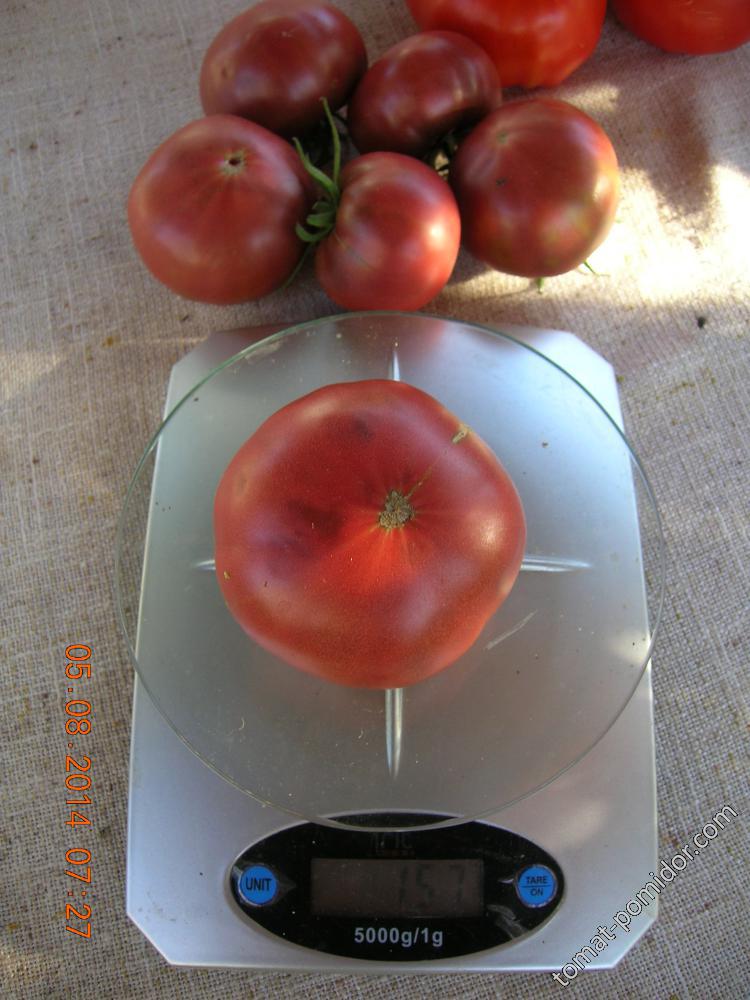
My Cherokee Purple grew with a potato leaf (PL). The bush wasn’t tall, about 1-1.2m (3.3-4 ft), but very productive. Yummy! 😋
Quote from AleksandrS:
I find it interesting — I grew “Early Cherokee Purple” from Gusev… Are these different varieties or just different names for the same one?
Sasha! I just looked it up in Tatiana’s TOMATObase. There is no variety called “Early Cherokee Purple”, but there is “Cherokee Purple”. They are probably the exact same variety. I got my seeds from A. Kulik.
Grew it in open ground. I really liked the variety. Productive, juicy, and sweet. My seeds were from Lenochka Leo (Elena Leo) in New York.
Popenko (a seed vendor) also has a “Cherokee Purple Heart” (USA). It has a distinct heart-shaped point; the color is similar, but the shape is completely different.
Quote from ElenaN:
Sasha! I just looked it up in Tatiana’s TOMATObase. There is no variety called “Early Cherokee Purple”…
It seems that, as is often the case, the word “Early” was added by local sellers to emphasize that in their specific climate or microclimate, this variety acts like an early one, rather than mid-season (as in Tatiana’s description)… Perhaps it adapted, or maybe in their conditions it really is early. In my climate, however, all varieties perfectly match Tatiana’s descriptions. 🙂
Quote from tomik:
My Cherokee Purple grew with a potato leaf (PL).
You must have had something else, because the true Cherokee Purple has regular foliage (RL), not potato leaf…
Quote from Lora_27:
Popenko also has a “Cherokee Purple Heart” (USA).
“Cherokee” is an entire family of different shapes and colors. It’s easy to recognize because the word “Cherokee” comes first, followed by the description of the variant—in your case, “Heart”. This family also includes Cherokee Green, Cherokee Chocolate, etc. But often, the entire family shares the outstanding flavor and productivity of the original Cherokee.
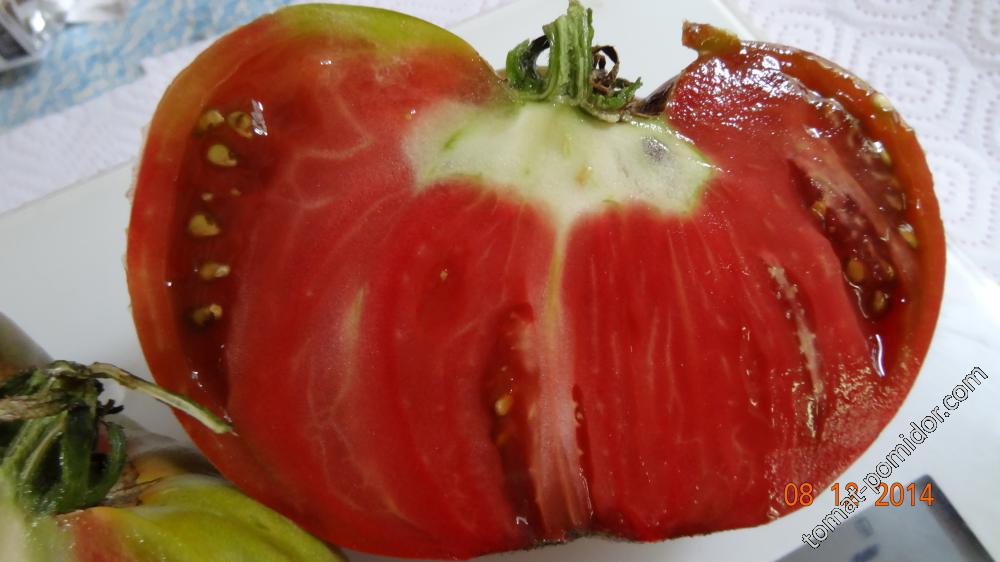
And the cross-section photo on Tatiana’s site is different too…
Quote from AleksandrS:
I find it interesting — I grew “Early Cherokee Purple” … didn’t notice any particular “earliness” to it at all –
In the US, it is listed as mid-season, taking 75 to 89 days after transplanting to the permanent position. You could even say it leans towards mid-late.
Quote from Lora_27:
And the cross-section photo on Tatiana’s site is different too…
Tatiana doesn’t have a cross-section photo of Cherokee Purple Heart yet, only green fruits.
You are probably mistakenly comparing your purple heart to the flat-round, slightly ribbed beefsteak tomato being discussed in this specific thread.
Quote from Alisa:
…added by local sellers to emphasize that in their specific climate or microclimate, this variety acts like an early one…
But who is “their”? 😉 I’m in roughly the same climate zone as Gusev… well, maybe he is slightly further south.
Quote from Alisa:
In the US, it is listed as mid-season, taking 75 to 89 days after transplanting…
Could you tell me what their overall classification is for maturity times in days after transplant? 🙏 Because here in Russia, we usually calculate DTM from seed emergence (sprouting) or even from the sowing date.
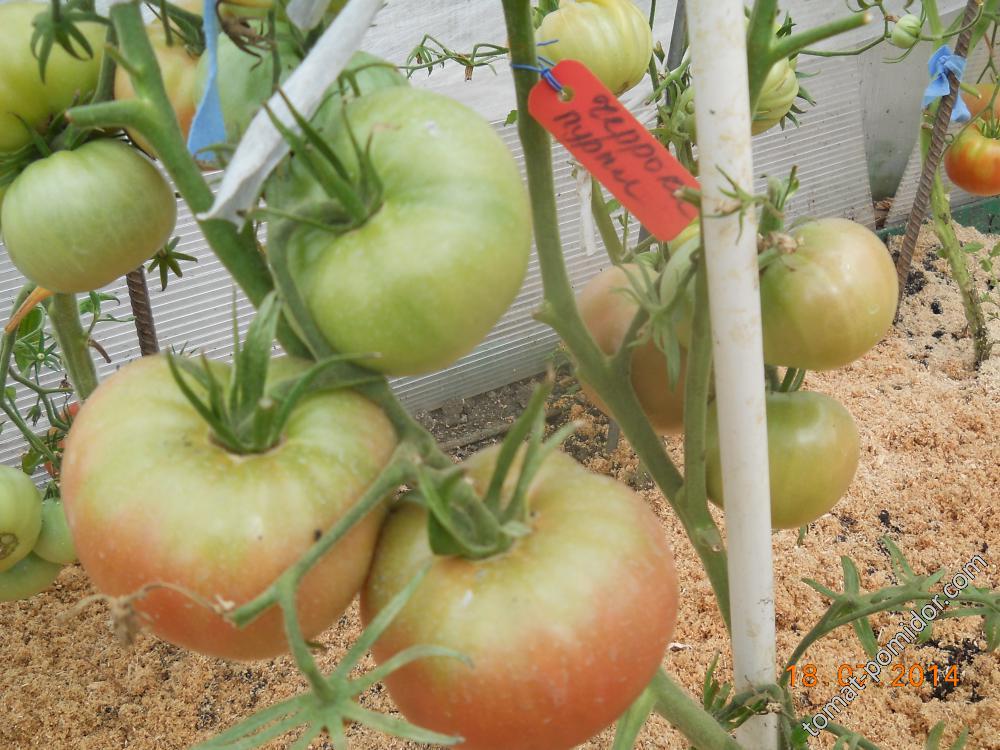
I cursed at this variety more than any other when it was just a seedling. It completely refused to grow! I planted it in the darkest corner of the greenhouse, but it turned out to be an absolute workhorse. It strengthened up, though it wasn’t very tall in the greenhouse—about 1.2m to 1.3m (4-4.2 feet). It set tomatoes very well. Probably thanks to this variety, I’m greatly increasing my dark tomato plantings this year 🙌. It was extremely sweet and delicious. The leaf was regular, seeds from Popenko.
Quote from AleksandrS:
Could you tell me what their overall classification is for maturity times in days after transplant?
For this variety, it’s 75-89 days after transplanting to its permanent position outdoors or in a greenhouse. In the USA, Days to Maturity (DTM) is universally counted from the day of transplanting, not from sowing and not from sprouting.
Quote from Alisa:
For this variety, it’s 75-89 days after transplanting…
Thank you, but you already wrote about this specific variety… I was asking about their classification system in general — what counts as early, what is considered late, etc.
Quote from AleksandrS:
I was asking about their classification system in general…
Ah, sorry, I misunderstood…
Early: 42-69 days
Mid-season: 70-89 days
Late: 90+ days. Although for my climate zone, 80 days is already considered late.
P.S. I double-checked… late is considered 80+ days, but generally 85+ days.
There can be variations for different climate zones… but they are minor.
Quote from Alisa:
Early: 42-69 days…
Thank you! Though it’s still not entirely clear — after all, you can transplant seedlings at very different stages: 1 month after sprouting… or when they are already flowering, or even have tiny fruit set…
Quote from AleksandrS:
…you can transplant seedlings at very different stages…
In my experience (I sow seeds March 8-15, and transplant in the first two weeks of June), early varieties ripen first anyway (usually the 70-day ones hit in the first week of August). The late varieties sit there until their natural time comes, meaning they won’t ripen before late August/early September, even if they were sown and transplanted on the exact same day as the early ones. DTM is generally counted from transplant until the first ripe fruit. 🙂
I tried sowing late varieties earlier and planting them under unheated plastic tunnels to get an earlier crop, but you can’t fool nature… they still waited for their natural maturity window to ripen. 🙂
Quote from ElenaN:
There is no variety called “Early Cherokee Purple”, but there is “Cherokee Purple”. They are probably the exact same variety.
Maybe there is no such official variety… but I do have seeds under both names! 😉
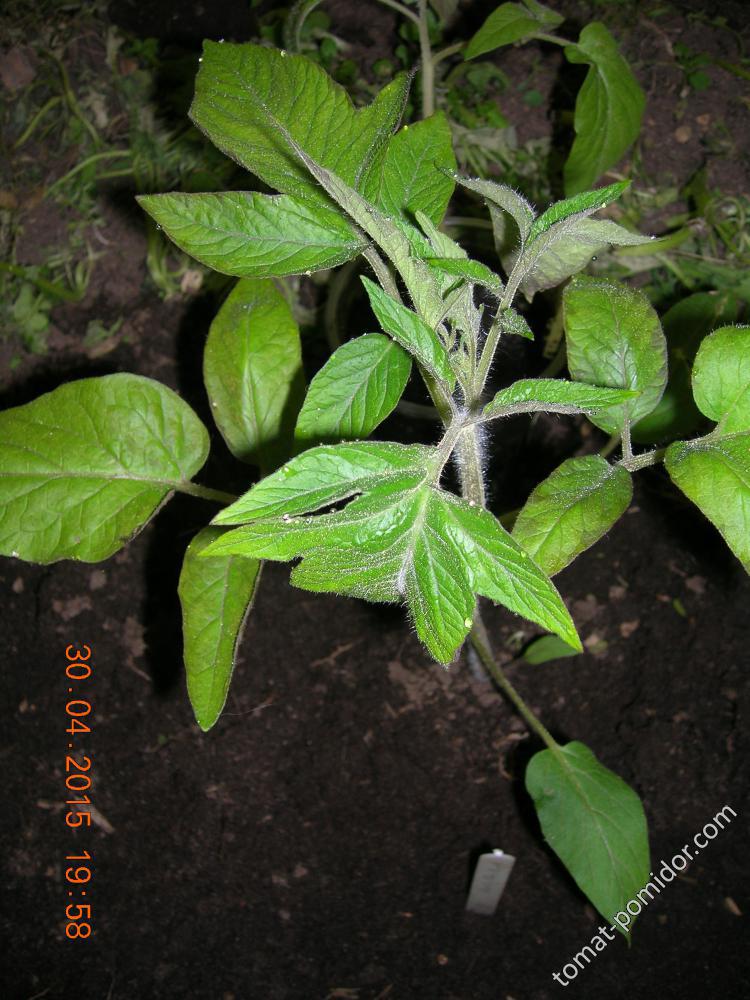
This year I planted both side by side — the “Early” and the regular Cherokee Purple. They are completely different: the first one has Potato Leaf (PL), the second one has Regular Leaf (RL).
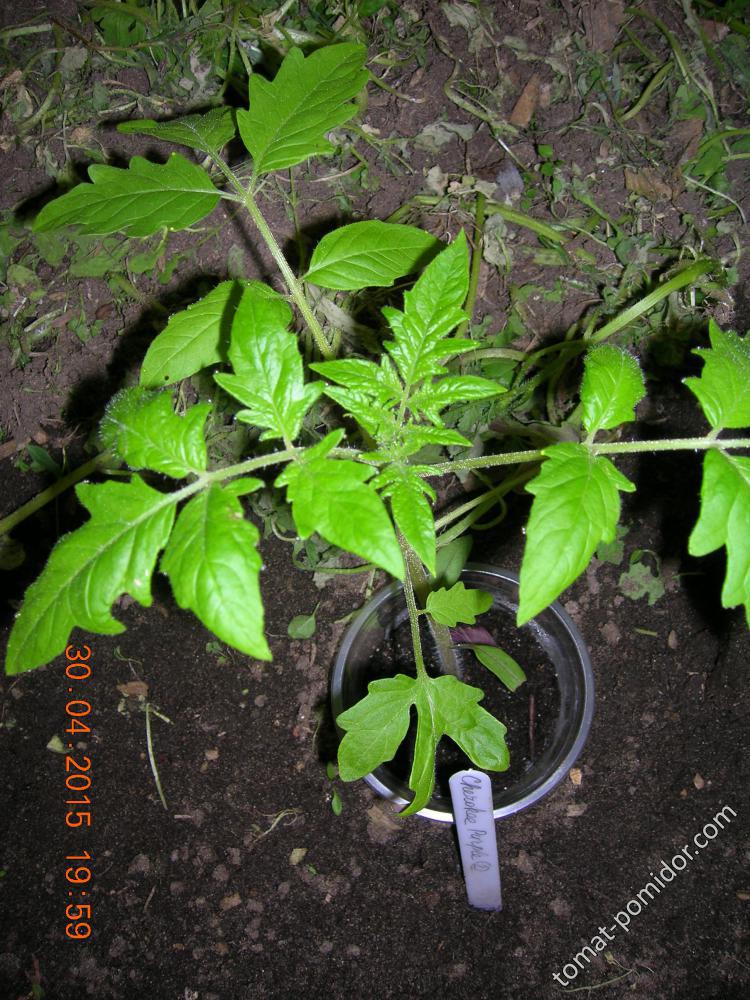
There was actually a conversation about this “Early Cherokee Purple” in the “Dark Tomato Varieties” thread back in 2013, it took up almost a whole page.
The likely suspects for an “Early” Cherokee with potato leaves are:
- Gary O’ Sena (which is a CP cross)
- Or some suspicious listing called “Cherokee Purple, Potato Leaf” that appeared in tatianastomatobase.
My Cherokee Purple from English seeds (brought from the UK) also has potato leaves, although it’s less pronounced than, for example, Japanese Black Trifele. So apparently, variants do exist.
Mine has regular leaves. Sets fruit wonderfully. It acts as a typical semi-determinate. Height is roughly 1.3 meters (4.2 feet). I prune it to 4 stems. Seeds are from Kolyakov.
Quote from mopsdad1:
Mine has regular leaves. Sets fruit wonderfully. It acts as a typical semi-determinate.
What’s interesting is that the later leaves on mine are regular! The very first leaves were large, unlobed, and definitely looked like potato leaves, but now the new growth is regular leaf. But overall, in terms of growth speed and appearance, it is 1:1 identical to potato-leaf types—it’s clearly in no rush, and the suckers look similar (sitting tight between the leaf and stem, in the crevice). Does that mean my plants have some sort of mixed foliage type?
We’ll see. It might just be a mix-up (off-type), so I’ll hold off on giving a final review for now.
Here is its leaf. And this is the first truss.

Cherokee Purple
“Pre-1890, USA. Indeterminate. One of the first black tomatoes. One of the best tasting beefsteaks. Discovered and named in 1990. According to legend, the seeds were given to white Americans by the Cherokee Indians around 1890.”
I liked the variety very much, grew it for the second year. Original seeds were from Royal Seeds. The bush was not tall, grew near the greenhouse wall, and was productive. The flavor is rich, true tomato taste. It has earned a permanent place in my garden.
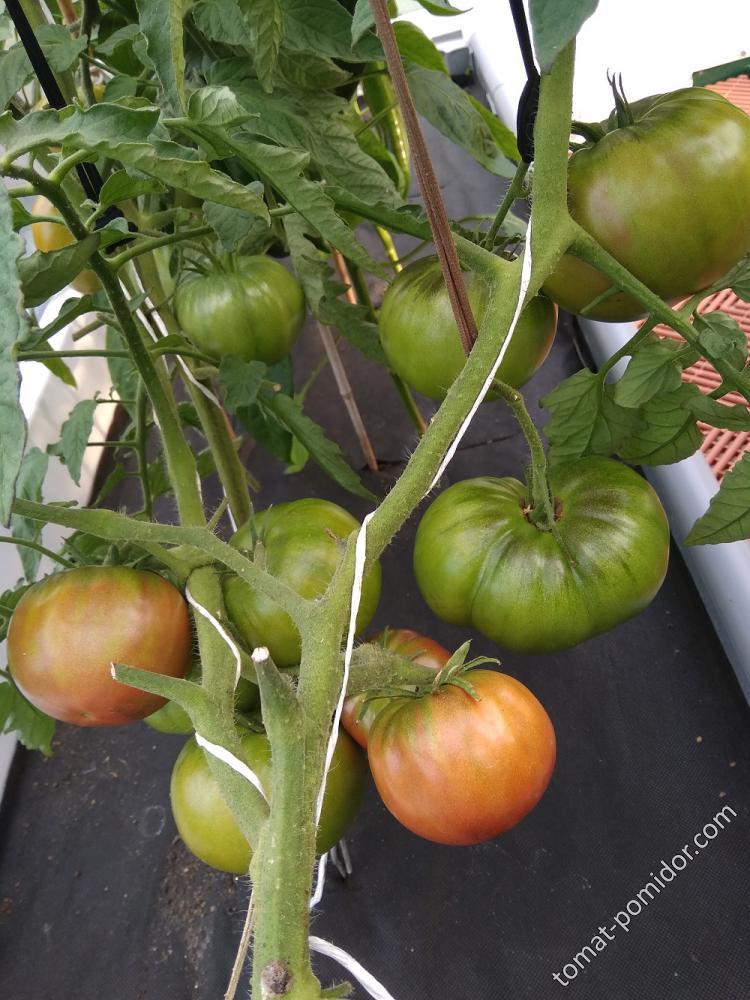
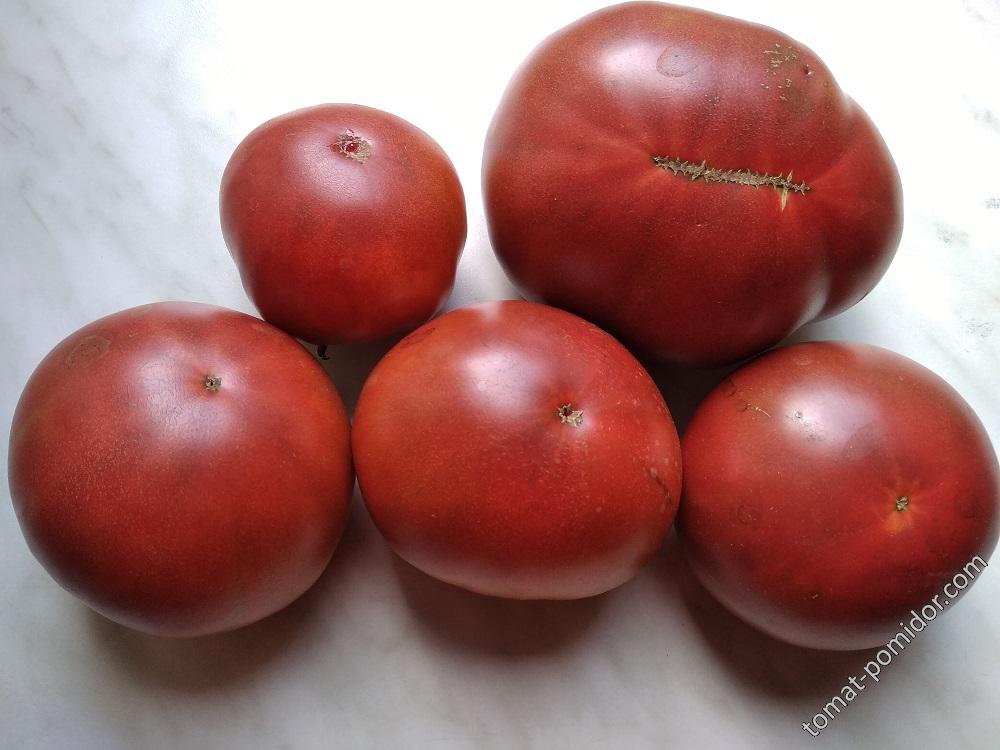
I really liked the variety; it was one of the first to start ripening.
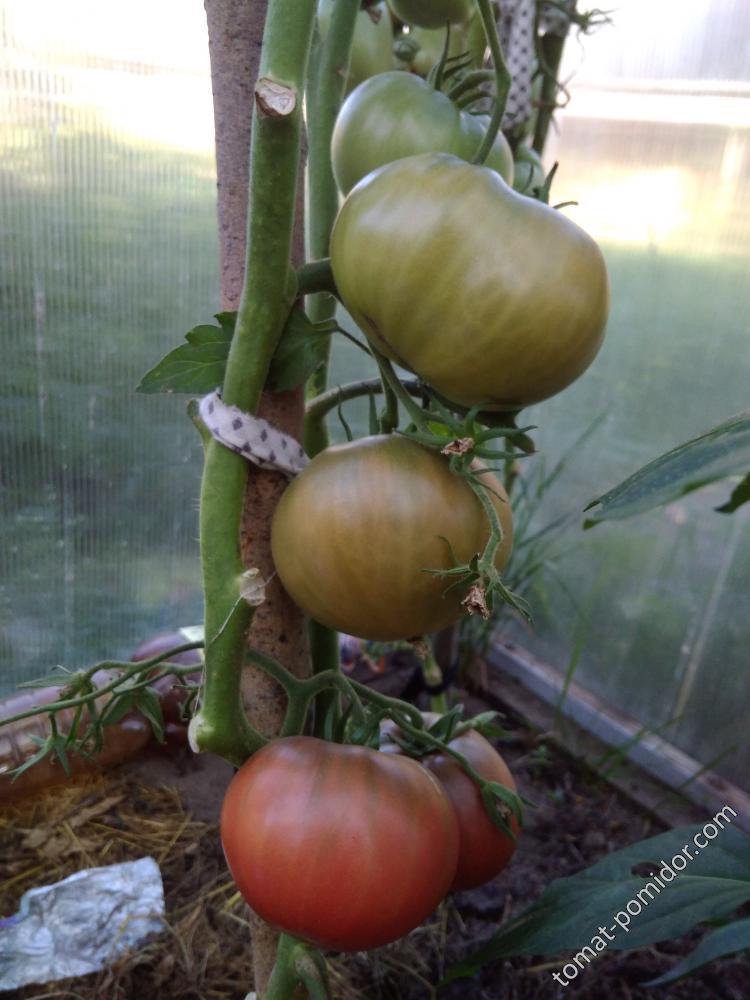
The variety is simply magnificent. I consider it the best of the black tomatoes.
The fruit color isn’t technically “purple”. These are classified as “black tomatoes”, genotype R R gf gf.
I’ve read through the thread but I still didn’t understand — when should I sow seeds for the Moscow region?