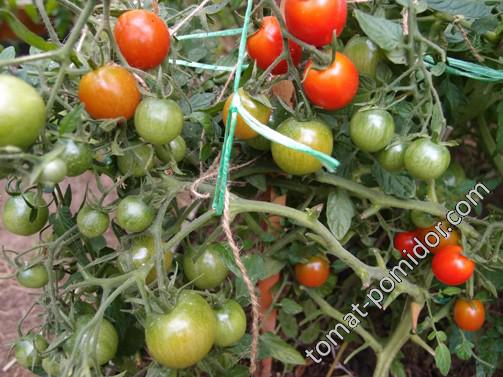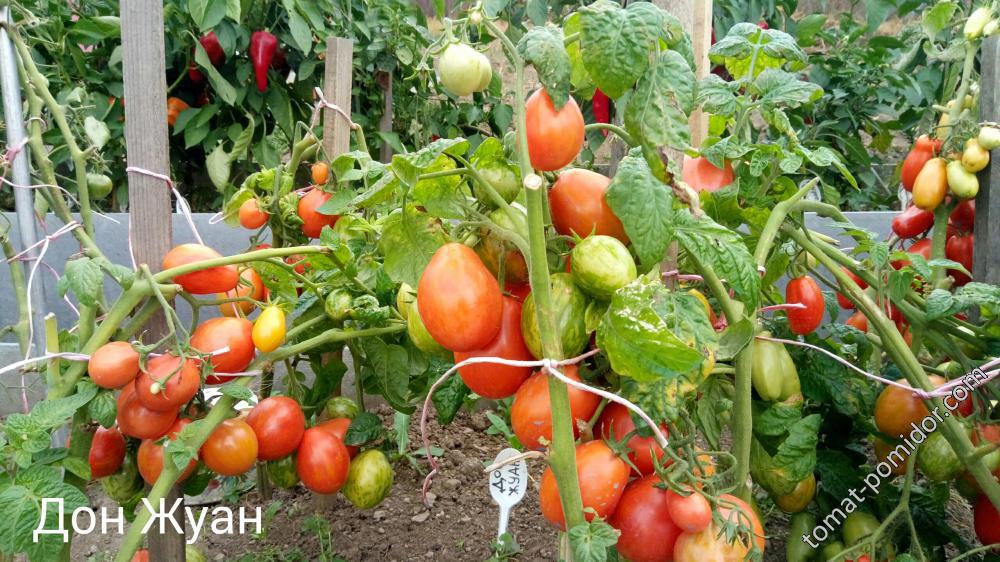
📌 Quick Summary (TL;DR): Don Juan
- 🌍 Origin: A very popular, reliable commercial variety, heavily distributed by the “Sedek” seed company.
- 🌿 Plant Habit: Determinate, often growing as a sturdy tree-type (rugose) bush. It is very compact, typically maxing out around 20–28 inches (50–70 cm) tall. Exceptionally fuss-free and performs incredibly well in open ground.
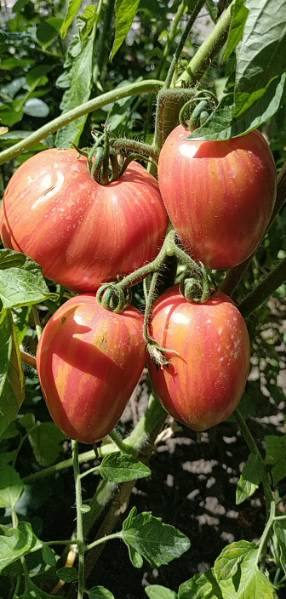
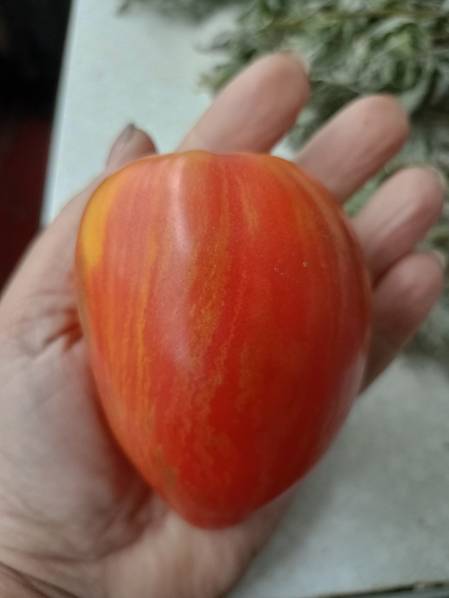
- 🍅 Fruit Characteristics: Beautiful pink plum/paste tomatoes with striking yellow stripes. Some strains feature a pronounced nipple or “beak” on the blossom end. They typically weigh around 2.5–4 oz (70–120g).
- 👅 Flavor & Texture: Firm and fleshy. It has a mild, sweet tomato flavor. It’s not a juicy slicer, but rather a dense processing tomato.
- 🥫 Best Uses: The ultimate canning and sauce tomato! Because it has very little excess water, it makes incredibly thick sauces and paste. It also boasts an incredibly long shelf life off the vine.
Another variety from my collection of “little beads”. Maybe some folks aren’t interested in such small tomatoes. But I love them for being so low-maintenance, productive, tasty, and beautiful. They are juicy enough for juicing and perfect for pickling. You can sun-dry them or eat them fresh. You can use them to beautifully garnish any dish. And at the same time, they demand almost zero attention. They practically grow all by themselves.
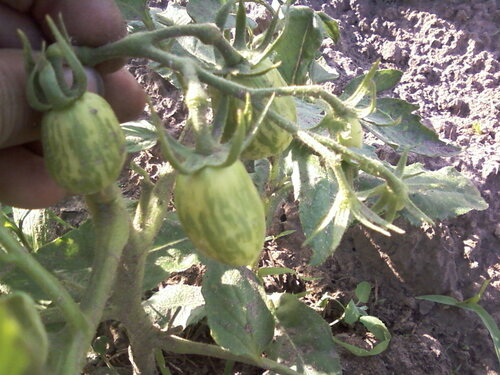

“Don Juan”

That last photo is very cute. The tomato looks like it’s glowing from the inside out. 👍
I grew this variety this year too. Very fuss-free. My daughter calls them “little watermelons” when they are still green 😄.
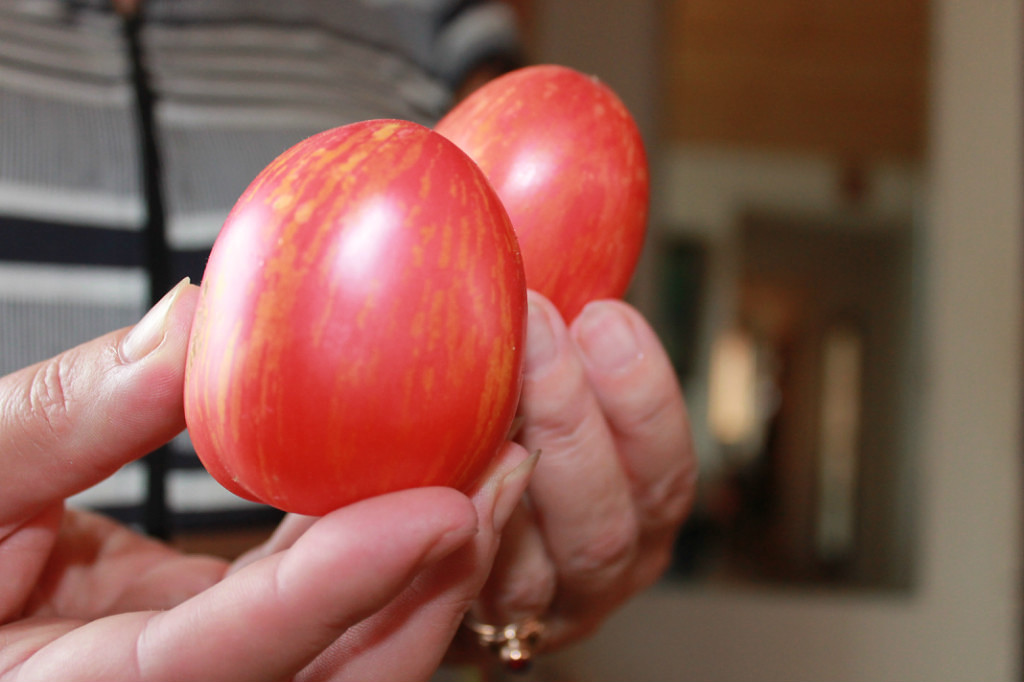
As I’ve said many times, I have all the luck when it comes to getting mixed-up seeds. This amazing little bush grew from seeds I got from Syray, even though I didn’t actually order this variety! 😂 To my great luck, a stray seed must have slipped in. Just from reading Vladimir Fedorovich’s description, I realized it was this exact variety: “Don Juan. Early season. Bush height 20-28 inches (50-70 cm). Fruit is a pink plum with yellow stripes, weighing 3.5-7 oz (100-200g). Fruits hang in trusses of 6-7, hold on the bush for a long time without dropping or cracking. All-purpose use.”
In reality, it’s very productive. The plums are firm, store for a long time without losing their crunch, and have a nice sweetness to them. And the fruits are just gorgeous, soft pink with yellow striping. A great pickling variety. If anyone else has grown it, let me know, I’m hoping I’m not wrong about the ID.
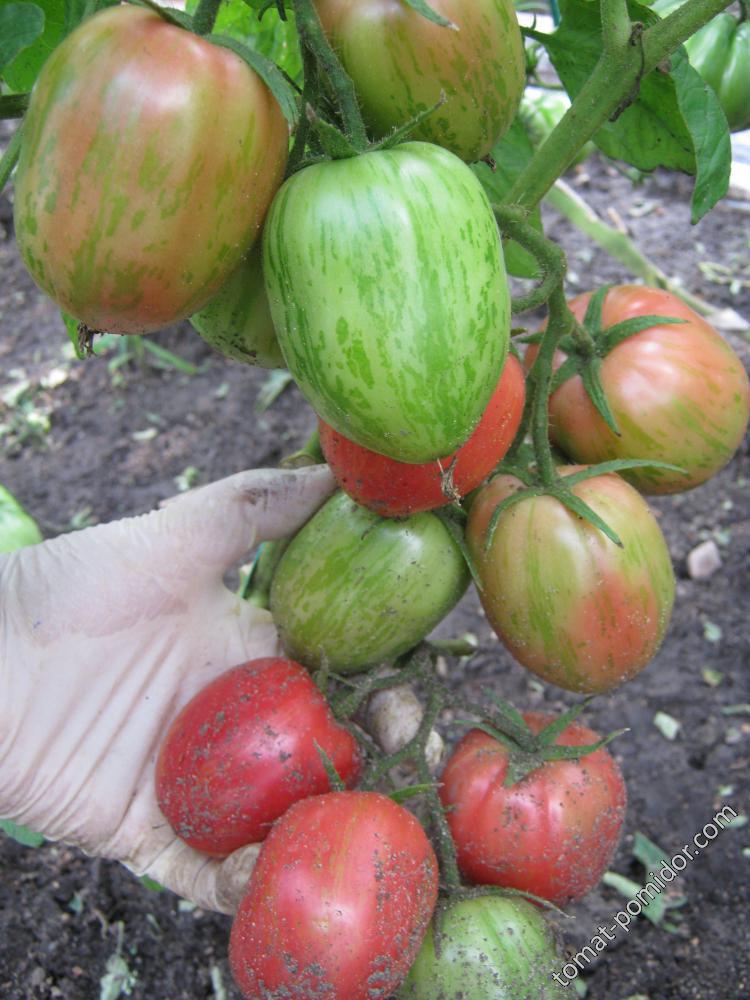
Galya, I grew Don Juan, everything matches your description, but mine had a slight pinch/waist in the middle of the fruit.
I grew it a while back. Seeds from Sedek.
A solid variety due to its flavor profile. I somehow forgot about it, but the variety definitely stuck in my memory.
My Don Juan from Sedek looks like this. It’s listed at 2.5-2.8 oz (70-80g). Galya, yours is noticeably larger. And the shape is a bit different too.
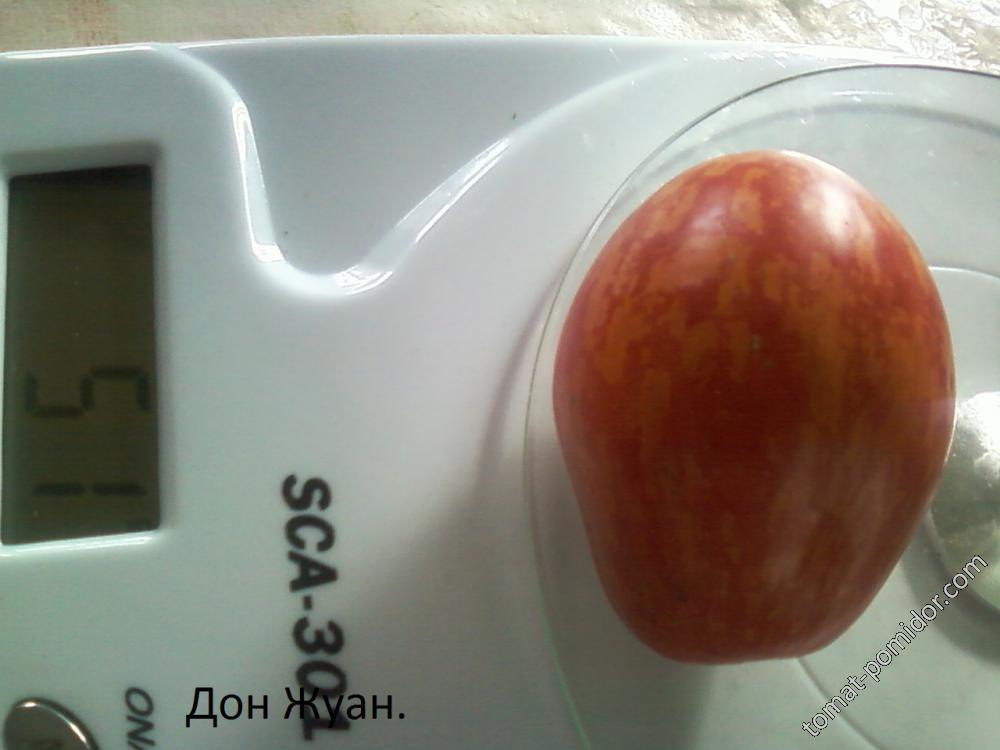
Verochka, maybe it’s just closer to the camera lens, so it looks huge?
To be fair, it’s supposed to have a little beak, but mine didn’t have one.
I don’t remember if mine had a beak. Either it didn’t, or it was very minor. I usually try to avoid varieties with pronounced beaks anyway. 😖 They are a pain to transport.
Tanya, Galya’s description says 3.5-7 oz (100-200g). Maybe the variety just sized up over all these years 😉 I’ve had my seeds for five years now.
😄 yeah, probably sized up. Honestly, what would a 7 oz (200g) fruit even look like in terms of length and width? I seem to remember it being about 2.7 inches (7cm) long. The diameter was probably around 2 inches (5cm). And that would be for the absolute biggest ones.
Yeah, it’s definitely closer to a cocktail size…
Vera, that up-to-7-oz (200g) thing is from Syray’s description. Mine topped out at maybe 3.5-4.2 oz (100-120g). (Didn’t weigh them, just eyeballing it).
It really does have an unusual color: soft pink with yellow stripes.
Then we definitely had the Sedek strain.
Mine is definitely Sedek.
Mine didn’t have beaks, but it wasn’t productive at all. Maybe I just don’t have a green thumb for it, I only got like 5-7 tomatoes per bush…
Wow, coming back to this thread after so much time… Vera, Tanya, it was definitely a “typo” on my end 😳, it’s gonna be around 3.5-4 oz (100-120g), it definitely won’t hit 7 oz (200g).
Great variety. I liked it. Thanks to Vera (Tomatinka) for the seeds. Grew it outdoors in open ground with no cover. Reached about 20 inches (50 cm) tall. Sturdy, beautiful, productive, and fought off Late Blight for a long time. The harvest was very good. This variety is definitely better suited for canning. Stores for a long time. I bet it would do great in containers. Too bad you can’t see the stripes very well in the photos.
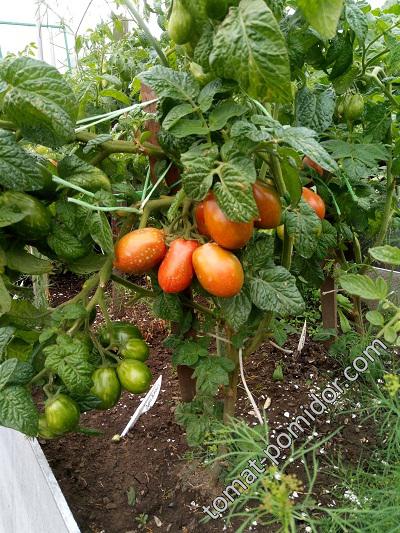
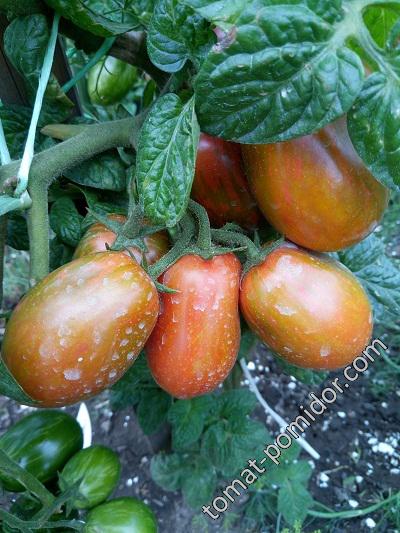
I grew it about 2 years ago. It’s interesting and beautiful, but flavor-wise it’s just not my kind of tomato. My family prefers sweet, meaty slicers, and this one has very thick walls and is on the firm/tough side. We don’t really like that texture for pickling either. It might actually be fantastic for sun-drying, but I’ve never sun-dried tomatoes before. I really want to try it and I’m currently reading up on the process.
For fresh eating, there are definitely better varieties out there.
But varieties like Don Juan make incredibly thick juices, sauces, and my family’s absolute favorite – “Hrenovina” . It’s so thick that the liquid doesn’t separate and pool at the top of the bottle 🙂
Plus, it’s just a handsome tomato. It is Don Juan, after all 😉
This year, Don Juan grown from my own saved seeds confirmed how productive and good-looking it is.
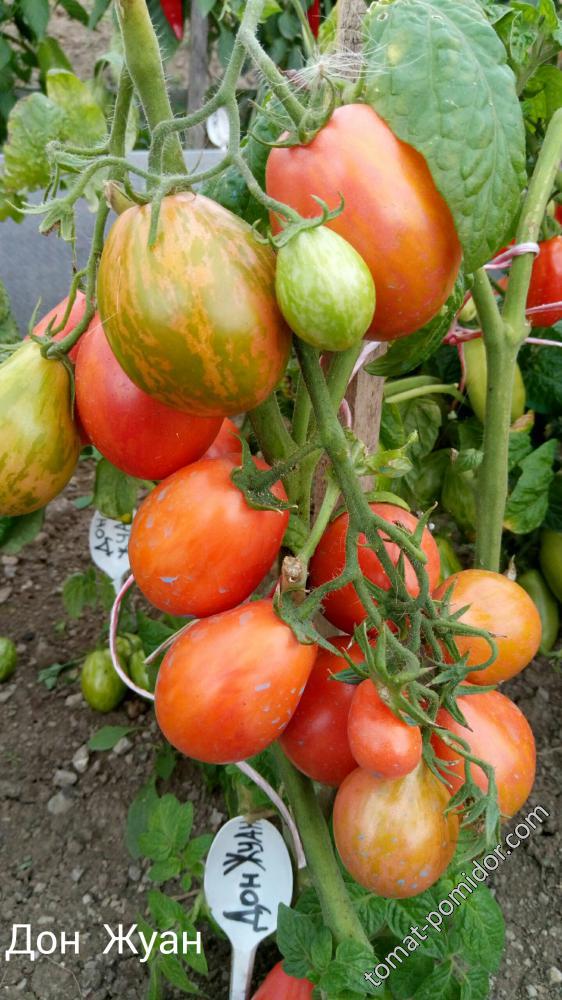
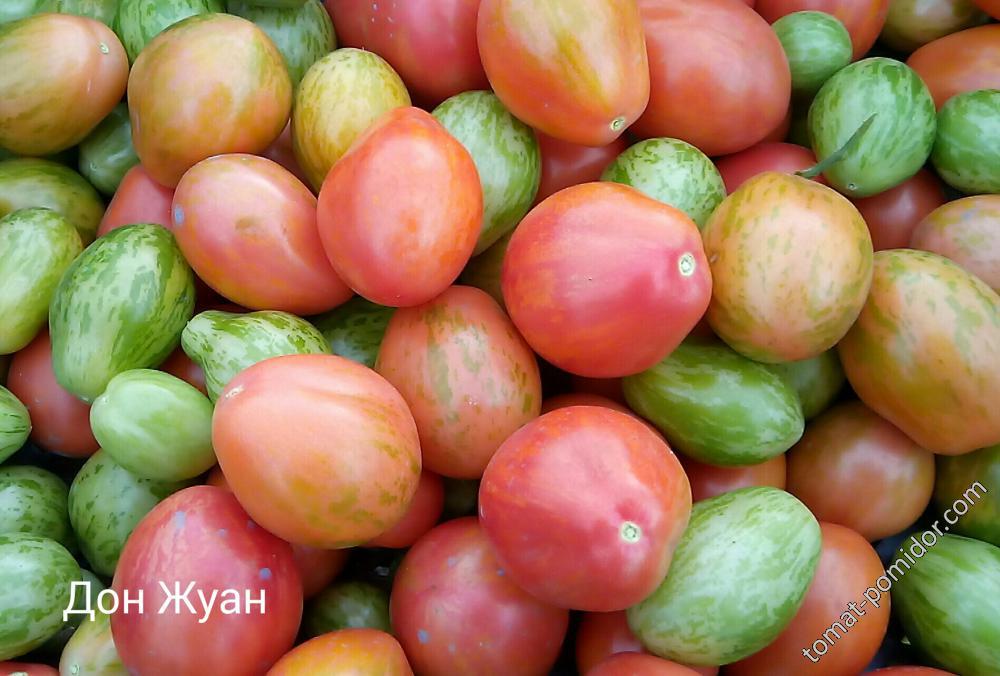
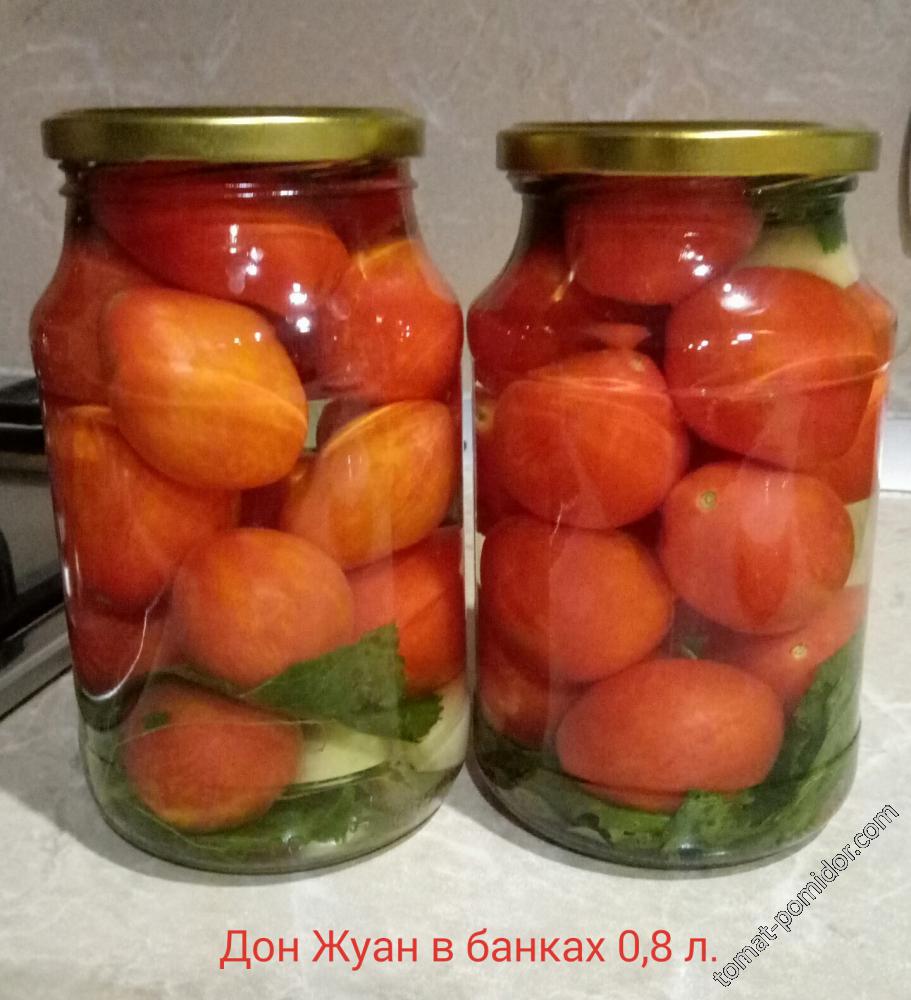
A great little tomato for canning in jars. Short (up to 20 inches / 50 cm), stocky little bushes, built like little oak trees. Yield is excellent.
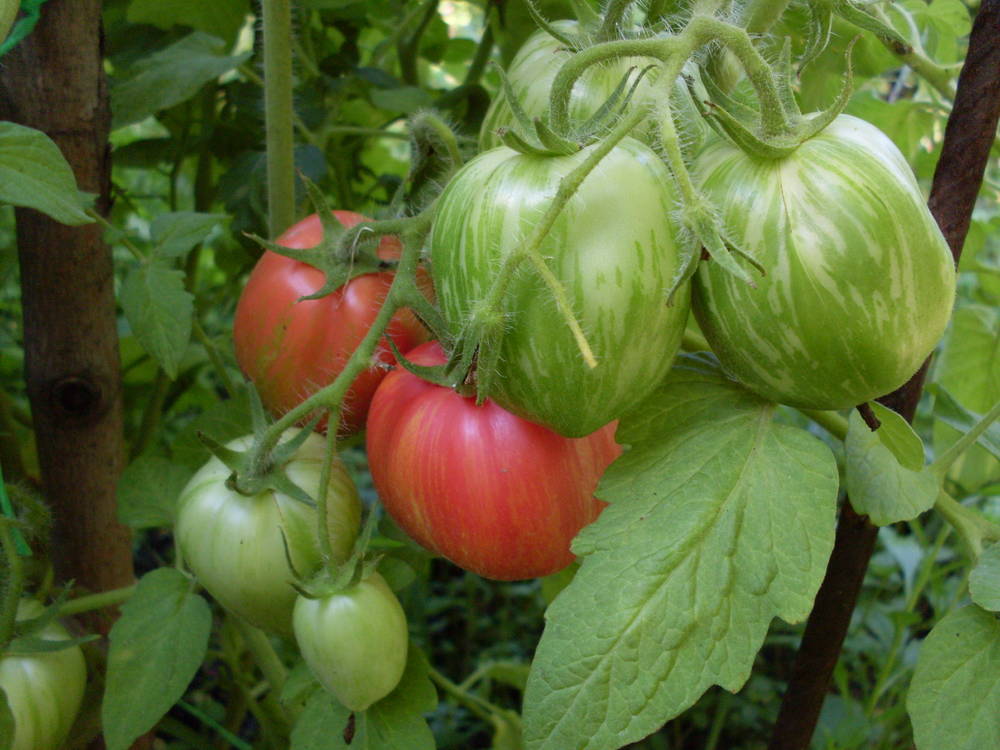
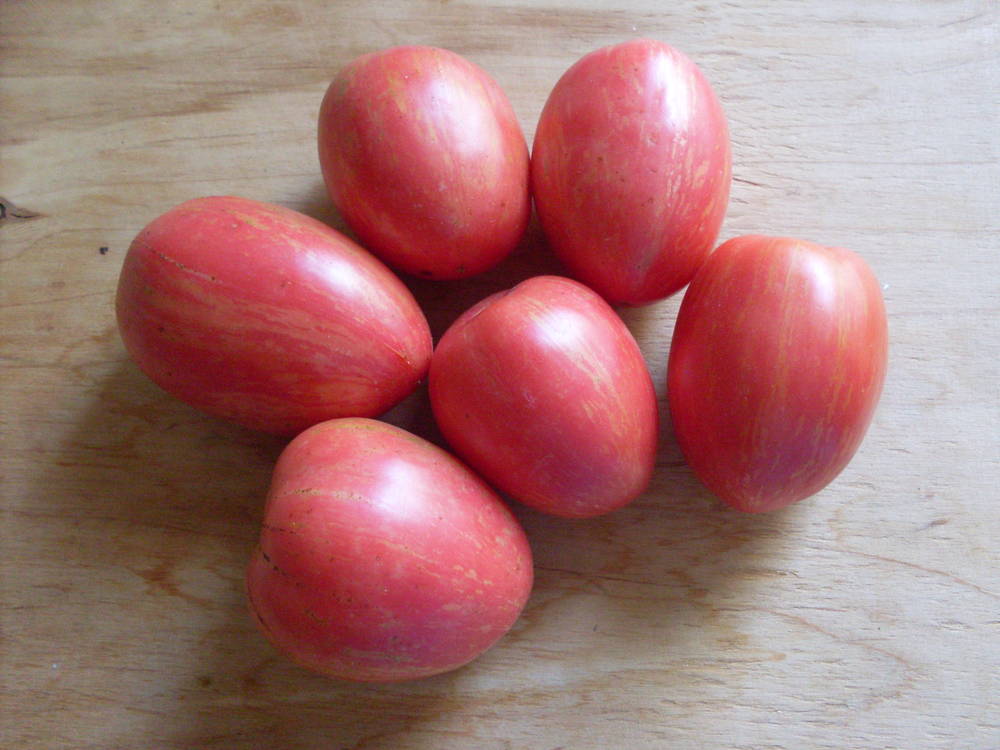
Testing it out for the first time, growing in the open garden. The bushes aren’t exactly robust. But it’s resilient. I’m very happy with it.
The fruits don’t have super thick skin. Sweet, meaty, not dry at all. Adding it to my “favorites” list.
tomatinka said:
Another variety from my collection of “little beads”… They Practically grow all by themselves.
Vera, what kind of bush habit does Don Juan have – is it a tree-type or not?
Lyubitel Tomatov said:
Vera, what kind of bush habit does Don Juan have—is it a tree-type or not?
Yes. It’s a tree-type (rugose). At least mine is.
Grew it this year both in the greenhouse and out in the open garden. Such a handsome plant! Productive, low-maintenance, early, stored for a long time, we just finished eating the last ones recently… Flavor is decent.
👨🌾 Editor’s Culinary Note: What is “Hrenovina”?
Inna mentions that she uses Don Juan specifically to make a thick batch of her family’s favorite “Hrenovina”. If you are not from Eastern Europe, you are probably wondering what that is!
Hrenovina (sometimes called Gorloder or “throat-grabber”) is a legendary, spicy, raw Russian sauce served primarily in the winter. It is made by taking fresh, ripe tomatoes and grinding them in a meat grinder along with copious amounts of fresh horseradish root (hren in Russian), garlic, and salt. Because it is never cooked, it retains all the fiery, eye-watering pungency of the horseradish and the fresh brightness of the summer tomatoes. The high acidity and natural antimicrobial properties of the horseradish and garlic allow it to be stored raw in the fridge for months! Using a dense, low-moisture paste tomato like Don Juan is crucial for Hrenovina, otherwise, the sauce will separate into a layer of red foam floating on top of a bottle of clear tomato water.
.jpg.3a199a233396c4e603d4503cb3aa46cc.jpg)