Growers’ Notes and Photos (USDA Zones 4-6 Experience)
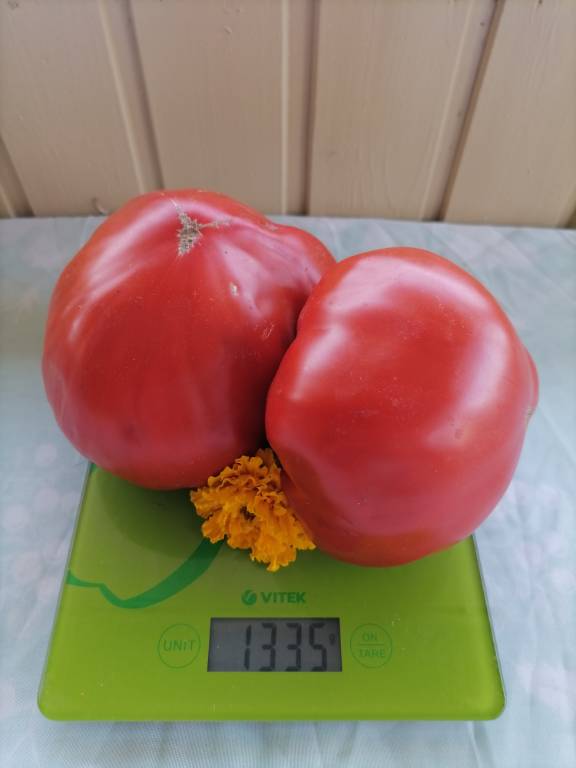
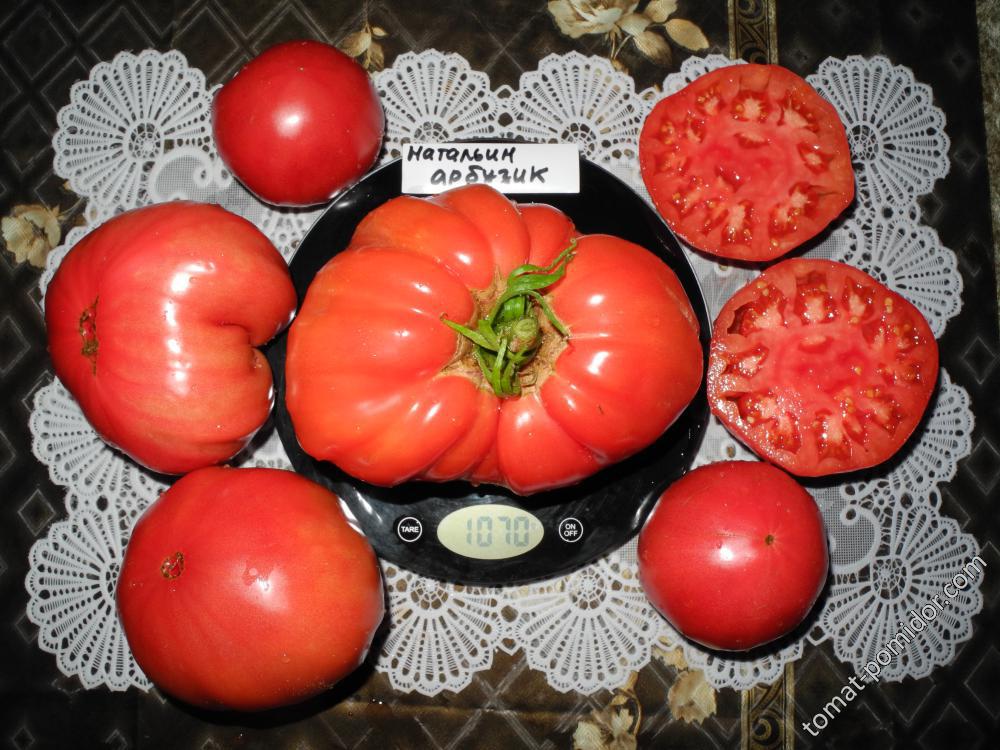
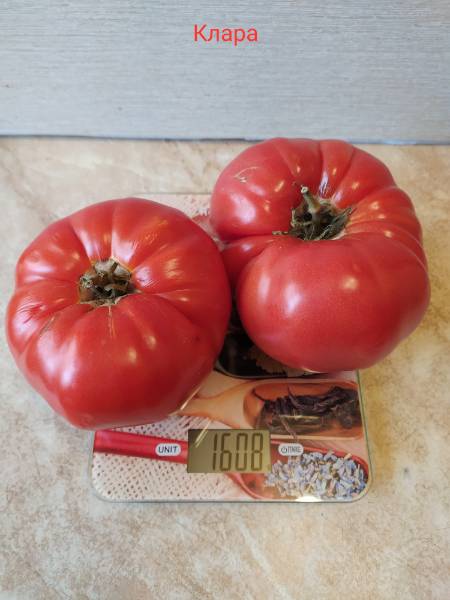
Indeterminate, mid-late season variety. Tall vines, reaching up to 6 ft (1.8 m). Huge red fruits averaging 21 oz (600 g), with individual monsters easily hitting 2.2 lbs (1 kg). Fruit shows subtle ribbing around the stem end.
Repeated it again this season: sowed seeds on March 15, transplanted out into the greenhouse in May. Picked my first fully ripe fruit on August 3. For our climate, it really needs to be sown in late February to hit peak stride earlier. Flavor is rich and well-balanced with very dense meat. Fully ripe fruit can hold on the counter for 10-14 days without going soft.
Edited October 14, 2018 by Drosera
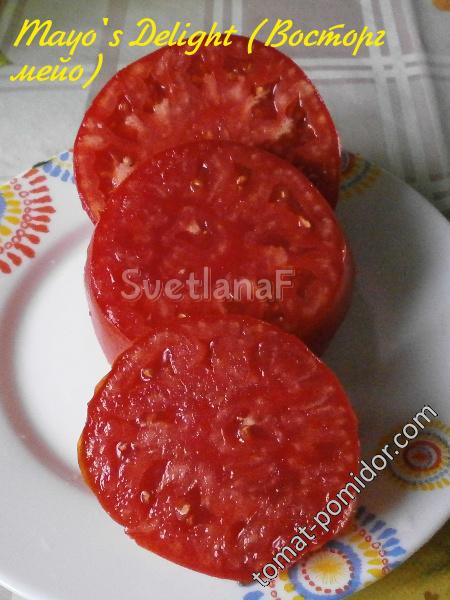
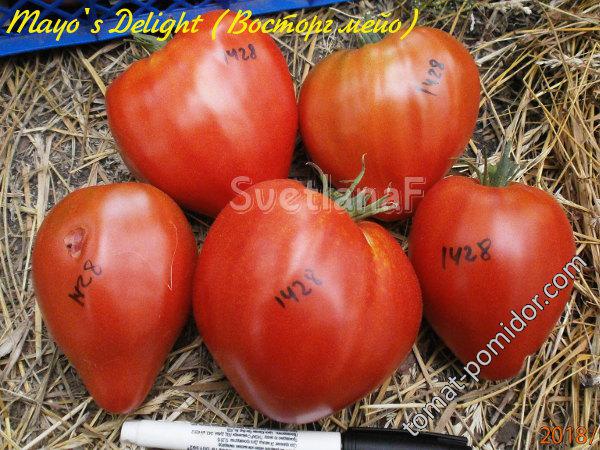
Mayo’s Delight. Wonderful variety, indeterminate vine, ran it in the greenhouse trained to 2 stems. Fruits are massive, lightly ribbed, fat blunt hearts with exceptional flavor! 👍 Flesh is dense, but trying to find seeds inside is an absolute headache! 🤦♂️
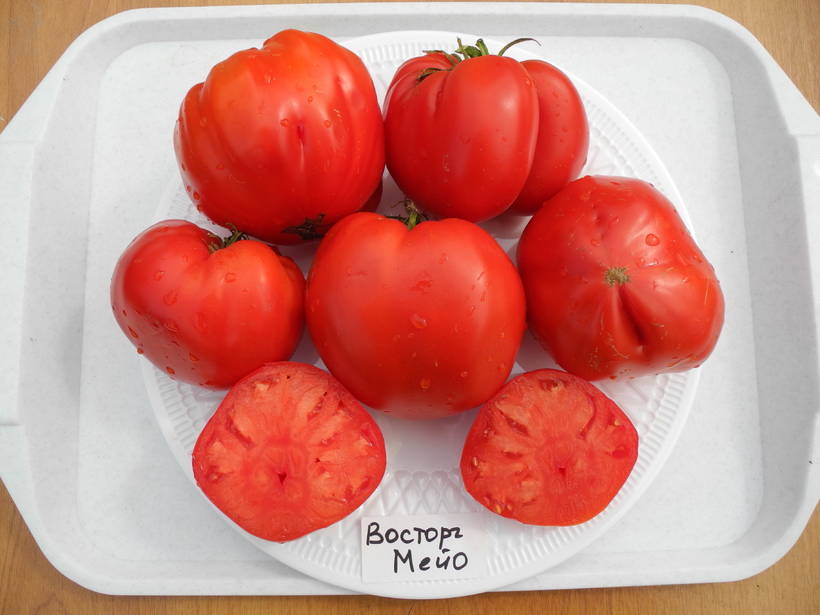
Full Summary: Fruit Architecture, Season Timing, and Seed Saving
- 🌿 Growth & Habit: Indeterminate vine climbing to 6 ft (1.8 m) in greenhouse culture. Handles 2-stem training cleanly while carrying tremendous fruit load. Produces distinct chubby, blunt red hearts with light shoulder fluting.
- ⚖️ Fruit Mass: True giant-class heirloom. Averages around 21 oz (600 g) with crown fruits regularly achieving 2.2 lbs (1 kg) under attentive watering and feeding.
- 👅 Interior & Flavor: Solid, dense steak texture with almost no open locules or gel pockets. Delivers a classic rich, balanced, full-bodied heirloom taste. Notable for lasting 10-14 days off the vine once fully colored.
- ⏳ Maturity & Sowing Advice: Leans mid-late. In colder northern zones (USDA 4), growers recommend starting seeds indoors by late February to ensure early August ripening and avoid lost late-season sets.
- 🧬 Seed Saving: Infamously stingy seed producer. Expect to process multiple large fruits just to collect a modest handful of true seeds.
- 🌎 Who Reviewed It: Grown successfully in USDA Zone 6 (Pyatigorsk) and Zone 4 (Moscow Region).
Varieties described as “blunt hearts” or “chubby hearts” (like Mayo’s Delight or Wes) blur the line between traditional tapered oxhearts and heavy beefsteaks. Agronomically, they are renowned for nearly 100% usable meat, sporting tiny cores and virtually dry locular cavities. While this makes them legendary for slicing and dense sauce-making, it makes seed preservation notoriously difficult. If you plan to save seed, let late-truss fruits hang until dead ripe, and be prepared to dissect several fruits to harvest enough viable seed for next season.