Growers’ Notes and Photos (USDA Zones 4-5 Experience)
Rezha Macedonian, or Macedonian Engraved.
One-of-a-kind variety with pods completely covered in fine corking lines. The saying goes that the heavier the corking, the better the flavor, and heat can swing anywhere from mild to pretty fiery. Matures in about 80 days.
Seed starting: Sow indoors from late February through mid-March in flats or straight into individual cups about 1/4 inch (0.5 cm) deep, then pot up at the seed-leaf stage.
Hot pepper seeds carry a lot of capsaicin, the compound behind the heat, and it actually slows germination down. To get past that, germinate seeds above 90°F (32°C). At regular room temp on a windowsill, sprouting will be poor or even zero.
Transplant outdoors in late May or early June once spring frost danger has passed, or in late April to early May under row cover or in a greenhouse.
Spacing: 12-16 inches (30-40 cm) apart in the row, with 24-28 inches (60-70 cm) between rows.
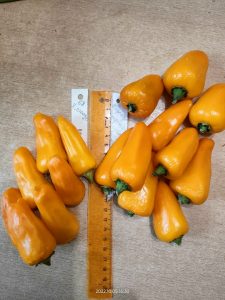
Probably time to pick this one so the others have room to grow 😄

Turned out to be the earliest of all my hot peppers. Sowed on March 9 and spotted the first bloom on June 1. Growing in the greenhouse. Heat is manageable even for spice lightweights. Seeds came labeled as Albanian Hot from Good Root, pretty sure it’s the exact same pepper as Rezha Macedonian.
Edited August 22, 2019 by Kirina


Seeds came from Nadezhda @RNA 🙏 Grew it in the greenhouse. Heavy producer with thin walls, and it dried really easily indoors in our apartment…


Good-looking pods, though not spicy at all. Slightly tangy and doesn’t have much standout aroma either. Maybe our cool summer was to blame, since it only really came alive and started setting heavily once temps climbed to 86°F (30°C) in early August. Grown outdoors.

Full Summary: Plant, Earliness, Heat and Drying
- 🌿 Plant & Pods: Early-maturing Capsicum annuum (~80 days), covered in dramatic, etched corking lines across red pods with thin walls. Kirina saw first blooms by June 1 from a March 9 sowing. Needs warm heat (86°F / 30°C+) to set heavily outdoors.
- 📈 Yield: Very productive in greenhouses (Anela) and once late-summer heat arrived outdoors (nierika).
- 🔥 Heat & Drying: Heat fluctuates strongly by weather and line (1,000-10,000 SHU): mild enough for spice-sensitive eaters in Zone 4 greenhouses, and zero heat in nierika’s cool Zone 5 summer. Thin walls make it effortless to air-dry indoors without a dehydrator.
- 🌎 Who Reviewed It: Five growers across USDA Zone 4 (Moscow Region and Kazan) and USDA Zone 5 (south of Tula).
Known in North Macedonia as Vezena Piperka (“embroidered pepper”), Rezha Macedonian gets its rugged, etched skin naturally as the outer cuticle splits and heals into woody corking lines. In Balkan kitchens, these thin-walled, richly colored pods are strung into garlands to sun-dry and crushed into bukovec (aromatic red pepper flakes), or roasted and stuffed. Capsaicin production in C. annuum relies heavily on warm nights and sunlight, which is why cool, overcast summers often turn out nearly sweet pods while hot summers ramp up the kick.