Grower’s Notes and Photos (USDA Zone 4 Experience)
Beaver Dam Hot Pepper
Capsicum annuum
A hot pepper variety with Hungarian roots, grown in the US under this name. Similar to the Hungarian variety Faludi, only milder. Heat tops out around 1,500 Scovilles. Plants reach up to 32 inches (80 cm) tall with minimal side branching. Needs staking, otherwise the plant flops over under the weight of the fruit. Takes 110-120 days from seed to maturity in a greenhouse. Thick-walled pods with juicy flesh that has a fresh watermelon-rind aroma. Sweet flavor with a light tang. Great for eating fresh and throwing on the grill.
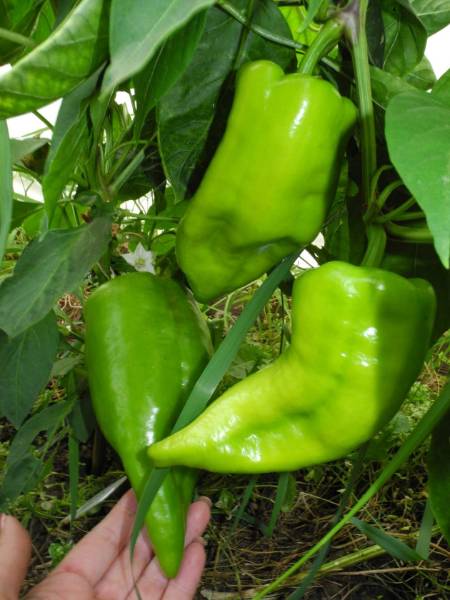
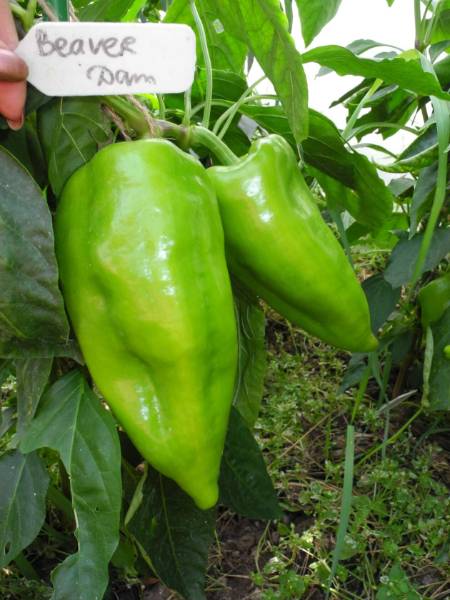
My plants stayed around 20 inches (50 cm) tall, grown outdoors under hoops and row cover. They definitely need staking so the heavy peppers don’t snap the branches. The pods really are big and meaty, and each plant can load up with plenty of them. Total winner of a variety! Can’t really judge the heat accurately since I don’t eat spicy food, gave it a quick lick and felt a noticeable medium kick. For folks used to heat, it’s probably pretty mild.
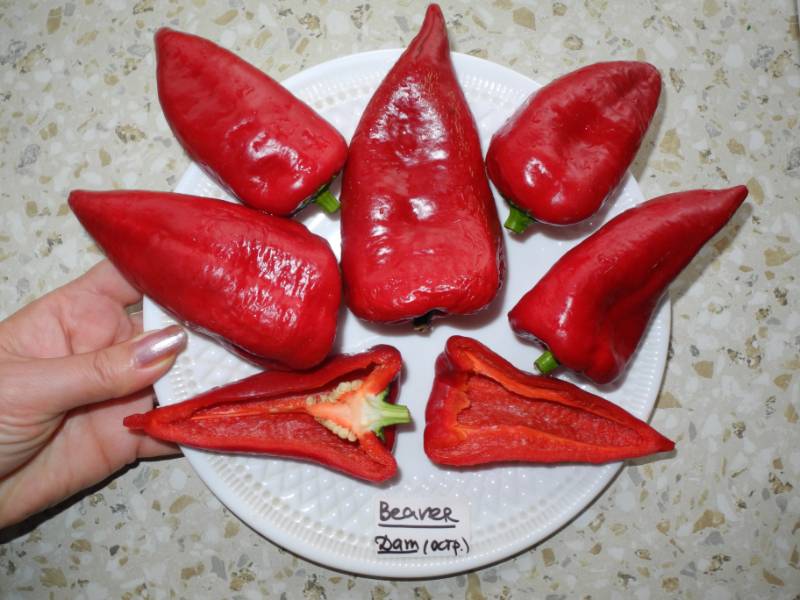
Beaver Dam on the plant:
Heirloom Backstory & Practical Growing Tips
- 🏡 1912 Wisconsin Heritage: This variety actually traveled from Hungary to Beaver Dam, Wisconsin in 1912 with immigrant Joe Hussli. It’s since earned a spot on the Slow Food Ark of Taste and even inspired an annual Pepper Festival in its Wisconsin hometown, which explains why it handles chilly Zone 4 summers so effortlessly.
- 🪵 Don’t Skip the Cage or Stake: Because the plants grow compact with wide-angled limbs and heavy 5-6 inch (13-15 cm) tapered pods, a simple bamboo stake or small tomato cage keeps loaded branches from splitting during summer storms.
- 🔥 Dialing In the Heat: Like many Hungarian-style peppers, most of the mild-to-medium warmth sits in the inner white ribs and seeds, while the thick outer walls stay sweet and crisp. Core them clean for mild stuffed peppers, or leave the veins intact when roasting or grilling for a pleasant warm kick.