📌 Quick Summary (TL;DR): Betalux
- 🌍 Origin: A very popular ultra-early Polish commercial variety.
- 🌿 Plant Habit: Note that there are two versions of “Betalux” circulating in the seed trade: a standard determinate, and a tree-type super-determinate (micro-dwarf). The super-determinate version is an absolute dwarf, growing very compact but producing slightly smaller fruits. It requires absolutely zero pruning. Perfect for both outdoor garden beds and greenhouse edges.
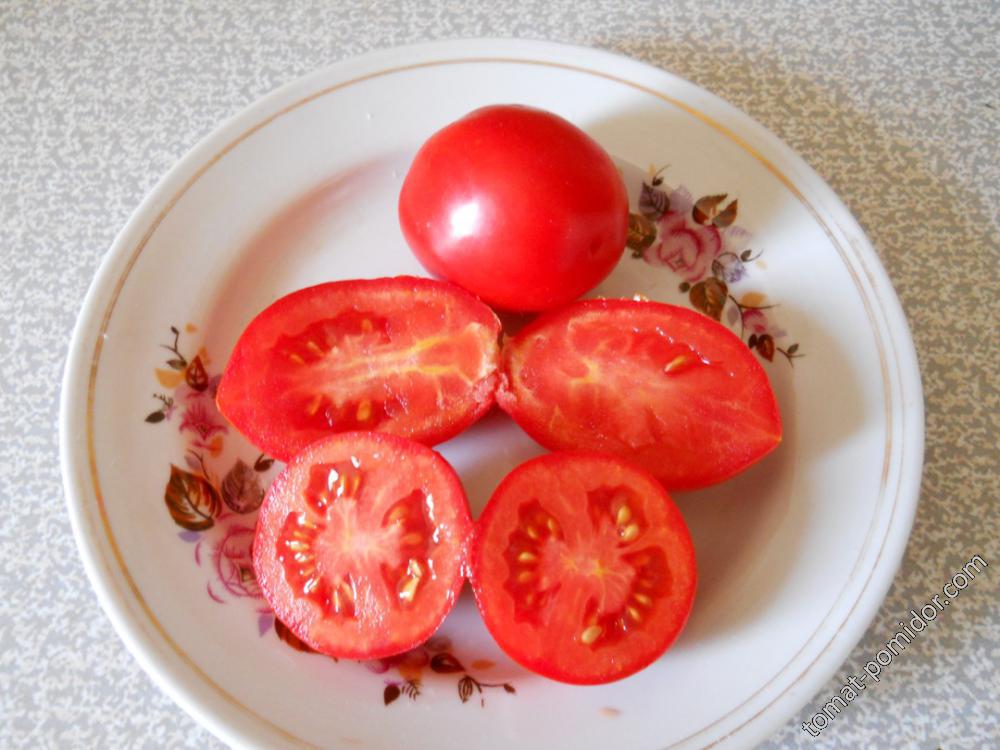
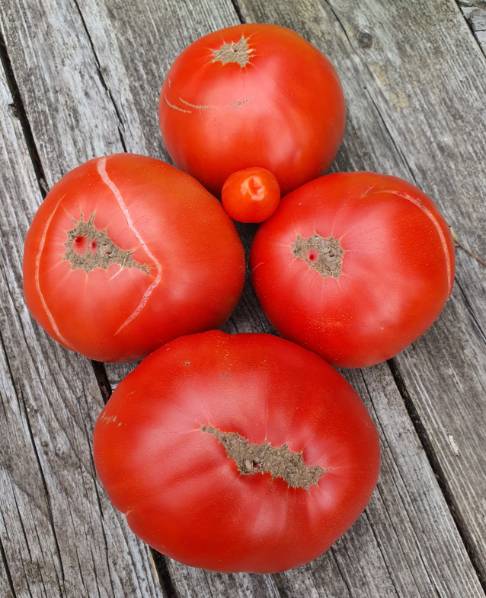
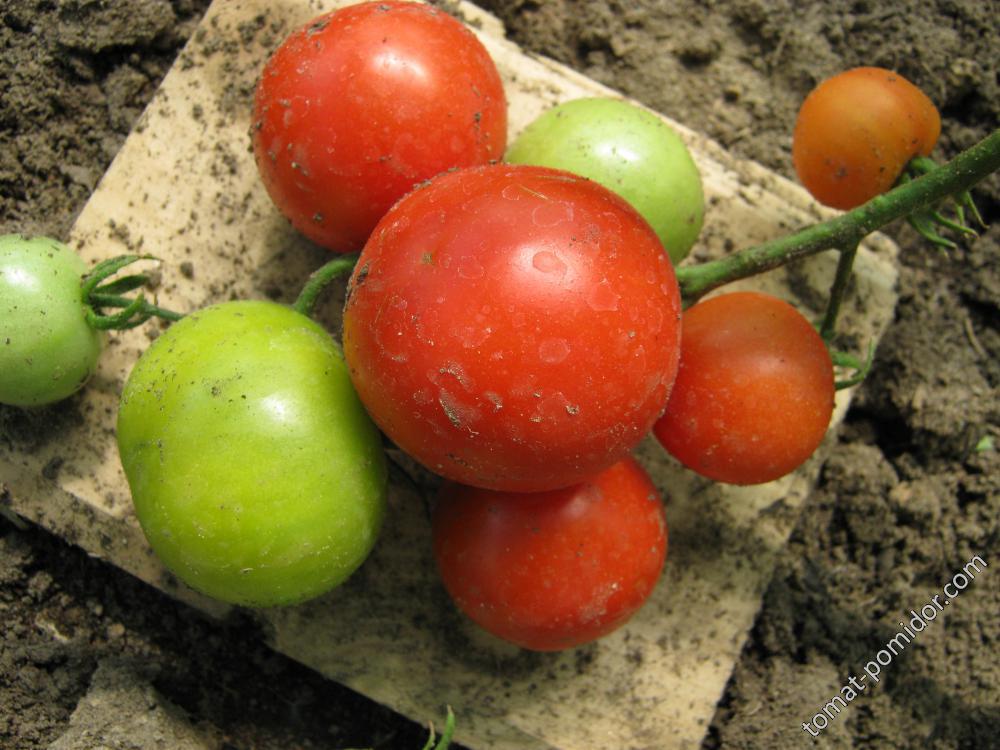
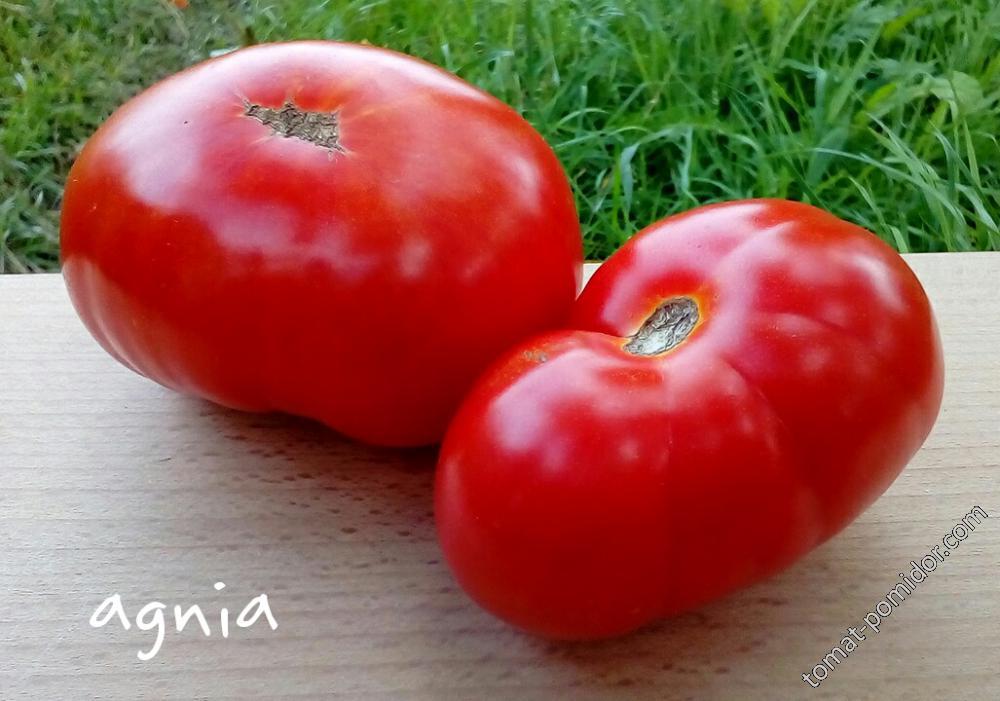
- 🍅 Fruit Characteristics: Red, slightly oblate (mini-beefsteak) fruits. The first flush produces fruits about the size of a child’s fist, while the final flush yields much smaller, cherry-sized tomatoes.
- 👅 Flavor & Utility: Not a sweet dessert tomato. It has a classic, slightly tart/acidic old-fashioned tomato flavor. The flesh is soft and juicy with thin skin (not a hard “supermarket rock”). Best use: It is the ultimate “insurance crop”—a variety that is guaranteed to give you a fast, early harvest even in terrible weather before Late Blight inevitably wipes out the garden.
Alena Latvia: Sowed after Christmas – Betalux – fruit set on the 5th and 6th trusses.
Alena, tell me, how did you prune/sucker your Betalux? It’s my first year growing it outdoors in open ground.
Alisa: …And does Betalux have a prolonged fruiting period, or do you eventually pull the plant?
My main experience with Betalux is outdoors. I’ll talk about the greenhouse later, they are still plumping up in there right now.
Here is my timeline for outdoors:
Planted out in mid-May in a 10 sq ft (1 sq.m) patch, removing just the bottom suckers.
By early June, the first trusses had distinct, fully formed fruits, but they refused to turn red because of the cold (constant night frosts, and daytime highs were only around 50°F (10°C) until June 30th).
On June 28th, I picked 2-4 ripe fruits off of each bush.
Exactly 2 weeks later, from 6 tiny bushes (barely the height of my hand), I picked over 1.3 gallons (5 liters) of tomatoes (a small bucket).
Another 2 weeks later, the bushes literally collapsed onto the ground under the weight of the second flush of fruit—picked another gallon (4 liters).
On August 10th, I picked roughly another half gallon (2-3 liters).
And that was it. Autumn arrived, followed by Late Blight (fita), but by that point, Betalux had completely finished its life cycle and given me everything it had.
So, it is the absolute perfect “insurance crop.” Surprisingly, the fruit type is like a mini-beefsteak. I wouldn’t call them sweet, but they aren’t piercingly sour either. I really liked them for canning—they are soft, juicy tomatoes with thin skin. As for vigor and speed of production—it gets top marks. The first fruits are about the size of a child’s fist, while the late ones are just tiny cherry-sized leftovers.
Alisa: Alena, tell me, how did you prune/sucker your Betalux? It’s my first year growing it outdoors in open ground.
First off, I might disappoint you a bit by saying that I know of two different “Betalux” strains. One is a tree-type super-determinate (micro-dwarf), and the other is a standard determinate. The fruit shape is similar, and they have a lot in common, but the super-det is an absolute dwarf, which means the fruits are smaller. I grew the super-det version outdoors. This year I’m growing it in the greenhouse, just tucked in at the feet of my tall indeterminate plants on one of the beds.
Regarding pruning: Outdoors, you do not need to prune it. When transplanting, just remove the lowest suckers and bury the stem about 1.5–2 inches (4-5 cm) deep for stability. My first fruits started setting when the bush was only 8-10 inches (20-25 cm) tall, and by the end of the season it topped out at 12-14 inches (30-35 cm). I just bottom-pruned the yellowing leaves and picked the fruits every two weeks. Initially, the bush stood up fine on its own. BUT! During the second flush of fruit, the bush just lays down, because the new fruits form on the suckers, and those suckers aren’t sturdy enough to hold the weight. I realized I should have laid a wooden stick down horizontally for them to lean on.
In the greenhouse, it’s trickier—right now the plants are about 12 inches (30 cm) tall and have a ton of suckers that immediately start blooming. Each bush currently has over 10 blossom clusters on it, and I know I should have thinned them out, but now they are already setting fruit… In the greenhouse, the plant is looser/leggier, and it seems to fruit even faster, because the second flush is plumping up at the exact same time as the first, and the third flush has already set.
Alena Latvia: First off, I might disappoint you a bit by saying that I know of two different “Betalux” strains. One is a tree-type super-determinate, and the other is a standard determinate…
Thank you! Judging by how mine is behaving, I think I definitely have the super-det micro-dwarf version…
Alena Latvia: I wouldn’t call them sweet, but they aren’t piercingly sour either… The first fruits are about the size of a child’s fist, while the late ones are just tiny cherry-sized leftovers.
Thanks! I was really looking for sweet varieties, but honestly, as long as it isn’t piercingly sour, I’m happy )))
Alisa: Thanks! I was really looking for sweet varieties, but honestly, as long as it isn’t piercingly sour, I’m happy )))
It’s definitely not a sweet dessert tomato—it is juicy, soft, small, and just mildly tart (maybe in better, warmer weather it wouldn’t be tart at all, but for me it was a classic tomato flavor with a little acidic bite). Overall, a great EARLY variety.
By the way, it was always super easy to identify among other picked tomatoes—the sepals on the stem are fused together like a little starfish. Its biggest advantage is that it will give you a harvest in the shortest possible time, regardless of the weather. And the fruit quality is important—it’s not a hard supermarket cardboard rock. Plus, it ripened outdoors for me earlier than many varieties in the greenhouse…
Overall, all praise and glory to a variety that did its job perfectly and gave me over a bucket of tomatoes from a single square meter. I just had a line of six tiny bushes tucked along the edge of a raised bed. Left an absolutely solid impression.
Here is my Betalux, completely unpruned. I only cut off the bottom leaves, though looking back I probably shouldn’t have cut the leaves and just pinched out the bottom suckers instead.
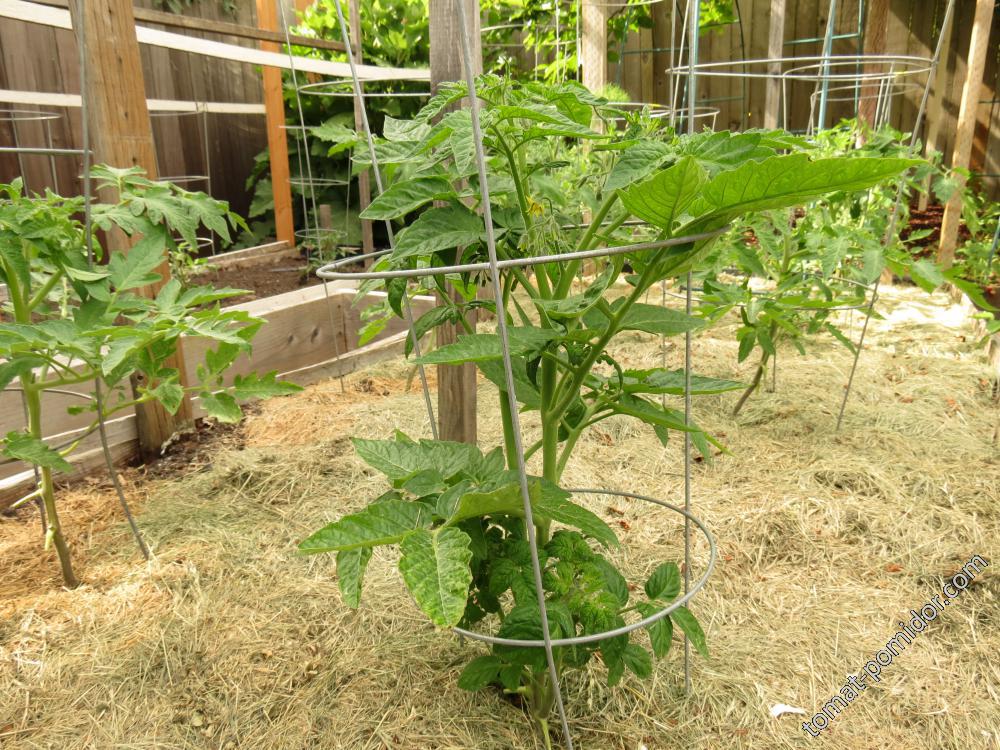
Alisa: Here is my Betalux, completely unpruned…
Wow, he is definitely living his best life there… Yeah, looks identical. By the way, it naturally gets a slightly mottled look to the leaves (you can see it on your plant too). Last year and this year, some of my plants looked a bit “mottled”—I was just examining them today.
I get the feeling it’s just because the plant is in such a rush—everything happens so fast with this variety that it probably just lacks certain nutrients at specific stages. And the leaves age and yellow pretty quickly, I prune them off ruthlessly. I didn’t have any issues with thinning fruit outdoors, but in the greenhouse it sets way too many—it blooms like crazy and instantly forms little pea-sized tomatoes everywhere. I’m afraid I’m just going to harvest a crop of tomato peas…