📌 Quick Summary (TL;DR): Blue Bayou
- 🌍 Origin: Created by legendary American independent breeder Tom Wagner (famous for Green Zebra). It has become highly popular overseas with Eastern European exotic seed collectors.
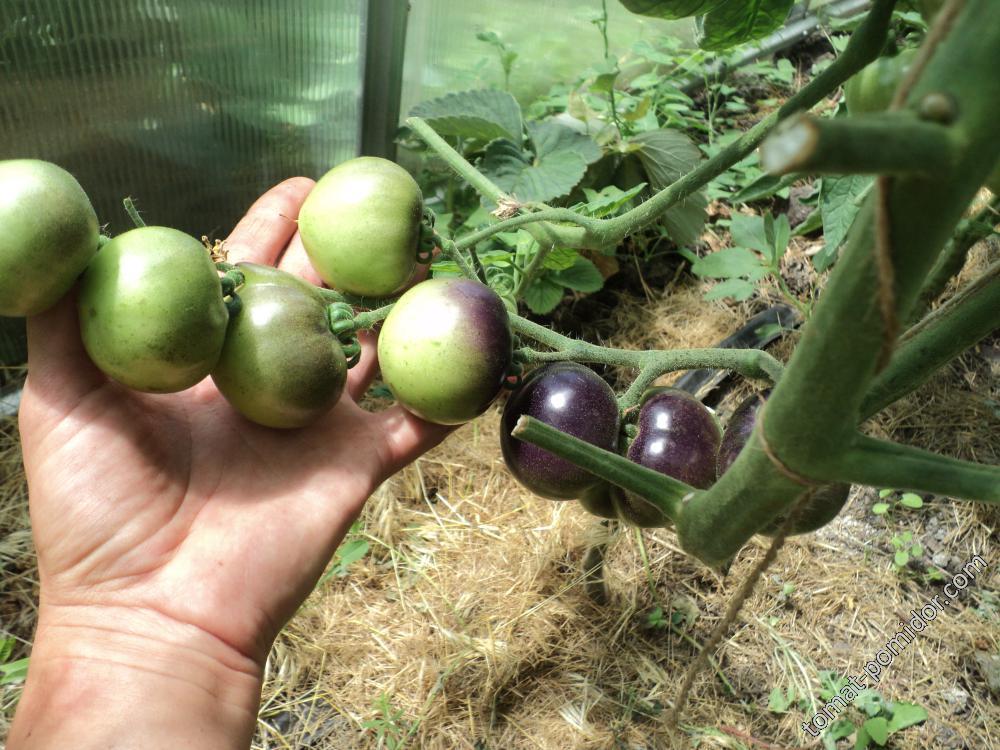
- 🌿 Plant Habit: Indeterminate (tall). One of its most striking features is the foliage—the stems and leaves exhibit a distinct blue/purple tint, especially when the plant is young or grown outdoors.
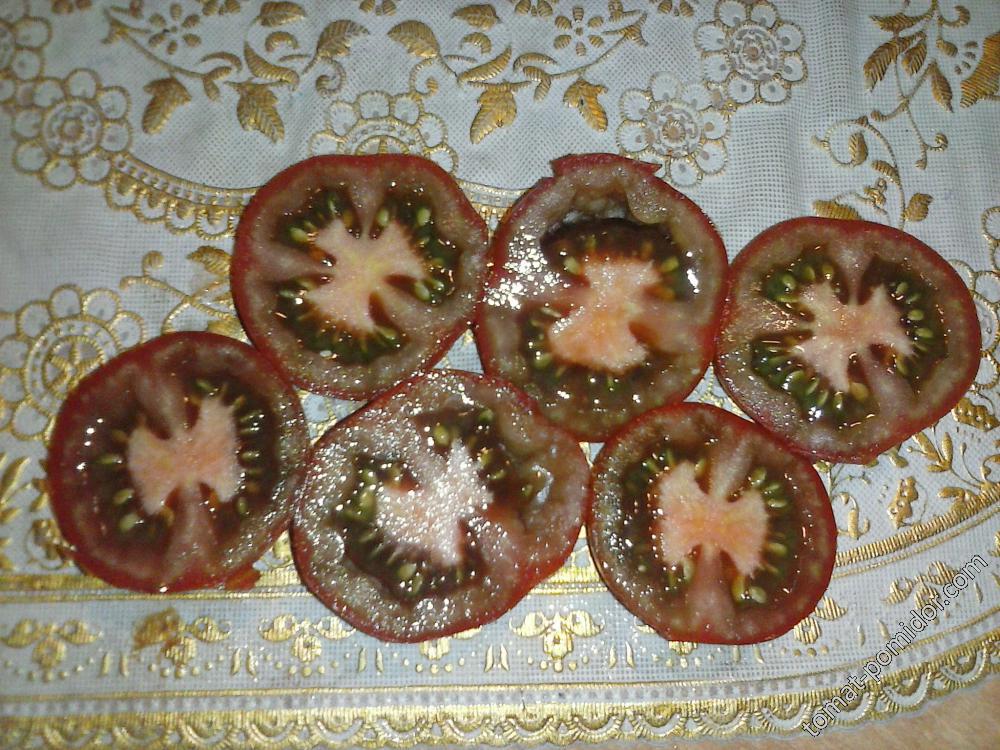
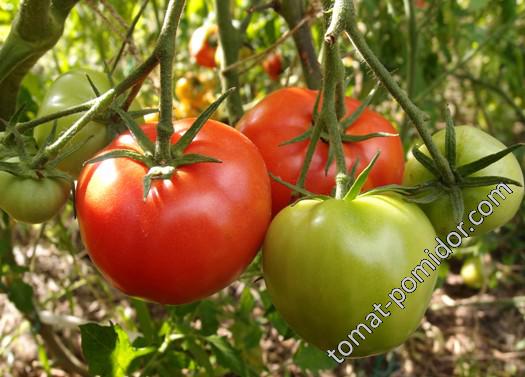
- 🍅 Fruit Characteristics: Small to medium cocktail-sized tomatoes, generally weighing up to 4.2 oz (120 g). The base color is red, overlaid with intense dark blue/black shoulders where the sun hits the skin.
- 👅 Flavor: Sweet, very juicy, and packed with good flavor. While some early anthocyanin lines tasted bland, Blue Bayou is known for actually tasting like a great tomato!
Indet. Fruits are round, red-blue, very good taste, weighing up to 4.2 oz (120 g). The leaves and stems carry a blue tint. A stunning sight. Description and seeds from V.D. Popenko.
I’ll add my own experience: I grew it both outdoors in open ground and in a greenhouse. The blue tint on the leaves and stems was on the greenhouse specimens, but outdoors the leaves were straight up dark blue – unusual, to put it mildly. When the fruits started sizing up, the leaf color gradually shifted closer to green.
It sets fruit in heavy clusters, heavy yielder, sweet. Outdoors the fruits were almost black, the ones in the photos are the greenhouse specimens.
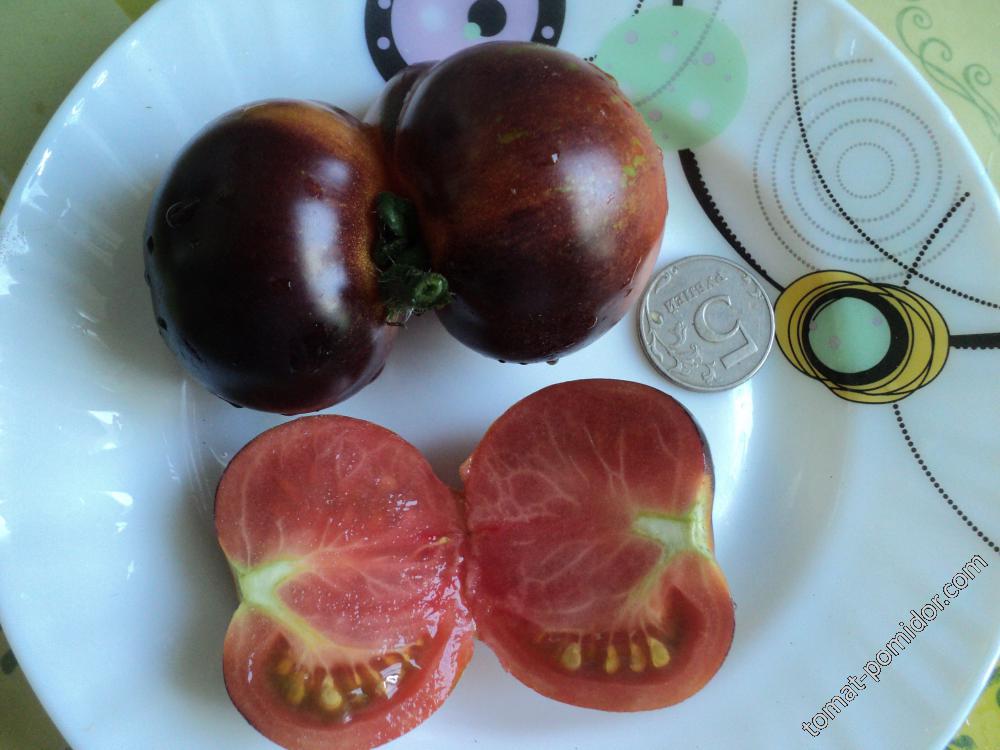
Svetlana, roughly how tall did it get in the greenhouse for you? How many main stems did you prune it to?
ElenaPr wrote:
Svetlana, roughly how tall did it get in the greenhouse for you? How many main stems did you prune it to?
The bush in the greenhouse was about 5.5 ft (1.7 m), I pruned it to two stems.
Blue Bayou. Indeterminate, mid-season exotic variety. The fruits aren’t huge; on the sides facing the sun, they have a dark blue, almost black color. A red blush appears on the less exposed areas. Leaves and stems have a blue tint. Very good flavor, juicy. Seeds from Ruslan Dukhov.
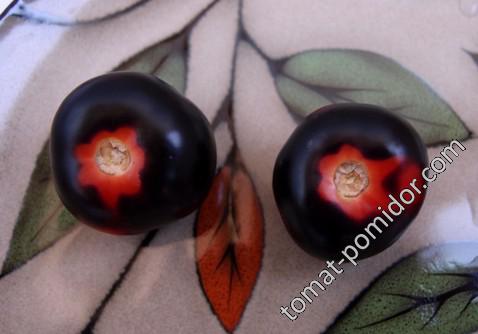
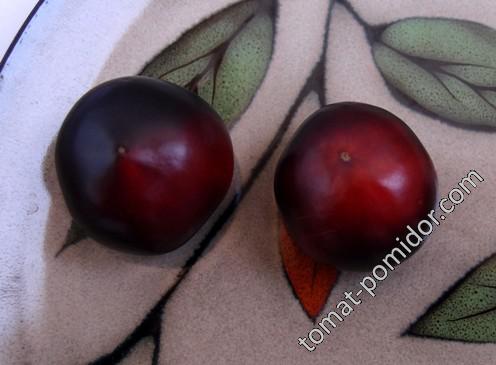
Svetlana mentions an important detail here: the plants she grew outdoors had foliage and fruits that were “straight up dark blue, almost black,” while her greenhouse plants were much lighter.Why does this happen? The blue/black color in varieties like Blue Bayou is caused by anthocyanin, a pigment that acts like sunscreen for the plant. However, this pigment is only triggered by direct exposure to UV light! Because greenhouse plastic and glass naturally filter out UV rays, anthocyanin tomatoes grown indoors will never get as dark and dramatic as those grown outdoors in full, unfiltered sun. If you want maximum black coloration, always plant these varieties in open ground!