Quick Summary of Khali Gali F1
- 🌍 Origin: A commercial early-season Russian hybrid (F1) developed by breeders in Rostov. Bred specifically for high yields and reliability in open ground.
- 🌿 Plant Habit: Determinate (bush), extremely vigorous with medium foliage. It generally reaches about 1 meter (3.3 ft) in height. Very low maintenance—it barely requires pruning, as the first suckers only appear after the first flower truss.
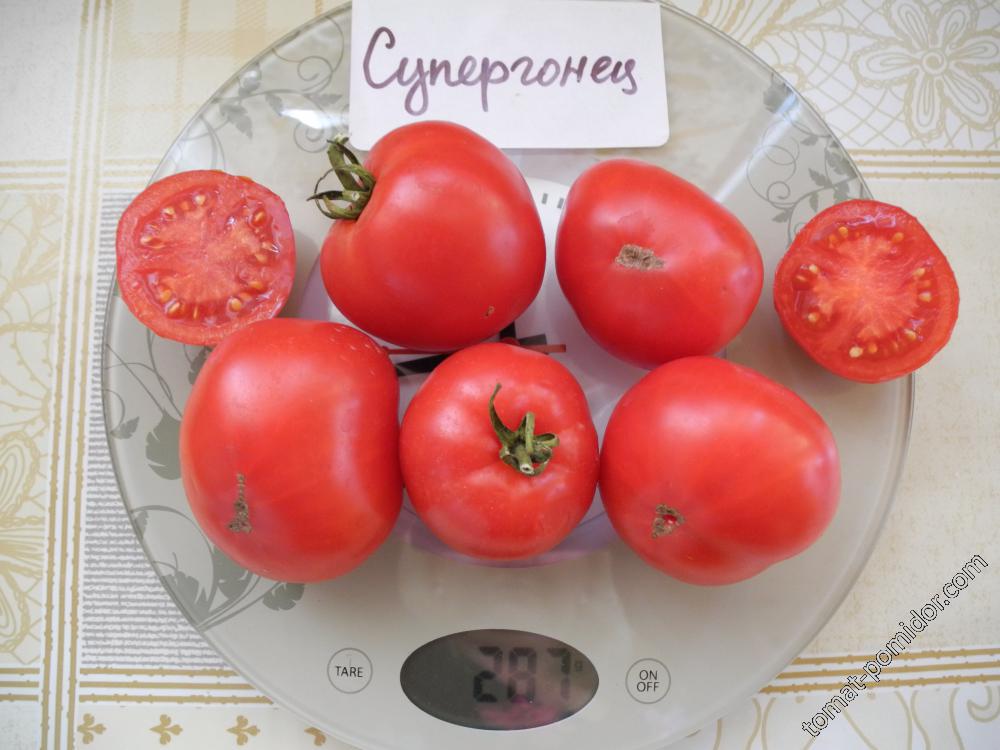
- 🍅 Fruit Characteristics: Uniform, firm, and heavy round red tomatoes with a tiny “beak” (nipple) on the blossom end. They average 150-250 g (5.3-8.8 oz) and have no green shoulders.
- 👅 Flavor & Use: Classic sweet-and-sour tomato taste. While it may not beat an heirloom beefsteak in a taste test, its incredible production volume and uniform size make it an absolute superstar for whole-jar canning and commercial sales.
- 🛡️ Disease Resistance: Highly resistant to TMV (Tobacco Mosaic Virus), and very tolerant to Early Blight (Alternaria) and Septoria leaf spot.
An early ripening hybrid (102-107 days).
The plants are determinate, vigorous, with medium foliage. It sets the first flower truss above the 5-7th leaf. The fruits are large, firm, heavy, round with an even red color, without a green spot at the stem (no green shoulders). Average weight is 150-250 grams (5.3-8.8 oz). There is a small “beak” (nipple) on the blossom end of the fruit.
Resistant to TMV (Tobacco Mosaic Virus), tolerant to Alternaria (Early Blight) and Septoria leaf spot.
Yield is 65-85 tons/hectare in open ground, and 13-16 kg/sq.m (2.6-3.2 lbs/sq.ft) in film greenhouses.
My impressions from growing it:
Last year I planted it for the first time, because I read online that this is a hybrid from Rostov breeders, and the climate zones of Donetsk and Rostov are very similar.
Taste: A sweet-and-sour tomato flavor. As for me, there are tastier ones, but among those I shared them with, there were people who thought the taste was the best.
Yield: I didn’t weigh the harvest on a scale, but it is clearly much higher than that of regular open-pollinated (OP) varieties. Good for obtaining marketable produce. Therefore (because of the sheer volume), the bulk of it went into canning.
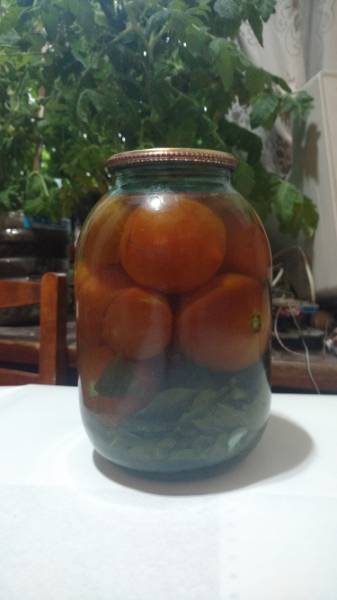
Canning: The size of the tomato allows you to put them whole into jars. There were practically none that wouldn’t fit through the jar’s neck.
Ripening time: Felt mid-season to me, but that’s my opinion, because by the time the first fruits ripened, Lyana and Rozovyi Myod (Pink Honey) were already in full swing.
I saw discussions online that you need to “shake” the plants to get more fruit set. This was attributed to a specific feature of the flower. Initially, I tried tapping the supports a bit, but then I gave up on it — there was a “sea” of fruit set anyway.
Diseases: It either doesn’t get fungal diseases or tolerates them easily; in any case, it doesn’t lead to a noticeable loss of yield. As for viral diseases — it’s worse. Out of 50 planted bushes, 4-5 got sick. Of those, 4 plants went from being 50-60 cm (20-24 inches) tall (just as active blooming was starting) to dying back into “dried-up little weeds” by mid-to-late August. Only one of the sick ones survived until autumn, but there were virtually no fruits on it. I only managed to stop the spread through treatments.
Bush shaping/pruning: It requires practically none; the first suckers appear only after the first flower truss. I liked this, since I don’t have the opportunity to devote all my time just to tomatoes. The bush is beautiful, with a thick sturdy stem, the leaves are light green, or rather with a lean towards a silvery hue. Height — mine was slightly over a meter (3.3 ft), which is taller than stated. But then again, maybe that was the result of powerful grow lights during the seedling stage, deep planting (developing roots in 3 tiers), and heavy feeding in the open ground.
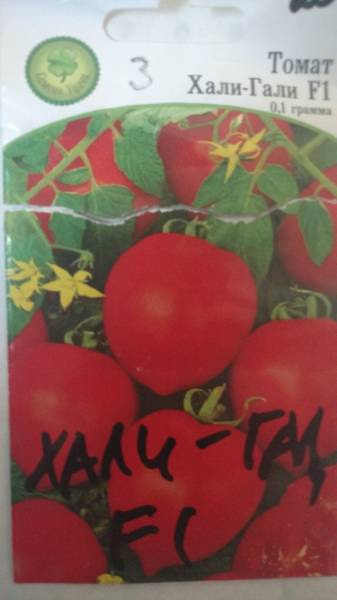
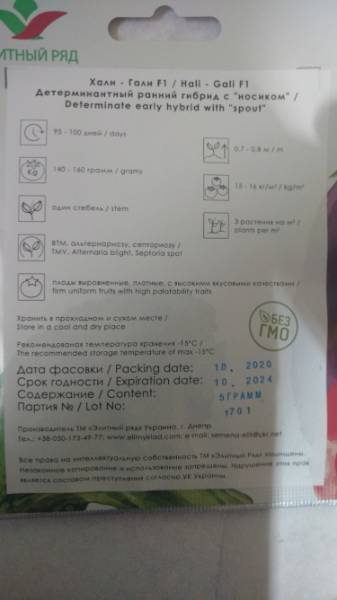
Seeds: Last year I bought them here (in Donetsk), clearly locally packed (photos 1 and 2). I will plant them again this year. I already bought the seeds, but Ukrainian ones this time (photo 3), we’ll see what grows.
By and large — I liked it, I will keep growing it.

I grew it several years in a row outdoors. Absolutely trouble-free to grow.