📌 Quick Summary (TL;DR)
- Dwarf vs Standard: Dwarf trees yield sooner and save space, but require watering. Standard trees live longer, cast great shade, and have deep, drought-tolerant roots.
- Seedling Selection: Look for a 1-year unbranched whip or a 2-year tree with 3-4 scaffold branches. Ensure a single central leader. Remove nylon netting from potted roots!
- The Planting Hole: Ignore the myth of digging massive 3-foot pits. A 20x20x20 inch (50x50x50 cm) hole is perfectly fine. Deeply buried fertilizers turn anaerobic and become useless.
- Planting Depth: The graft union must remain above the soil line to prevent the scion from rooting.
- Fertilizing: Feed with nitrogen (balanced NPK or compost) in spring. Stop nitrogen by mid-July and switch to Potassium/Phosphorus to harden the tree for winter.
Calibrated apples gleam at us with a waxy gloss from supermarket shelves. They often sit there for half a year or more in their barely edible spacesuits. We eat them ourselves and, out of habit, buy them for our children because “Apples are good for you!”…
Meanwhile, in many backyards, it has become trendy to plant NOTHING but lawns and conifers… Excuse me, folks! But how can that be — a garden without an apple tree?..
However, since you are reading this, it means you have decided to plant an apple tree after all. For that, let me shake your hand!
So, let’s get down to planting (Buckle up!).
The apple tree is our northern storehouse of vitamins and health. And even though times have changed and planting tall trees on standard seed rootstocks is no longer trendy, a lot of new varieties and wonderful dwarfing rootstocks have appeared.
🌳 Which Apple Tree to Choose: Dwarf or Standard?
The agony of choice is heavy when the market is oversaturated with seedlings. You want columnar trees? Here you go. You don’t want columnar? Here are “big” apple trees on standard rootstocks. What exact trees to plant depends mainly on your preferences.
Mainly — because there are some restrictions. For tall (standard) apple trees, for example, it is necessary that the groundwater level on your plot is no higher than 2 meters (6.5 ft). On light sandy soils, you can plant them with a groundwater level of 1–1.5 meters (3–5 ft) if you use a few little tricks.
For dwarf apple trees, on the contrary, you must consider that their roots are shallow, but the crop load is heavy. Therefore, if you live in an arid region, watering will be necessary (or other agricultural practices that increase soil moisture retention).
Advantages of Tall (Standard) Apple Trees:
- They are big and beautiful; in the summer, it’s pleasant to sit in the shade under such a tree. And between two large trees, you can hang a hammock!
- Large harvests. Moreover, if you graft scaffold branches of different varieties onto it, the harvest will be massive and diverse.
- A large apple tree lives and bears fruit much longer.
- Since the roots of a large apple tree penetrate deep into the ground, watering it is not necessary once established.
- Such a tree is generally more resistant to weather whims. Unlike dwarf trees, it doesn’t need to be staked or supported out of fear that branches loaded with fruit will break from the first strong wind.
Advantages of Dwarf Apple Trees:
- They take up very little space! On a small suburban plot, this is often vital.
- They cast very little shade! On old, shady plots, people sometimes forget what “full sun” is. The difference in plant development is huge. It’s important to keep our garden as sunny as possible if we want to grow vegetables or flowers. (Lawns, on the other hand, often do better in partial shade).
- They enter fruiting early. In the third year, a dwarf apple tree will already have a dozen apples, and in the fourth year, you can harvest a couple of buckets of choice, large fruits!
- Yes, the fruits on dwarf apple trees are generally larger. And maybe even tastier, though that’s debatable.
- By making a small planting mound, an apple tree on a dwarf rootstock can be planted in the wettest part of the yard, since its roots only penetrate about half a meter (1.5 ft) deep.
- It is much easier to deal with pests and diseases on dwarf trees—you can spot and remove issues in time, whereas you might have no idea what is going on at the top of a large apple tree.
🍏 How to Choose Apple Varieties for Planting?
This is a very complex and individual question. It’s great if you have the opportunity in the fall to walk through a farmer’s market and taste different varieties. But unfortunately, most city dwellers are deprived of this opportunity.
Choosing varieties based on internet descriptions is also a dubious task, as everyone’s tastes differ. So you are left with the trial-and-error method.
I think it’s unnecessary to repeat “do not buy seedlings in questionable places, from roadside vendors, etc.” It’s important that the variety is suited (hardy) for your specific climate zone; you should be sure of this before buying. Otherwise, you might get a variety that freezes in the winter, or one that doesn’t have a long enough summer to ripen its apples.
And one of the most important qualities of a variety is disease resistance, mainly to Apple Scab. Why plant an apple tree and then complain that the apples might be tasty, but they are all covered in scab, deformed, and unattractive? Plant resistant varieties!
🌱 Bare Root or Potted? What’s the Difference?
Indeed, the main thing is that the seedling is strong and healthy.
Potted Seedlings – What’s the Catch?
It seems like a potted apple tree is much better—you can buy it in spring or summer and plant it immediately. But it’s not all so rosy.
First, often a freshly dug field tree is just shoved into a pot, and there is no real root ball permeated with fine feeder roots. Upon your first attempt to pull the seedling out, all the dirt falls off.
Sometimes it’s worse — inside the plastic bag or pot, there is a large-mesh nylon net. Some say you don’t need to remove it, but I highly recommend cutting the net off. Many sellers stuff the roots into the net haphazardly—crushed, bent upwards, all to one side. If you don’t untangle and spread the roots, instead of a productive tree, you will have endless torment. The tree doesn’t die, but it doesn’t grow either — it just sits there complaining of a headache.
The second bad scenario is when the pot is too small, and the apple tree has been languishing in it for months. Sometimes you see these poor things in stores; they have already finished blooming in the pot, and an apple is hanging on them… How does the root system feel in such a volume? And the store workers diligently flood this seedling with water because by evening it dries out completely. And so it goes every day: dried and wilted by evening, flooded in the morning.
This doesn’t mean you shouldn’t buy potted seedlings. You absolutely can, but it’s best to do so in early spring, before bud break. Planting trees with apples and flowers on them is a risk. Be sure to remove the apples and flowers—the tree shouldn’t be focusing on a harvest in its difficult first year. Let it grow roots instead.
Bare Root Seedlings
Generally, with bare root trees, it’s simpler because you see the roots, not a pig in a poke. If you get the tree at the right time (early spring before bud break, or in autumn after leaf fall), you will have no major problems. Buying bare root seedlings that have already opened their leaves is a doomed enterprise.
Let’s look at the roots. On dwarf apple trees, we will see a mop of numerous, fairly thin roots. On tall apple trees, there should be 1-3 massive taproots going almost vertically down. If you scrape them with a fingernail, they should be white. Rotten and dried roots are bad. Taproots roughly chopped off with a shovel right near the soil line are also bad.
📏 The Appearance of the Seedling: What Do We Need?
Due to inexperience, it’s easy to make foolish mistakes. First, you should buy either a one-year-old “whip” (a vertical stick 3 to 6 feet tall, practically without any branches) OR a two-year-old tree that has the beginnings of a canopy (2-3 scaffold branches for standard trees, or 3-5 for dwarfs).
If you joyfully grab a bushy apple tree that has 10 branches coming off the trunk in its second year, there is nothing good about it. It will be overly congested, and you will have to cut off half the branches anyway. But the tree spent energy growing them…
Second, look at the trunk itself. The trunk should be straight, and the top should not fork into two or three equal parts. The central leader — the highest branch continuing the trunk upwards—must be singular, without competing branches sticking up right next to it.
Generally, all of this can be pruned and trained, so if you bought a crooked seedling you liked, let it live and bring you joy. But if you have a choice, think ahead about how the tree will grow in a year or two.
⛏️ How to Plant the Apple Tree?
Here is the question of all questions. Are there secrets?
The Planting Hole: Debunking the Myth
Contrary to old-school recommendations, I advise you to dig a hole that is neither particularly deep nor particularly wide—let’s say 20x20x20 inches (50x50x50 cm).
Where did all these advice pieces about digging massive 1x1x1 meter (3-foot) pits come from? Maybe that wise guy was just bored, or maybe he loved digging. The truth is, with proper care, you will notice no difference in tree growth between a 20-inch hole and a 3-foot massive pit.
What are you traditionally advised to pour into a 3-foot hole? Humus, organic, and mineral fertilizers. But anything buried at a depth of 3 feet enters anaerobic (oxygen-free) conditions, where it decomposes poorly and remains in a form indigestible to plants.
As for the much-loved superphosphate, you can pour it in the hole. But show me an apple tree in a normal garden that suffers from phosphorus deficiency? I haven’t seen one yet. What else? Complex NPK fertilizer. Why do we need nitrogen at a depth of 3 feet? It will wash away even deeper with the rains and spring snowmelt. There’s no point in digging a huge pit unless your soil is absolutely terrible (like pure clay or rubble).
What Should You Put in the 50×50 cm Hole?
Add some wood ash to the good topsoil if you have it. About 2 cups per hole is perfect, provided you don’t have alkaline soil. Fill the hole almost to the top with regular black soil.
In the top 4 inches (10 cm), you can get creative and add any organic or complex mineral fertilizers (like a balanced NPK or liquid humic acid). But this applies mainly to spring planting.
🍂 Autumn Planting
They say it’s better to plant an apple tree in the fall, after leaf drop. At this time, the tree is busy building its root system, while the above-ground part is sleeping. Our task is not to interfere. Large amounts of nutrients are not needed for root growth; just good soil in the hole is enough.
Do NOT add nitrogen (humus, fresh manure, compost) because the buds might wake up, which threatens the seedling with freezing in winter. Pouring potassium and phosphorus “to help the tree prepare for winter” is also too late—the tree prepared without you. Just fill the seedling with earth, tie it to a stake, and sing it a lullaby.
🌷 Spring Planting
I prefer planting trees in the spring. For potted trees, spring planting is optimal. We immediately see how the tree grows, the speed of shoot growth, leaf color, etc. If something is wrong, it can be adjusted with timely feeding.
For bare-root plants, immediately after planting, pour a bucket of water over the tree. You want to create absolute mud. It is also good practice to pour water into the hole before filling the roots with earth, mix the water with the soil at the bottom of the hole into a mud slurry, spread the roots in this mud, and then fill the hole with soil. Then pour another bucket of water. Water the apple tree once a week, a bucket at a time, for the first 5-6 weeks.
⚠️ Crucial Step: Planting Depth
If you plant the tree too deep, it will grow poorly and likely die after a few years. On grafted apple trees, the graft union is clearly visible—it MUST remain ABOVE ground level.
Look carefully at where the root system begins on the seedling. Just about a centimeter above the highest root, you will see the transition from underground to above-ground tissue. The bark will change texture and color. You cannot bury the seedling deeper than this line!
💩 Mulching and Fertilizing: First-Year Care
To get a harvest in the second year after planting (for dwarf trees, of course), you need to give the tree everything it loves! In spring, this is primarily Nitrogen.
- Mineral options: A balanced NPK fertilizer (like 10-10-10 or 16-16-16). Scatter a couple of tablespoons around the tree early in the spring, ideally right on the melting snow. Urea or Blood Meal also works well if you just need nitrogen.
- Organic options: Apple trees love organic matter, even fresh manure. Rule of thumb: Just don’t put fresh manure directly against the trunk, or the bark will rot. Step back about 4 inches (10 cm). There is no need to fear that the tree will grow out of control; by mid-July, the nitrogen will be used up.
Important: Starting in July, nitrogen fertilizers should no longer be given. It’s time for Potassium and Phosphorus. Scatter a mineral fertilizer without nitrogen, or better yet, wood ash (a cup or two) into the tree circle.
Community Q&A and Comments

Thank you. I planted in the spring; out of ignorance of planting rules, I actually did exactly what you described: 20x20x20 inch hole, regular black soil.
But I have a question. What diameter should the tree circle (mulch ring) be? And did I understand correctly that fresh horse manure placed around the trunk will not harm the apple tree? With subsequent mulching, of course.
The apple tree was not feeling very well, but after fertilizing with Humate + 7 trace elements, it seemed to come back to life, and full leaves appeared.

Hello, Zhanna! Let’s start with the manure. Remember that manure is primarily nitrogen. The apple tree definitely needs nitrogen, but giving it in the second half of the summer after a possible starvation period is not recommended — the apple tree will start acting inadequately, growing new shoots that may not have time to harden off if autumn comes early.
The tree circle should ideally be equal to the diameter of the canopy (drip line). But usually, it ends up being smaller.
Do not put manure right up against the trunk! The bark will rot. Step back 4 inches (10 cm) or more.
As for the apple tree coming back to life after fertilizing — it might be a coincidence. If it was a bare-root tree planted in the spring, it might have only just now grown enough feeder roots for further growth. In the first year, it’s better to underfeed than overfeed.
Hello, we planted dwarf apple and pear trees in the garden this year, and leaves and buds have still not appeared on them, although the branches are flexible. We live in the South. What do you advise? We bought them in a store, and we had no problems with other plants.
Hello. Buds are either there or they aren’t; they can’t magically appear in winter or spring. For now, keep watering, watch, and wait! They might still break dormancy.
Thanks for such clear info! I want to know, do I need to do anything with the apple blossoms in their very first year of flowering?
Good afternoon. Many apple trees are able to regulate their own load — all excess fruitlet drop occurs naturally (June drop). But in the first year, it is better to pluck off even the ones that don’t fall off themselves. You can leave 1-2 apples just to “taste test.” You do not need to remove the flowers themselves, just the small developing fruitlets.
Hello! Two years ago we planted Spartan, Bogatyr, and Konfetnaya apple trees (Note: cold-hardy Russian heritage varieties) from nursery containers. The apple trees are basically not growing, even though we dug large holes and fertilized them well. How can we resuscitate them? I think maybe it’s because we planted them together with the tight root ball of soil from the container, and we should have shaken the dirt off to free the roots. What should we do?
You probably buried the root collar (graft union), which is the most likely cause. The root collar must be above the surface of the earth. If you planted it correctly, check the condition of the bark; on young trees it often cracks. You do not need to shake the earth out of the containers — that is not the cause.
Thank you for the advice, but I would like to know what is the maximum depth the roots of an apple tree go? Because we have a very high water table.
It depends entirely on the apple tree’s rootstock. If it is on a standard seed rootstock, the roots can go down 2, 3, or even 4 meters (6.5 to 13 ft). But if they are dwarfs or semi-dwarfs, they only go down 0.5 to 1 meter (1.5 to 3 ft).
Tell me, is it possible to plant two apple trees in one hole?
You can do anything… but it’s not always beneficial. What is the goal? It is much better to plant one tree and graft two or three different varieties onto different scaffold branches. If you plant two trees in one hole, their roots will heavily compete for resources.
Dear Pomidoroved! What do you think about using heavy-duty landscape fabric/rubber tree rings around the base of young trees? Does it make sense to lay them down? Do you secure them with a rim of soil?
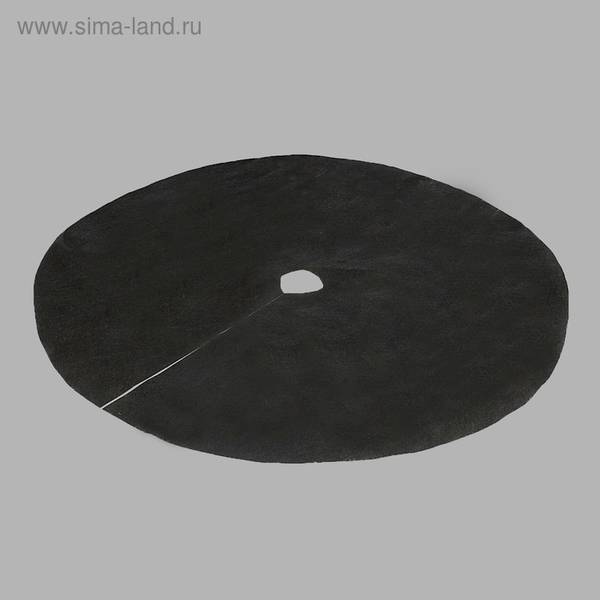
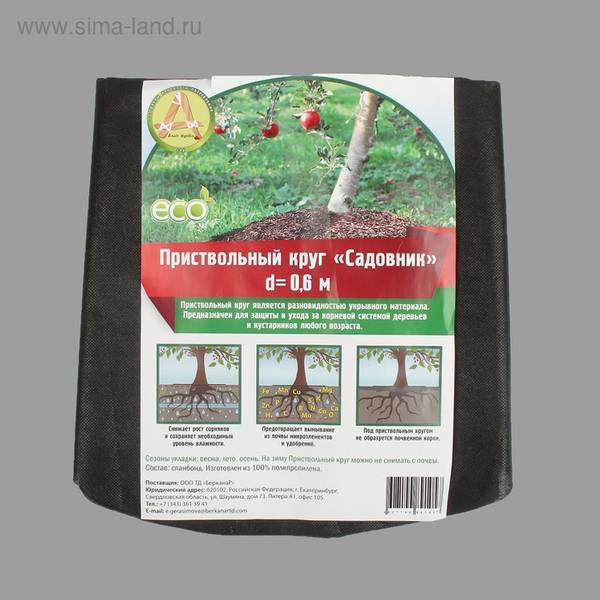
It makes sense if, for example, there are no neighboring apple trees. If you lay these rings down in the spring and then remove them when the fruits are swelling, they will prevent the Codling Moth larvae from emerging from the soil beneath the tree… So yes, it helps with pests. It is a lot of fuss, though. And the moths can always fly in from the neighbor’s yard anyway 😄
As for weed control… I don’t know, I would just mulch thickly with organic matter — it brings more benefits. Also, fertilizing the tree will be much harder when this heavy mat is lying there.
I plan to bring a pear tree from my second country house, but it is already 5 years old. Is it worth digging it up, and what is the proper way to do it?
The diameter of the root system is roughly equal to the diameter of the canopy. Often a 5-year-old pear tree is about three meters (10 ft) tall; transplanting something that big without heavy machinery will be difficult. But if the pear tree is relatively small, you need to transplant it in autumn, when leaf fall is almost over, but giving the tree at least a month before the ground freezes.
You need to dig up the largest possible root ball of earth. Then, early in the spring, heavily prune the canopy. This is to reduce moisture evaporation through the leaves while the roots are damaged. There are chances it will survive.