🍅 Quick take: RAF (Resistente A Fusarium) is an iconic Spanish winter greenhouse tomato bred by French seed house Clause from a Marmande selection. Famous for fetching gourmet prices in Madrid and Barcelona restaurants, true RAF produces deeply ribbed, firm green-shouldered slicers running 3 to 7 oz (80-200 g) that ripen from the inside out. In its native Almería, it achieves legendary sweetness through cool winter temperatures (41-68°F / 5-20°C) and naturally saline irrigation. Northern growers report that while plants are resilient and productive in standard summer gardens (yielding up to 10 lbs / 4.6 kg per plant), without salt stress and cool slow ripening, the flavor reverts to a classic tangy Marmande. Full summary ↓
Growers’ Notes and Photos (USDA Zones 3-5 & Spanish Context)
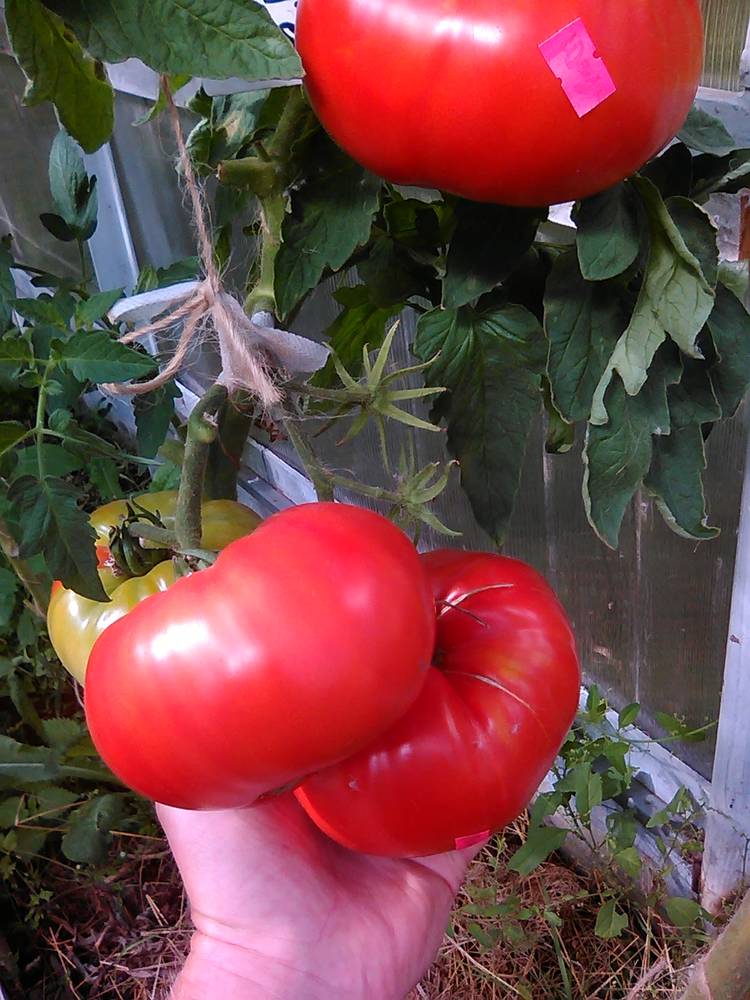
I couldn’t bring myself to pinch off the first fasciated megabloom, and look what happened: a gnarly, fused double tomato that ended up stalling out the rest of the plant. The other fruit sets went completely dormant 🙈, just waiting their turn. I am really curious to see when it finally starts blushing pink.
Started several seeds and every single one germinated. Had to scatter them all over the garden: one directly in the greenhouse soil, two in buckets inside the greenhouse, and two outdoors.
Even though our local weather is a far cry from sunny Almería (June was nonstop cold rains, temperatures you only see in Almería in January!), almost every single plant has already set fruit. All of them are running about 16 to 20 inches (40-50 cm) tall. No idea what they look like in their native habitat, but these photos are from June 30. We shall observe! 🙈
I will be following your updates closely, especially regarding flavor and yield! 🙂
I was even scheming to water mine with brackish water to recreate that native Almería soil where it gets so incredibly sweet 😄
The Almería Secret: Brackish Water, Winter Greenhouses, and Fusarium Resistance
Here is some background I dug up:
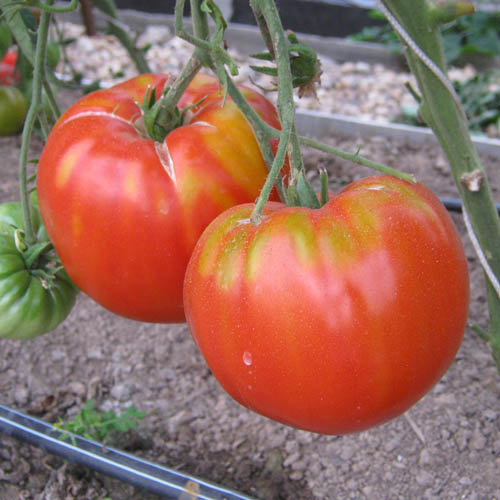
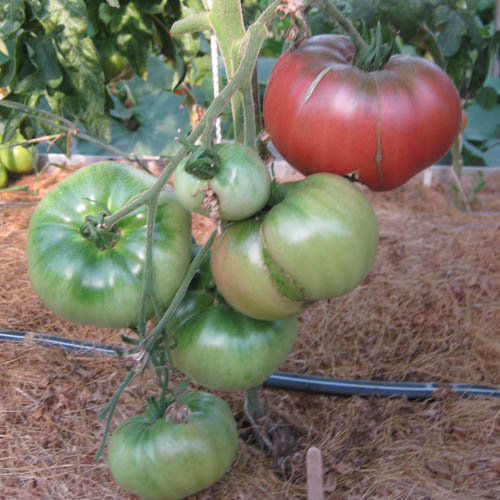
RAF is famous as one of the most expensive tomatoes in Spain, and it looks unusual. The fruits are sold with green shoulders, sometimes looking completely green. They sit on market stalls like ruffled emerald blossoms with deep, pronounced ribs. To our eyes, they look unripe, but that color is deceptive. RAF ripens from the inside out.
The ultimate flavor stage is when the exterior skin is still dark green with just a soft rose flush showing through the bottom. At that stage, the flesh is dense, aromatic, juicy, and packed with tiny seeds. That is when high-end restaurants buy them by the crate. Top European chefs feature them prominently; in fact, whole new menu items like “Gazpacho RAF” were created around this cultivar. Though the absolute best way to eat it is raw, sliced into thick wedges with flaky sea salt and good virgin olive oil.
Turns out RAF is a stabilized selection out of Marmande. Decades of selective breeding created a true open-pollinated variety on the coastal farms of Almería.
It thrives in Southern Spain on dry, poor, saline soils. Low humidity and lean soil are precisely what makes RAF tick. Even more fascinating: it is tailor-made for unheated winter greenhouses. The best flavor and texture come from fruit grown between November and May under cool temperatures running 41 to 68°F (5-20°C) with low winter sun. In upscale Spanish restaurants, fresh RAF can fetch up to 15 euros per kilo, comparable to fine Iberian ham!
forzicia wrote: All of them are running about 16 to 20 inches (40-50 cm) tall. No idea what they look like in their native habitat, but these photos are from June 30. We shall observe!
I am growing it this season as well. Mine look virtually identical. Practically every other variety in my greenhouse has already blushed red or yellow, but this one and my Uzbek variety are stubbornly holding green.
forzicia wrote: The acronym RAF stands for Resistente A Fusarium…
Yes, I read that text over the winter. Still doesn’t quite explain why breeders slap the RAF label onto non-Marmande varieties though.
Finally harvested my very first ripe RAF! 🙂
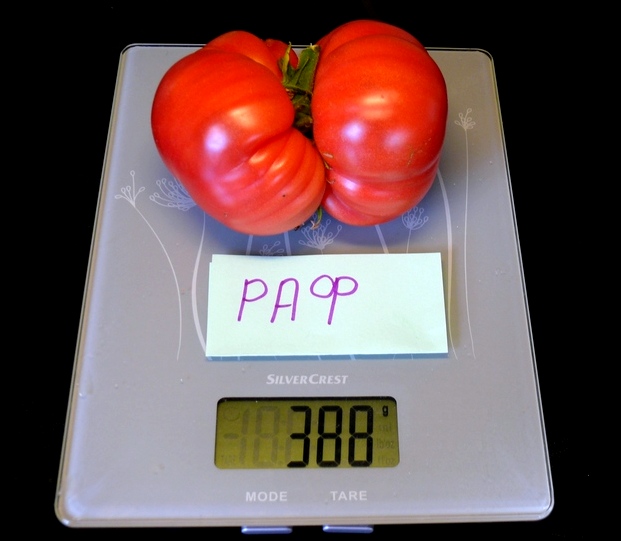
Here is the cross-section. A bit irregular with some internal core tissue because it was a fused double fruit from that first fasciated bloom. Flavor was very pleasant: rich, delicious, with a light tangy kick.
Breeding History: Clause 27, Spanish Terroir, and Summer vs. Winter Brix
A grower from Spain explains: In the 1960s, coastal Almería was hammered by Fusarium wilt outbreaks that devastated regional mainstays like Muchamiel. French seed company Clause stepped in and crossed “Marmande Clause 27” with a Fusarium-resistant breeding line, creating the original RAF.
Almería provided the perfect conditions for continued selection. RAF thrived in their mild winter climate, developing exceptional sugars because the fruit matures at a slow crawl over many weeks. That specific weather happens in Almería between late autumn and early spring. When grown during hot summer months, RAF turns bland and ordinary because fast-maturing fruit cannot concentrate those complex sugars.
Later commercial releases from Clause, like hybrids Delizia F1 and Conquista F1, frequently carry the “RAF” label because they share that same winter-market Marmande genetic background.
Another grower from Switzerland notes that RAF performs best in partial shade. He only saves seeds from store-bought fruit purchased between December and March when genuine winter-grown RAF is on supermarket shelves. Fruits sold under the RAF name during summer are usually different varieties altogether.
Edited March 10, 2015 by Aleksander
Sweet wrote: Vera, Rufa is almost certainly an old family heirloom that came from Polina in Bor.
Yes, that came from Polina. If it is an old family heirloom, definitely not the Spanish RAF.
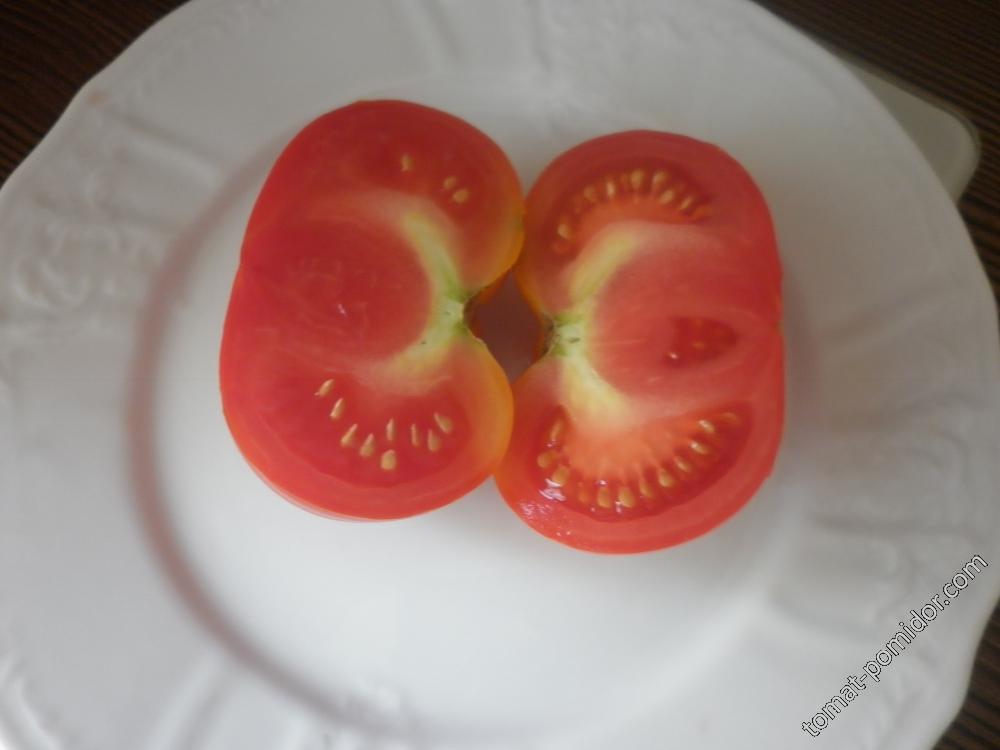
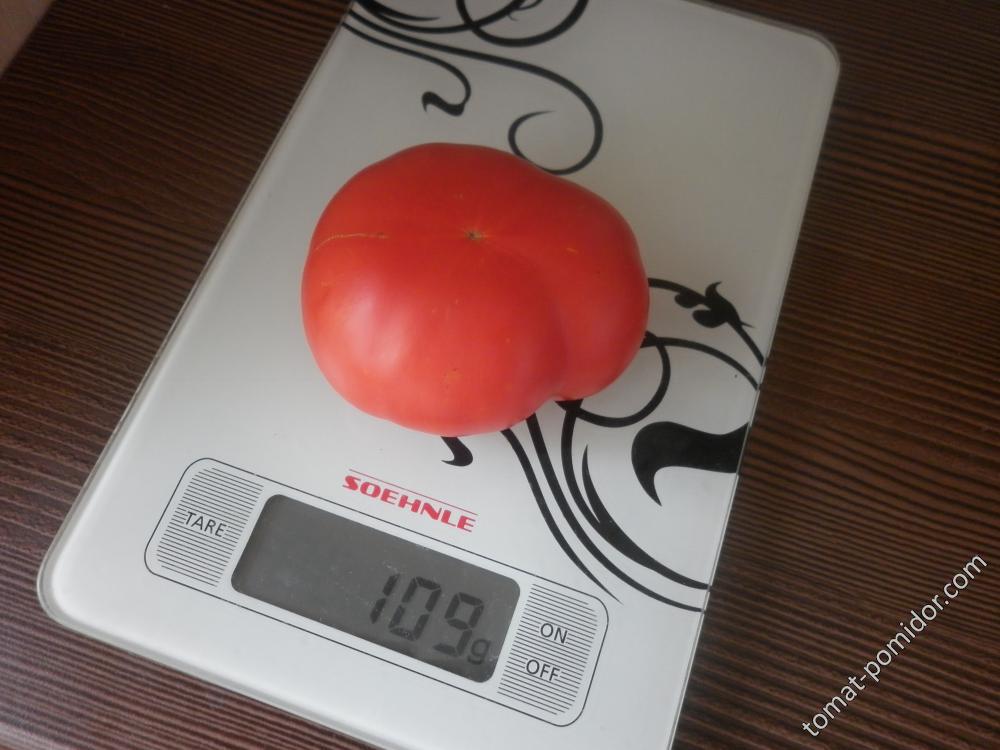
Sown March 19, planted out May 11 outdoors under a rain cover. Plant grew to 3.5 ft (1.1 m) tall, trained to four stems. Total yield was 10 lbs (4.6 kg). Average fruit weight was 3 oz (82 g), with the largest hitting 7 oz (192 g).
Flavor turned out like a standard sweet-tart tomato, definitely leaning toward the tangy side.
In plant habit and yield, it mirrors Marmande very closely (also grown from Galina’s seeds), though Marmande was slightly larger with even deeper shoulder ribbing.Edited November 25, 2018 by grawicapa
Aleksander wrote: Later commercial releases from Clause, like hybrids Delizia and Conquista, frequently carry the RAF label…
Clause continues to breed new sweet winter market varieties off this lineage, keeping that classic green-shouldered look alive for premium commercial growers.
Full Summary: Plant, Yield, Taste and Climate Dynamics
- 🌿 Plant Architecture: Semi-determinate to compact indeterminate vine reaching 3.5 ft (1.1 m) in open ground and higher under glass. Exhibits dark, stout foliage with stocky early growth (16-20 inches / 40-50 cm) and strong resistance to Fusarium wilt.
- ⚖️ Fruit Size & Shape: Deeply ribbed, fluted oblate beefsteak with dark green shoulders. Weight runs 3 to 7 oz (80-200 g) on multi-stemmed plants. Flesh is dense, meaty, and notably low in seeds.
- 👅 Flavor & Terroir Reality: When grown in standard temperate summer conditions, RAF behaves like an old-fashioned sweet-tart Marmande. The intense gourmet sweetness associated with Spanish market RAF is a product of Almería’s specific winter microclimate: slow growth under cool temperatures (41-68°F / 5-20°C) combined with high electrical conductivity (saline) water stress.
- 📈 Productivity: Highly productive workhorse, yielding up to 10 lbs (4.6 kg) per plant under outdoor rain shelters in short-season Zone 4 gardens.
- 🌎 Reviewed In: Moscow Region, Samara, Ivanovo, Siberia, and Spain (USDA Zones 3 to 5).
• Breeding Lineage: RAF (Resistente A Fusarium) was developed in the 1960s by the French seed company Clause by crossing Marmande Clause 27 with Fusarium-resistant material to save tomato crops in southern Spain.
• The Saline Water Secret: In the Vega de Almería and Cabo de Gata regions, farmers irrigate RAF with brackish well water high in sodium and magnesium chlorides (high EC – electrical conductivity). The resulting osmotic stress forces the plant to pump sugars (hexoses) and organic acids into the fruit to prevent dehydration. Combined with slow, 60-day winter ripening, this creates the signature sweet-savory umami crunch. When grown in regular sweet garden soil with standard rainfall, the plant loses that osmotic pressure, producing a good, but standard, tangy Marmande slicer.