Growers’ Notes and Photos (USDA Zones 4, 6 & 8 Experience)
Red Pear Franchi.
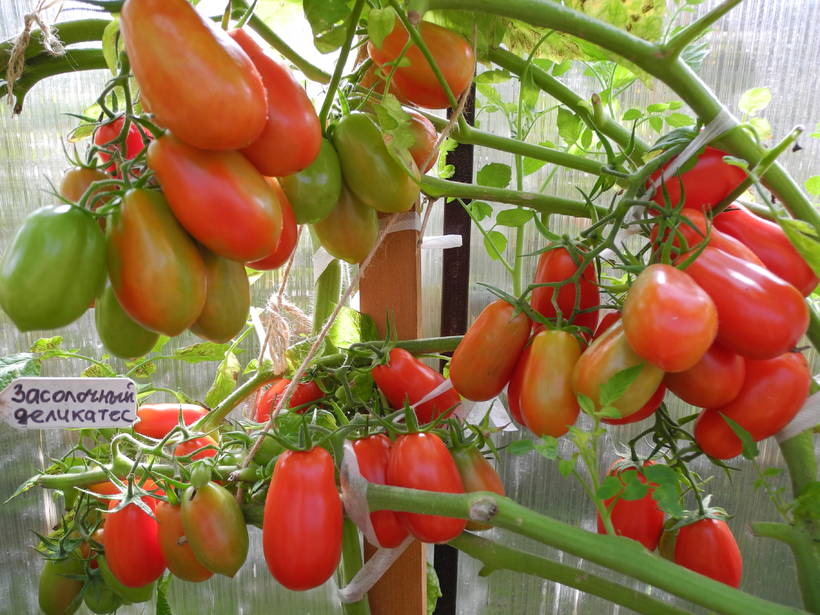
Could not find this remarkable variety in our forum directory! Grew it in the greenhouse: vigorous, tall indeterminate vine. The fruits are bright red, lightly ribbed pouches weighing 7 to 9 oz (200-250 g), solid meat inside, and sweet. Production was outstanding 👍
Edited January 4, 2017 by Drosera
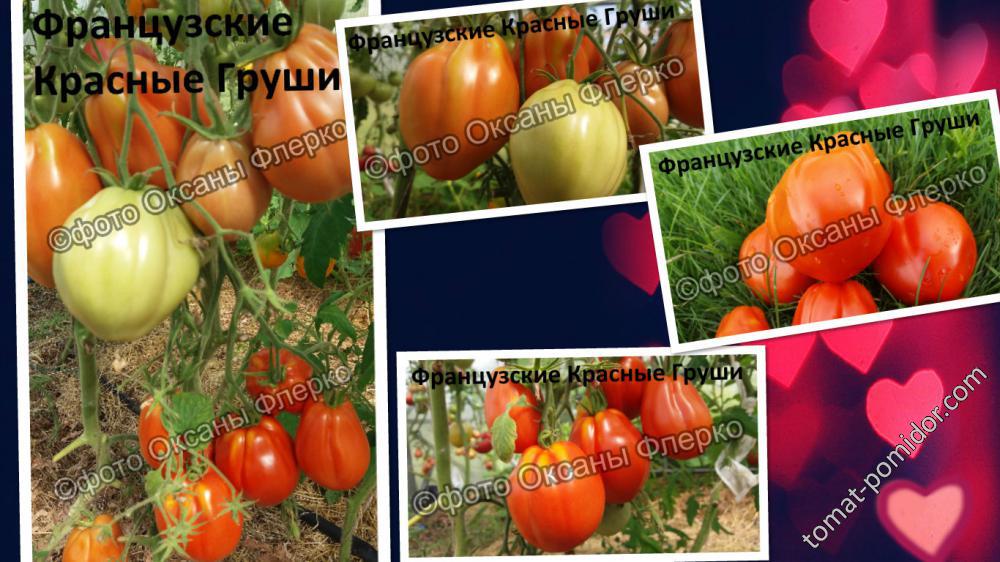
Oksana, that variety is Red Pear Franchi. “Franchi” refers directly to Franchi Sementi, the historic Italian seed house.
Sloppy translators frequently butcher this as “Red Pear of the Franks,” which is completely absurd. Sadly, the variety circulates under that butchered alias, and now under a couple other variations.
This has been my primary garden workhorse for several years now. Incredibly productive, phenomenal in fresh summer salads, and unmatched for canning whole in its own juice.
Yes, Alexander, you are spot on, that is definitely the true variety. Glad the moderators cleaned up the thread title 💐
On 1/4/2017 at 1:12 PM, Aleksander said:
Franchi refers directly to Franchi Sementi, the Italian seed house. Sloppy translators frequently butcher this as “Red Pear of the Franks”…
Alexander, thank you! That translation blunder has grated on my nerves for ages. In European garden centers, original Franchi seed packets are everywhere on the racks. Then growers stumble across homemade mistranslations on regional forums, scratching their heads wondering: “Is this a brand new discovery, or an identical duplicate?”
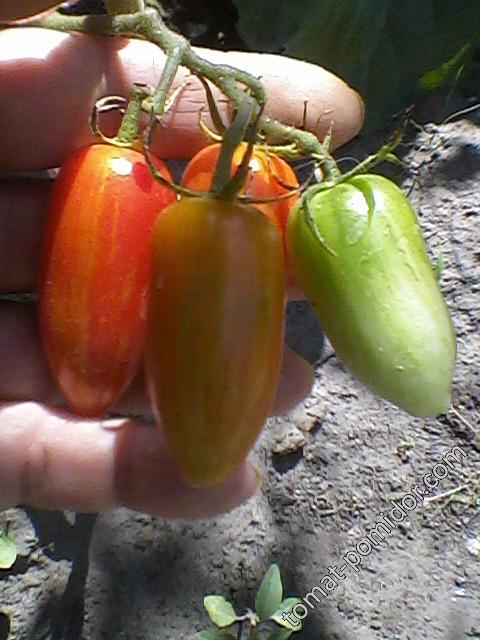
Spot the difference! A single tomato of this variety was handed to us by the owner of a local nursery, given to him by a friend from Italy under the folk name “Bull’s Blood.”
Fruits have no narrow neck, blunt bottoms, deep red, with solid flavor (rated a solid 4 out of 5). Exactly what Italians love for rich, thick tomato paste.
The yield is jaw-dropping: tested two seasons running, both under greenhouse plastic and out in the dirt garden beds, pulling up to 22 lbs (10 kg) per vine, well over a full five-gallon bucket! Flavor ranks just behind my top dessert slicers, simply because the vine is so overloaded with heavy fruit that nutrients get divided among dozens of tomatoes without specialized feeding.
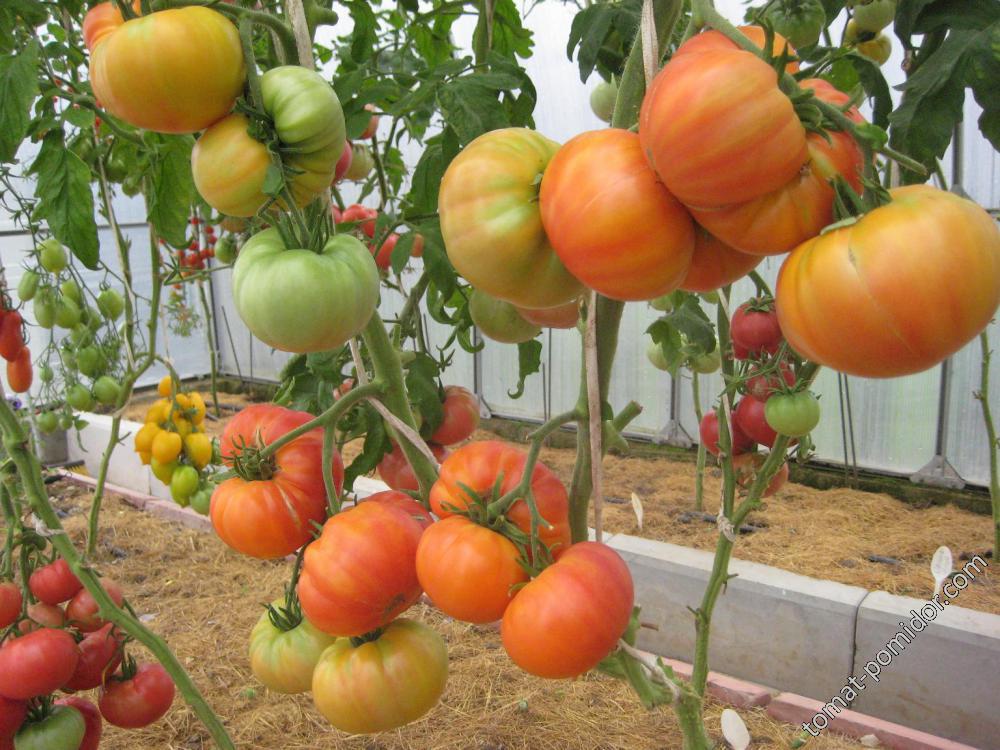
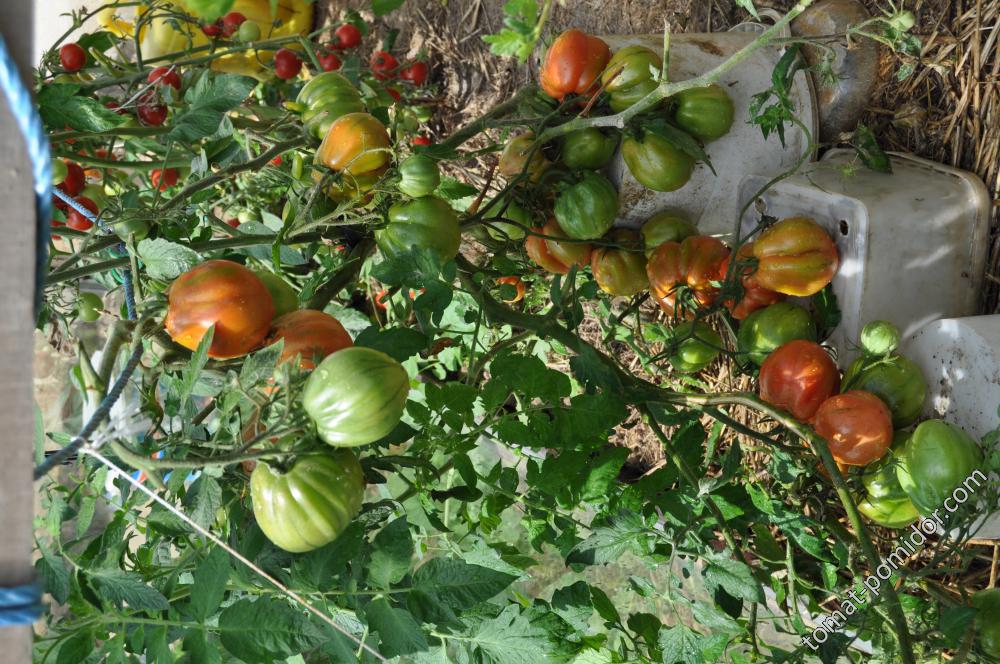
Under our tunnel plastic, it hit the roof at 4 ft (1.2 m), bent over, and threw an explosion of productive lateral suckers. In the photo, the entire vine could not even fit in the frame. The weight of ripening fruit trusses had to be supported on three overturned buckets. How many identical twins of this exact landrace exist across Italy under different town names on every single island?
On 1/4/2017 at 3:15 PM, Rodebielesumer said:
How many identical twins of this exact landrace exist across Italy under different town names on every single island?
Dozens! In practically every small Italian town. It represents a universal Mediterranean tomato type. On roadside market stalls and Italian grocery shelves, it is almost universally labeled *Cuore di Bue* (Oxheart), even though genuine botanical oxhearts in our understanding are heart-shaped or pointed cones (which Franchi also sells).
In my own seed collection, an identical pleated strain is labeled *Costoluto Rosetano*. My daughter bought the original tomato at a local farmers market in the town of Roseto, so that is what we named it, much shorter than “Oxheart from Roseto.”
In 2016, I grew Red Pear Franchi (listed as Canadian source) and Corazon de Buey (listed as Spanish source) right next to each other.
The resemblance was astonishing: zero meaningful differences in fruit shape, vine architecture, or flavor. Both came from collector V. Redko. Both blew me away with their yield and rich taste, so I will just keep one of the two lines going. In the foreground are the Franchi Red Pears trained to two stems; in the back of the high tunnel is Corazon de Buey. The Spanish line ripened just a few days earlier.
Edited January 3, 2017 by Kirina
On 1/4/2017 at 4:12 PM, Kirina said:
In 2016, Red Pear Franchi (Canada) and Corazon de Buey (Spain) grew side by side…
Irina, that points right to a classic headache with commercial seed collectors: putting the country where they traded for the seed packet in parentheses!
The tomato itself is pure Mediterranean, Italian, Spanish, and Portuguese heritage! There are so many absurd catalog listings like that. Is it really that difficult to look up a variety’s genuine origins online? Instead of claiming a Mediterranean heirloom is from Canada, just state: “Acquired from a collector in Canada.”
Alexander, does that mean we have to fact-check every single variety listing from our boutique seed vendors? It is a bit disheartening; you would assume a dedicated “heirloom collector” status implies a more rigorous standard.
Seen that constantly: varieties that are textbook Italian landraces listed as originating in the USA simply because seeds were ordered from a US vendor!
On 1/4/2017 at 4:48 PM, Kirina said:
…you would assume a dedicated “heirloom collector” status implies a more rigorous standard.
Maybe not every vendor, but far too many commercial sellers trust automated translation tools blindly and show zero critical thinking toward variety history. T. Kushnareva has written extensive warnings on this exact issue.
Loved this one: high sweetness, meaty texture, and outstanding yield.


Alexander, does this variety match up with the one sold as “Best Bestos”?
Looking at Ilya’s photos in our catalog, it looks identical. Looking at photos on other gardening websites, not quite as clear.
My suspicion is that name was coined by Bulgarian seed sellers. The name itself is not Bulgarian. In English, you can only translate the first word (“best”); the second word is nonsensical, likely a garbled typo of an original regional name. You only ever find that name circulating in Eastern European listings claiming it is a Bulgarian heirloom, Western databases have zero record of it.
On 2/26/2018 at 4:42 PM, Lyusya said:
Alexander, does this variety match up with the one sold as “Best Bestos”?
Now, years later after trialing “Best Bestos” multiple seasons in my own garden, I can say definitively: there is zero difference between them. It is the exact same tomato.
Full Summary: Red Pear Franchi Growth, Yield & Culinary Value
- 🌿 Plant & Growth Habit: Vigorous indeterminate vine with robust branching. Tends to push strong lateral suckers that set heavy trusses. Highly responsive to double-leader training in both high tunnels and open ground.
- 🍅 Fruit Morphology: Distinctive pleated, pouch-shaped (piriform/purse) red fruits weighing 7 to 9 oz (200-250 g) with dense, multi-locular walls and minimal watery gel.
- 📈 Yield Potential: Massive producer. Elena (Zone 8) reported verified harvests exceeding 22 lbs (10 kg) per vine. Heavy trusses require substantial staking to prevent stems from kinking under fruit weight.
- 🍝 Kitchen Uses: Classic multipurpose Mediterranean heirloom: sweet, dense, and low-acid enough for fresh slicing, but high in dry matter and pectin, making it an elite selection for whole-pack canning in its own juice and thick marinara paste.
- 🔍 Known Aliases & Duplicates: Distributed internationally under commercial and folk aliases including Pera d’Abruzzo, Corazon de Buey (Spanish selection), Costoluto Rosetano, Bull’s Blood, and the Bulgarian catalog alias Best Bestos.
Red Pear Franchi is a commercial heirloom selection maintained by Franchi Sementi (established in 1783 in Bergamo, Italy, the oldest family-owned seed company in the world). Botanically, this is the traditional Pera d’Abruzzo landrace native to the Abruzzo region along the Adriatic coast. In Italian markets, pleated pyriform varieties are frequently colloquially termed Cuore di Bue alongside true oxhearts. Alexander’s critique highlights an endemic issue in heirloom seed circles: when commercial collectors buy Italian seed packets from distributors in Canada or the US, they frequently misattribute the provenance as North American or coin regional aliases like Best Bestos.