Growers’ Notes and Photos (USDA Zones 4-8 Experience)
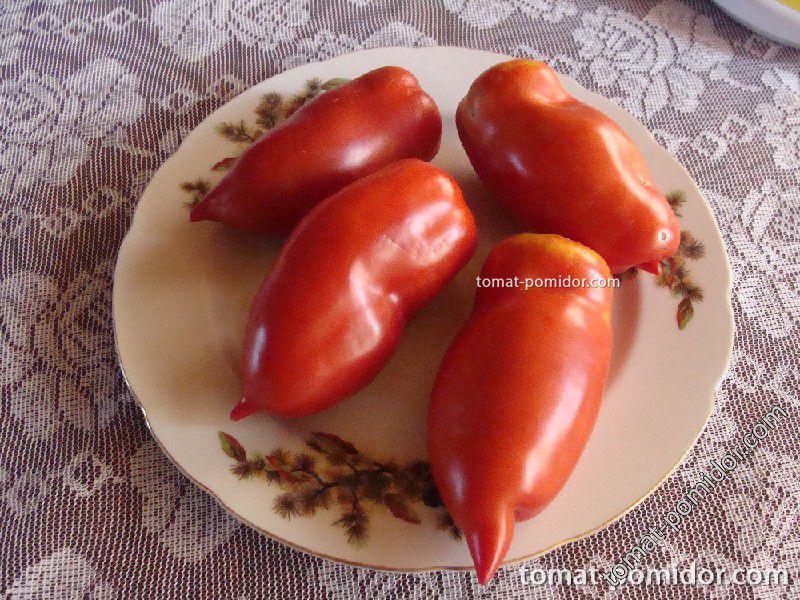
On the left is the Spanish seed line, on the right is the strain from V. Redko. They were visibly different even in the seedling flats: the Spanish line had light-green leaves, while Redko’s foliage was dark green. The Spanish vine was more slender, and its fruits were flatter with less shoulder ribbing.
Visually the shapes differed, but the flavor on both struck me as fairly plain and basic. Both lines turned out quite seedy.
Both strains are indeterminate, mid-season leaning early. The Spanish line ripened earlier. Good overall productivity.


Strain Comparisons and Northern Acclimation
Another absolute favorite Spanish beauty of mine. I trialed seeds from three separate sources: Belgium, Spain, and V. Redko. All three sources yielded identical tomatoes for me.
Here is a translated blurb from one of the Belgian seed merchants, which matched my harvest to a tee:
“An heirloom from the village of Barbastro in Huesca province, Spain. Considered by experts to be one of the finest tomatoes in the world. Round beefsteak fruits running 11 to 18 oz (300-500 g), slightly flattened at the poles with subtle ribs over curved shoulders. Pink skin with green shoulders that fade only at complete ripeness. Tender skin, firm pink flesh, very low seed count, and rich in antioxidants. Superb flavor with remarkably low acidity. Broad, vigorous vegetative growth with dense regular foliage. Indeterminate. Heavy late-season production with excellent size uniformity.”
In my garden, it leaned late-season. The vine was enormous and thick-stemmed, built almost like a small tree. The fruits are gorgeous pink beefsteaks with green shoulders that completely vanish once fully ripe. Slightly oblate with faint ribbing. Every fruit was huge and uniform, weighing between 18 and 25 oz (500-700 g), averaging 2 whoppers per cluster.
I ran all vines with 3 to 4 leaders, and every single fruit managed to ripen right on the vine. Dense meat, very few seeds. The flavor was smooth, sweet, and dessert-quality. You can spot this variety from across the garden, it is unmistakable. Definitely putting it in my permanent lineup.
Edited February 28, 2018 by Sofia 27


Sonechka, thank you so much for sharing this variety! Looking at your slice, it truly is meat-heavy with few seeds 😋 I have seeds started this season from two sources: Sonya and Tamara Proskurnya from Ukraine, who sent it to me with rave reviews and labeled it an absolute personal favorite!
The Great Flavor and Seed Count Debate
Dense meat, very few seeds. The flavor was smooth, sweet, and dessert-quality. You can spot this variety from across the garden, it is unmistakable. Definitely putting it in my permanent lineup.
Sonechka, what exactly do you mean by “smooth, dessert-quality”? Are we talking a solid 5 out of 5 with prominent sweetness? Because in my dirt, the highest rating I could give it was a 4.
Experienced growers say that during the second year of growing them in our northern climate, Spanish heirlooms start ripening noticeably earlier. It will be interesting to see how it performs for you as a repeat trial in 2018, please share your results in the fall!
I don’t plan on repeating this specific one, but I have another Spanish beauty that was delicious but extremely late in 2017. I’m planting it again to see if year-two saved seed acclimates and matures faster.
I completely agree on fruit quality: very uniform, the skin is tender yet does not tear or crack, making it a great candidate for market tables and road stands.
Mine had the exact same interior structure as yours: lots of small seed locules with 10 to 15 seeds tucked into each pocket. In my book, that qualifies as a seedy tomato!
Heavyweight Giants in Cold Northern Zones
Gorgeous glossy pink fruits with a rich, classic old-time tomato flavor. Productivity was exceptional, the single largest tomato out of my entire garden this season came off this vine! Seeds came from Sofia, huge thanks Sonechka!


Delicious variety! Grew mine in the greenhouse, ended up mid-late season because of our freezing cold spring.
Full Summary: Plant, Yield, Taste and Storage
- 🌿 Plant & Vigor: Extremely vigorous indeterminate vine with thick, sturdy main stems capable of supporting heavy multi-leader pruning (3 to 4 stems). Reaches 6.5 ft (2 m) easily in high tunnels. Typically mid-late to late in short northern seasons, though growers report improved earliness when saving seed locally.
- 📈 Yield & Colossal Weights: Exceptional producer of trophy beefsteaks. Individual fruits regularly clock in between 18 and 25 oz (500-700 g), frequently producing the heaviest fruit in northern home gardens. Trusses average 2 massive fruits each.
- 🚚 Skin & Market Durability: Despite having a delicate, melt-in-your-mouth eating quality, the skin exhibits high structural elasticity that resists cracking and handles transport remarkably well compared to delicate heirlooms like Brandywine.
- 👅 Flavor Profile: Very low acidity with a smooth, sweet, traditional old-world finish. Green shoulders are prominent during fruit development but color up to a warm pink at peak maturity. Seed counts vary by grower perspective: locules are numerous but small and meat-dominated.
- 🌎 Who Reviewed It: Grown in cool northern Russian zones (Kostroma and Nizhny Novgorod, USDA Zone 4) and southern warm climates (Pyatigorsk, USDA Zone 7/8).
Geographic Heritage: Tomate Rosa de Barbastro originates from the Somontano region in the foothills of the Pyrenees (Huesca, Aragon, Spain), where it holds protected national quality status. It is legendary across Spain for its pale pink skin, low seed jelly, and sweet, non-acidic finish.
Northern Epigenetics: Elena and Sofia touch on a popular heirloom theory: Mediterranean landraces, adapted to long hot summers, often perform late and vegetative in their first season in northern latitudes (USDA Zones 3-5). Saving seed from the earliest ripened crown fruits helps select for northern epigenetic adaptation, frequently shortening maturity dates by 7 to 10 days in subsequent generations.