📌 Thread Summary: Seed Potato Curing & Preparation
- Topic: A detailed discussion on the best practices for harvesting, curing, and chitting (pre-sprouting) seed potatoes to ensure maximum yield and safe winter storage.
- Curing & Storage (The Quarantine Phase): Never put freshly dug potatoes straight into a root cellar. Cure them in a dry, ventilated space (like a barn or empty greenhouse) for a couple of weeks to allow skins to toughen and any hidden rot to reveal itself. Cover them with breathable fabric to prevent solanine buildup (greening) during this phase. Do not load the cellar until the ambient temperature drops to 7–8°C (45–46°F).
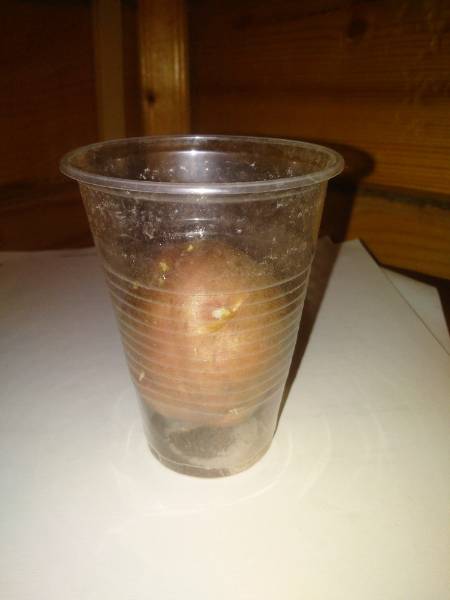
- Chitting / Sprouting Seed Potatoes: Bring seed tubers out of storage about a month before planting. Sprout them in a cool place so the sprouts remain short and stubby (5–10 mm / 0.2–0.4 inches). Long, overgrown sprouts often die off after planting, forcing the tuber to expend energy growing a new sprout, which significantly delays emergence and reduces yield.
- Maturity & Skin Toughening: Count potato maturity from the flowering stage (usually requiring 45-50 days post-bloom). To ensure tubers are fully mature and will store well, mow the tops (vines) 7–10 days before digging.
Morning is truly good today, the sun is shining bright. Finished cutting the tops off the taters, gonna put my contraption away in storage, clear out some of the plants in the greenhouse, and prep a spot in there for curing the potatoes. Ain’t got room anywhere else.
The days are getting noticeably shorter (~13.5 hours of daylight left), so I gotta get things done while the sun is up, plus it gets mighty chilly by the evening.
So, things are moving along slowly but surely.
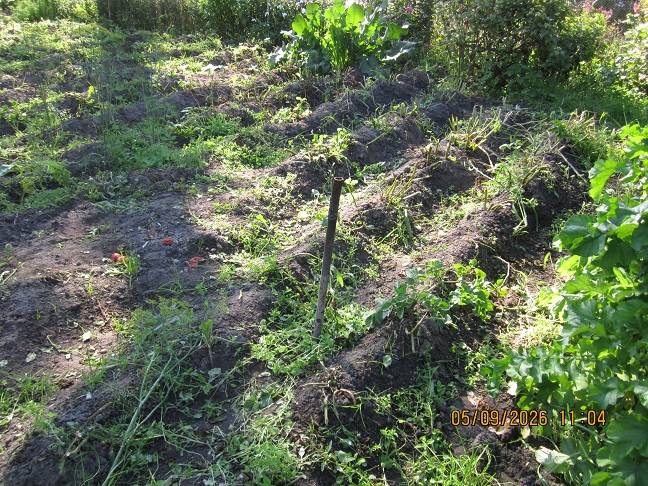
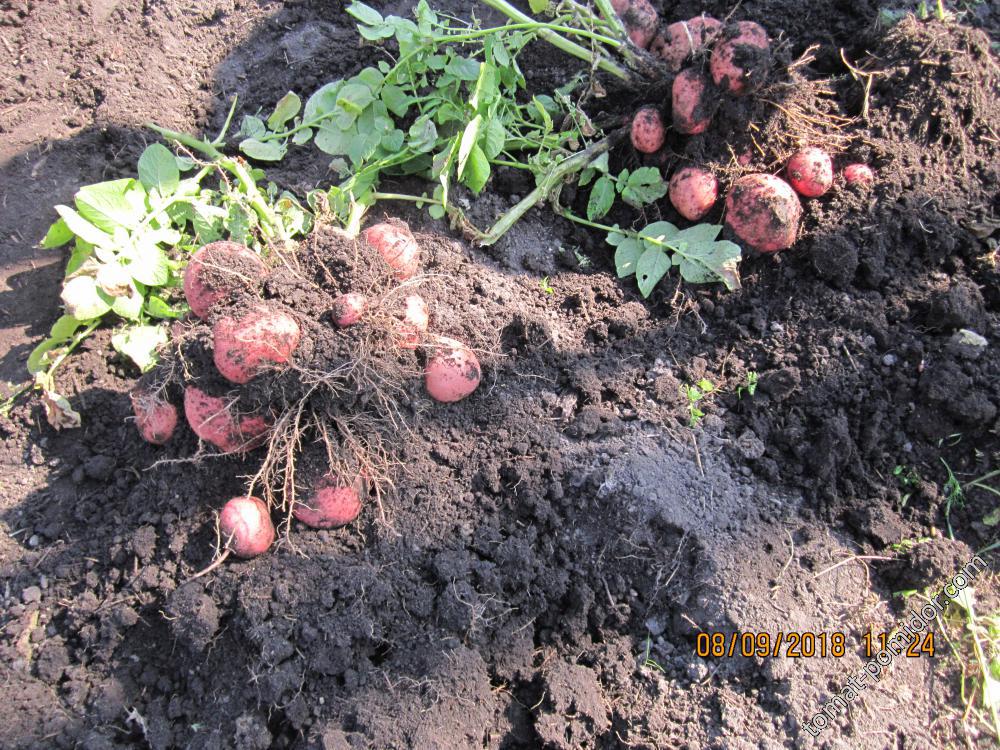
First batch of spuds dug up, mostly for the seed stock… Later I’ll dig up a bit for eating and the small ones (that patch got trampled during a fire we had. Whatever is there is there… we’ll just buy some in the village if need be).
===
Got everything prepped in the storage shed, bored out a pulley on the lathe for the table saw. That’s about all I got done today—I’m already beat. Can’t work long hours anymore, I get tired. I need to get the spuds covered up in the greenhouse so they don’t turn green in the light.
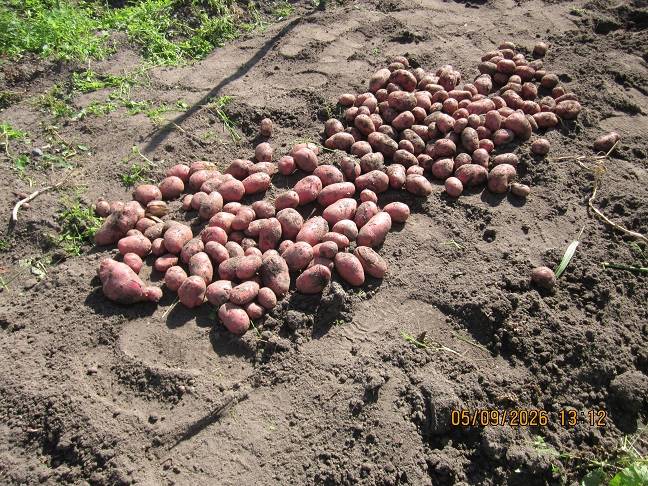
On 9/5/2026 at 09:19, MADanilich said:
First batch of spuds dug up, mostly for the seed stock… I need to get the spuds covered up in the greenhouse so they don’t turn green in the light.
Good afternoon, friends!
Andrey, why cover them up if they are your seed stock? I actually green my seed potatoes on purpose, they don’t rot later on.
On 9/5/2026 at 15:16, Nata N. New said:
Andrey, why cover them up if they are your seed stock? I actually green my seed potatoes on purpose, they don’t rot later on.
Natasha, Andrey is just planning to keep all the potatoes in the greenhouse for the quarantine/curing phase. We do the same thing when we dig potatoes, especially out in the country when there’s a lot of them—we don’t put them straight into the bins. First, they lay in the barn for a few weeks to dry, and if any have rot, it will show up. Only after that do we sort them and move them into the root cellar. And while they are on the barn floor, we cover them with all sorts of rags so they can breathe, but not turn green!
On 9/5/2026 at 15:16, Nata N. New said:
Andrey, why cover them up if they are your seed stock? I actually green my seed potatoes on purpose, they don’t rot later on.
The thing is, Natasha, while they are in quarantine (curing) in a bulk pile, they need to be covered during the day so solanine doesn’t build up. You can green them later, and even then, not too much. White-skinned potatoes take to greening easily, but the “red” tubers need to be greened less (or it takes much longer). Plus, they store just fine on their own if the tubers were properly “ripe” when dug.
===
“…I actually green my seed potatoes on purpose, they don’t rot later on…”
Now that is highly debatable. Tubers rot for a whole bunch of reasons. The main ones being:
– Unripe potatoes
– Improper storage (wrong microclimate in the cellar)
You also gotta remember that smaller tubers store much better than large ones. Big tubers have more moisture and starch + a lot of trace elements, which means you have to be much stricter with storage conditions.
On 9/5/2026 at 16:32, Ninulia said:
……First, they lay in the barn for a few weeks to dry, and if any have rot, it will show up…….
Absolutely spot on! 👍 Curing them for a couple of weeks is plenty. When I lived out in the country, we wouldn’t load the root cellar until the temperature down there dropped to +7 or +8°C (45-46°F), and eeeeeven then, we left the cellar hatch cracked open until it cooled down further to +5-6°C (41-43°F).
Usually, before loading, the cellar hatch is left open for a while anyway, because you typically want to dry the cellar out before autumn sets in to bring the humidity down.
On 9/5/2026 at 15:16, Nata N. New said:
why cover them up if they are your seed stock? I actually green my seed potatoes on purpose, they don’t rot later on.
Hello! We used to green ours right away too. But in our climate, you just can’t guess—you select the tubers for planting, and by spring the sprouts turn out all thin and spindly because of the heat. So we stopped greening them and now we just select our seed stock in the winter based on how the sprouts look…
👋
Looking at the averages: A DRAWN-OUT spring, a dry and HOT summer, a LONG fall, and an Indian summer that can hit either in early September or October, with daytime temps reaching +25-28°C (77-82°F) like we have right now this year… According to the old-timers’ lore and meteorological averages—these are all SIGNS OF A HARSH WINTER. At least, that observation holds true for Western Siberia.
We shall live and see. 💃 📝
A big HOWDY to everyone! 👋
Howdy everyone.
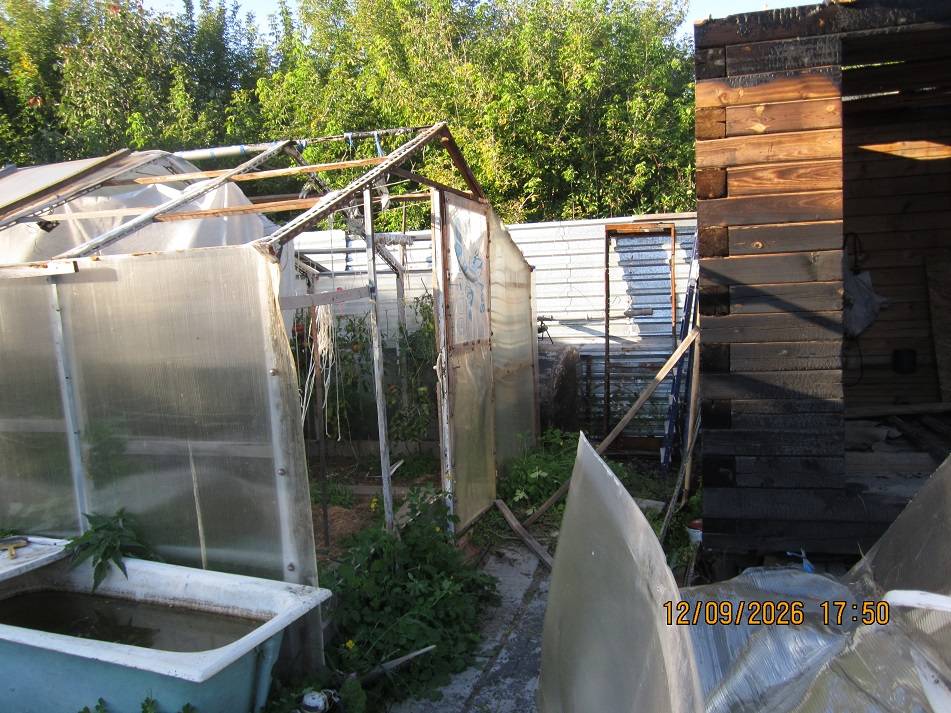
Spent almost the whole day messing with the greenhouse. Finally removed the melted polycarbonate sheet from the roof, cleaned up the frame to mount the new sheet (don’t have the new one yet though). Cut a proper piece for the door—needs replacing too, the old one blistered up and got brittle. Saved that chore for tomorrow. It’s a scorcher today, out in the direct sun it’s easily +30°C (86°F). 🤦♂️ Barely any breeze. I feel like I spent the day in a sauna, that’s enough work for one day. Now I gotta figure out the lumber and the 6mm poly sheets. I’ll slowly rebuild it… tomorrow I’ll tackle the door (the vent and the bottom of the door need new poly).
Andrey, good day to you!
How are things?
Good day to everyone who was worrying that Andrey went missing. He didn’t get sick, he’s just been running around town hunting down polycarbonate for his greenhouse, he’s very busy and getting really tired.
Morning, though not exactly a good one. Real autumn has arrived, it’s been drizzling almost all night and it’s chilly. I was in town yesterday buying some odds and ends… funny thing is, the sun was shining in the city, but at our place (in the northern part of town) a good rain came through and turned into a drizzle. There was a brief break in the weather, so I managed to fix the greenhouse vent, but then the drizzle started up again so I had to pack it in. It’s still coming down, and it’s almost 11 AM.
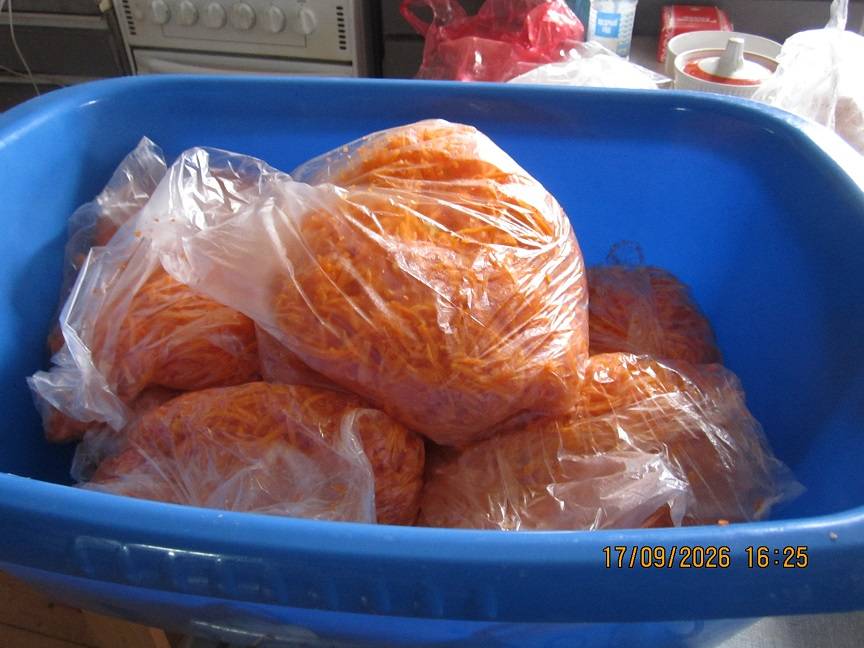
I reckon I’ll tackle the carrots today. Harvest them, wash ’em, peel ’em, shred ’em, and freeze ’em in bags.
Lots of little chores to do. Gotta roll up the hoses, drain the water lines in the summer kitchen… just a ton of chores, keeps you running in circles.
On 9/5/2026 at 19:54, Serebryanka said:
you select the tubers for planting, and by spring the sprouts turn out all thin and spindly because of the heat. So we stopped greening them and now we just select our seed stock in the winter based on how the sprouts look…
See, Lyudochka, I can’t entirely agree with you there either. The “vigor” of the sprouts depends strictly on the VARIETY + the size of the seed tuber + How ripe the seed tuber was when dug!!?!
Then, prepping them for planting is also a huge factor.
Take me for example. We used to pull the seed potatoes out of the cellar in late April (after the 25th) and let them chit (sprout) in a cool place, so that right before planting, the sprouts were no longer than 5-10 mm (0.2-0.4 in). Sprouts like that usually establish a strong root system at the base and push up vigorous foliage when they emerge.
The bigger the sprouts get during chitting, the weaker they become. AND… the root system dies off more because it’s not getting nutrients from the soil. So later on, it has to form a whole new root system directly from the SPROUT (once planted in the dirt). Yes, roots form from the sprout, alternating with stolons (the root-shoots where the new tubers form).
This leads to delayed emergence. You’d think big sprouts equal fast growth, but they actually emerge a bit later, unevenly, and aren’t nearly as robust as you’d hope. 📝
Another thing. If the sprouts get WAAAAY too big, there’s a high chance they will die off completely, and a new sprout will have to form in its place—resulting in the exact same thing: delayed emergence and yield loss.
So the preparation phase is REALLY important. Sometimes it’s hard to guess the right timing to bring seed out in the spring, but… in this case, it’s better for the sprouts to be SMALLER rather than overgrown. Especially if a drawn-out spring is in the forecast.
===
At one point I wanted to buy a potato planter attachment for my tractor, but then I thought about it—if you plant with a machine, there is zero point in sprouting them beforehand, because even small sprouts just snap off in the hopper. That ALSO delays emergence, which, in our climate that’s practically equivalent to the Far North, ain’t exactly a successful strategy.
A couple more words on potatoes. A lot of folks say potatoes need 90-100 days to fully mature. How does that work?
I mean, for the vast majority of varieties, that’s true, but!!!! From what starting point are we counting? From planting… or from emergence?!
If you listen to agronomists, it’s best to count from the flowering stage. At least 45-50 days should pass from flowering until full maturity, and even THAT isn’t a guarantee.
To be absolutely sure they are fully mature (if you don’t know the exact variety), they recommend mowing down the tops 7-10 days before you start harvesting.
What does that do? It “ages” the tubers (toughens up the skin). The tubers store much better, even the big ones, because it reduces their excess moisture content.
Good day, Andrey!
Let’s look at potatoes using tomatoes as an analogy.
Capitalist marketers count the days to maturity from the day you transplant seedlings outside—it gives them nice, pretty, low numbers to print on the packet.
Some hobbyists count the days from when the sprouts first emerge, though thankfully there aren’t too many of those.
The vast majority count the days to maturity from the day the seeds are sown. Normal seeds pop up in 4-5 days, and if they take longer because they’re old or for other reasons, well, that delay just gets deducted from their “earliness” rating.
5 hours ago, Fenix said:
Good day, Andrey! Let’s look at potatoes using tomatoes as an analogy… Capitalist marketers count the days to maturity from the day you transplant seedlings outside…
Good day, Pavel. 👋 I personally wouldn’t compare potatoes to tomatoes, even as an analogy. Tomatoes have a long fruiting and ripening period. We’re talking about INDETS here, and timeframe-wise… alas… these two “fruits” just don’t align. The only similarity is that the start of the first tomato ripening is counted from planting (sowing) or from potting up. I personally count the days from potting up. It’s more realistic, since you’ve done artificial selection and created the real conditions for their final growth in the permanent beds.
The only real thing they have “in common” is TOPPING (pinching out the growing tips). To get 100% ripening on tomatoes, we do a partial topping, and later a “hard” topping.
That forces almost all the tomatoes on the vine to ripen without losing quality.
Whereas with potatoes, folks don’t even start digging for “new potatoes” until after they flower (around Elijah’s Day, after August 2nd).
===
Just managed to dig up half the carrots, and the drizzle started up again. Barely had time to give them a rough wash out in the rain. Now I’ll wash them properly inside the house, peel them, and process them. At least I got work to do, so that’s something.
4 hours ago, MADanilich said:
I personally wouldn’t compare potatoes to tomatoes, even as an analogy
Andrey, I just meant it as a joke about how we arbitrarily measure their age in “dog years” 😁
Well, the sun actually peeked out in the afternoon, but I stuck to the plan. Dug up a bucket of carrots, washed ’em, peeled ’em, and shredded ’em.
Just gotta wash the tools now. Put them in the chest freezer. I was gonna vacuum seal them, but then I thought—is it WORTH it? I can just tie the top of the bag and that’s that!
If I pull a vacuum, the moisture will get sucked right out of the carrots, and I’ll be left with dry cardboard. Just sealing it with a vacuum sealer… ain’t worth the fuss, plus the bags are thin.
I’m using the traditional, tried-and-true method.