Growers’ Notes and Photos (USDA Zones 3b-6b Experience)
I picked my first ripe ones in mid-July and was still harvesting the last fruit in October. The flesh is tender, sweet, and juicy with a distinct tropical fruit aftertaste. The flavor stayed consistent all season long. Grew mine in a greenhouse, and it took intense summer heat like an absolute champ.
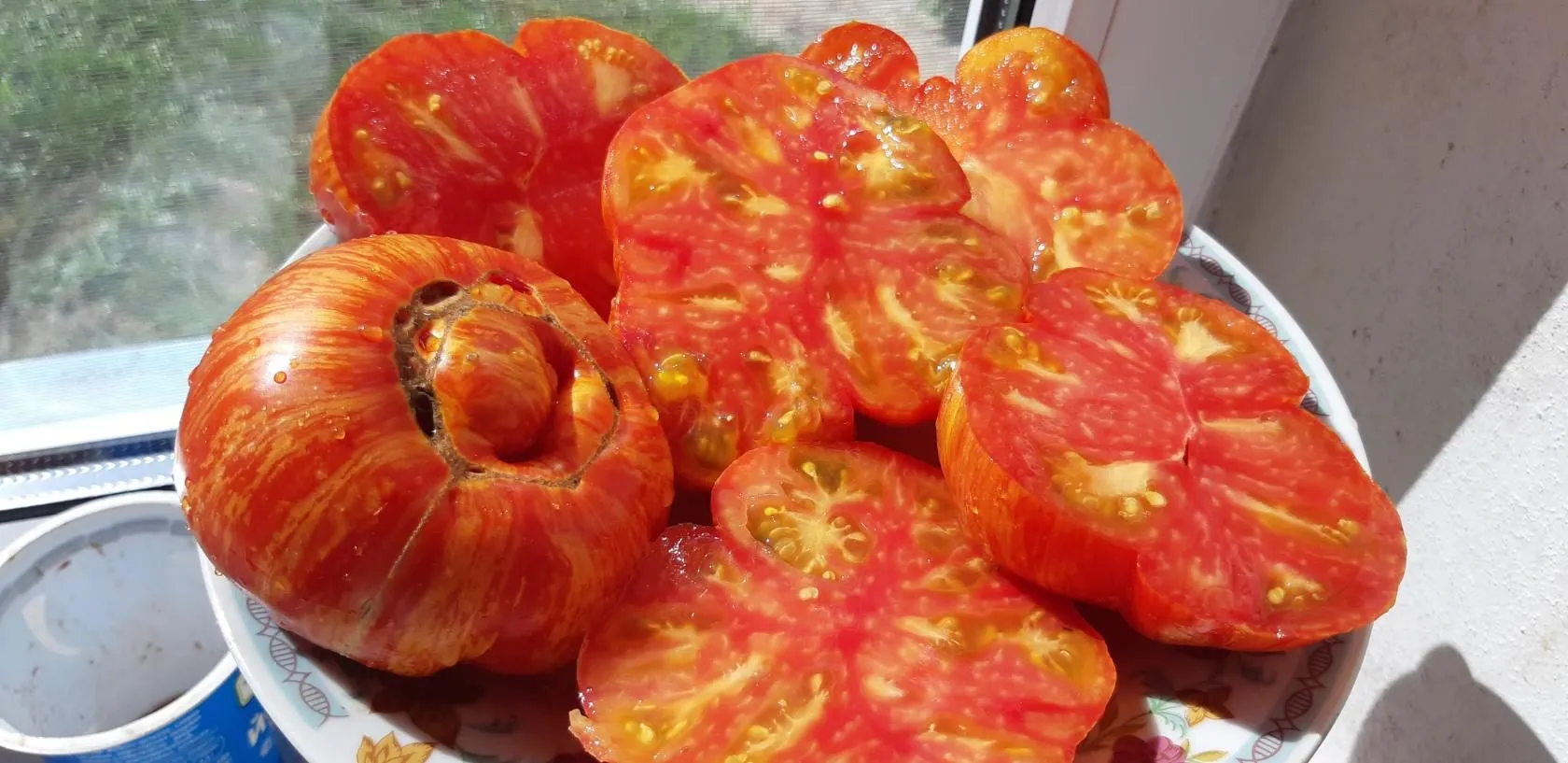
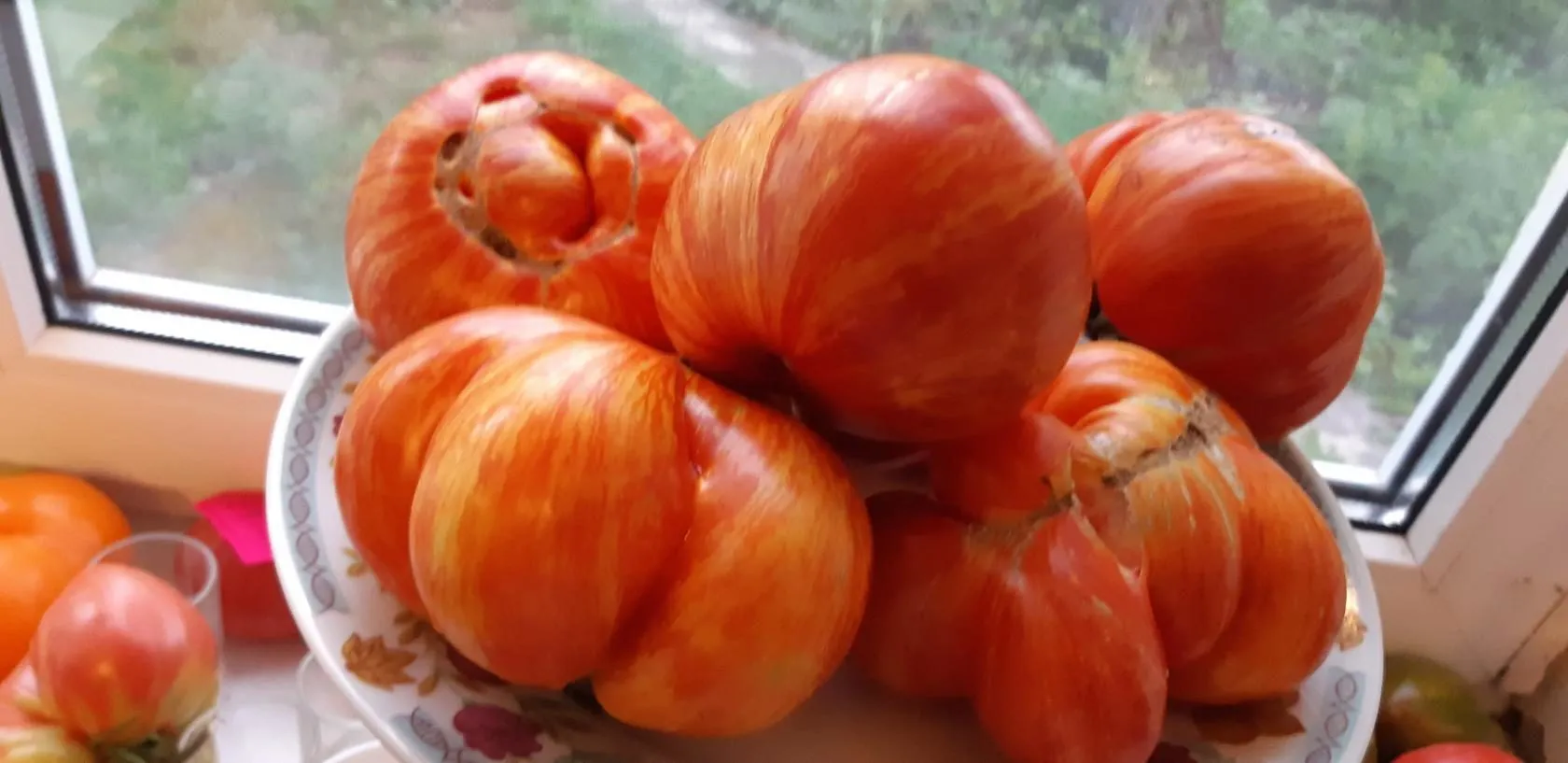
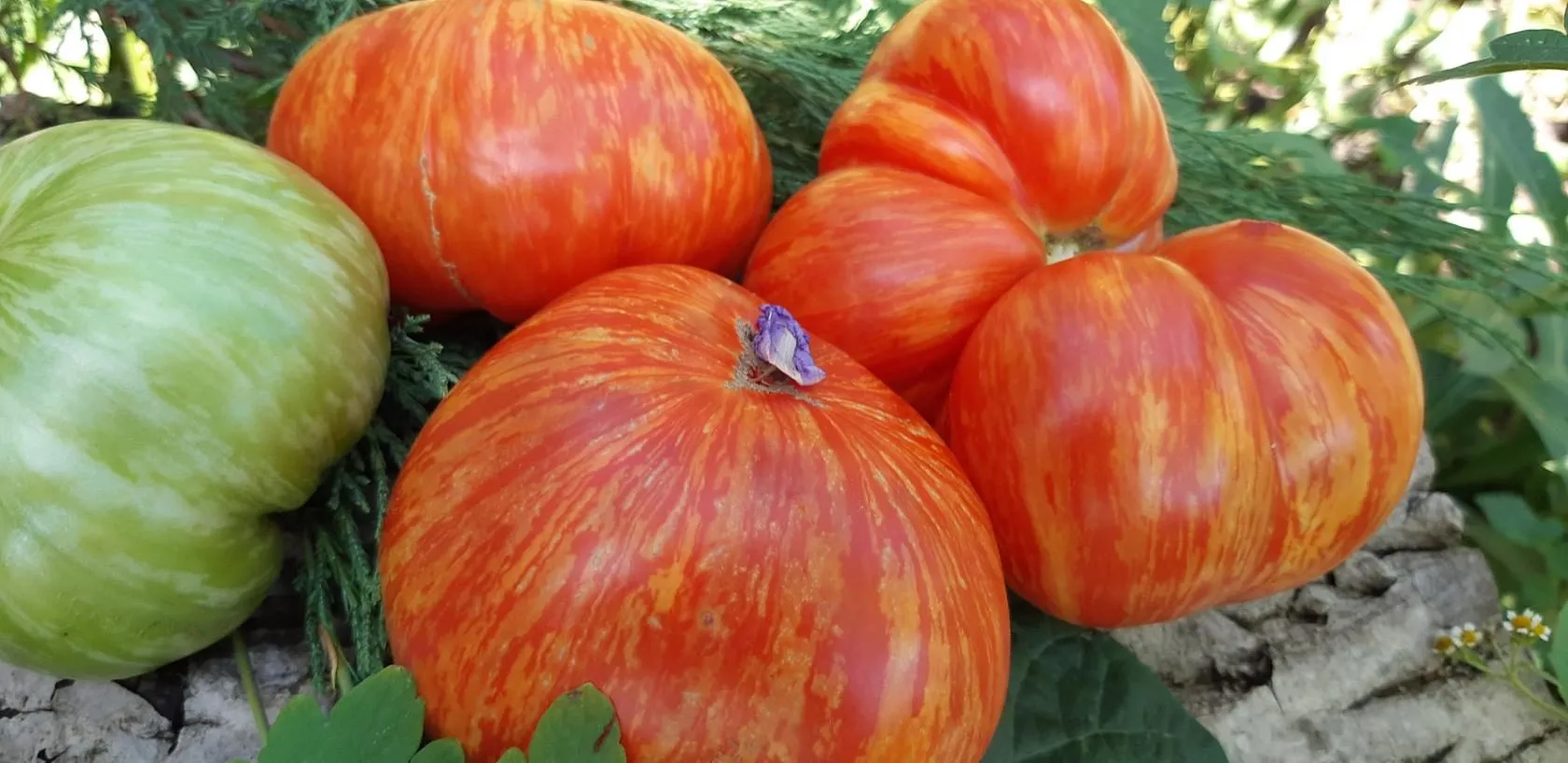
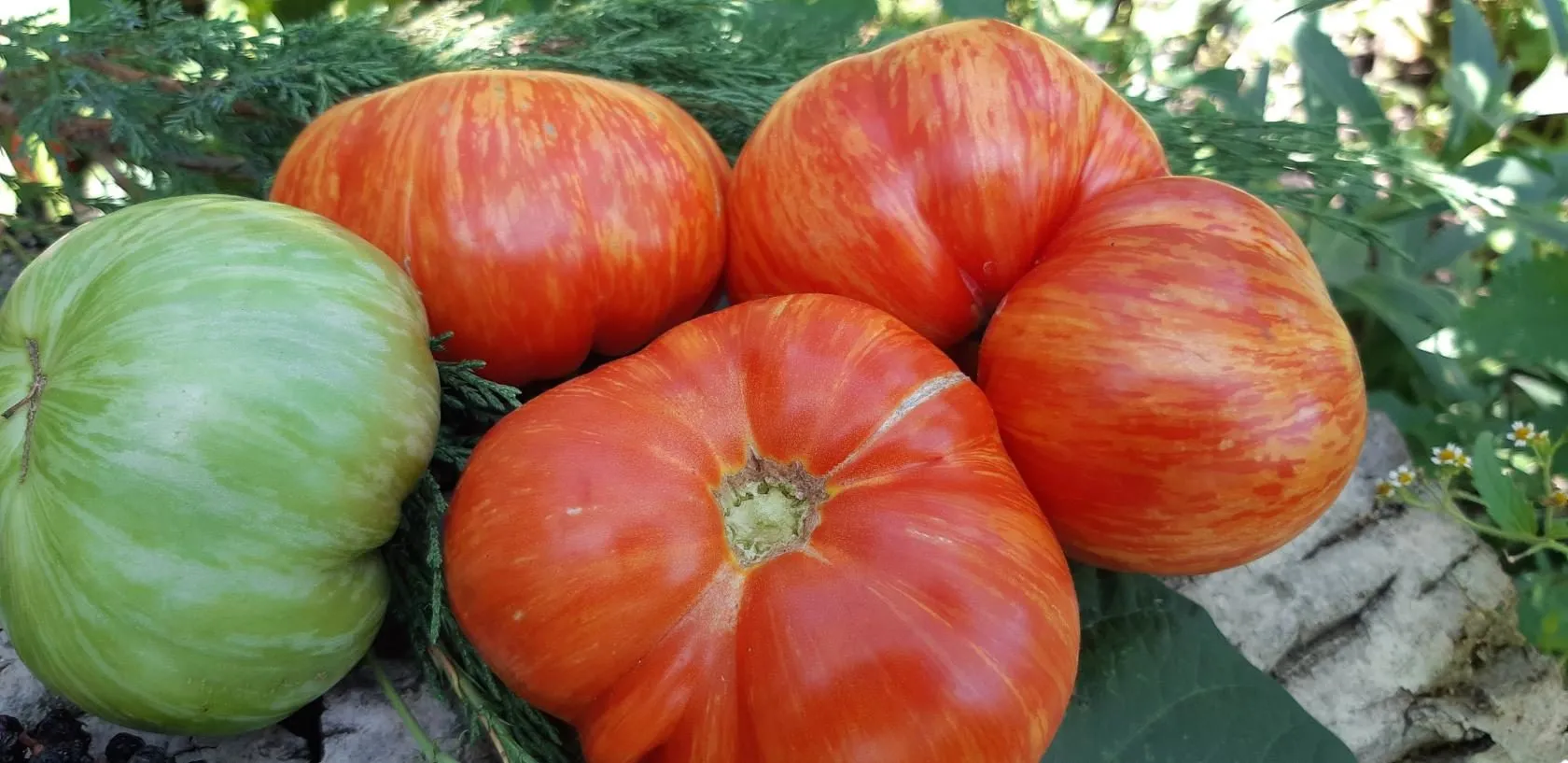
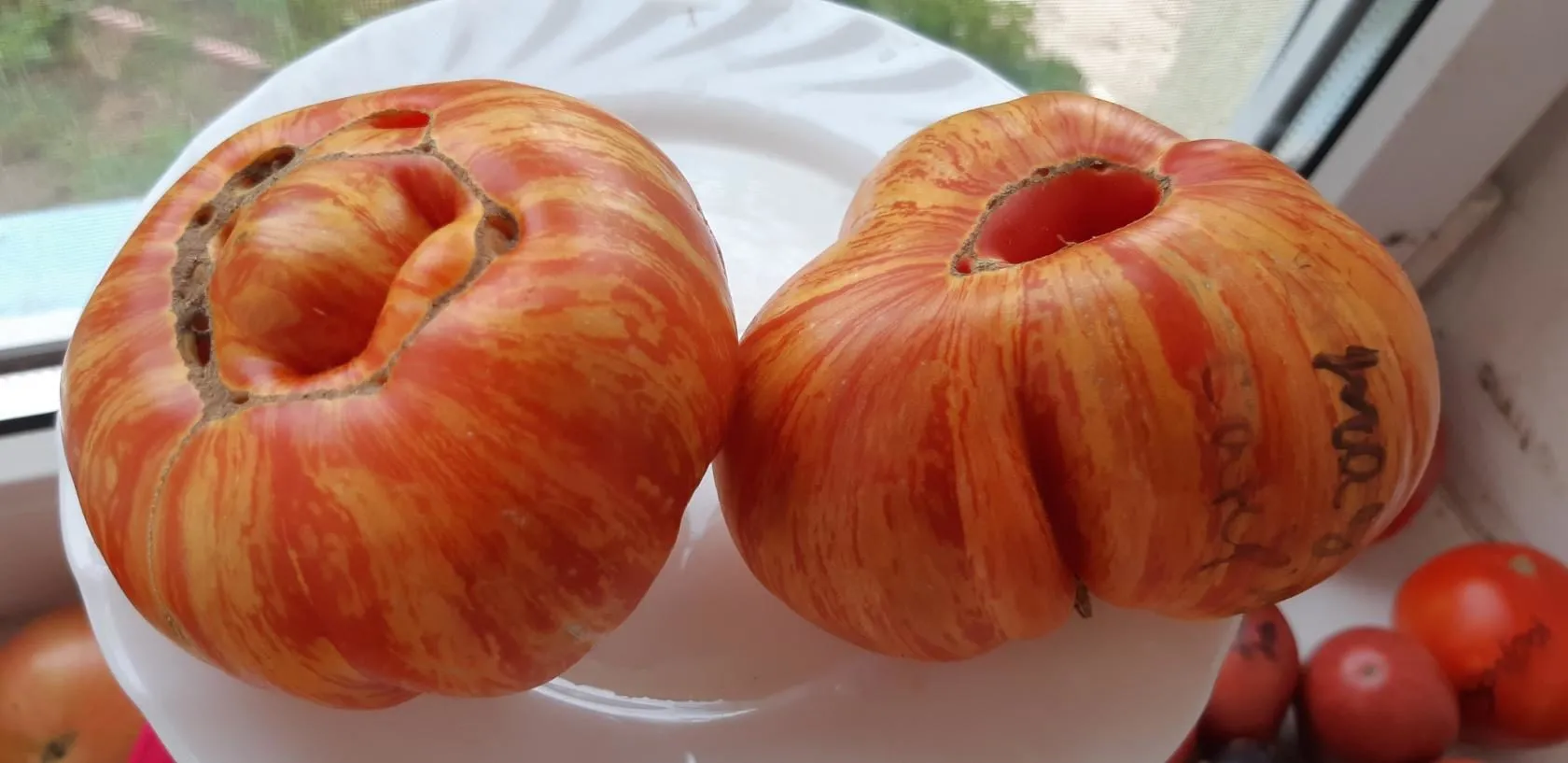
Oblate slicers up to 14 oz (400 g), red with gold stripes. Beautiful internal marbling when sliced, super juicy with that nice fruity undertone. 😋
Big thanks to Sofia 27 for the seeds! 🙏
Edited September 19, 2019 by Svetikk


Radomila: How do they hold up post-harvest? Can they hang on the vine once ripe, or do they crack and turn to mush quickly?
The vines are very vigorous. Trained to two leaders in the center greenhouse bed, they easily hit the rafters. I did notice the foliage on all the Jazz family varieties seems slightly lighter green than other tomatoes in the greenhouse.
In midsummer greenhouse heat, ripe fruit can hang on the vine for a little bit, but not too long. Once the weather cools down, they hang great. In high summer, you won’t store them for weeks on the counter because they are quite juicy, but later in the fall when ambient temps drop, they keep very decently.
Disease resistance has been solid; they power through clean right until the hard frost.
Edited September 22, 2019 by Svetikk
Tall, sturdy vines carrying big, gorgeous fruit. At peak ripeness, they turn red-orange with a pink marbling over the crown. They all sized up nicely, averaging 10-18 oz (300-500 g), with a sweet, concentrated flavor and a bold fruity aftertaste. In greenhouse beds, training to 2 or 3 stems clearly delivers the best results.
In my northern climate, it matured as a mid-season variety. Disease resistance was remarkable – the vines held clean, green foliage right to the end of the year. The fruit held up surprisingly well post-harvest without losing firmness.
Huge thanks to Sofia for sending me the seeds! 🙏 An exceptional variety.
Edited September 22, 2019 by Yaroslavna


Gorgeous and delicious.
Svetikk: …Ran 2 plants in the greenhouse trained to 2 leaders, crazy productive…
Svetlana! That fruit set is mind-boggling! Did you prop a mirror up behind the vine or what? That looks way too crowded! If it’s loaded down that hard, there’s no way those fruits can be running 10-18 oz (300-500 g) each! And the color is just magnificent!
Sergey-EKB: Did you prop a mirror up behind the vine or what?…
Sunrise Jazz is by far the highest yielder in the whole Jazz family. Keep in mind that photo shows two plants pruned to two leaders each. The majority of the fruits were medium-sized, around 5-7 oz (150-200 g), with just a few specimens pushing up toward 14 oz (400 g).
Svetikk: Sunrise Jazz is by far the highest yielder in the whole Jazz family…
Svetlana, what’s your fertilizer schedule? How, what, and when do you feed to get a set like that?
Quick Facts: Variety Summary
- 🌿 Growth Habit: Vigorous indeterminate vine easily hitting 6.5-7 ft (2+ m) in greenhouse setups. Features distinctive lime-to-light-green regular foliage. Performs best when pruned to 2 or 3 stems.
- 🍅 Fruit Profile: Large, flattened oblate beefsteaks ranging from 5-7 oz (150-200 g) on overloaded trusses up to 14-28 oz (400-800 g) when thinned. Flame-like orange-red skin overlaid with bright yellow marble striping.
- 📈 Heat Tolerance & Yield: Exceptional fruit set. Unanimously noted by growers for setting every truss through severe summer heatwaves without dropping blooms, making it the most productive entry in the Jazz series.
- 👅 Flavor & Keeping Quality: Rich, sweet, and low in harsh acid with a distinct tropical fruit finish. Juicy interior that is best consumed fresh or sliced during high summer; late-season harvests keep well under cooler conditions.
- 🧬 Breeder: Developed by Fred Hempel of Artisan Seeds (Sunol, California).
Bred by Californian geneticist Fred Hempel at Baia Nicchia Farm, the Jazz series was selected for high-sugar fruit with intricate striping. Sunrise Jazz stands apart from its siblings (like Jazz or Midnight Sun) for its remarkable heat setting. While many large bicolor beefsteaks abort blossoms when temperatures spike above 90°F (32°C), Sunrise Jazz maintains flawless pollination and continuous set under cover. Note that its foliage is naturally a paler chartreuse green, which is a genetic trait rather than a nitrogen deficiency.


