In this thread:
When to Plant Spring Garlic: The Importance of Root Zone Temperature
Posted November 29, 2021
On 11/29/2021 at 12:55 PM, MADanilych said:
Absolutely right, Lyudmila! 👍 Just need to clarify one detail. You have to wait until the soil warms up to at least 54°F (12°C)… AT THE ROOT DEPTH.Then the picture is complete from an agronomic standpoint.
Yes, garlic starts growing as soon as the temp at the root zone goes above 35°F (2°C). In the early spring thaw spots, the soil quickly hits that 35°F mark.
P.S. Forgive me Lyudmilka for tracking mud in your thread. I’m heading back to my own journal now. I invite anyone interested to drop by, though I don’t have much serious info right now. Just in winter hibernation, so to speak 😁
Andrei, come over more often. I am always happy to see you and useful info is never a bad thing.
As for soil temperatures, it is honestly easier to just say “wait until the birch leaves open up” because that is easier to understand. Most of us don’t go out measuring the soil temperature every single time we plant.
Posted November 29, 2021
Sure, Lyudmilka, you can definitely use the unfolding birch leaves as a sign. But a real gardener actually measures the soil temperature instead of just relying on folklore.
Eventually you get enough experience that you don’t even need the thermometer anymore. You can just look at the first weeds popping up and know exactly what is happening underground.
So why is this even necessary? People might ask.
Well, let me give you an example from my own experience.
It is spring. The snow is melting. Part of the garden bed is bare dirt, but the rest of it still has about 1.6 feet (0.5 m) of snow on it. What happens? On the bare soil, the garlic shoots pop up in two or three days depending on the weather. Meanwhile, the snow on the rest of the bed might take another week or more to melt.
Having early, uneven sprouting isn’t a good thing! So what is the solution?
There are two paths that actually work:
- Shovel snow back onto the bare patch to stall the sprouting.
- Do the opposite. Shovel the snow off the rest of the bed to speed up the melting.
But girls, there is a catch here! Garlic that sprouts way too early can easily get hit by spring frosts. If it is a prolonged freeze, it will cause the seed leaves and the first true leaves to dry up prematurely. Later on, those leaves will turn yellow way too early, which reduces the plant’s efficiency and ultimately ruins your yield.
Preventing Leggy Seedlings: Why Side Lighting Matters
I could also talk your ears off about grow lights. It is a massive topic that really depends on your specific setup. But I want to highlight one crucial thing.
Your supplemental lighting needs to hit the plants from the SIDES, or ideally from all directions. If you only put lights directly ABOVE the plants, it will inevitably cause the growing tip to stretch out. Your seedlings will end up too tall and leggy.
You really have to adapt to your own conditions.
Personally, I don’t use grow lights at all. I have my own formula which I wrote about in my journal. It is based on matching the seedlings with the right temperature and daylight hours. The minimum natural light needs to be at least 500 Lux. My formula also relies on natural selection, monitoring air and soil temps, careful watering, and other small details.
I won’t even get into fertilizers. They are absolutely unnecessary during the seedling stage. The potting soil has more than enough nutrients to get them to the transplanting stage.
Deceptive Spring Weather: A Lesson in Cold Soil
Posted November 29, 2021
On 11/29/2021 at 2:59 PM, MADanilych said:
Well, let me give you an example from my own experience.
Danilych, I have a story of my own that I will remember for the rest of my life.
One year we had a very early spring. Like, unusually early. By April 3rd, the soil was already dry and crumbly. So I decided it was time to sow dill, parsley, and lettuce.
I had a guy building a bathhouse for me at the time, a local guy from the village. He looked at my planting very skeptically and told me I was wasting my effort because the ground was still cold. I didn’t believe him. I had felt the dirt with my own hands and it felt warm!
Long story short, my seeds never sprouted and the builder was totally right. My subjective feelings tricked me. The soil was only warm for the top couple of inches.
Now I own a soil thermometer 😂
Posted November 29, 2021
On 11/29/2021 at 3:13 PM, SvetaR said:
Now I own a soil thermometer 😂
There you go Svetik, good job! 👍 Sending you some flowers for that 💐
I also wanted to add, hold your horses! I would use the phrase “haste makes waste” but it doesn’t quite fit here. Modern youth are always rushing somewhere, but our gardening business requires a slow and steady pace.
And yes! An early spring is ALWAYS deceptive. I have seen that happen countless times.
Posted November 29, 2021
On 11/29/2021 at 3:22 PM, MADanilych said:
Modern youth are always rushing somewhere, but our gardening business requires a slow and steady pace.
Young people just have different priorities. Some classic author once said, “In a hurry to live, in a rush to feel.”
I have noticed one thing for myself. I started arriving at my summer house much later in the season and I started giving my plants a lot more space. Naturally, my planting dates got pushed back too. I don’t know if it’s the timing or just good summer weather, but I have way fewer problems now. Giving plants plenty of space between them works wonders 💃
How to Prevent Outer Scale Rot in Stored Onions
Posted November 29, 2021
On 11/29/2021 at 1:49 PM, LyudmilaF said:
Good day! Can I ask a question/complain a bit? I grew some beautiful Candy and Sabrosso onions from seed, but they are rotting. It starts from the outer scales and goes deeper. It doesn’t look like onion fly damage since those usually rot from the bottom root plate up. Because of the heatwave, I watered them every 3 days. Could that be the reason?
Stepping back in real quick to share some thoughts about your onions, LyudmilaF.
Regarding the rot. Setting aside pest issues which is a whole different conversation, I want to give you a tip. If you grew your own onions but messed up the watering schedule a bit, the best way to get them to store perfectly is to weave them into braids *.
It is not hard to do, and interestingly enough, even pests tend to abandon the bulbs when they are hung up like this.
The process is simple. You just need to trim the onion tops leaving about 2 to 3 inches (5-7 cm) of stem. Even if the stem isn’t completely dry yet, it weaves nicely and won’t cause the bulb to spoil during storage.
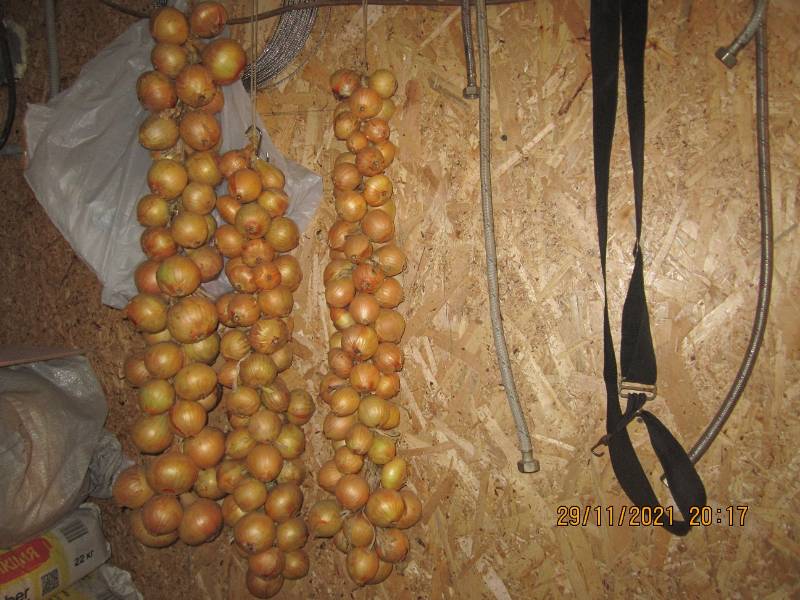
It takes too long to explain in text, just search online for “how to braid onions for storage” and you’ll figure it out immediately.
Good luck! 🙏
👨🌾 Editor’s Notes:
- Birch tree phenology: In Eastern European gardening, waiting for the native birch trees to leaf out is a reliable phenological indicator that the soil has naturally warmed up to about 50°F (10°C) and the risk of hard freezes has passed.
- Onion Braids (Batmans): The author uses the old regional word “Batmankas/Batmans”, which refers to the traditional method of curing and storing onions by weaving their dried tops into a sturdy rope or braid. Hanging them provides maximum 360-degree airflow, curing the neck completely and preventing moisture from traveling down into the scales (which causes top-down rot).