Quick Summary of Alice’s Dream
- 🌍 Origin: Created by Polish breeder Zbigniew Pawluczuk, who discovered this stunning cross on his plantation in 2015. It is a cross between Blue Gold and Amethyst Jewel. In Russian, it is known as “Mechta Alisy”.
- 🌿 Plant Habit: Indeterminate (tall), regular leaf. It exhibits strong vegetative growth and requires strict pruning (best kept to 1 or 2 stems). Can reach over 2 meters (6.5 ft) in a greenhouse.
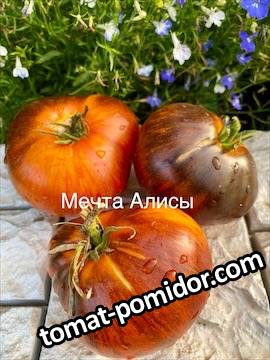
- 🍅 Fruit Characteristics: A visually breathtaking anthocyanin bicolor. The base is orange/yellow with red stripes, topped with heavy purple/black anthocyanin splashing on the shoulders. Weights generally range from 120g to 400g+ (4 oz to 14 oz+). Important note: Because it was released early in its stabilization process (around F4), the genetics are still unstable; many growers report segregation (off-types) such as missing stripes, pure yellow fruits, or different sizes.
- 👅 Flavor: When grown in ideal conditions, it is intensely sweet with complex fruity/spicy notes. However, it is highly sensitive to environmental stress. In extreme heat with heavy watering, or in cold, sunless conditions, the flavor can become bland or watered down.
- ⏳ Yield & Quirks: Mid-season to mid-early. Yields can be massive, but the plant is susceptible to Blossom End Rot (BER) and can drop blossoms during severe heatwaves. It is frequently compared to Lucid Gem, though Alice’s Dream is generally larger, juicier, and has a shorter shelf life.
Alice’s Dream (Мечта Алисы)
Originator – Zbigniew Pawluczuk, who found this beauty on his plantation in 2015. The parent lines are Blue Gold and Amethyst Jewel. This line is still very young, which is why not all forum members this year got that wonderful striping visible on the photos on Zbigniew’s website.
For me, this variety turned out to be mid-season. It developed slowly but grew into a verrrry beautiful bush with powerful regular foliage and strong vegetative growth. I led it into 1, 2, and 3 stems—the best option is keeping it to 1-2 stems. The taste is like many Bicolors.
If we compare it to Lucid Gem, the bush of Alice’s Dream is more powerful, ripens later, the yield is higher, and the fruits are not as dense (there is more juice, so they don’t store as long as Lucid Gem). But they are great in salads, especially for those who love a “juicy/drippy” salad. This year, it is the only variety I am actively fighting the squirrels for, they absolutely loved it)))
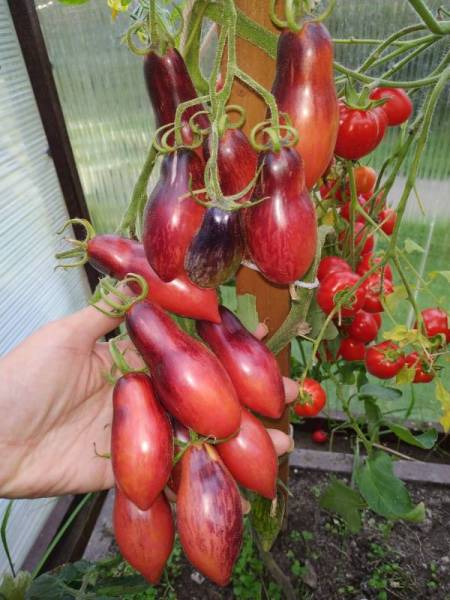
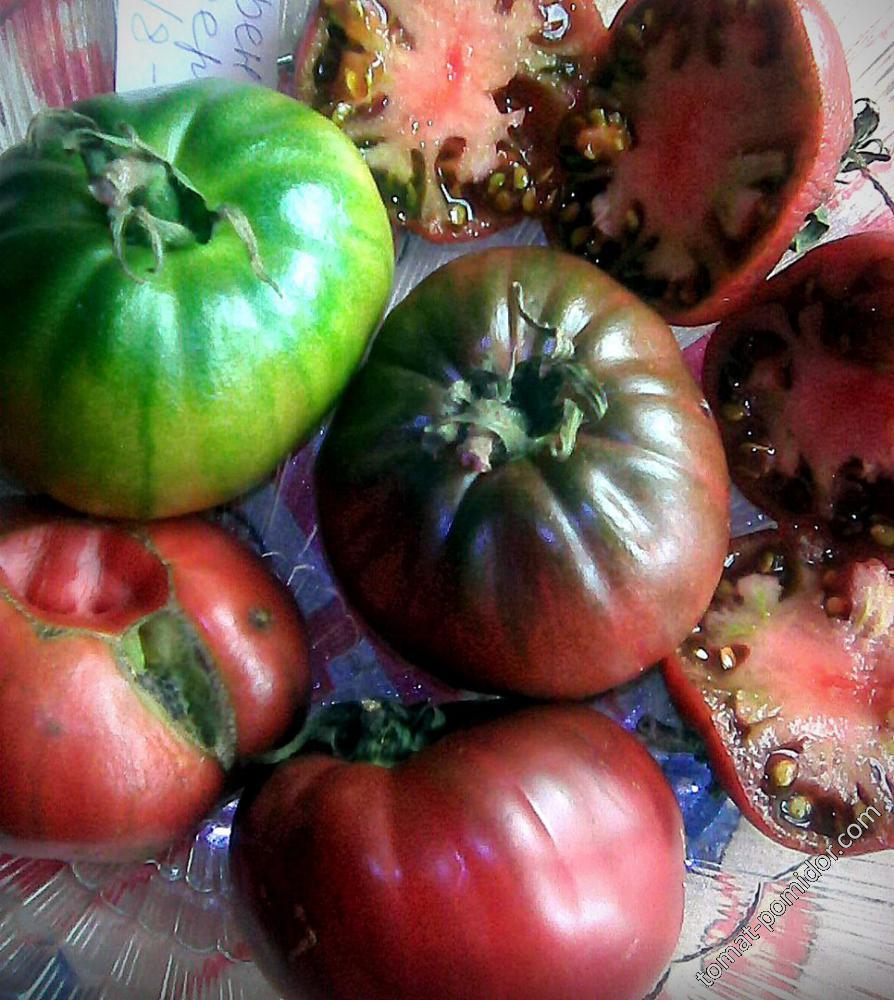
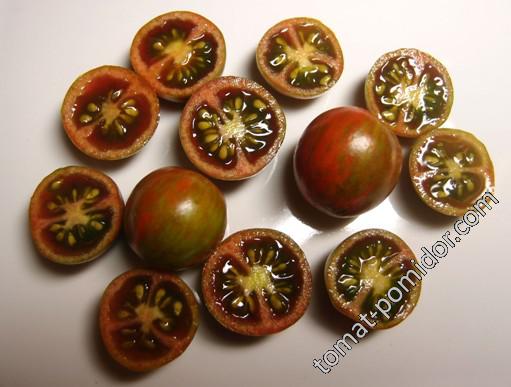
Here is how they turned out for me:
Fruits in various stages of ripening:
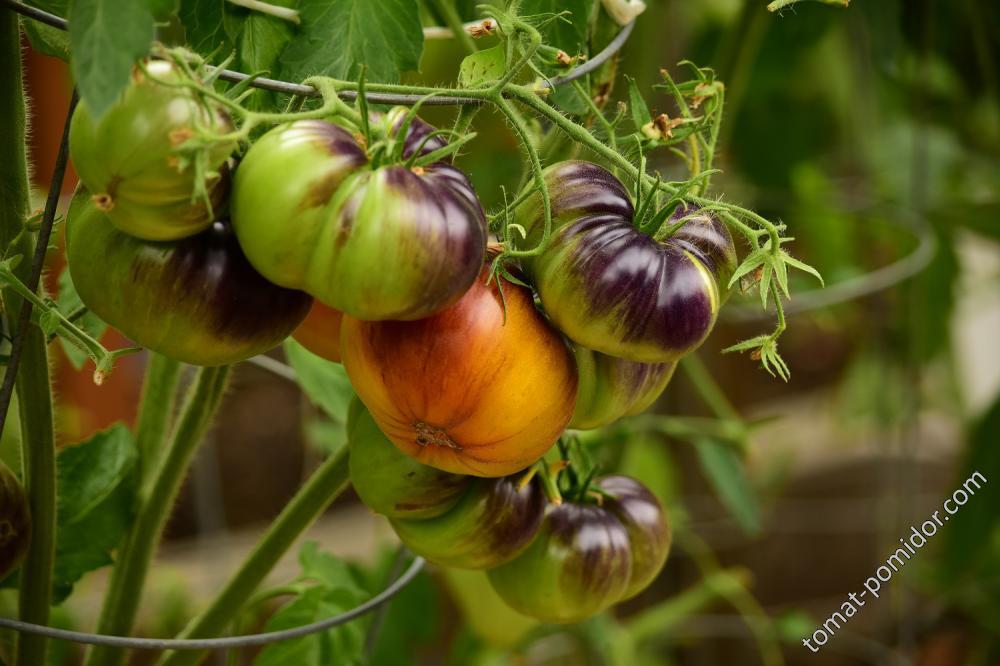
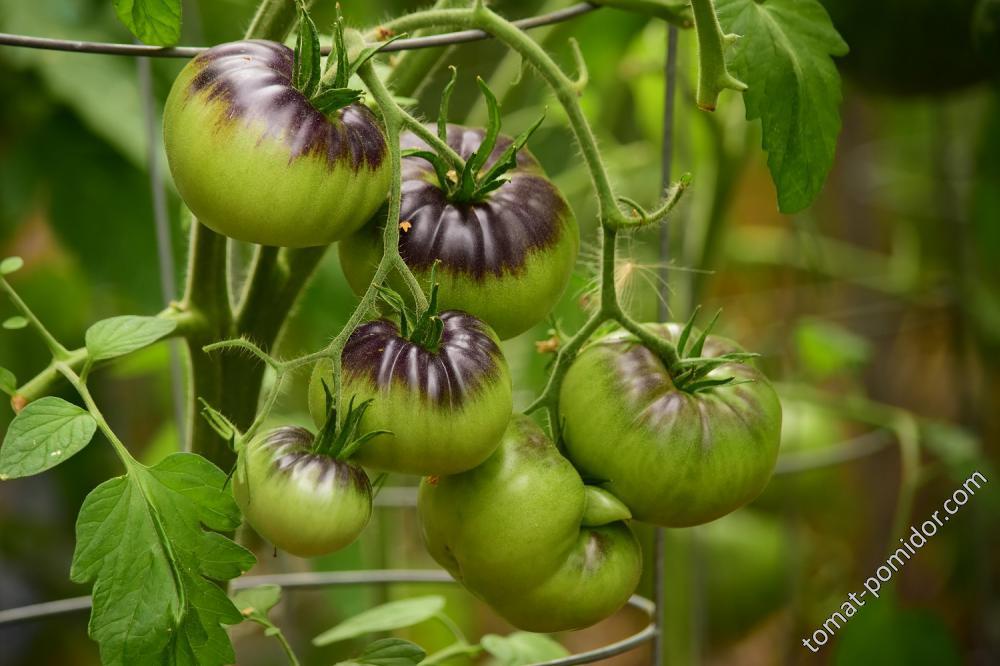
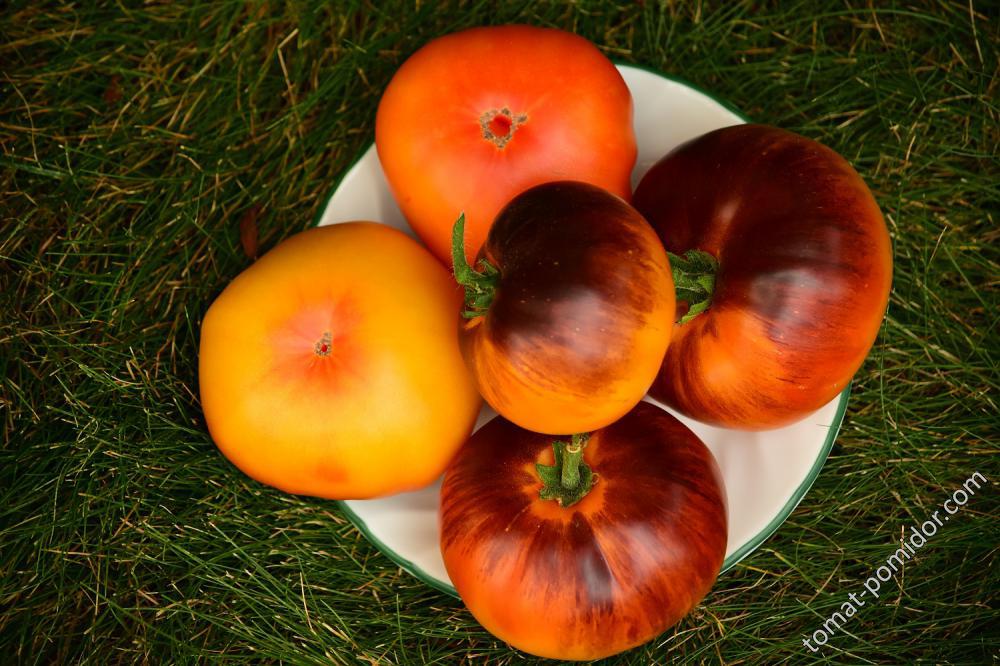
My Alice’s Dream grew like this.
tomatinka wrote:
My Alice’s Dream grew like this.
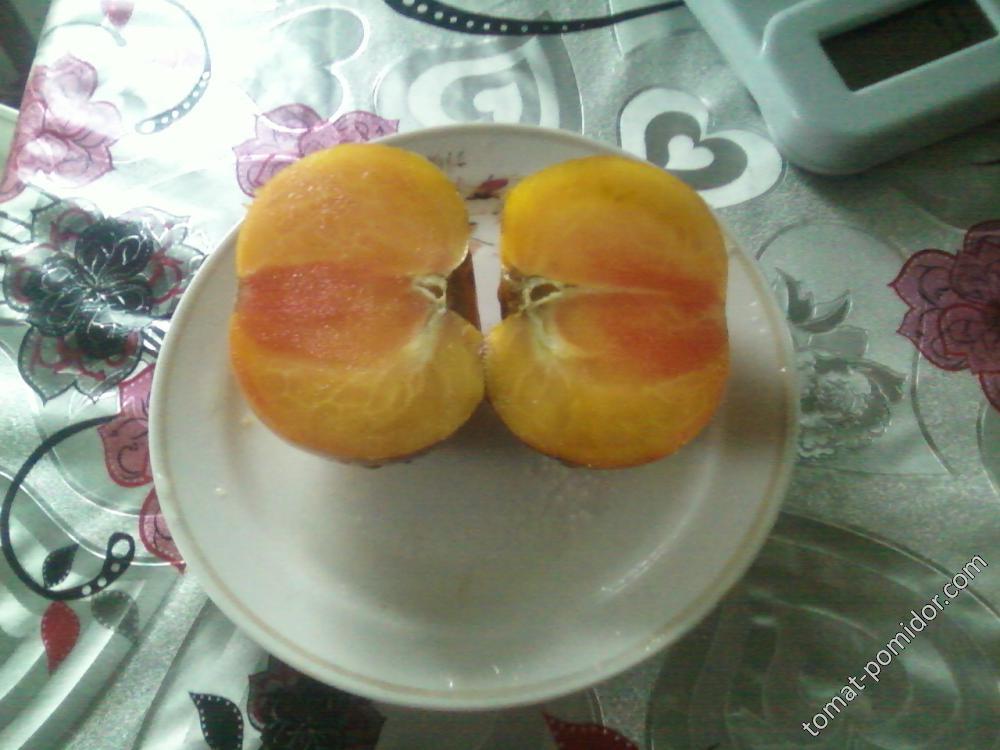
Verochka, there is more anthocyanin on your Dream than on mine, and when sliced, yours is pure meat, whereas mine has larger seed cavities. Did I get different seeds, since the variety is still young, or did my meat turn out different because I water them every single day?
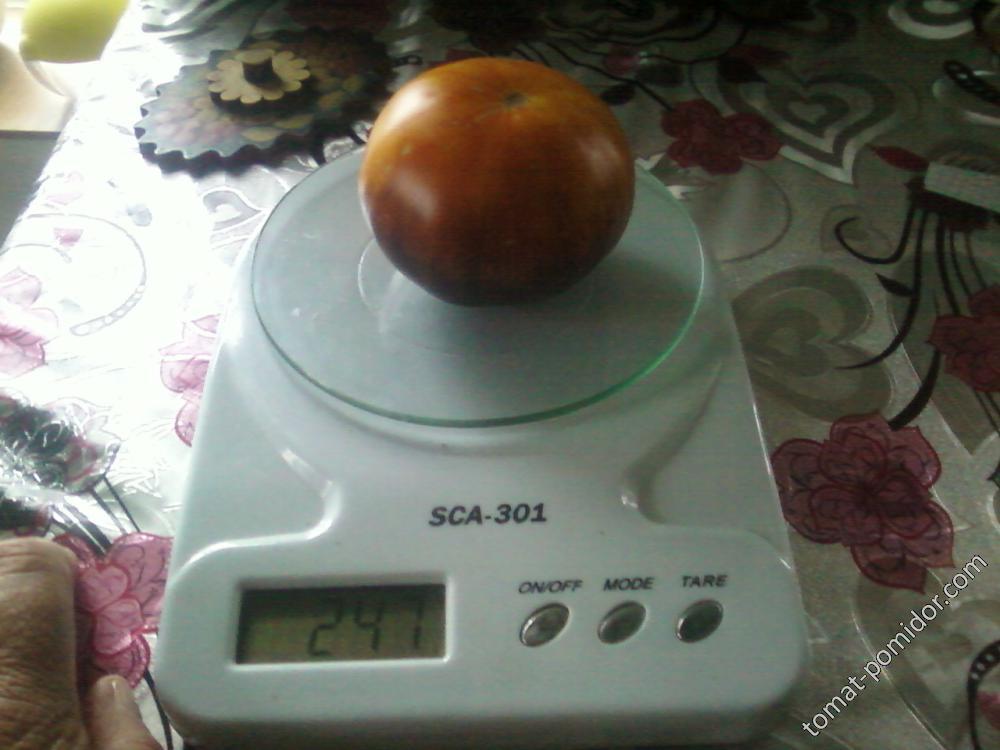
The size turned out similar though. I just re-weighed them and smiled: three tomatoes came out to exactly 214g (7.5 oz) total, but generally, the weight varied from 120g to 270g (4.2 to 9.5 oz) because I didn’t prune the flower clusters. Some had up to 14 fruits per cluster, others 6-7. Basically, the more fruits you leave on a cluster, the smaller they get.
We ate the big one, the smaller one is left.
The seedling was gifted to me by Elena N.
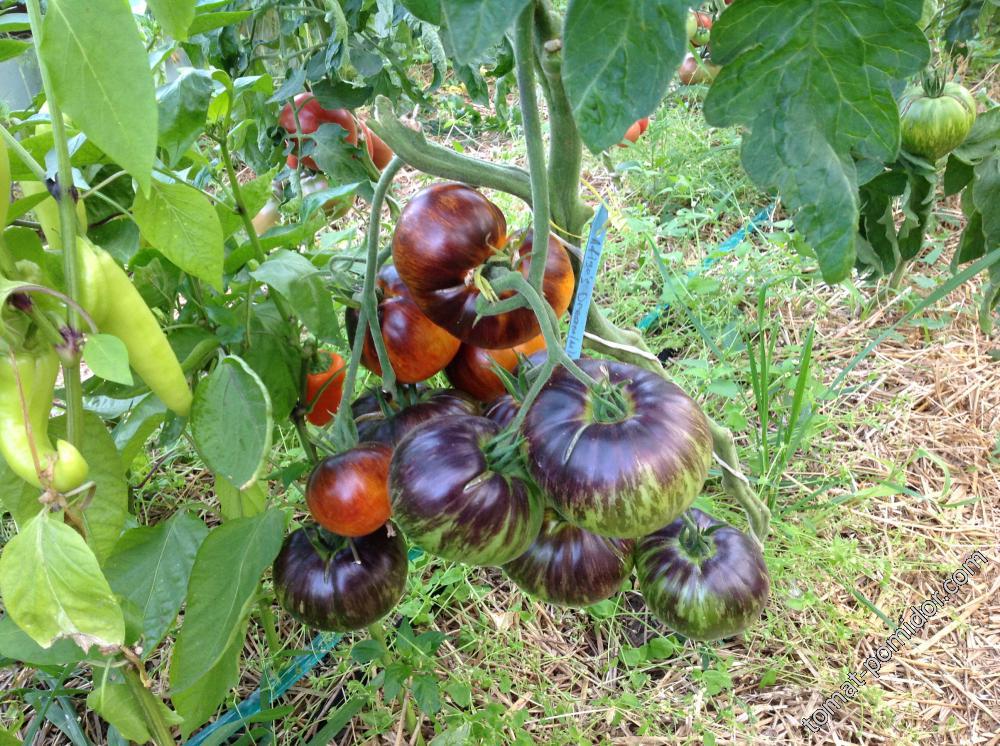
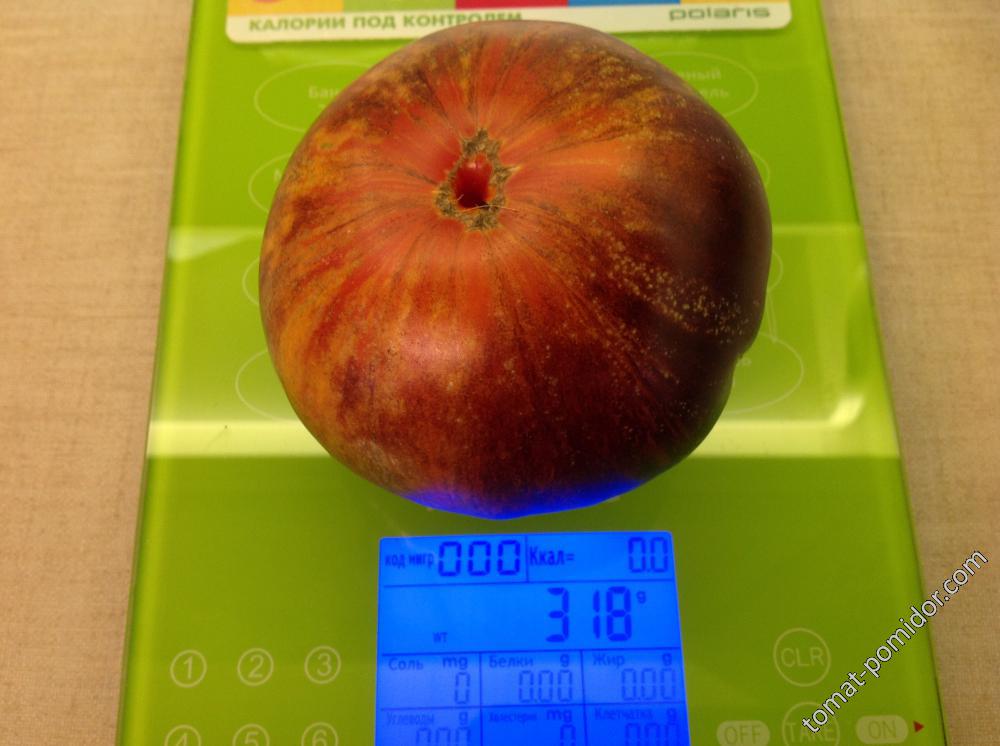
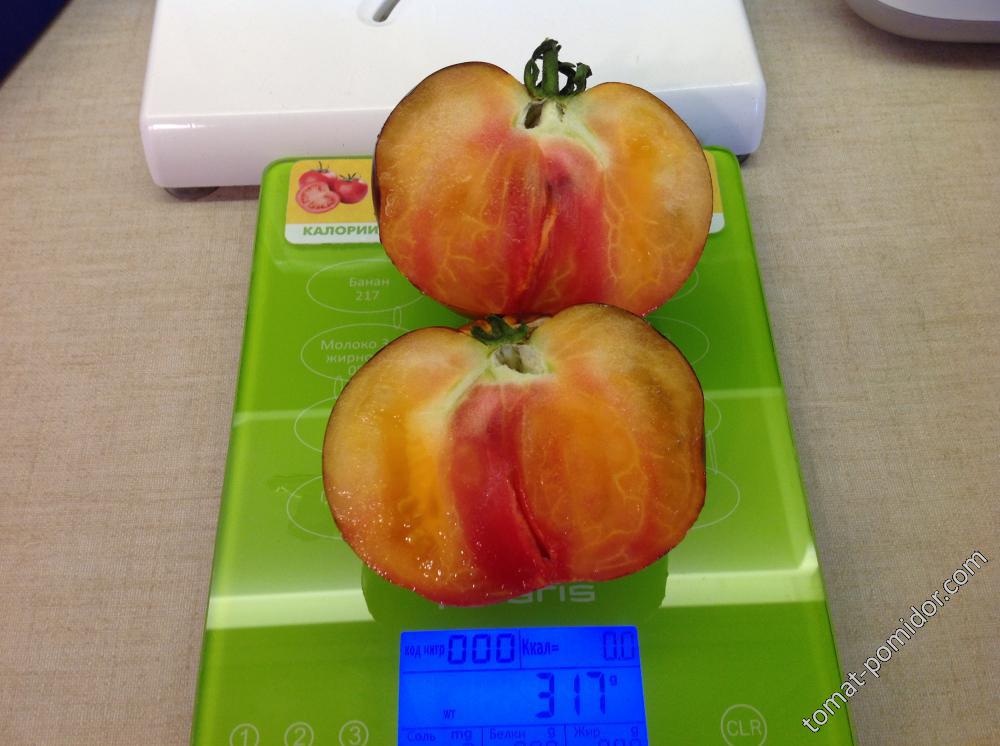
I really liked this variety, the taste is intensely sweet and juicy. I will definitely grow it again.
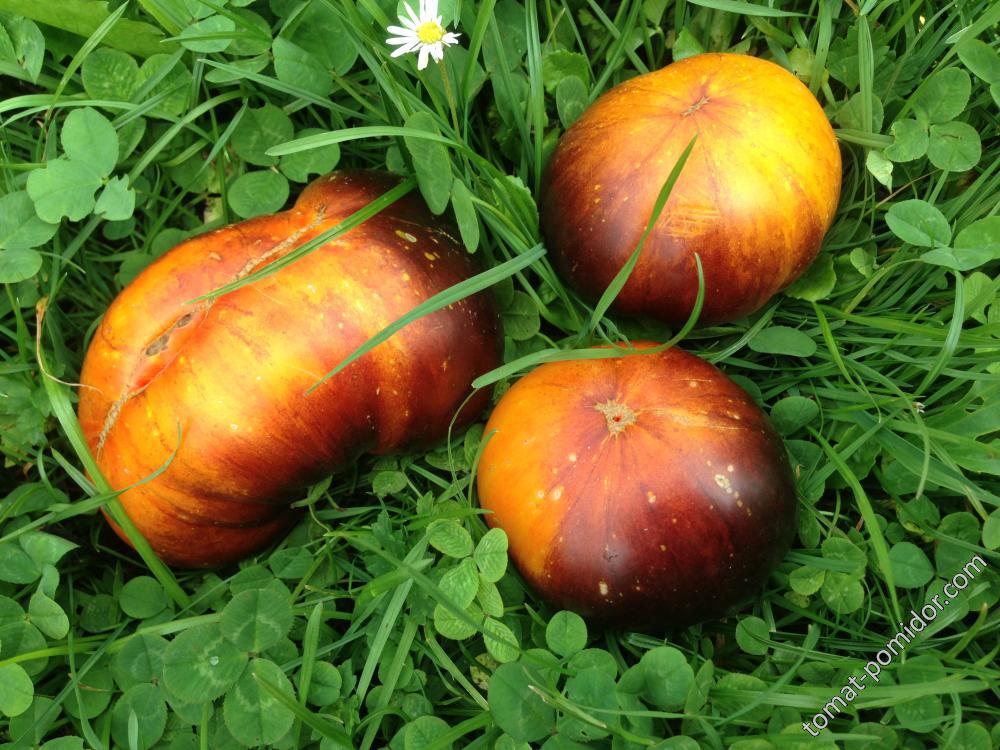
“Liked it” is an understatement… It has definitely taken up permanent residence in my garden. 😍
It continues to surprise me; the fruits at the very top of the plant are significantly larger. I topped the bush in August at the 2-meter (6.5 ft) mark, because where else was it supposed to go?! 😄
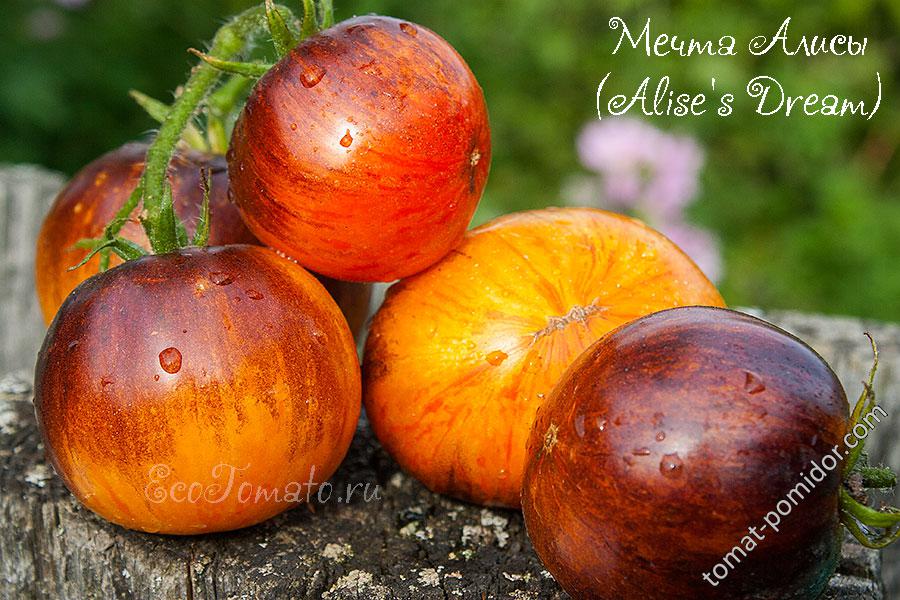
I grew it from two different sources. One segregated (threw an off-type) — there were no stripes, only anthocyanin on the top. I didn’t even bother taking pictures or saving seeds from it.
But the second one grew like this: sweet, beautiful, and productive. I liked it very much.
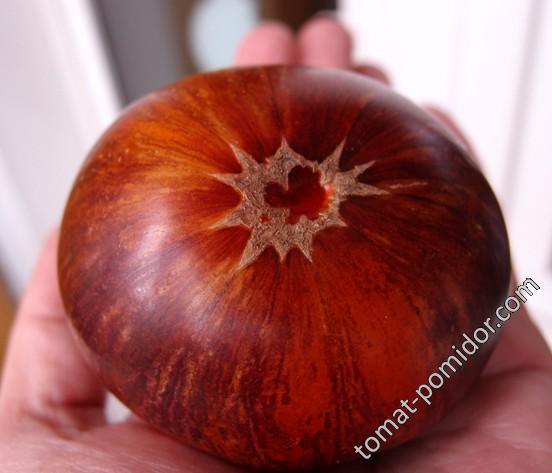
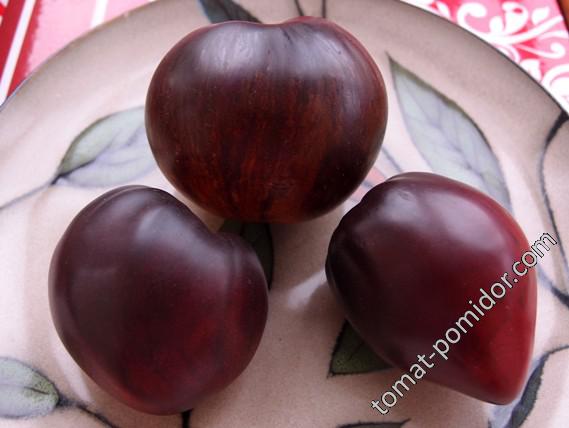
I planted Alice’s Dream this year as one of three “name” tomatoes for my granddaughter, Alice. I ordered the seeds from Poland. The bush was very powerful and beautiful. The variety is productive. The weight of the fruits didn’t quite reach what was advertised (though my friend, to whom I gave a seedling, had fruits over 400 grams / 14 oz). There was no genetic segregation, but there were no pronounced stripes either. Anthocyanin was present on the upper part of the fruits, especially on the later ones (which also turned out larger).
The fruits have a bright, intense flavor, sweet and juicy. I will definitely continue growing this variety, but next time from different seeds—the very first generation straight from Zbigniew. The fruits from those are much larger, with clearly defined stripes. Very beautiful!
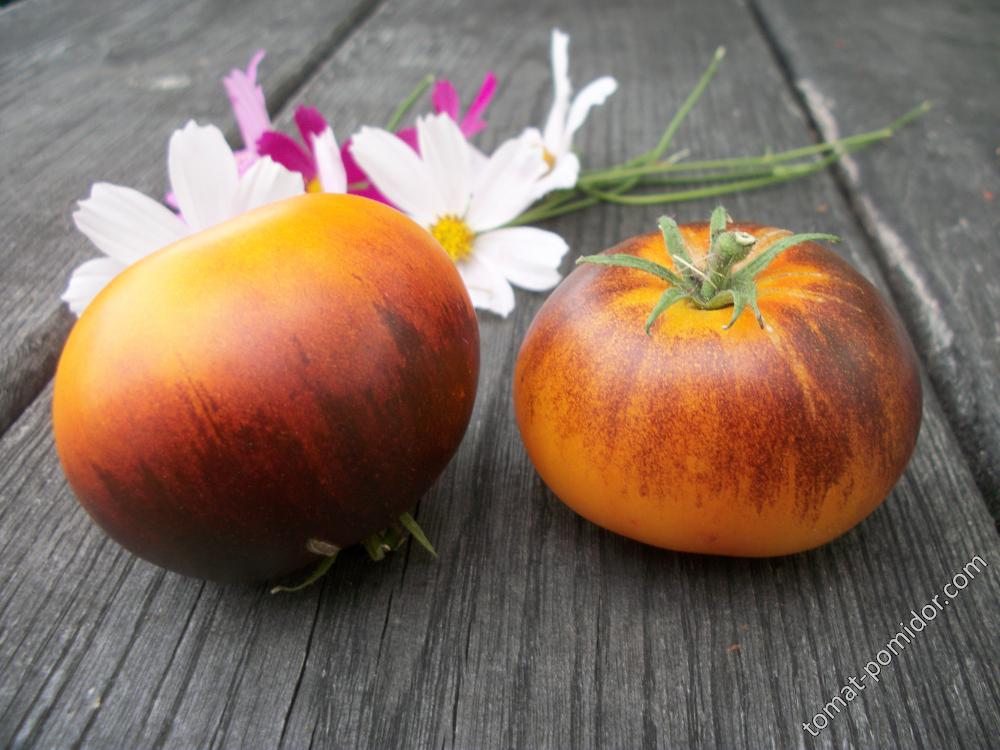
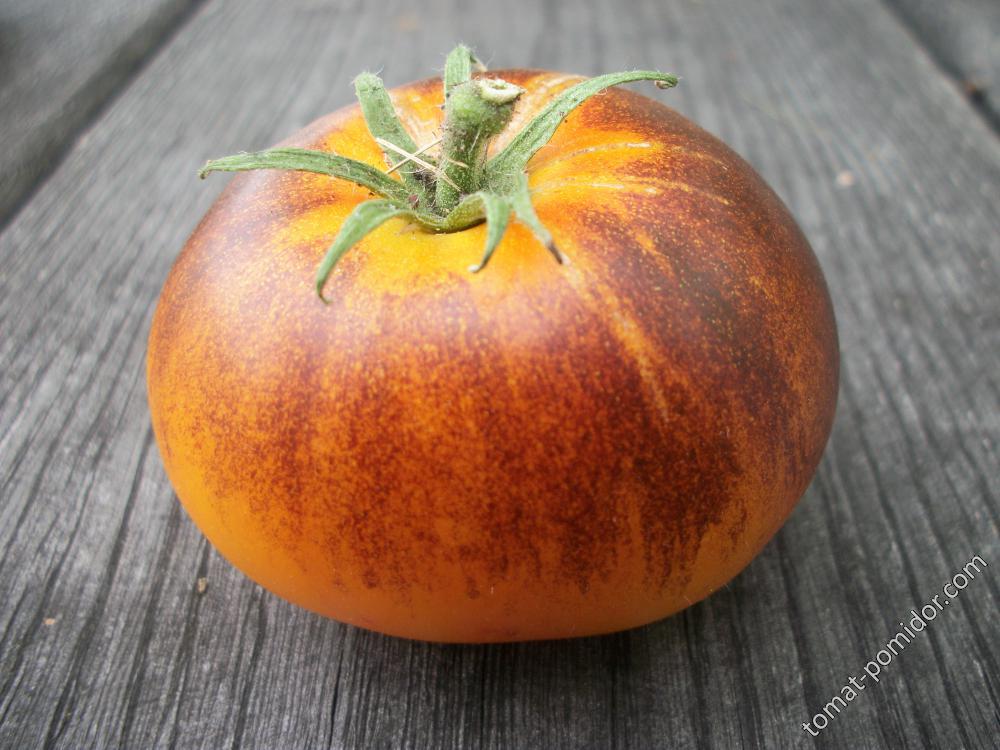
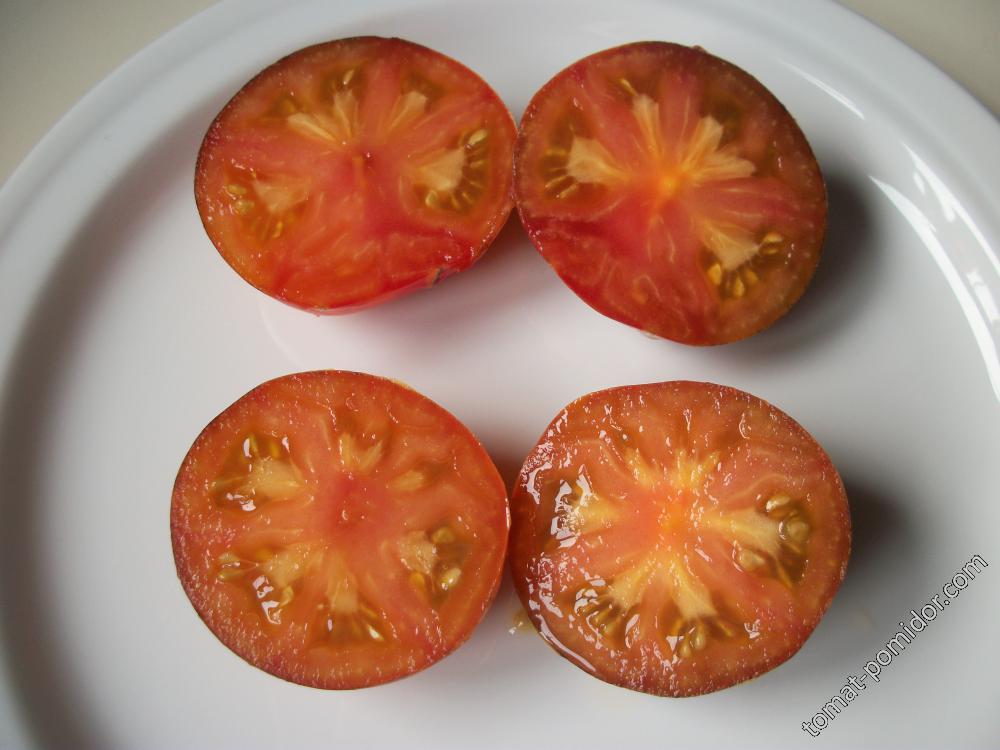
For me this year, this variety was completely tasteless — the tomatoes were sour and “wooden” (hard). But oh, what beautiful stripes! Unfortunately, I didn’t take a photo. Now I am debating whether to plant it again next year or not. I saved the seeds anyway, just in case. 😳
A very productive variety. Yes… the skin is very tough/thick, but the ripe fruit is very tasty, with a spicy note!!!!
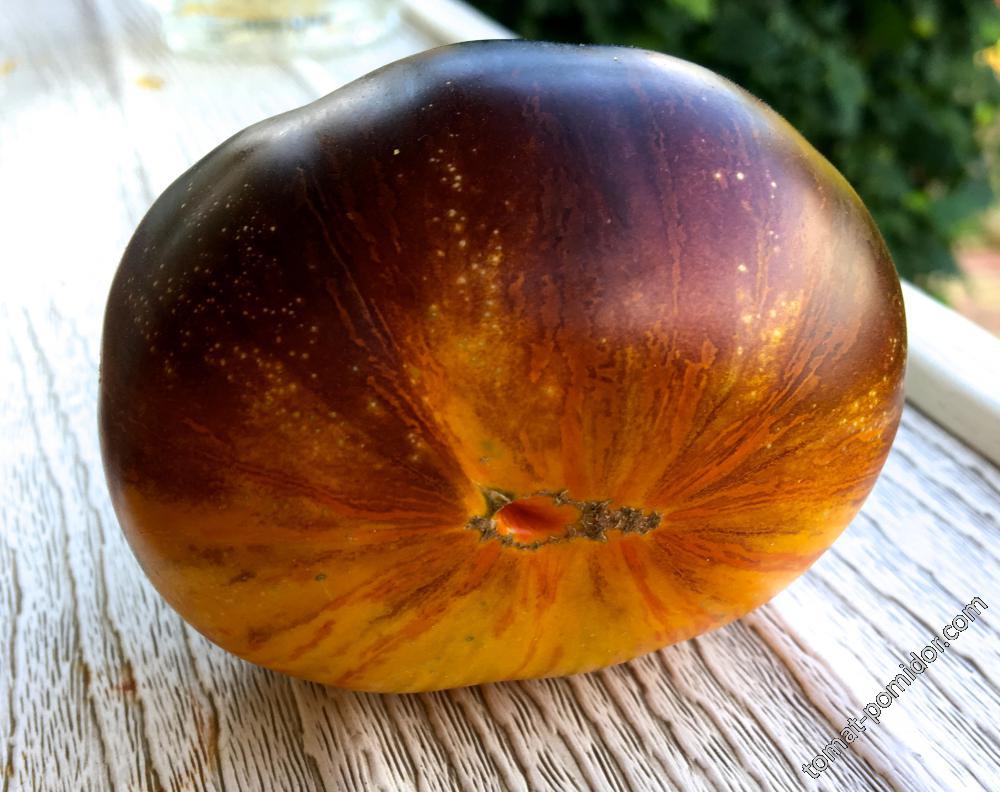
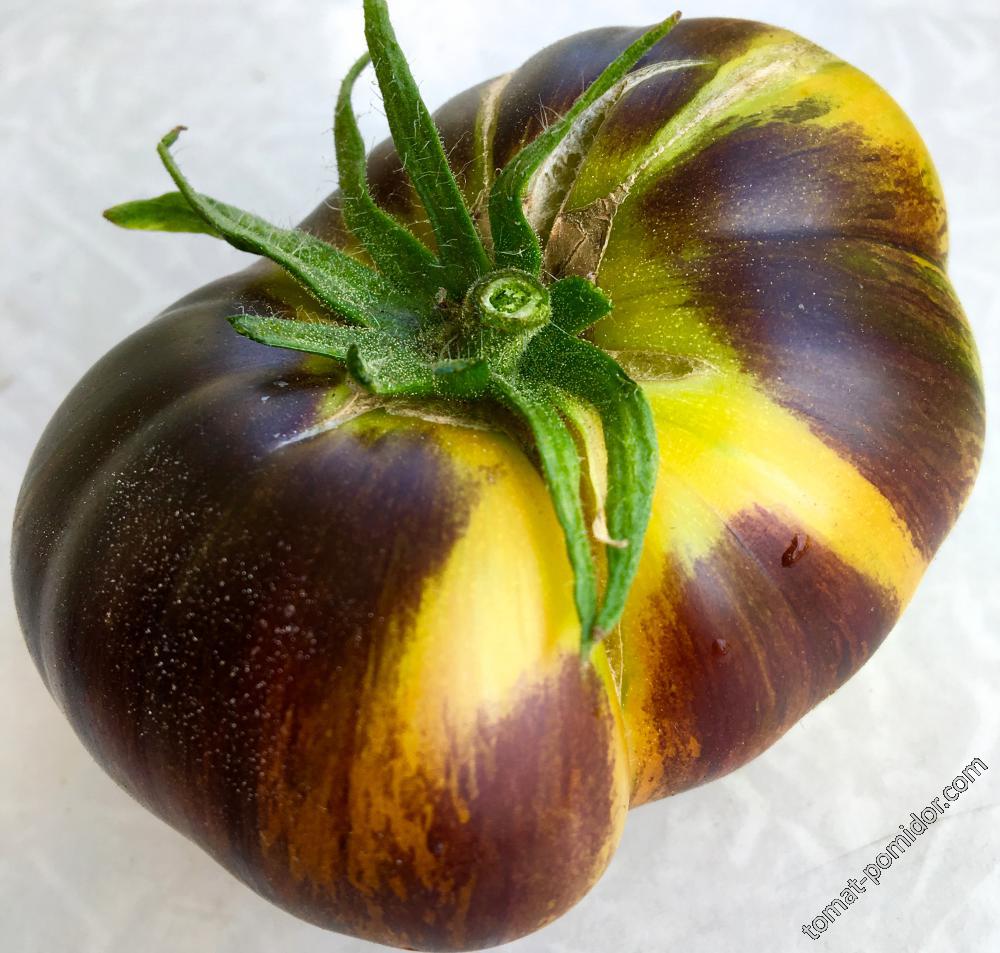
I dreamed of this variety, but ALAS!
I grew 1 bush in a polycarbonate greenhouse on the sunny side. Unfortunately, Alice turned out to be a delicate lady and handled this year’s harsh conditions poorly. The yield was disappointing, and the taste was even worse. Inedible! It’s such a pity, I wanted to surprise my daughter-in-law Alice… 😞 I won’t grow it again; my garden and this beauty are just not compatible!
By the way, Lucid Gem, growing right next to it, survived a long period of abnormal May cold that transitioned into abnormal June heat. True, the first cluster produced some ugly, deformed fruits, but then it straightened out and didn’t disappoint in taste.
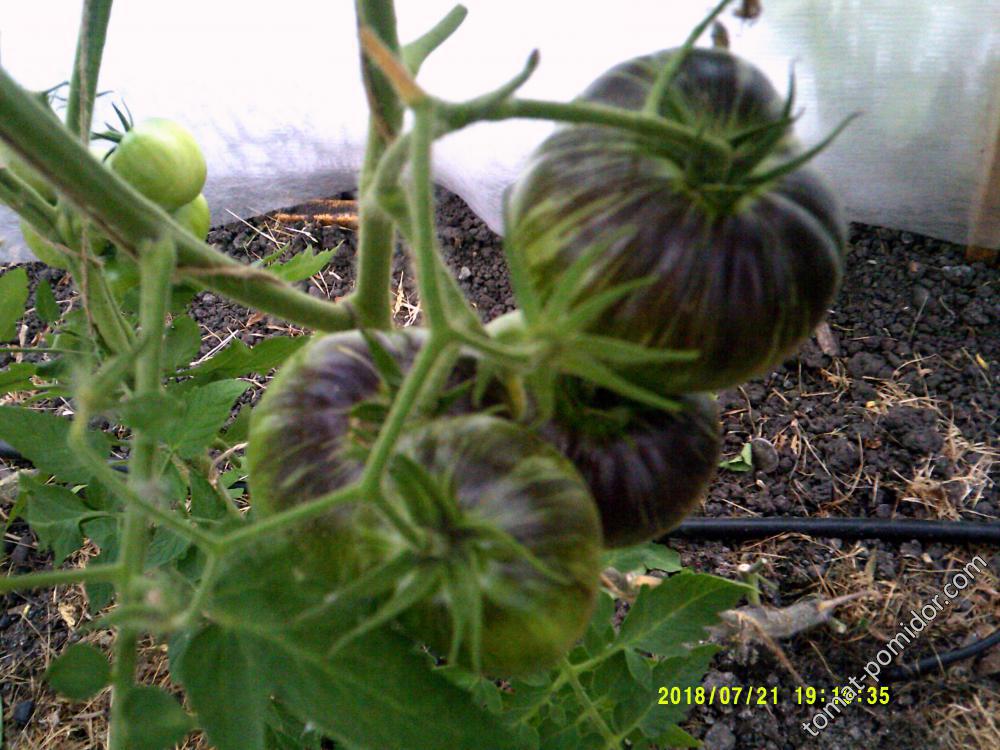
Beautiful, tasty, but not the absolute “best of the best”. Worth trying. Especially for those who love blue/antho tomatoes.
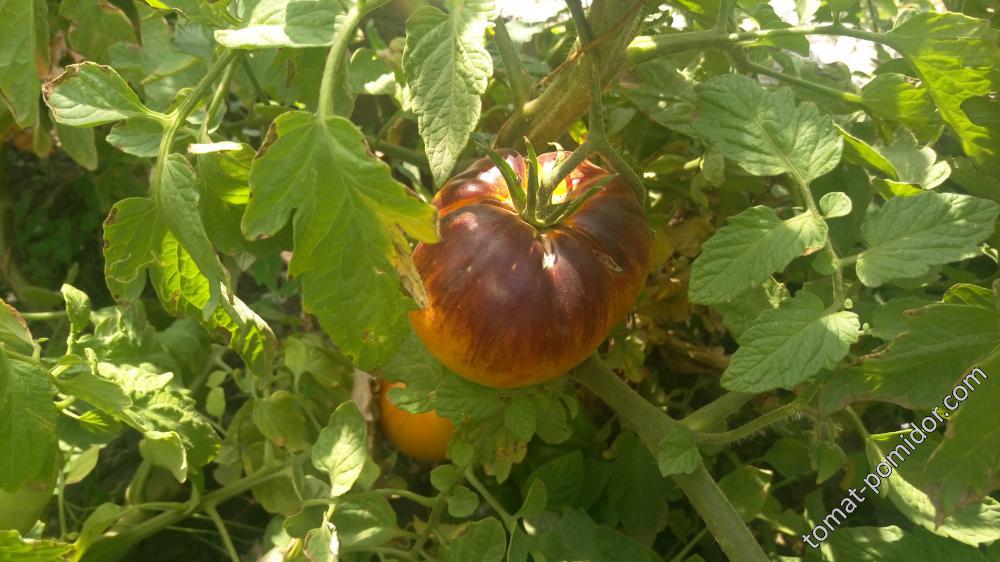
Tatyana Kemerovo wrote:
Lucid Gem… survived a long period of abnormal cold…
The beauty of Alice’s Dream drives me crazy! My conditions aren’t the best for it either. They suit Lucid Gem a little better. But here is the nuance: Lucid Gem sets its fruit BEFORE the extreme heat hits, whatever it manages to set is mine. But Alice’s Dream waits for the heat and starts setting fruit *during* the heatwave—it takes a long time to get going.
Alice’s Dream loses its flavor because the fruits swell during the heat when maximum watering is required, so the roots cannot deliver sweetness from the soil to the fruits. My only hope is to acclimatize it to my region, but that is a hassle when there are so many other new varieties to try, and I don’t have a greenhouse to give it more comfortable conditions. But it is so beautiful, for that reason alone I will give it another chance from different seed sources, hoping it has gone through the hardening process there)))
P.S. I could be wrong, but it seems to me that Alice’s Dream turns out sweet for those who don’t have cold summer nights and sharp day/night temperature swings. And also for those who don’t have extreme 40°C+ (104°F+) summer heat that requires heavy daily watering. It behaves exactly like any other mid-late bicolor tomato (at least in my conditions).
For me, this variety suffered heavily from Blossom End Rot (BER), practically the entire harvest was ruined.
This year I sowed Alice’s Dream from a different source, and it grew completely different. Mine was deep orange, very tasty. But this one is yellow, and the taste is different. I regret not sowing my own saved seeds. Though maybe mine wouldn’t have grown the same either… This year, a lot of varieties segregated (threw off-types). Under extreme conditions. Or maybe nobody bothered to stabilize the genetic traits. Nowadays, you don’t even know what to think anymore. 😕 😢
Alisa wrote:
She behaves like any other mid-late bicolor…
My Alice definitely wasn’t mid-late, photo from July 2.
In the greenhouse, it started ripening among the very first. Sweet, meaty. It has that distinct flavor found in “blue” (antho) tomatoes combined with the sweetness of bicolors.
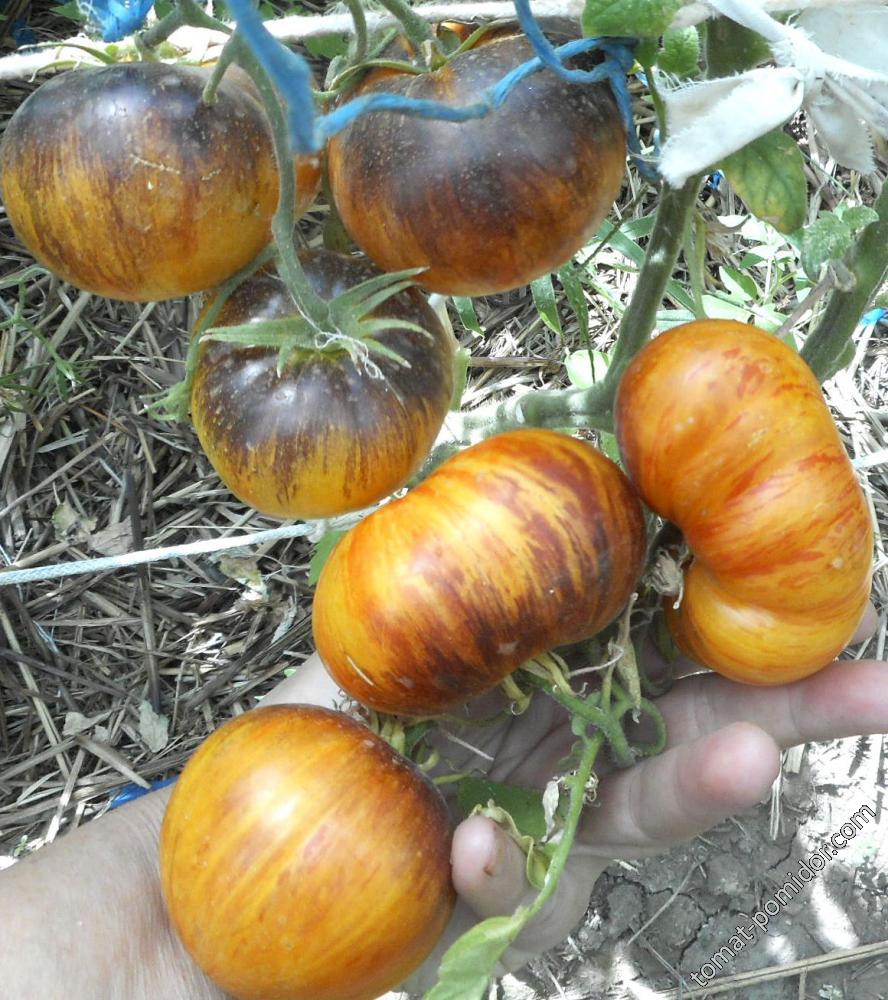
tomatinka wrote:
This year I sowed Alice’s Dream from a different source, and it grew completely different…
Good afternoon! It’s not surprising, the Polish breeder found this beauty in 2015. Meaning, at best, it was an F4 generation this year—of course the genetic line is unstable. But from my seeds last year, our colleagues grew the exact same thing (however, I didn’t get any stripes last year).
I got my Alice’s Dream seeds from Lidia. I grew one bush; the first tomato ripened on June 29. I liked the taste.
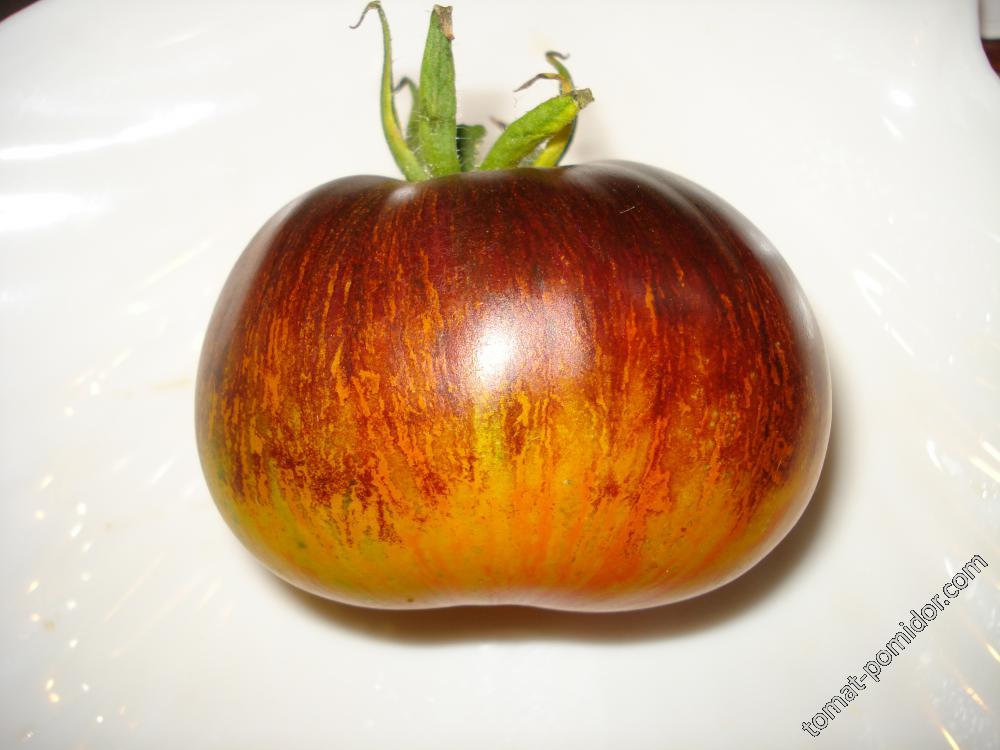
Here is my Alice’s Dream, the taste has fruity notes. My stripes are clearly defined (we discussed this somewhere before). Seeds from Lenochka-Danko.
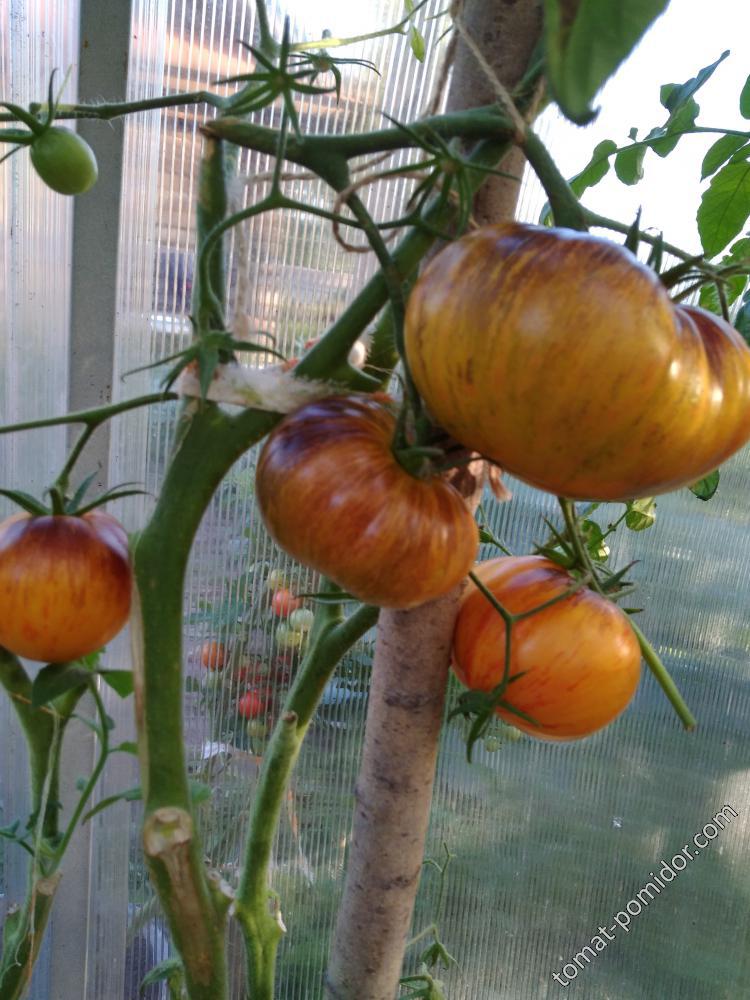

My Alice’s Dream looks like this:
Turned out chubby, highly ribbed, and the required stripes seem visible. It didn’t bury me in a massive yield, but it was tasty. Seeds from Kulik.
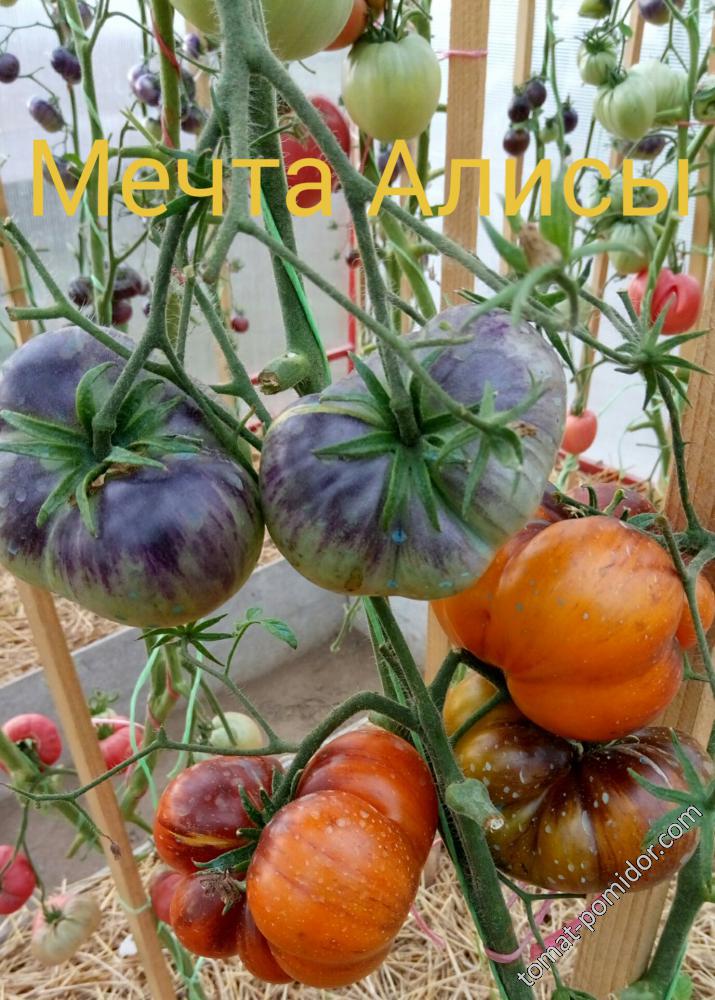
Yes, Alice absolutely segregates (throws off-types). Last summer, I had large striped-orange beefsteaks, very tasty with firm flesh that didn’t turn to mush in salads. This year, from my own saved seeds, I got small round “apples” up to 100-150 g (3.5-5.3 oz) with large seed cavities, soft and runny. The coloring is completely different: a small anthocyanin cap and a yellow belly without any stripes, just a uniform color. The taste is much simpler, without that spicy hint. Not Alice at all!
I got Alice seeds from the Moscow growers meetup. Grew 2 bushes in the greenhouse. Both bushes were identical in shape and color, except one bush only produced 4 fruits, while the second one yielded beautifully. I didn’t get to track the flavor development because we left for vacation, and they almost all ripened at once and probably got overripe. The taste of mine turned out unmemorable. But the beauty is extraordinary — the color, the stripes, and the bicolor cross-section were all present.

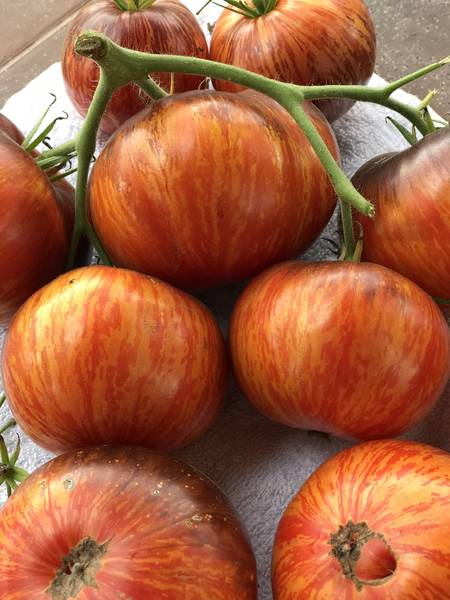
I planted it for my granddaughter Alice. Alice is happy. Very beautiful, in the first cluster they reached up to 500 g (17.6 oz / 1.1 lbs). Seeds from V.V. Redko.
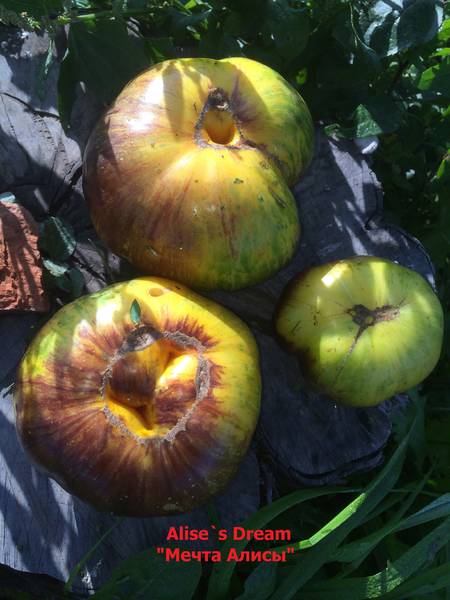
Alice’s Dream this year.
By the end of the season, the fruits were smaller, but just as tasty.

Mine grew outside, it was productive, but the taste didn’t impress me at all—it was bland.
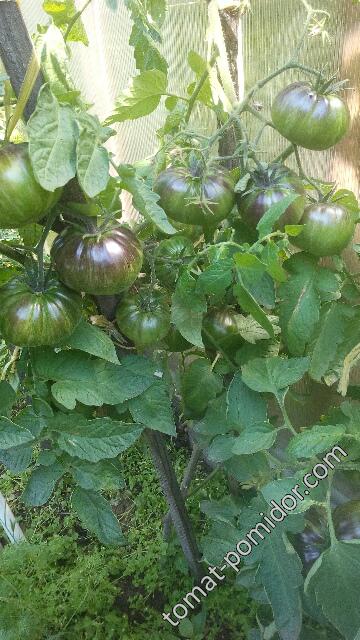
I also planted it this year. I didn’t get many fruits. And as for the taste… I just didn’t understand it. I ate the first one slightly unripe, apparently. It tasted like kiwi, just as sour. And when I was saving seeds from a fully ripe one — the taste reminded me of an unsweetened apricot. You can’t really chop it into a salad. I saved the seeds, of course. But alas, it did not thrill me.
A very beautiful tomato, every fruit has its own unique beauty!
But, unfortunately, mine turned out bland, just like all the other anthocyanin varieties for me.
My version of this variety looked completely different. The anthocyanin was almost invisible, but that’s probably due to a lack of sun. However, why my fruits had zero stripes, I have no idea.
My Alice’s Dream. Early in the season it was light-colored, and by August it turned deep orange.
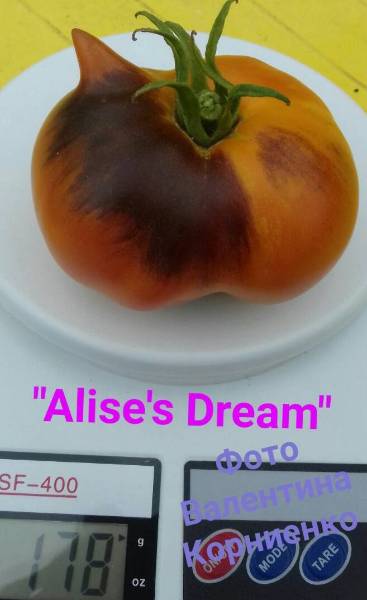
This year, Alice’s Dream ripened among the very first in the greenhouse. We ate the first one last week. I haven’t weighed the larger ones yet, they are still ripening. Out of all 4 years that I’ve grown it, this year it performed the absolute best.
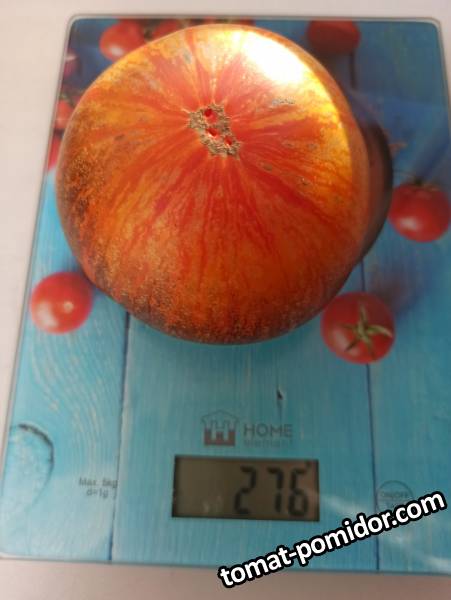
Beautiful. But absolutely no stripes. Just orange with anthocyanin. The flesh is orange with a pinkish tint. Not productive. The taste is rather bland. And the skin tastes like a plum skin. I’ll probably repeat it, but I need to order seeds from a different source. Grew to about a meter (3.3 ft) in Open Ground.
In the end, this variety really loves open ground. Last year I was proving to everyone that it is the most delicious tomato; a friend saved seeds from my fruit and planted them in a greenhouse this year — and it tasted like pure grass.
nierika wrote:
In the end, this variety really loves open ground.
I have to disagree. It depends entirely on your region. Here in Novosibirsk (Siberia), it is only productive and tasty inside a greenhouse.
This year it looks very similar to the Lucid Gem variety for me. Just larger. I harvested them all together from the greenhouse and open ground. Yesterday I cut one open and here is the result. I think this one was from open ground. The ones from the greenhouse were bigger.
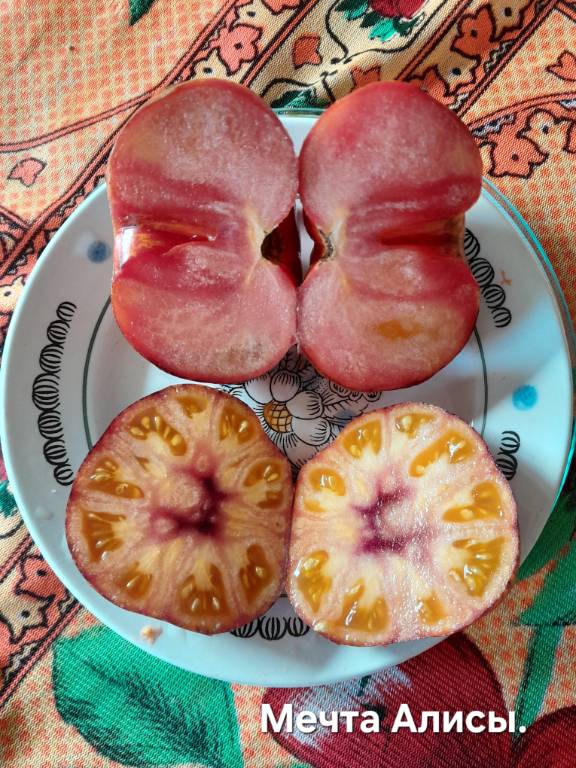
10 years later, I repeated this variety. Very beautiful. Of course, compared to the newest modern releases, the taste is a bit simpler, but I still love this variety very much.