📌 Quick Summary (TL;DR): The Blossom End Rot Myth
- 🍅 The Calcium Myth: YouTube tutorials often tell you that Blossom End Rot (BER) is caused by a lack of Calcium in the soil. In reality, the soil usually has plenty of Calcium, but the plant physically cannot absorb it due to environmental stress.
- 🌡️ The Real Triggers: A sudden heatwave, cold soil, slightly acidic pH (closer to 6.0), or intentionally letting the soil dry out will stop the roots from transporting Calcium to the fruit, instantly triggering BER.
- 🧬 Genetics Matter: Not all tomatoes are created equal. Two-locule fruits (plum, paste, and Roma-type tomatoes) are genetically highly susceptible to Blossom End Rot. Beefsteaks growing right next to them in the exact same soil will often be perfectly fine!
- 📺 Beware the Videos: Most commercial greenhouse videos feature highly bred F1 Hybrids. Don’t blindly apply their watering and feeding schedules to your finicky open-pollinated Heirloom varieties.
🌍 You’re reading a translated thread from our Russian-language forum. These growers garden in climates ranging from Minnesota-like deep freezes to Texas-like heatwaves.
Have you ever struggled with Blossom End Rot even after adding Calcium? Drop a comment below! We’d love to compare notes.
Why YouTube Tomato Advice Fails in the Real World
I gotta chime in here… I just couldn’t hold back… speaking as a practitioner…
Regarding that gardening video from the so-called “professional”… Just look at the video! They are growing commercial F1 Hybrids… those are NOT open-pollinated heirlooms (which is what most of us grow). And their methods do NOT apply to specific backyard cases and climates, even if some of the info is useful. We’ve talked about this a million times.
The dosages and the frequency of watering and feeding are STRICTLY TIED to your specific soil and your specific micro-climate…
A lot of advice out there is useful, but you still need to have your own head on your shoulders to apply it correctly. You have to factor in that we grow different heirlooms, we have different soils, and completely different microclimates… 🤷♂️
MADanilich (Andrey) wrote:
…you have to factor in that we grow different heirlooms, we have different soils, and completely different microclimates.
Yes, Andrey Danilovich, you are absolutely right!
In my case, the cause of Blossom End Rot on my tomatoes was a sudden, sharp spike in temperatures. And to make matters worse, right when the heatwave hit, I was intentionally withholding water and letting the soil dry out. Why? Because I had just fed them Calcium Nitrate, and my greenhouse tomatoes got way too lush and went into vegetative overdrive.
So I tried to fix one problem by drying out the soil, and caused another. Like the saying goes: be careful what you wish for… 🤦♀️🍅
Tatiana2305 wrote:
In my case, the cause of Blossom End Rot (BER) on my tomatoes was…
Tatiana, did ALL of your tomatoes get hit with Blossom End Rot?! I highly doubt that… 😉 Was it just one specific variety by any chance!??
Here is where I want to remind everyone of a long-forgotten truth: Genetics.
This is a massive factor that you cannot ignore. If someone, somewhere, saved seeds from a specific fruit, you have to remember – genetics play a huge role. You might sow those seeds the next year and see no BER, but a few years down the line… boom, the bottoms of the fruit rot. I won’t get too deep into the theory here.
This is exactly where those environmental conditions everyone talks about kick in. Everyone screams: “It’s a Calcium deficiency!” But man does not live by bread alone. Same goes for the plant. There might be plenty of Calcium in the soil, even a surplus of it, but the plant CANNOT absorb it for a whole number of reasons:
* The soil pH is slightly acidic, dropping closer to 6.0.
* Low soil temperature compared to the air temperature… EVEN IF soil moisture is perfectly normal.
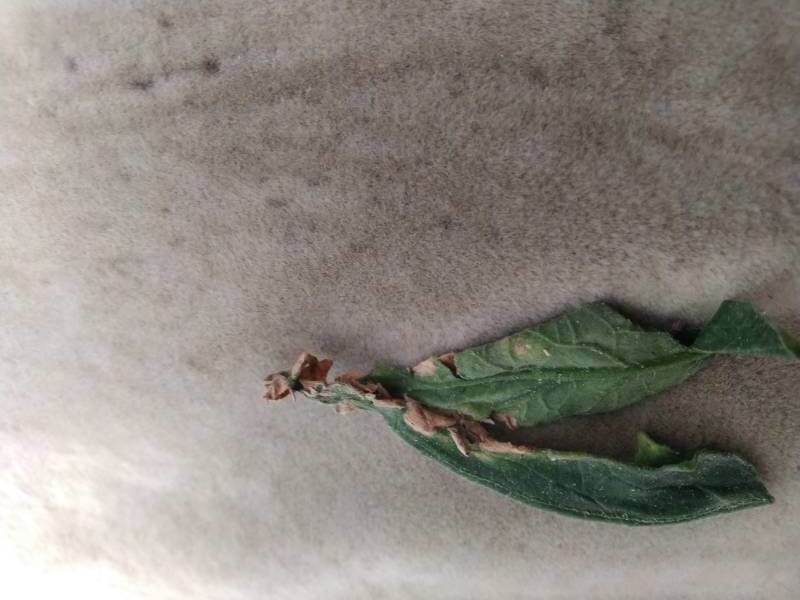
The leaves, especially on indeterminate varieties, are the first to tell you this. Brown spots appear on the lower leaves, which many people confuse with Late Blight or Leaf Mold. A lot of diseases look alike. You have to be observant and know the signs at the VERY beginning.
And then there’s improper mixing of fertilizers. People forget about the chemical compatibility of elements… Agronomists and these so-called “scientists” keep quiet about a lot of things, they just “show off” in their videos, but deep down they know the real science of fertigation.
Basically, there are a lot of conclusions to draw, but how do you get this through to people!? That’s the real problem… 🤦♂️
Alright, dear gardeners, those of you who live right next to your patch can keep a close eye on things, but for “weekend warriors” who only visit their plots on Saturdays, it’s basically impossible to catch these things in time. So just keep doing what you’re doing, slowly gaining experience in the finer details – it never hurts.
Good luck and great harvests to everyone! 🚜🌾
MADanilich (Andrey) wrote:
Tatiana, did ALL of your tomatoes get hit with Blossom End Rot?!
No, Andrey Danilovich, you called it. It was only 2 specific varieties – both of them plum/paste tomatoes.
Now I know that things aren’t as black and white as the video bloggers claim. You really have to account for specific conditions. But man, wouldn’t it be nice to just have a “magic pill” – a universal cure for all tomato disasters… 😂
Tatiana2305 wrote:
It was only 2 specific varieties – both of them plum/paste tomatoes.
I figured as much, Tanya. Two-locule fruits (paste/plum types) are the absolute most susceptible to Blossom End Rot. There are some exceptions for flat-round beefsteaks, but mostly it’s the plums.
And to have your “magic pill”, you really don’t need much:
* Know your variety and its specific needs.
* Know the signs of diseases that the plant shows you through its leaves, and react quickly.
The rest is just details = soil, microclimate, maintenance… and THAT’S IT!!! Very simple. And everything will be A-OK!
Of course, there are things out of our control… weather, Mother Nature and her “quirks.” Fighting that isn’t always easy. We try to outsmart her!!! Sometimes it works, but it’s an uphill battle… 🌦️
Andrey is dropping some hardcore horticultural truth bombs here. If you grow elongated paste/plum tomatoes like San Marzano or Roma, you will almost certainly battle Blossom End Rot (the bottom of the fruit turning black and leathery).Biologically, these are “two-locule” fruits (meaning they only have two seed cavities inside, unlike a beefsteak which has many). Their genetic vascular structure makes it incredibly difficult for the plant to pump Calcium all the way to the very tip of the elongated fruit.Even if you pour gallons of Calcium onto the soil, a simple heatwave or a few days of dry soil will disrupt the water pressure in the plant, and the tip of that plum tomato will instantly die and rot. Don’t blame your soil – blame the genetics and the watering schedule!