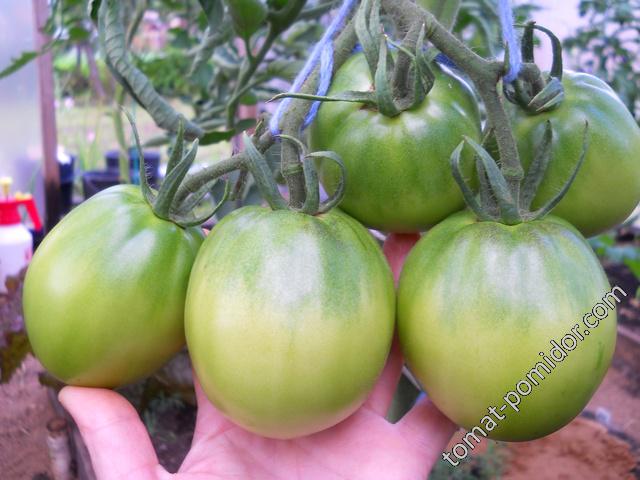
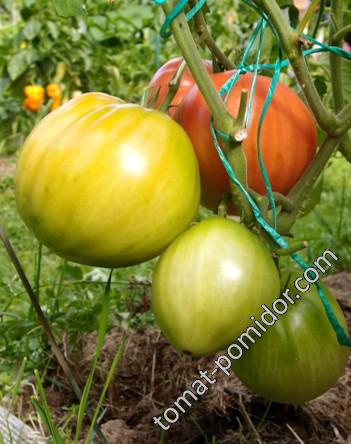
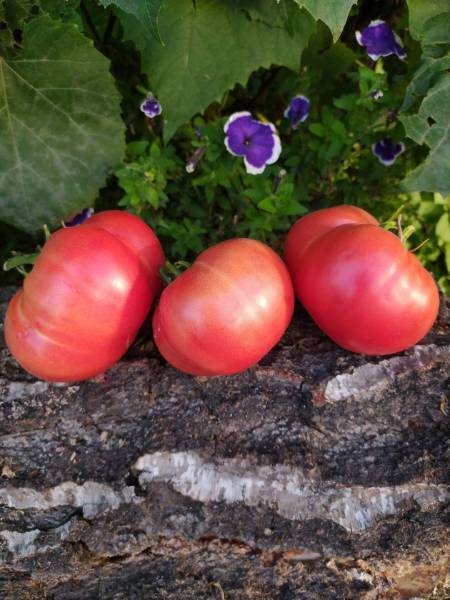
Growers’ Notes and Photos (USDA Zones 3-4 Experience)
Indeterminate, tall, mid-season salad variety.
Fruit are large, handsome ribbed beefsteaks, scarlet red and very meaty. Flavor is traditional, classic old-school tomato. Moderate producer here. Ran it outdoors in the open dirt, but honestly, this variety belongs in a protected greenhouse.
Seeds came from Tatiana Kouchnareva.
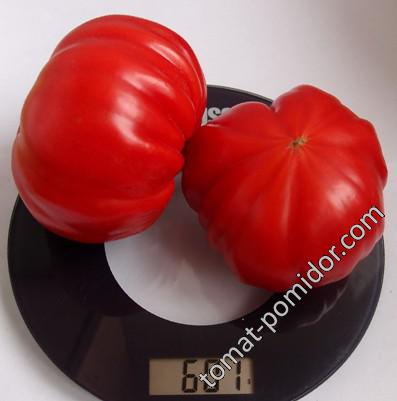
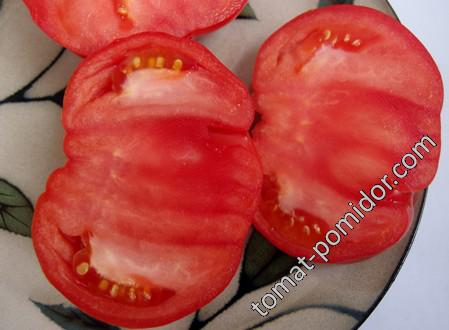
Outstanding variety, a genuine giant slicer. Greenhouse grown, obviously.
Even on the higher trusses, fruit were easily sizing up around 14 oz (400 g). Flavor was quite good, though to be fair, every tomato tasted great in my garden this year, even the outdoor determinates.
Definitely runs late. Brilliant scarlet red color. The one in my photo was picked a little green by accident.
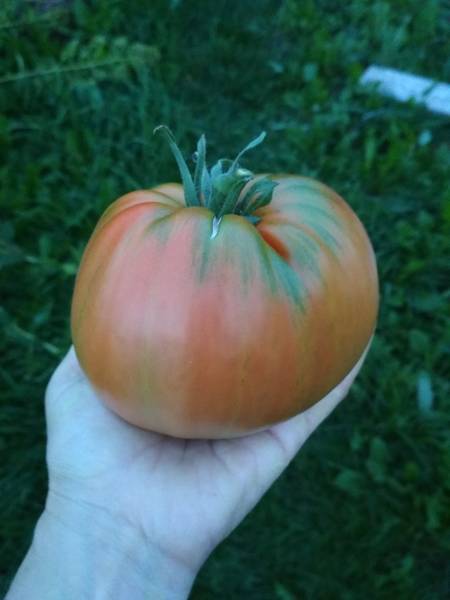
Started my seeds on February 20, and this Lucchese is only just beginning to break color. Seriously late season for me! But the fruit on that vine are absolute monsters.
The proper Italian pronunciation is “Loo-kay-zay.” Can we get the thread title updated to reflect that?
This is one for the true big-beefsteak lovers. Hands down, my biggest fruit of the whole season came off this vine.
It did not run late for me at all. Gorgeous red stunners with deep fluting around the stem end. Solid meat, the flesh is slightly dry and dense. Straightforward old-time tomato flavor, and to my palate, it carried a very pleasant hint of tartness.
Can’t tell you the natural height because mine snapped right after transplanting, but it bounced back on suckers and finished around 5.5 ft (1.7 m).
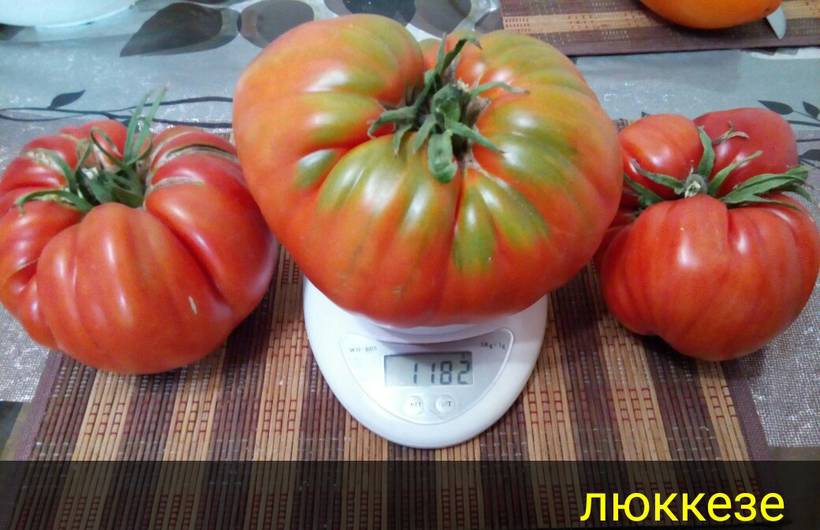
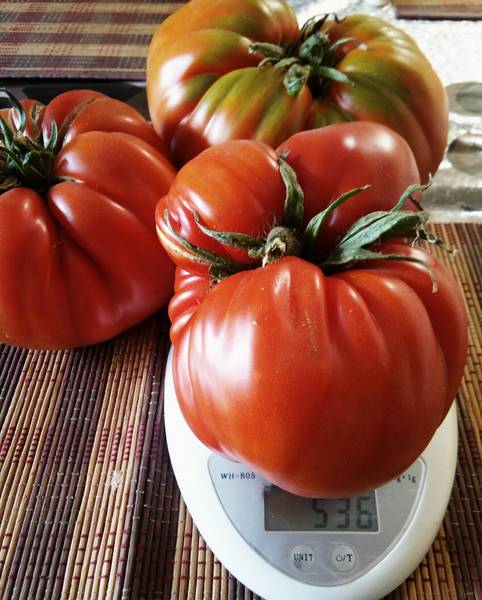
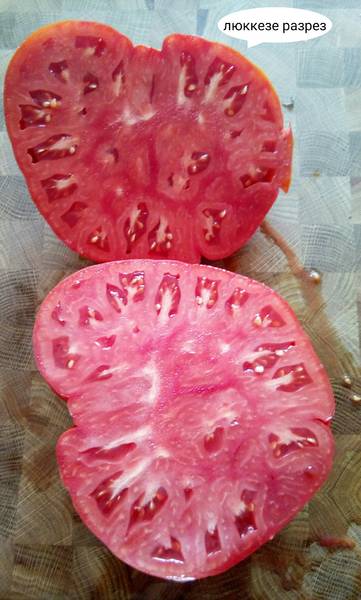
Gorgeous red stunners with deep fluting around the stem end..
They look magnificent! I love these hefty, substantial beasts 🙂
Elya, did you run yours as a double stem?
Elya, did you run yours as a double stem?
Yes, two stems. The vine itself is very sturdy. Clusters hold these heavyweight monsters easily without kinking or buckling.
Edited December 19, 2019 by elja1968
Full Summary: Vine Habit, Fruit Size, and Maturity
- 🌿 Vine Habit & Sturdiness: Vigorous, thick-stemmed indeterminate vine. Reaches 5.5-7 ft (1.7-2.1 m) under cover. Unlike fragile oxhearts, Lucchese develops thick truss stems that carry massive fruit loads without requiring emergency tape or branch slings to prevent kinking. Responds very well to training to two leaders.
- 🍅 Fruit Size & Ribbing: Deeply fluted, ribbed shoulders with an irregular beefsteak shape. Easily tips the scales at 14 oz (400 g) and frequently produces the largest fruits of the season in home gardens, even on higher clusters.
- 👅 Texture & Flavor: Dense, meaty, and slightly dry interior with small seed cavities. Flavor is classic, savory, and well-balanced with a pleasant old-fashioned tart acidity rather than extreme sweetness.
- ⏱️ Days to Maturity: Generally considered late season (80-85+ days). In short northern regions, early February sowing and greenhouse protection are necessary to get full color before autumn frosts, although southern Urals growers reported mid-season timing during warm summers.
- 📦 Culinary Versatility: Fantastic slicer for classic platters, and an outstanding candidate for rich Italian pastes, puree, or canning due to low moisture content and minimal seed pockets.
- 🌎 Tested Growing Zones: Successfully harvested across cold continental zones (USDA Zones 3b through 4, including Central Russia, the Urals, and Bashkortostan).
Lucchese (pronounced loo-KAY-zay, meaning “of Lucca”) is a traditional heirloom originating from the province of Lucca in the Tuscany region of Italy. In Italian gardening traditions, large fluted varieties from this region are prized both for slicing with olive oil and salt, and for processing into rich, thick winter passata due to their low gelatinous seed pulp.
The seed source mentioned in the thread, Tatiana Kouchnareva, is the founder of Tatiana’s TOMATObase in British Columbia, Canada. Her extensive heirloom preservation work was pivotal in making rare regional European and Soviet accessions available to North American and international collectors.