Jump to Discussion Topics:
Early Trials and the F5/F6 Genetics Debate
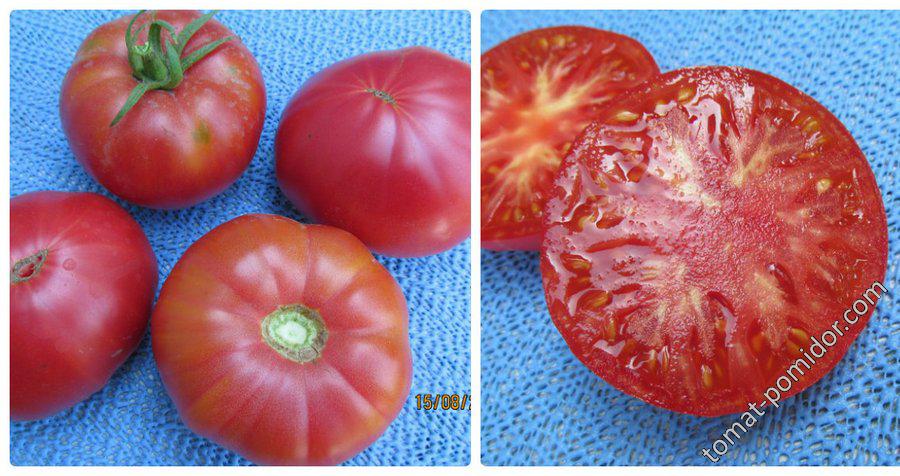
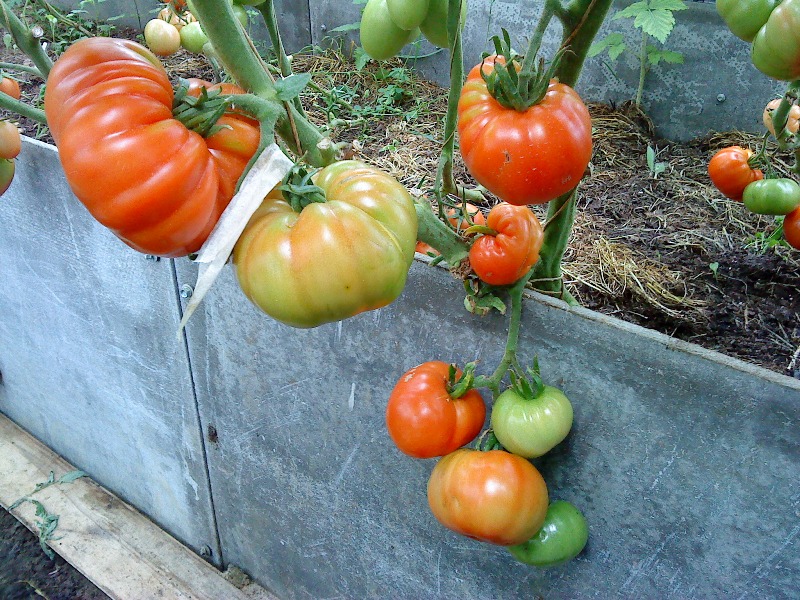
Really liked this one. Trained the plant to 3 or 4 stems. Reached about 5.5 ft (1.7 m) tall. Tended toward mid-to-late season for me, but was a heavy cropper. Fruit is firm, rich, sweet with just enough acid kick, super juicy, and stunning to look at. Great fresh for slicing in salads and holds up nicely for whole-pack canning too.
Edited September 11, 2015 by Drosera
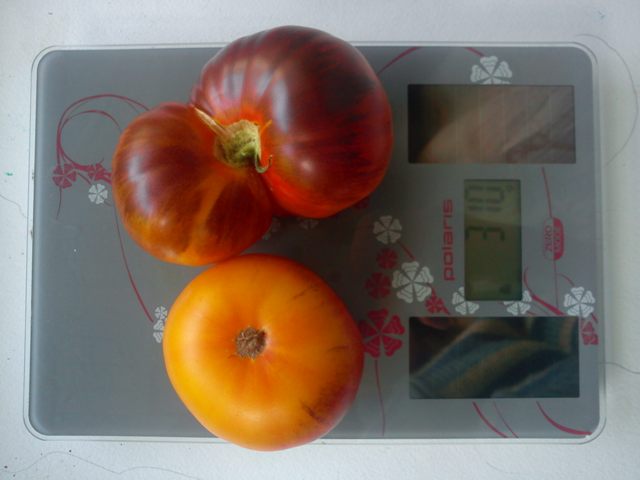
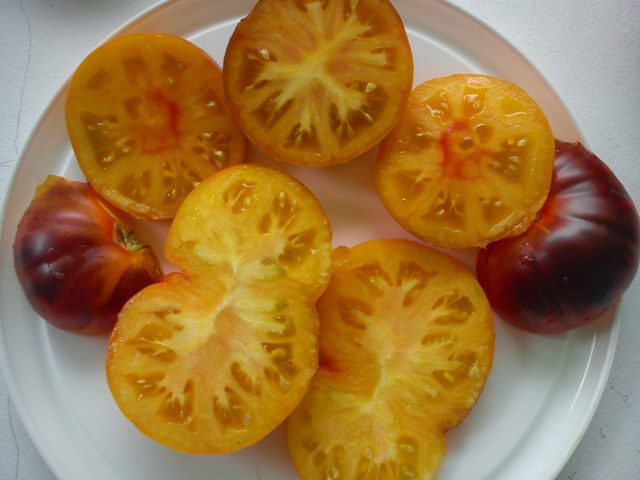
Grew P20 x Beauty King side by side from two seed sources: Kulik and Kraft.
The Kraft selection was mid-early, productive, and stayed around 3.5 ft (1 m) outdoors in open ground. Gorgeous fruit, and even with our cold, drenched summer this year, they turned out genuinely sweet and tasty.
The selection from Kulik turned out later to ripen, with a touch more tartness. Didn’t snap any photos of that one.
Here is the Kraft line:
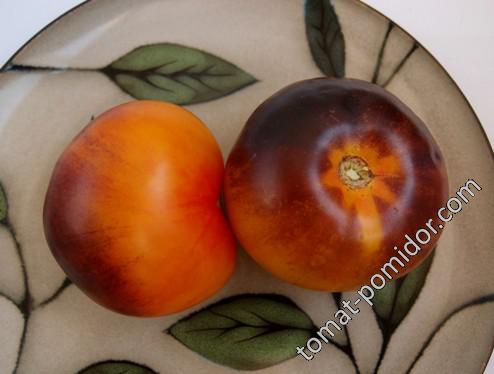
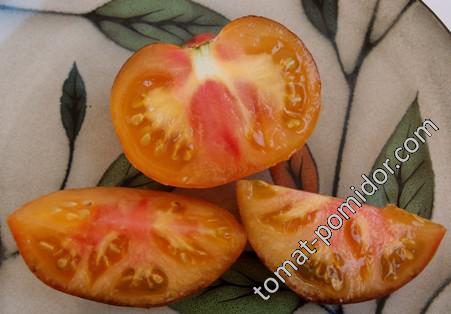
Grew P-20 x B.K. from Kulik in open ground. Vines hit 5 ft (1.5 m). In my garden it performed as a mid-late season producer, pumped out plenty of fruit, and tasted delicious. The slicers ran 7 to 10 oz (200-270 g), very juicy and noticeably sweet. 👍
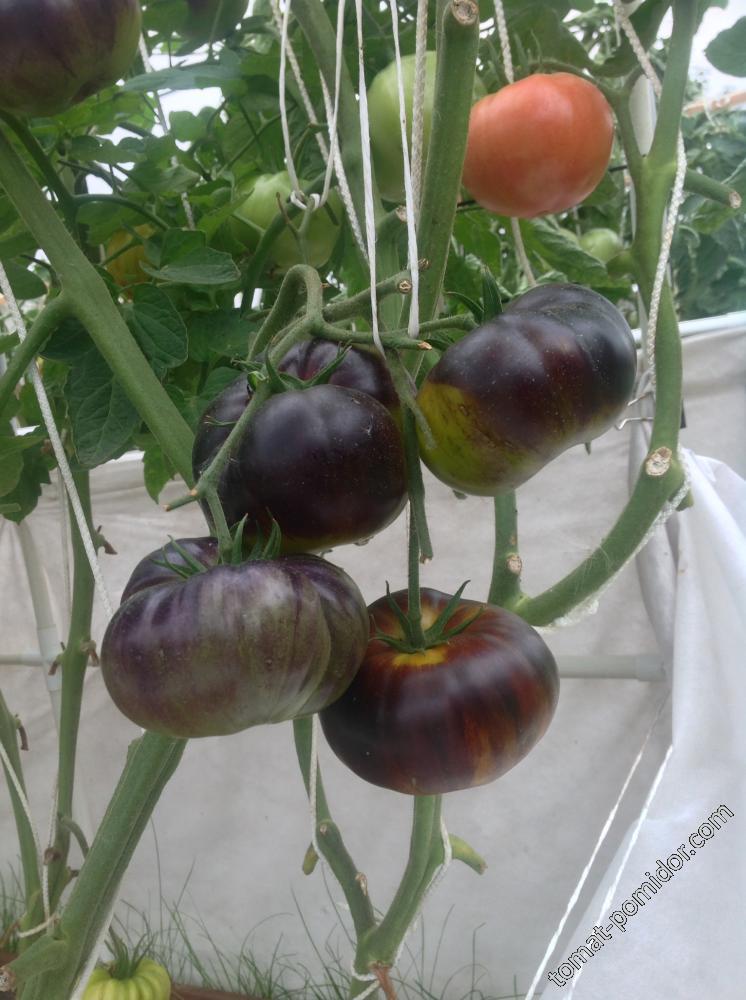

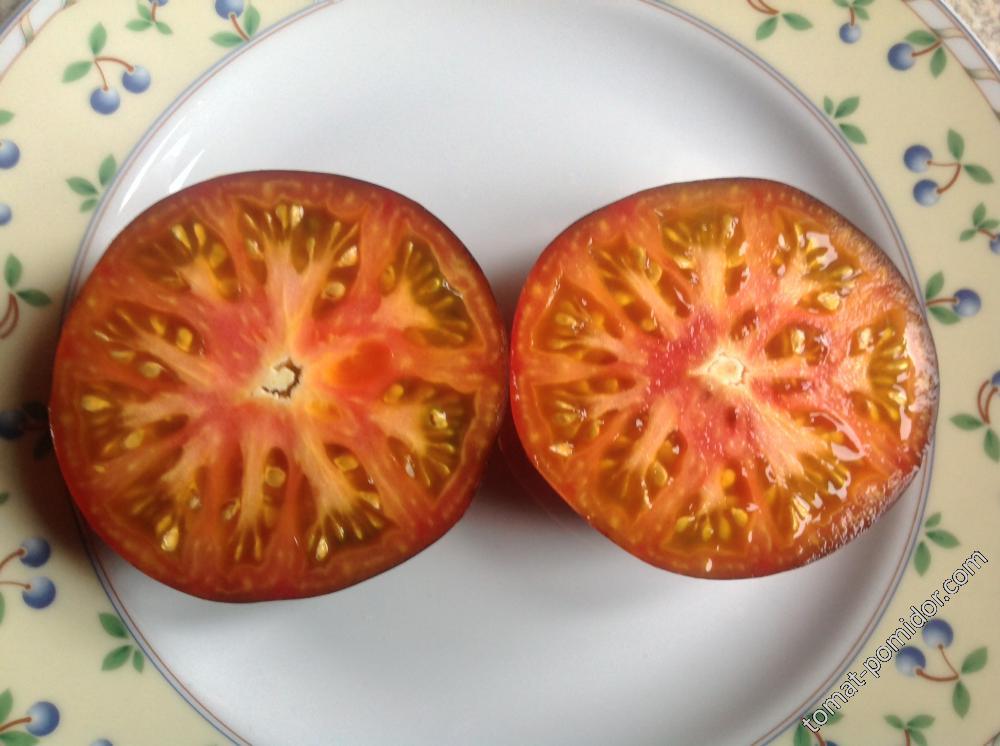
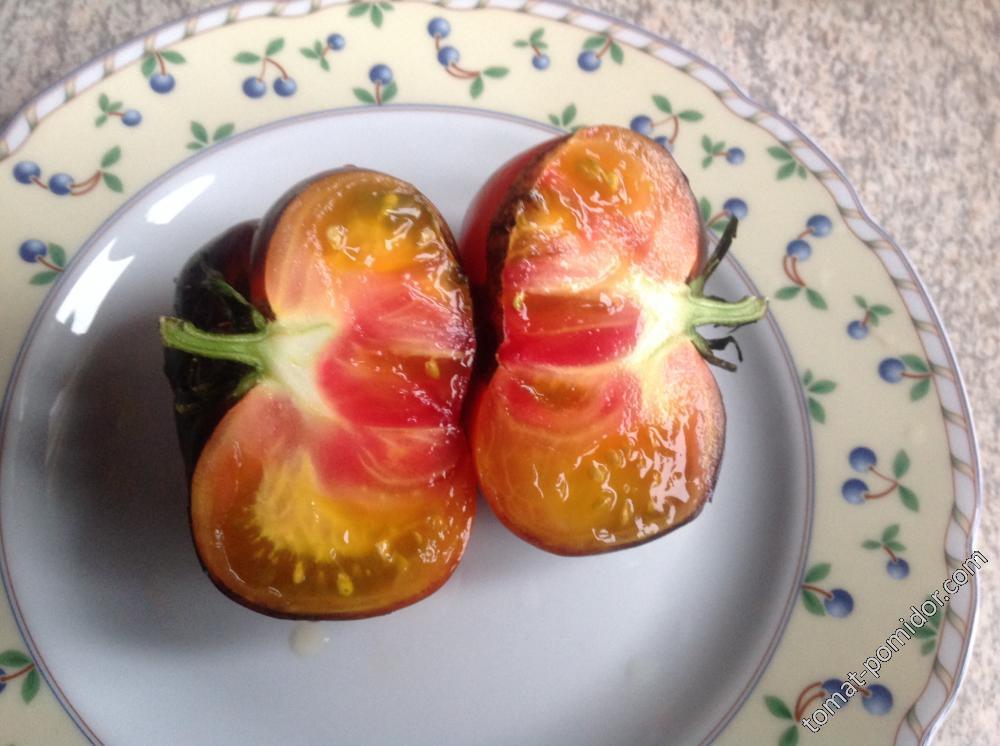
Here is how P20 x BK F5 turned out for me from Kraft’s seed stock.
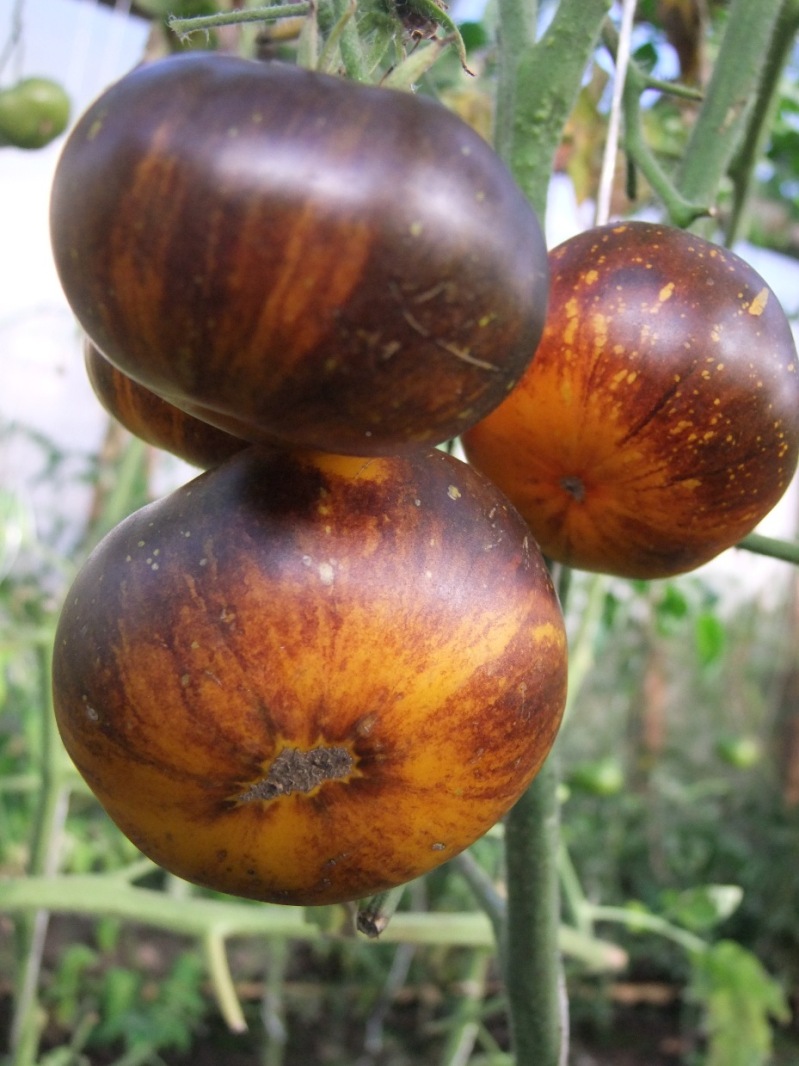
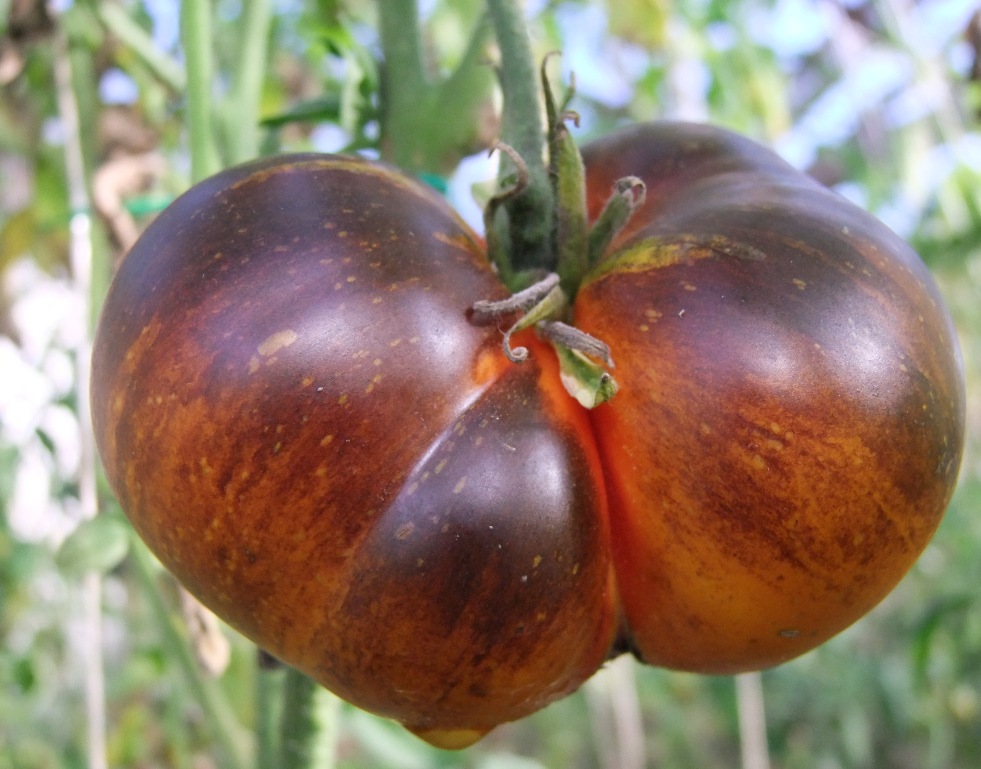
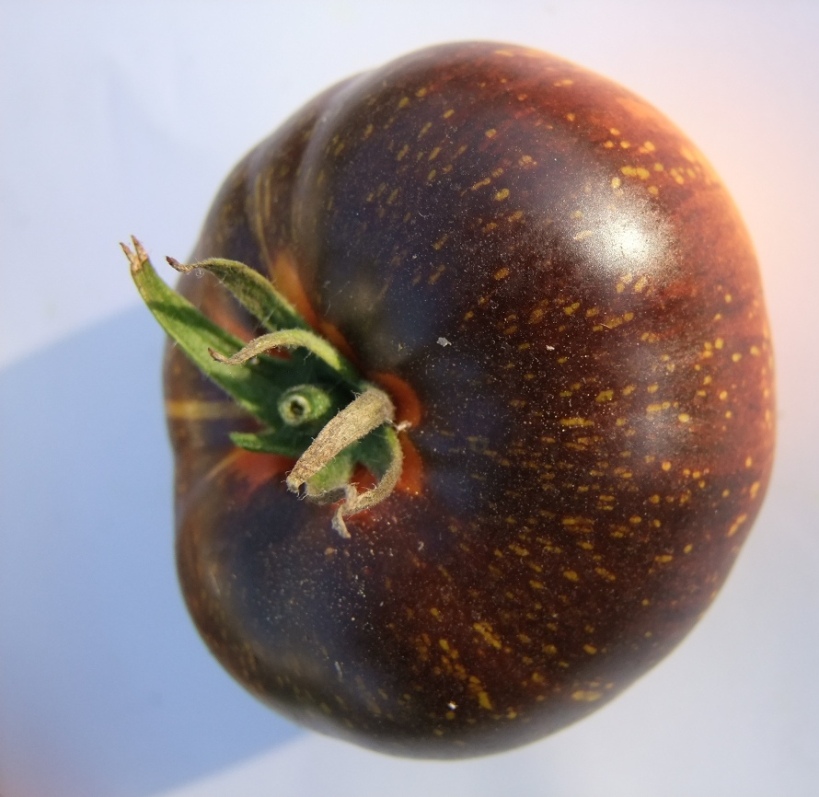
Sandr:
Here is how P20 x BK F5 turned out for me from Kraft’s seed stock.
Tastes as good as everyone says, I bet? 🙂
Sandr:
Here is how P20 x BK F5 turned out for me from Kraft’s seed stock.
Super gorgeous colors! What did the fruit weigh?
Folks, how did you order seeds from Kraft? What a stunner, I just can’t resist.
Edited September 15, 2015 by Alisa
Flavor was solid, even with the cool summer we had. Weight stayed mostly under 7 oz (200 g), but had one top out over 10 oz (300 g).
Kraft doesn’t sell seeds outright. He trades within a very tight private circle, which I’m not part of, so I had to get these through an intermediary who trades directly with him.
Grew this one this year from Kulik’s stock. Open ground vines topped out at 4.3 ft (1.3 m). Turned out to be a mid-early producer with outstanding flavor. Holds on the vine forever without getting mushy. Puts out tidy clusters of 3 to 5 fruits, averaging 4 to 5 oz (120-130 g), uniform as clones.
Top-notch tomato. Total favorite! Putting it in the dirt every single year, no matter how many new varieties show up.
Here is what mine looked like:
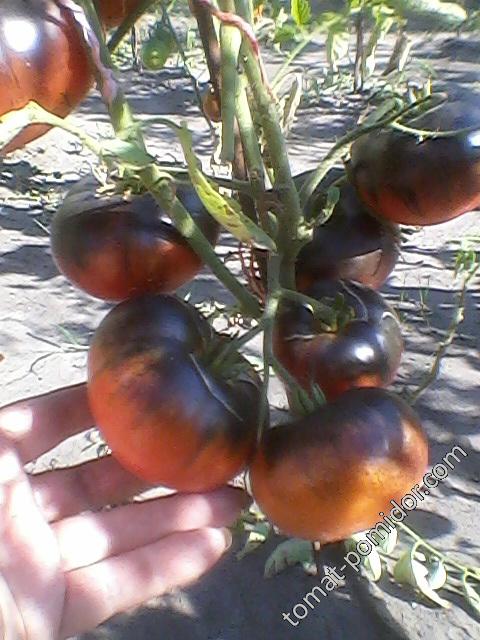
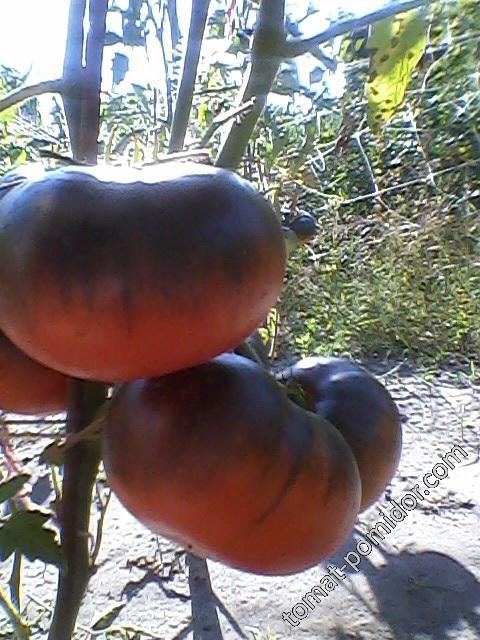
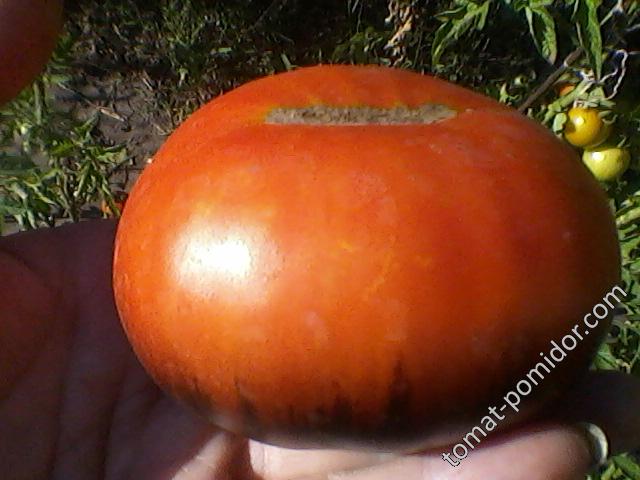
Even though the cross symbol ‘x’ is sitting right there in the name, folks keep referring to this as a fixed ‘variety’. Segregation is going to keep happening in the upcoming generations. Even looking at the photos posted so far, you can clearly see some plants kept the green stripe (gs) gene from Beauty King, while on most others it is already gone.
Drosera:
Even though the cross symbol ‘x’ is sitting right there in the name, folks keep referring to this as a fixed ‘variety’. Segregation is going to keep happening in the upcoming generations. Even looking at the photos posted so far, you can clearly see some plants kept the green stripe (gs) gene from Beauty King, while on most others it is already gone.
If people are buying seed at the F5 or F6 generation, it is basically on the doorstep of being stable. I’ve grown Beauty King myself, and when ripe it is yellow with red striping. Where would green stripes come from on a finished fruit?
There is no such thing as ‘almost stable’ in genetics. The purple/antho coloration is governed by dominant traits like Abg or Af. Whichever one was in the original parent line, dominant traits show up in both homozygous and heterozygous plants. To truly stabilize an open-pollinated variety, you have to select for homozygous plants. Because there is little to no obvious difference between homo and heterozygotes early on, growers end up continually saving seed from heterozygous plants, rolling the dice year after year.
As for the green stripes, that refers to the green stripe gene, expressed as radial green banding on the skin of unripe fruit.
Drosera:
To truly stabilize an open-pollinated variety, you have to select for homozygous plants…
By the time breeders hit F9, they slap an intriguing name on it and release it into commerce as a named variety. We will probably see this marketed under a new name soon enough.
From what I have gathered on this F6-F7 material, the parent lines were Beauty King and P20 out of OSU. There were no subsequent outcrosses. As you can see from the photos above, weight and fruit type are already locking in nicely across wildly different microclimates and growing setups. Flavor seems consistent too, though you would need side-by-side trials to know for sure. That is exactly what breeders do at the F9 stage before releasing them commercially in the US.
Drosera:
…
Here is another sibling line from those exact parent genetics, straight from the same breeder and trial farm:
“We’ve found another interesting manifestation of Aft/atv in a segregating breeding line tracing to our cross P20 x Beauty King. Note the ‘tiger stripes’ pattern. Although we are yet unable to stabilize the phenotype, anthocyanin accumulates in lateral stripes on developing and ripe fruit (coexpression w/ Fs gene). The Fs phenotype appears to be highly influenced by environment, complicating the breeding. This photo is also from our 2013 Pennsylvania nursery – nickname for now is Bengal Tiger.”
Brad Gates already released a very similar variety with matching color, just smaller in size, named Blue Gold. And everyone knows Brad’s favorite tomato to breed with has always been his Beauty King.
The color variations are plain to see in the photos posted here. And taste is entirely subjective, heavily driven by weather and soil.
Just because seed sellers call F9 lines ‘stable varieties’ doesn’t mean they won’t throw off-types. The two parents used here were radically different across multiple dominant and recessive traits: pigmentation, fruit size, cluster counts. Recessives will continue popping up down the line, and folks will just blame it on bee crosses or rogue seed mixups.
Edited December 5, 2015 by Drosera
Alisa:
…nickname for now is Bengal Tiger…
Bengal Tiger is breathtakingly gorgeous, no question, but it’s still not a stabilized variety. 🤐
Drosera:
Recessives will continue popping up down the line, and folks will just blame it on bee crosses or rogue seed mixups.
Most of the varieties listed in our forum directory are modern introductions released over the last decade. As long as growers follow careful seed-saving protocols, selecting only fruit that matches the target phenotype for color, flavor, shape, and size, there won’t be issues. Seed stewards play a vital role in locking these lines down too.
Drosera:
Bengal Tiger is breathtakingly gorgeous, no question, but it’s still not a stabilized variety. 🤐
Nowhere close to stable yet. If the traits hold, it’s roughly at F3. Probably won’t see a commercial release for another two or three years.
Have you ever tried doing your own manual crosses?
Haven’t tried it yet, but seeing this massive wave of purple and antho hype everywhere, the itch is definitely there.
Anyway, getting way off-topic here.
What an astonishing tomato! That paint job is hypnotic. 😲 If the eating quality matches the looks, this is heading straight onto my must-grow list.
Color Segregation: Red, Orange, and Chocolate Offspring
A few more shots from my garden…
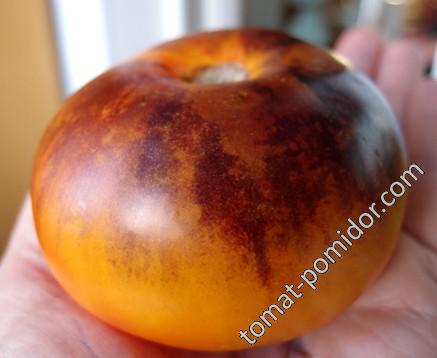
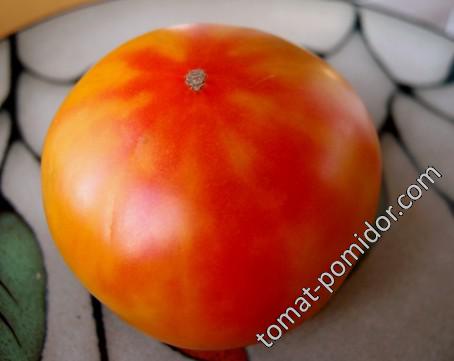
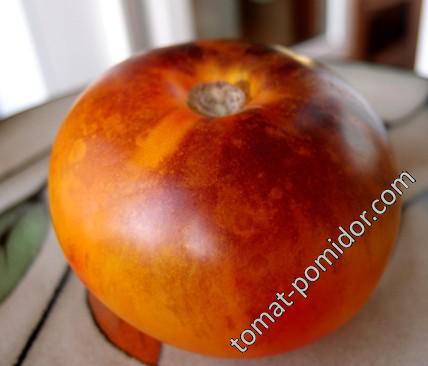
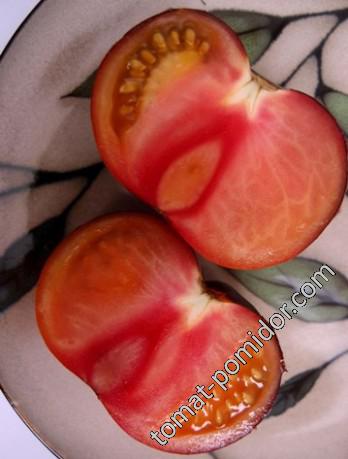
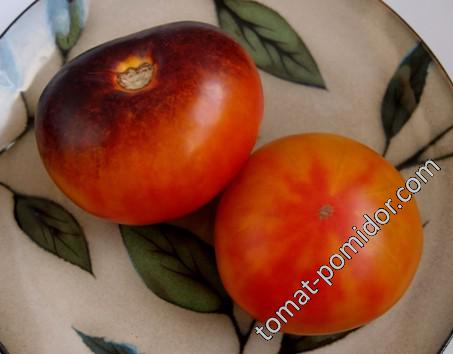
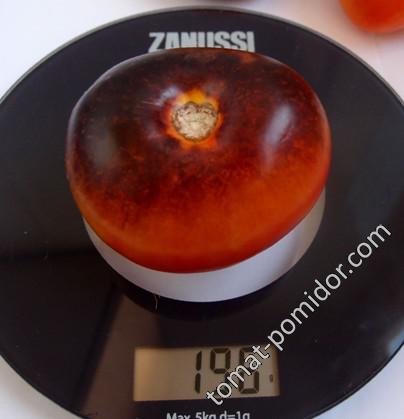
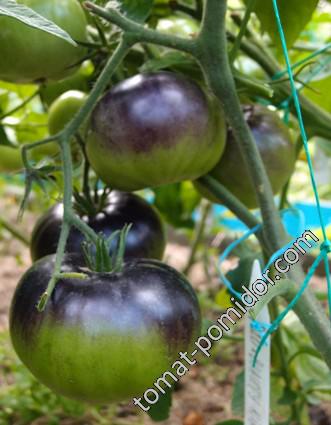
Seeds from Kulik, grown outside in open ground. Delicious, stunningly beautiful, and keeps great on the counter. Really loved this one. 👍
Yield was pretty disappointing for me, only got three runty tomatoes off the whole vine. But man, that flavor! Unbelievable. Definitely giving it another shot next season. They were candy-sweet with such an exotic fruit kick, didn’t even taste like a regular tomato at all!
Cranked out great yields for me, counted 28 slicers on the vine weighing 7 oz (200 g) and up. Gorgeous and delicious fruit. Seeds were from Kulik.
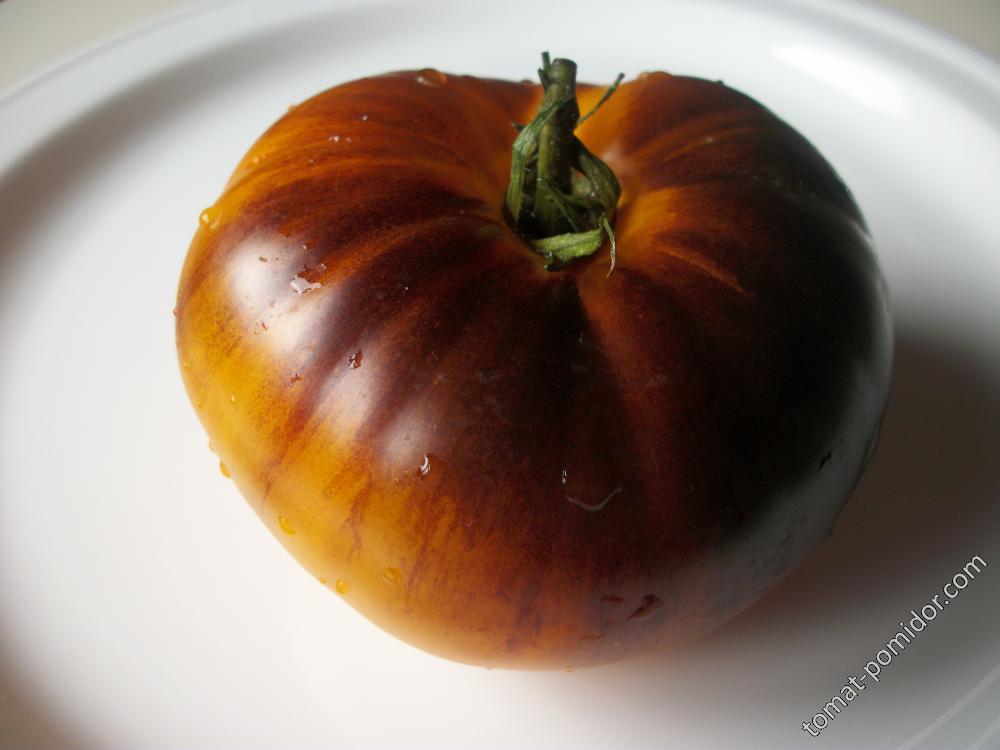
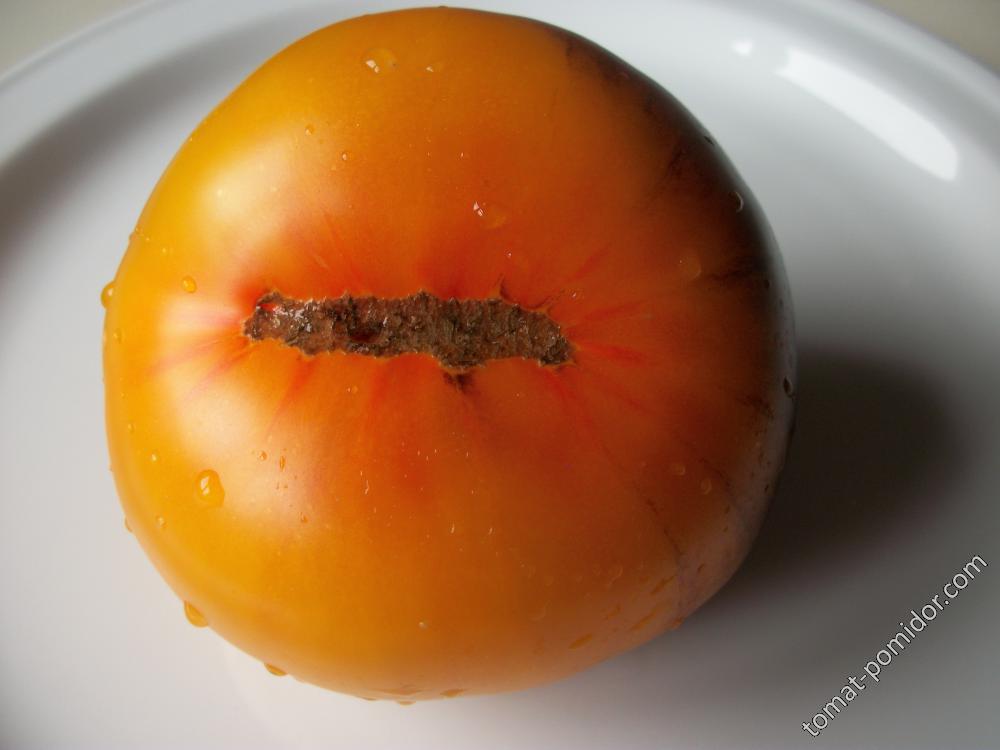
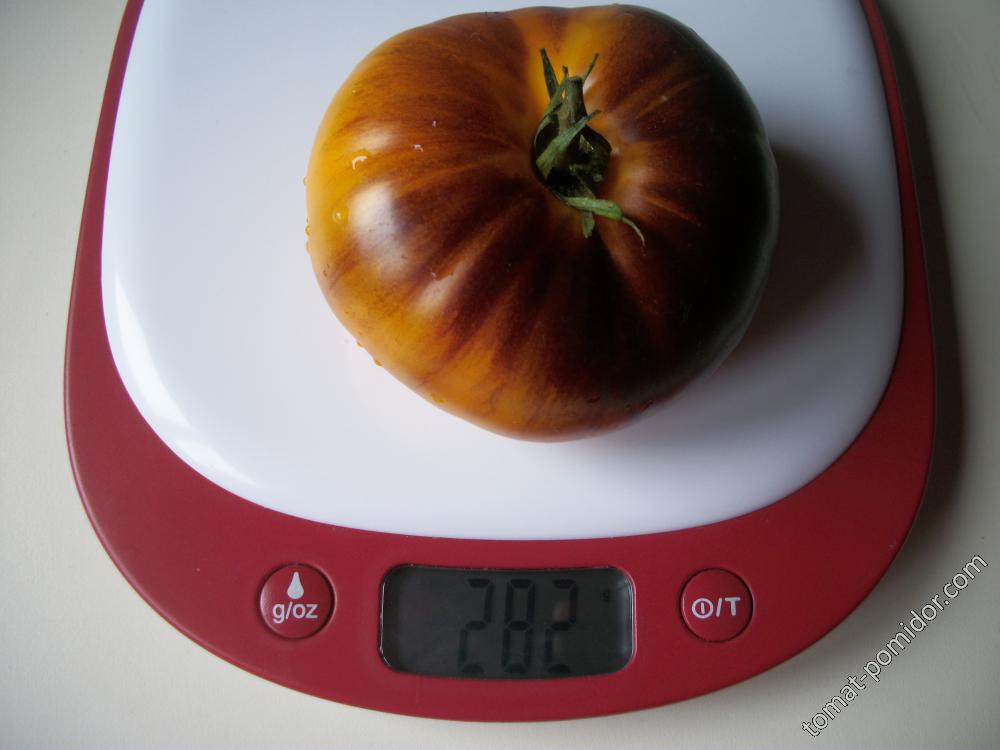
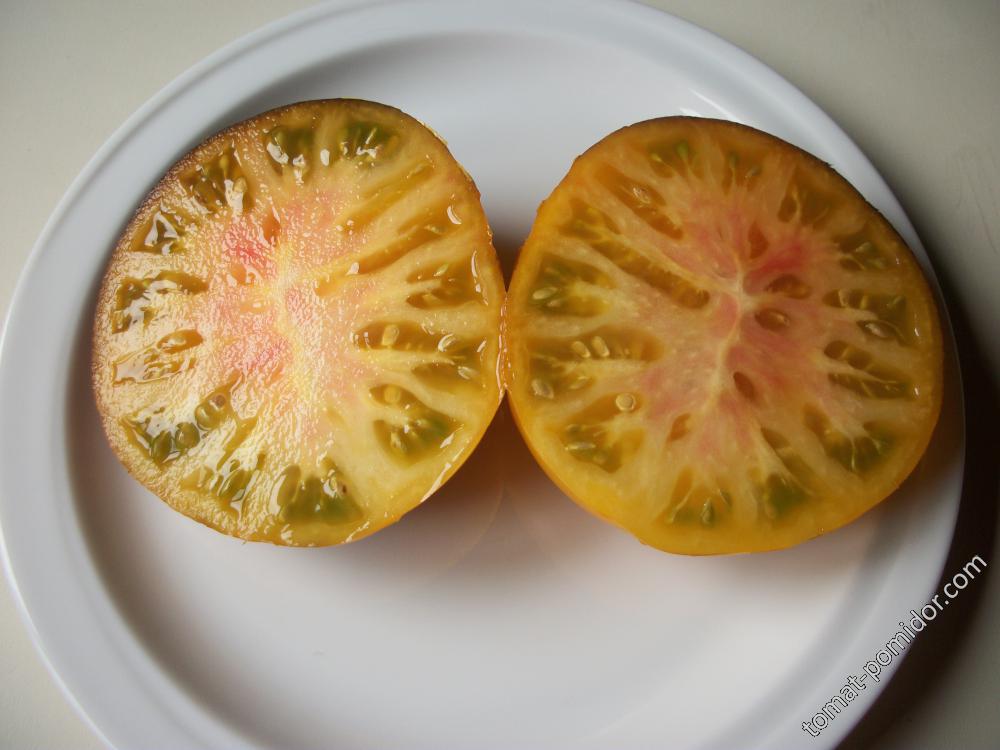
Loved this variety to pieces. Heavy cropper, beautiful, and tastes amazing! 👍😋 Earned a permanent spot on my favorite list. 😘
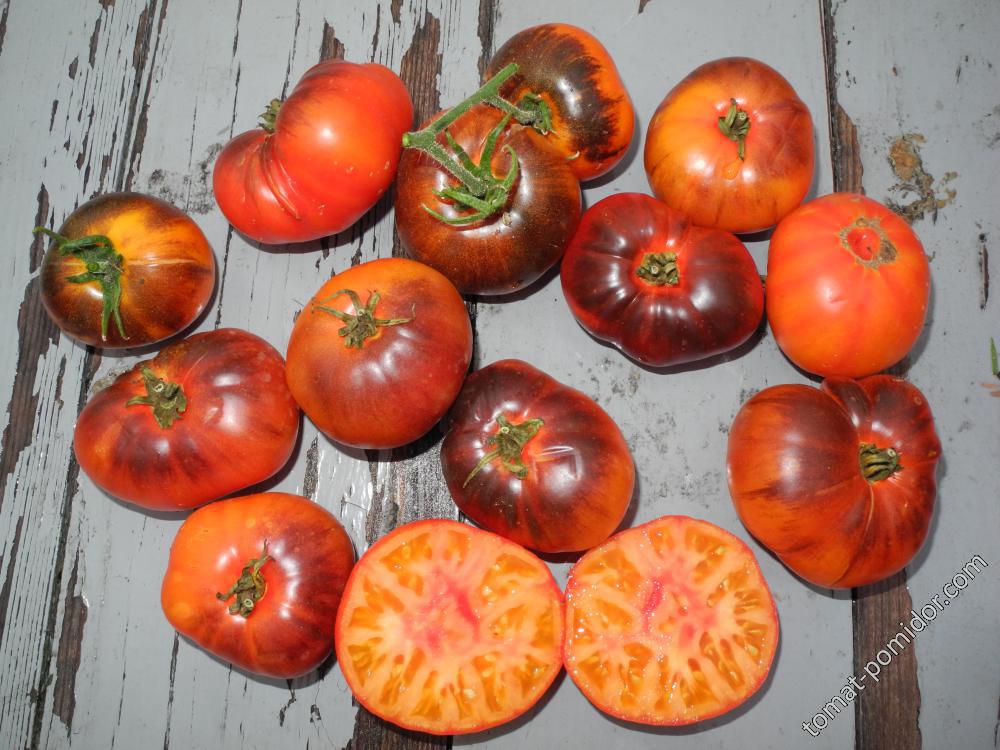
Grew two plants and harvest was pretty decent. Across the two vines, one tomato came out yellow with blue shoulders, while all the rest were like this:
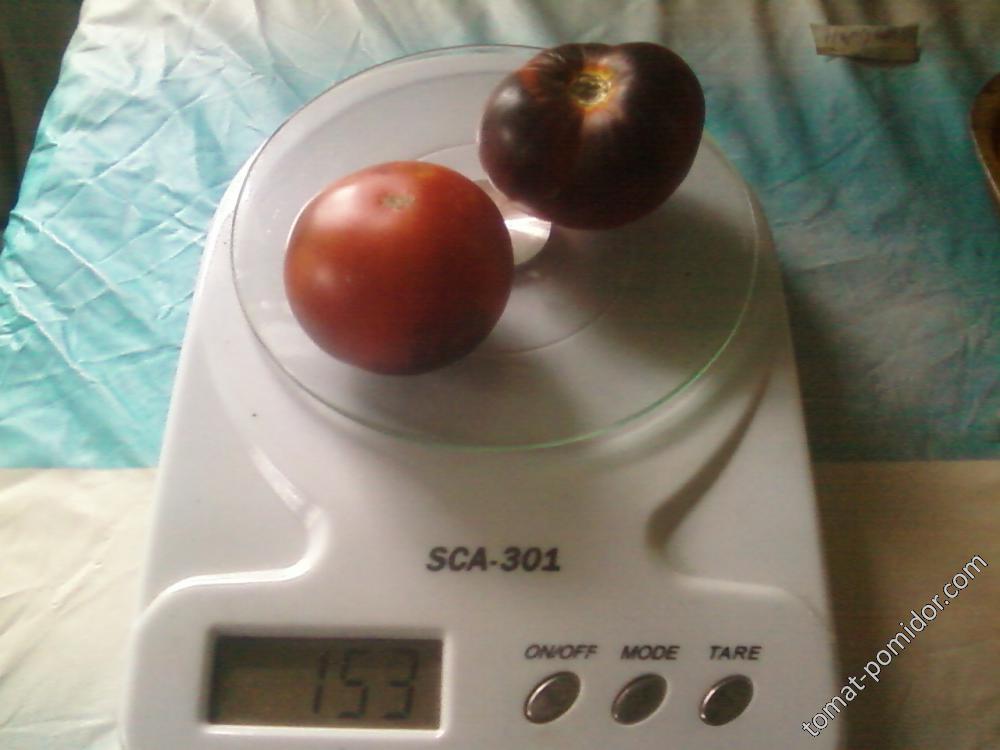
tomatinka:
Grew two plants and harvest was pretty decent. Across the two vines, one tomato came out yellow with blue shoulders, while all the rest were like this…
Got segregation from Alena’s seeds as well (I think her batch was around F6). Out of four plants, three gave me orange-and-blue fruit, while one, the very first to ripen, gave red-and-blue fruit.
The orange-blue ones were heavier, oblate with nice shoulder ribbing, while the red one was on the smaller side, disc-shaped, and very symmetrical. The red fruit tasted sweeter to me, while the orange-blue had a mild refreshing tartness. Saved seed from both, labeling the red one separately. Planning to grow the red off-type again next season because the sweetness won me over. Excited to see if segregation continues.
Yield for me was moderate because I couldn’t decide how many stems to run. In the future, I’ll train them to 3 or 4 stems to get fruit set early before the summer sizzle. Once the real heat hits, my vines completely stall out and only start setting again after temperatures drop, basically a month before frost. Tested 1, 2, and 3 stems this year, and 3 stems yielded the best by a mile. Also gonna give them a little shot of nitrogen next spring since they clearly have a generative habit.
Mine was grown from Lena’s (Danko) seeds. 🙏 Grown outdoors in open ground, two plants side by side. Both grew identically to about 4 ft (1.2-1.3 m). Yield was average, mid-season ripening. Fruits are gorgeous, beefy in the 5 to 9 oz range (150-250 g), vibrant orange with indigo shoulders. Flavor was superb, very sweet without any sharp acidity.
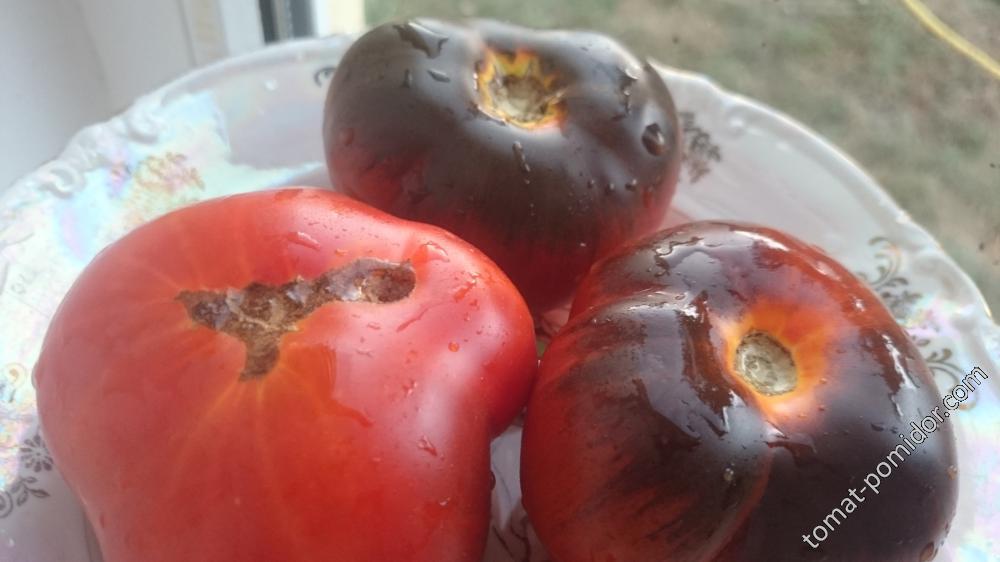
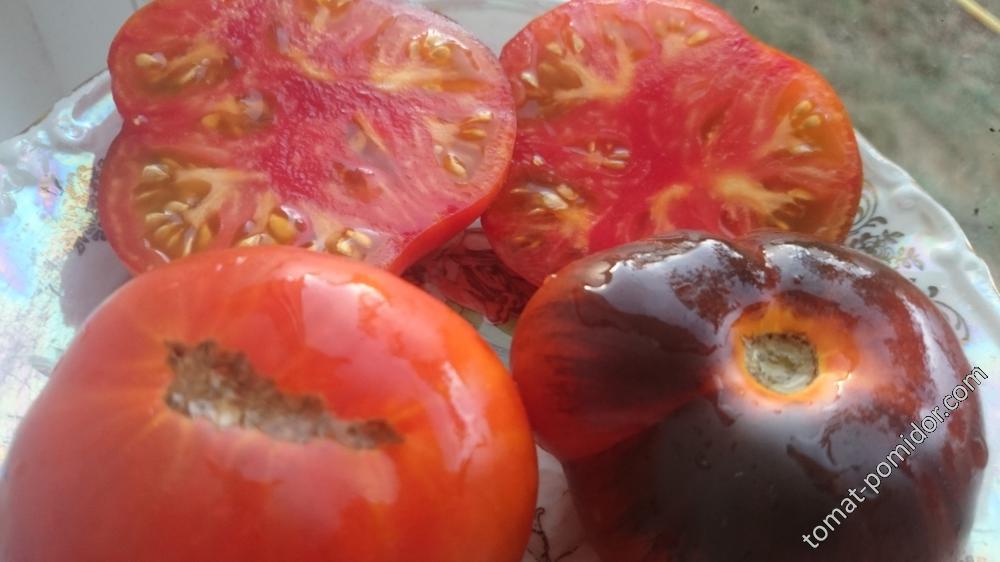
Here is my color segregation:
Edited October 9, 2016 by Alisa
What a looker.
I swore I had enough seeds and didn’t need a thing, but I’ve been craving this one for a solid month now. 🙂
Ovechka:
What a looker. I swore I had enough seeds and didn’t need a thing, but I’ve been craving this one for a solid month now. 🙂
Lyuda, grab Lucid Gem instead. Very similar in both flavor profile and color patterns, but a much more stabilized variety.
Alisa, should I grow this one? 🥺 You know where I’m going with this 😉
galka68:
Alisa, should I grow this one? 🥺 You know where I’m going with this 😉
Without a doubt. It earned a spot on my permanent keeper list. In person, the coloration is mind-blowing. Plant it where you walk by every day so you can admire it. Instant mood boost. And eating it is just pure joy!
Alisa:
Without a doubt. It earned a spot on my permanent keeper list…
Where’s the giant hug emoji when you need one? 🙏
galka68:
Where’s the giant hug emoji when you need one? 🙏
Galina, check out how the colors play on this tomato! A camera just can’t do justice to the iridescence in full sunlight. Every fruit gets hand-painted by the sun in its own unique pattern. As late fall cooling sets in, the shoulders turn almost jet black with a deep violet sheen, shifting into mahogany-brown tones as they soften up. Insanely gorgeous fruit!
Seems like it turns out gorgeous in every variation! Pure eye candy. And if the eating quality holds up, it’s a dream tomato.
ElenaN:
A few more shots from my garden…
Saved seeds last season from a tomato with this exact cross section. And look what came out of the dirt this year: almost completely chocolate-brown fruits with striping, strikingly handsome!
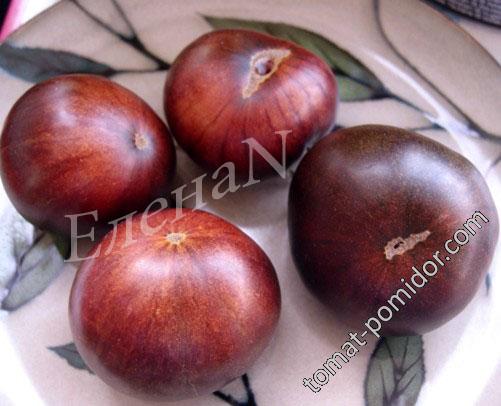
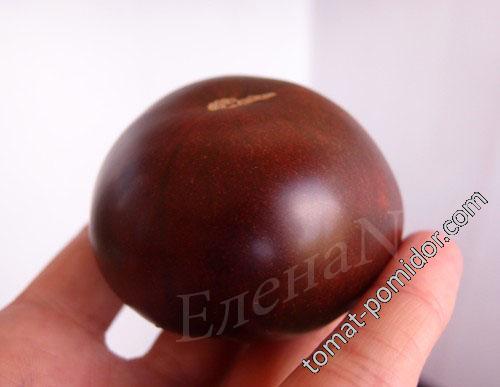
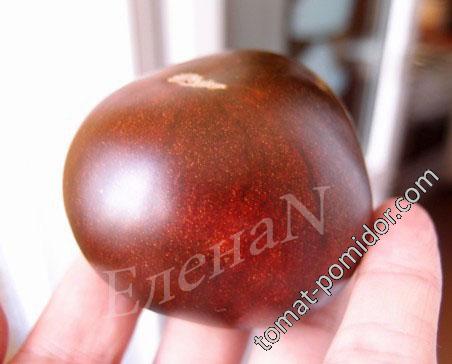
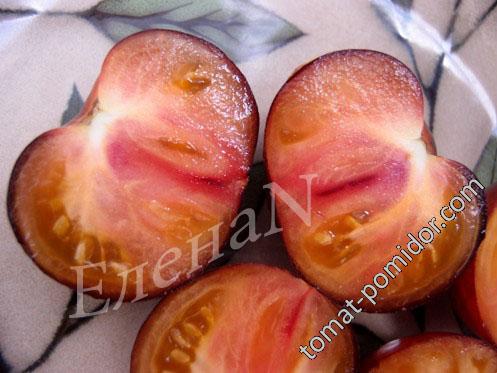
They look just like ripe nectarines! 😘
Elena! Did the flavor change from the original? Visually, they look like pure candy! 🙂
Elena 62:
Elena! Did the flavor change from the original? Visually, they look like pure candy! 🙂
Lena, felt like last year’s fruits tasted a notch better. Seems color intensity cranks way up during cool weather. Also worth mentioning: late-harvest green fruits ripened indoors on the counter kept extraordinarily well, and developed rich internal coloring without going soft.
Elena, planning to grow out seeds from this dark looker this coming season? If those traits stabilize, that would make one killer new variety! 😉 Looks truly phenomenal! 👍
ElenaN:
Saved seeds last season from a tomato with that distinct interior cross section. And look what came out of the dirt this year…
👍 Lena, I actually ordered this from Kulik. But no, not gonna gamble. I’d rather plant your seeds! Was it the Kraft or Kulik line that produced those mouthwatering beauties?
Galina nailed it, they look just like peaches! 👍
Galinka, definitely planning on it. Saved seed from the absolute darkest fruit of the bunch. Super curious to see what emerges next. Thanks! 🙏
Tanya! 🙏 That line traces back to Kraft’s seeds. This upcoming season will be my third year growing it out.
ElenaN:
That line traces back to Kraft’s seeds. This upcoming season will be my third year growing it out.
Gotcha, Lena. Makes total sense to grow yours right next to Kulik’s (if my seed order arrives in time) and compare results side by side. 📝
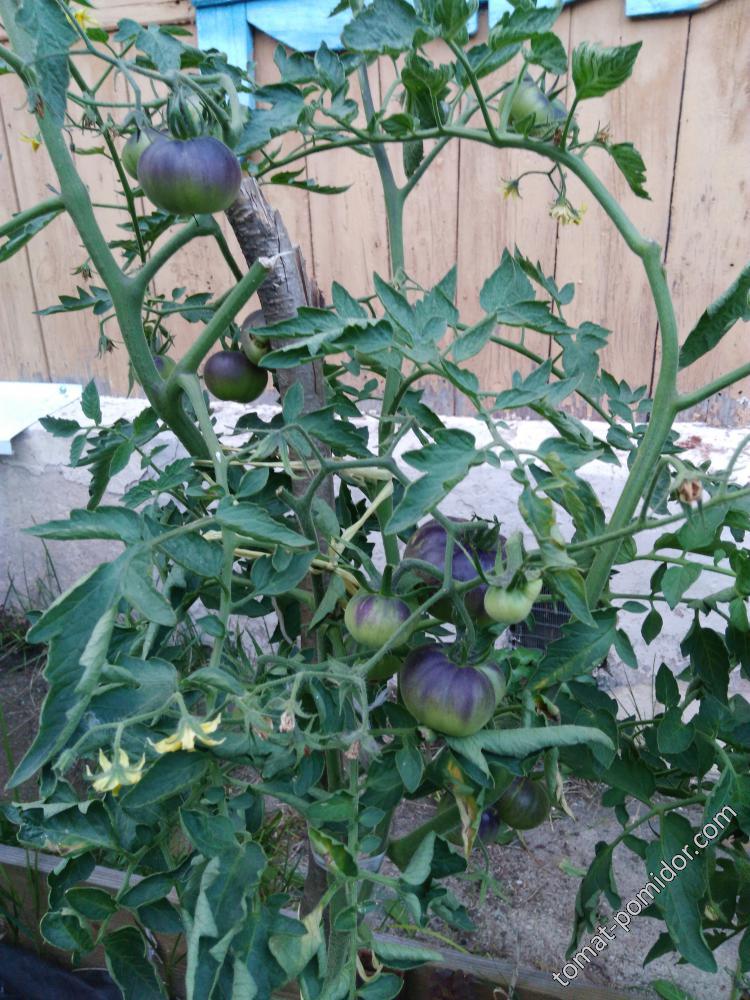
Turned out very productive for me, even though it was planted in almost complete shade. Last one to catch late blight out of everything in my patch. Delicious, gorgeous tomato. Seed was sourced from Happy Garden (Schastlivy Sad). Absolutely back on my grow list next season.
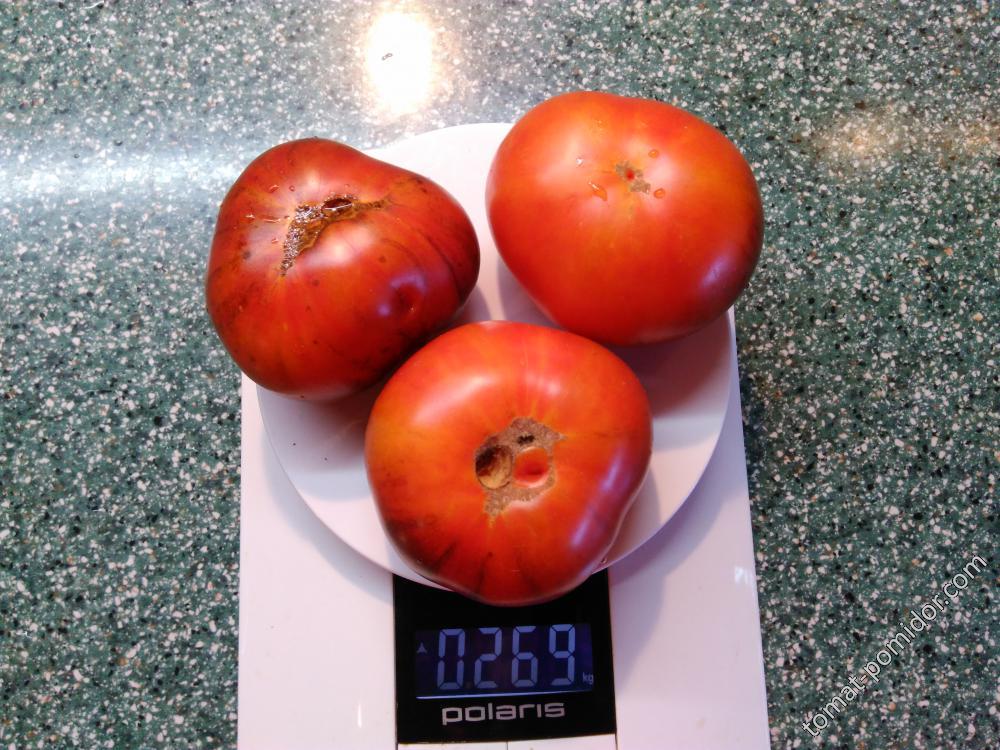
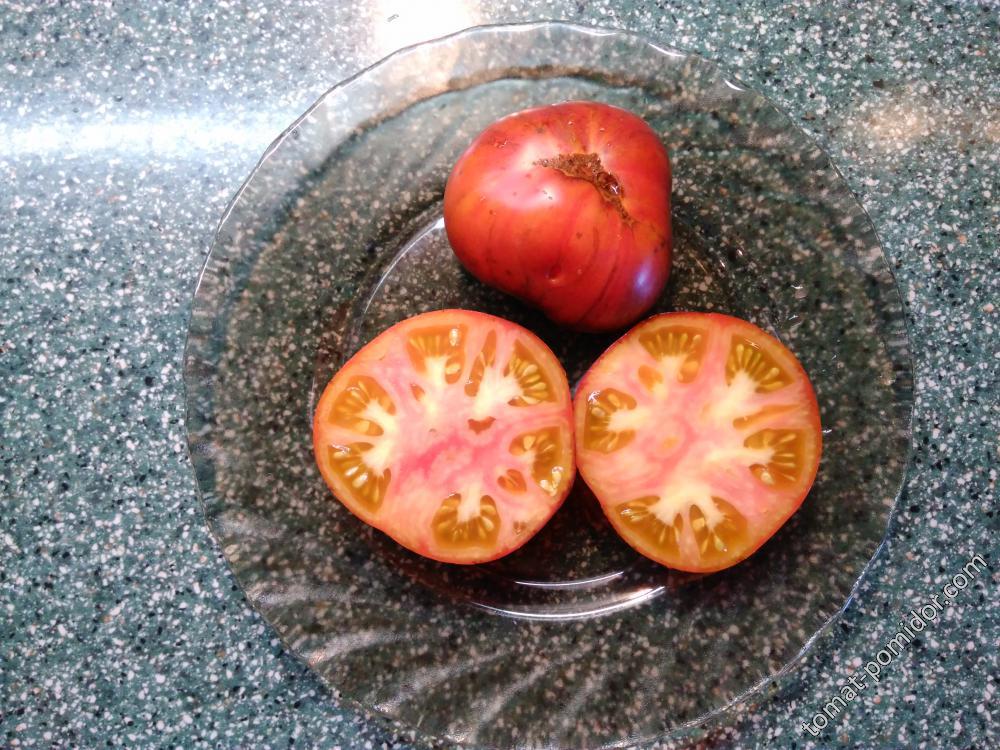
ElenaN:
Galinka, definitely planning on it. Saved seed from the absolute darkest fruit of the bunch…
If you pull off another batch of dark stunners like that, save a big batch of seeds! 🙌 Dibs on being first in line! 😂
ElenaN:
Saved seed from the absolute darkest fruit of the bunch, super curious to see what emerges next.
Elena, you really think choosing the darkest fruit makes any difference genetically? 🤐
You noted it yourself:
ElenaN:
Seems color intensity cranks way up during cool weather.
Drosera:
Elena, you really think choosing the darkest fruit makes any difference genetically?
Svetlana, honestly not sure yet whether it matters or not. Next season’s grow-out will give us the answer! 📝
Grew my looker in an unheated greenhouse. Indeterminate vine, oblate slicers, orange bodies with dark purple shoulders, weighing in the 5 to 9 oz range (150-250 g).
Honestly, most blue and antho tomatoes don’t impress me at all in the taste department. I mostly grow them for ornamental eye candy. But this variety is the hands-down best tasting of all the blues I’ve ever trialed.
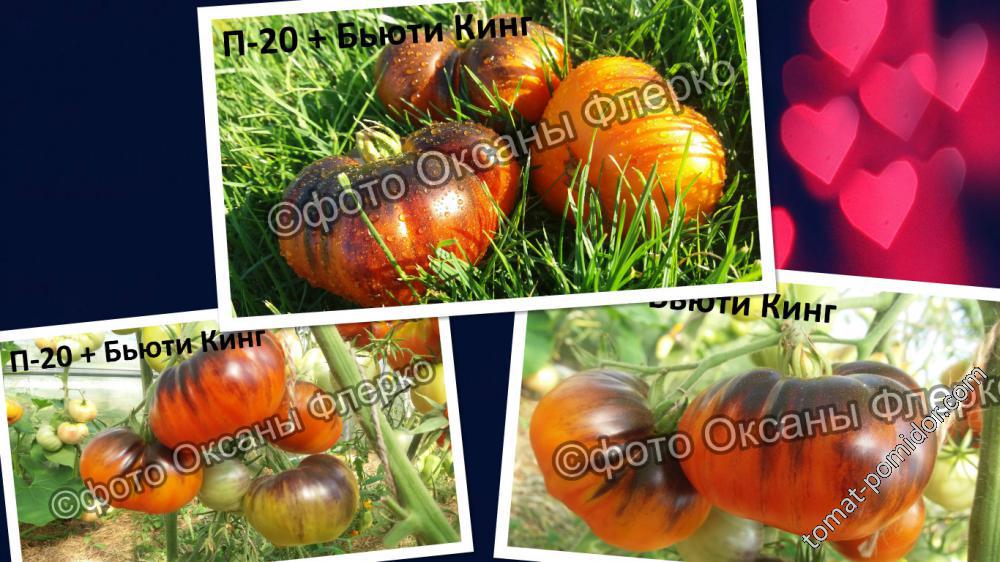
Gorgeous, delicious, heavy-cropping variety! 👍
These photos are just the first tomatoes off the vine. Plant was stubborn to ripen at first, but then the whole flush colored up all at once. The early ones were about this size, but the second truss grew much larger. Didn’t snap pics of those, unfortunately. No cut shot either, but the interior cross section is pure art! 😘
Edited October 3, 2017 by Lyolikovna


Flavor Trials and the Lucid Gem Comparison (2017–2018)
Yep, total winner! Loved both the coloration and the flavor. Yield was average. You definitely want to sow seeds on the early side, it runs late. Start them early, and you will pull a solid crop.


Hands down one of my tastiest tomatoes of the entire 2017 season! Everyone who sampled it at our weekend patch fell in love with it. Sweet, with a genuine tropical fruit note. Noticeably sweeter than Amethyst Jewel (sitting right next to it on the plate). Gorgeous, heavy yielder. Absolute home run!
Edited October 31, 2017 by Kirina
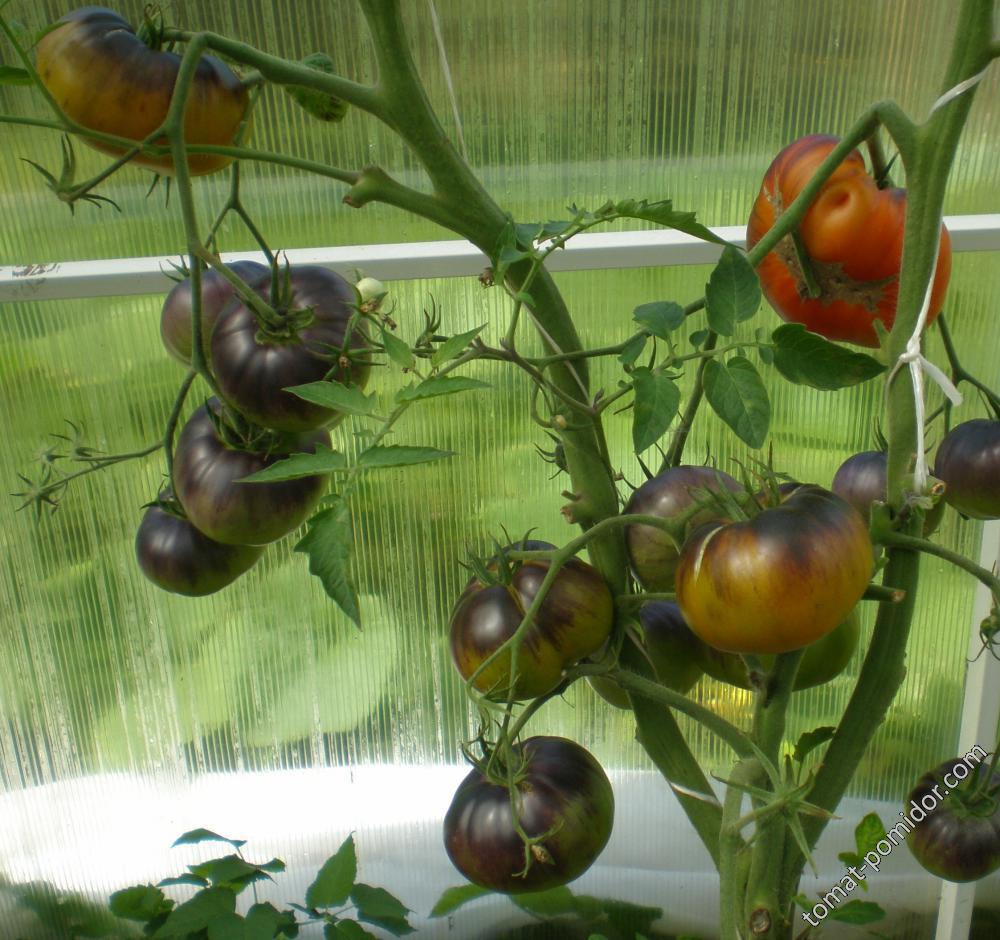

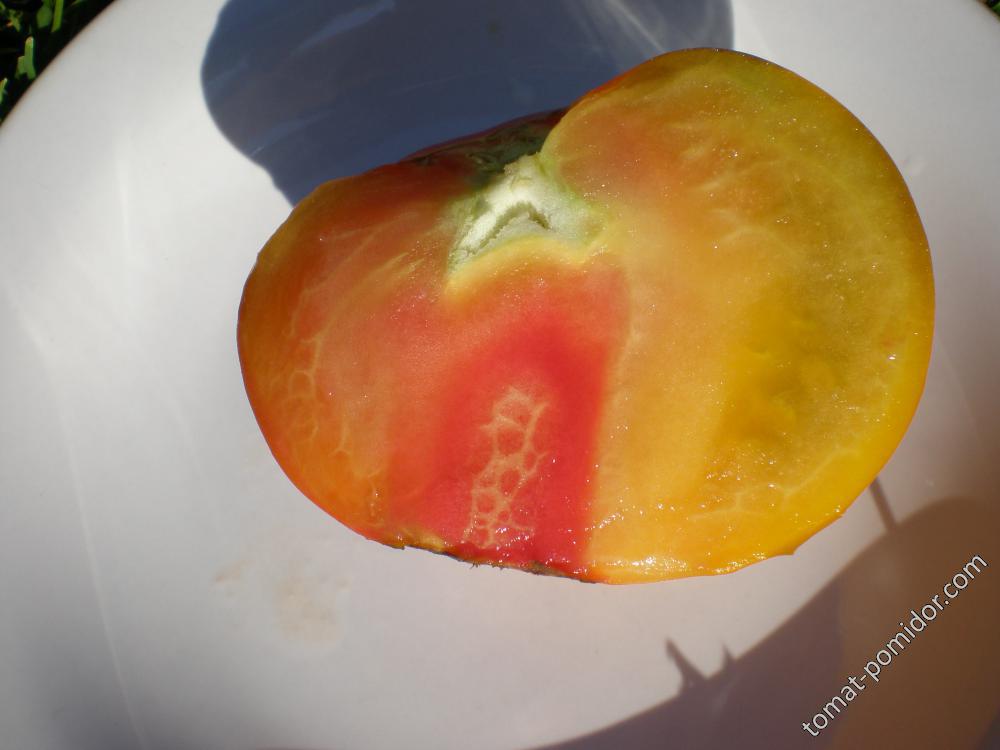
One of my personal favorites too, though it runs a bit late. Better suited for greenhouses. I had mine out in open ground back in 2016.
Mine was remarkably sweet as well, but yield stayed on the low side. Definitely growing it again to give it another look.
This is my second year growing it. Everything got off to a slow start this season due to the late spring, but we are still snacking on these slicers right now. They keep like a charm when picked slightly under-ripe.
Total darling… Photos taken August 11.
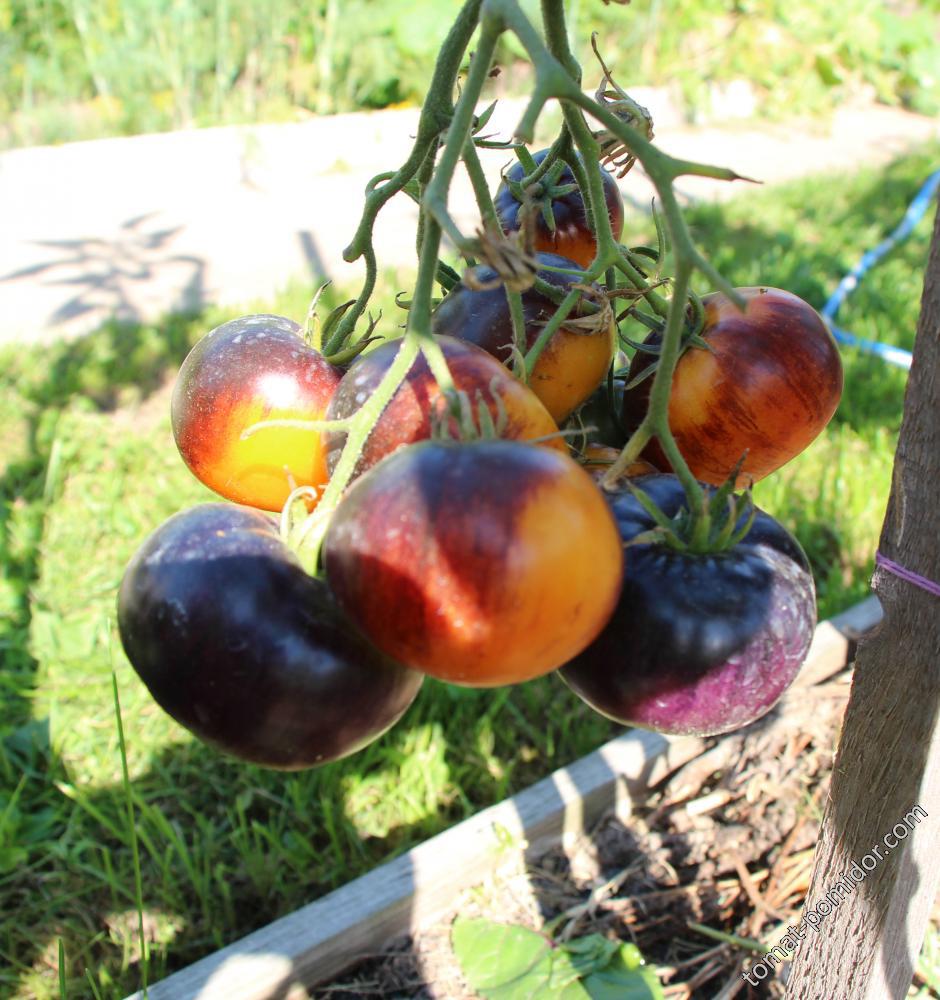


One of my top performers this season! 😘 Heavy cropper, gorgeous, disease-free foliage, and super delicious 😋, loads of sweetness. Big thanks to LanaD for the seeds! 🙏


Anela:
Total darling…
Elena, my seeds came from you. Big shoutout and thank you! 🙏
Edited December 12, 2019 by Drosera
Sowed early in February after reading everyone’s warnings about it being late. Kept it growing on my enclosed balcony all the way into June. By the time I transplanted out into the garden beds, I was putting in 5-foot behemoths (1.5 m) already carrying set fruit clusters!
Picked the first ripe tomato on July 3, weighed in at 5.2 oz (149 g). Sliced the second one on July 6, hitting 5.5 oz (158 g). Right now the vines are flowering and setting heavy trusses outdoors.
Taste blew me away, absolutely loved it! Had this unique, enticing fragrance too. And what a looker, resembles a ripe nectarine! Guaranteed spot in my garden next year.


In all my years growing tomatoes, this is easily the most unusual and delicious variety I’ve ever tasted. Can anyone suggest another variety with a similar flavor profile?
abrovka:
Can anyone suggest another variety with a similar flavor profile?
Lucid Gem.
Productivity was great for me. Topped the vine in mid-July since it had already set a solid crop load. Flavor was fantastic, absolutely loved it. Sampled Sgt. Pepper’s right after this one and Sarge tasted downright bland in comparison. P20 x BK has a very intense, punchy flavor.
abrovka:
Can anyone suggest another variety with a similar flavor profile?
Besides Lucid Gem mentioned above, check out Streak Lightning, Blush cherry, Pink Tiger, Copia, and bicolors like Olympic Flame, Gold Medal, Tuxhorn’s, Polish Pastel, Old Flame, Beauty King, Plan 9 from Outer Space, and Purple Russian.
Can’t guarantee an exact flavor match, but to my palate, these are the absolute top-tier gourmet slicers: juicy, intensely flavorful, with tons of natural sweetness. 😋
Thanks for the suggestions! Grown plenty from that list already. Gold Medal was fantastic, but none of them had that specific exotic punch P20 has. I’ll give Lucid Gem a run next season, haven’t tried that one yet.
Evgeniya 03:
Productivity was great for me… Sampled Sgt. Pepper’s right after this one and Sarge tasted downright bland in comparison…
Mine looks identical to that right now, no red ones just yet. Big thanks to the ladies for all the reviews! Can’t wait to try mine now. Vine is loaded with fruit.
abrovka:
Can anyone suggest another variety with a similar flavor profile?
Lucid Gem comes straight out of the same genetic family. To my taste, it runs even sweeter.
In my patch, Lucid Gem and P20 x BK have grown completely indistinguishable for two straight seasons now. They even segregate into yellow and orange variations in the exact same way. 🙈
The Antho Disappearance Mystery and Heat Trials
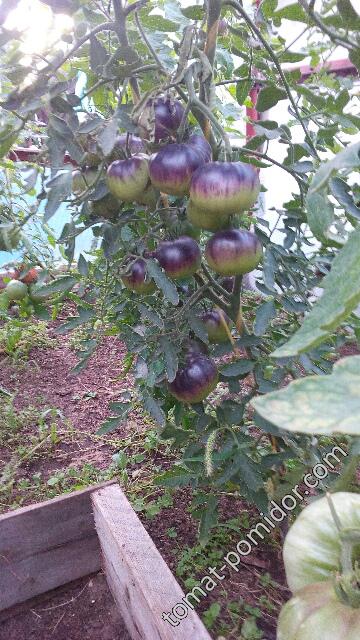
Quick question: can anthocyanin expression just disappear on P20? The early fruit ripened true to type with deep blue shoulders (photos above). But the newer fruit setting now are solid green without a trace of purple.
Growing right beside it is another plant of the same cross, spaced 20 inches (50 cm) apart, with branches tangling together, receiving identical sun exposure, and that one has deep green-purple fruits. What gives?
My absolute favorite blue tomato this season. Incredible eating quality. Flavor reminds me of sweet plums.
tomatinka:
In my patch, Lucid Gem and P20 x BK have grown completely indistinguishable…
Couldn’t tell the difference between them either.
Plus, it got slammed by BER two seasons in a row. Icicle varieties right next to it were completely clean. Dropping this one from my grow list.
Nadezhda, you really need to keep one of them around! Such a fascinating tomato. I didn’t see any BER on mine at all.
As for anthocyanin expression: had three Cosmic Eclipse plants side by side in the greenhouse. Two developed rich antho shoulders, one stayed completely clean. Meanwhile outside in open ground, the fruit turned jet black.
Same deal with Contrast Flanders: zero purple under plastic, but rich antho outdoors. These modern lines simply aren’t stabilized yet. And there are so many unstable crosses flooding the market these days. 😔
Vera, I understand when a plant lacks antho from day one. But on my vine, the first two ripe tomatoes were gorgeous (photos above), while the next fruits on that exact same cluster showed zero purple! How is that possible?
sofochkamai:
How is that possible?
Usually comes down to direct light exposure hitting the developing skin.
Alisa:
Usually comes down to direct light exposure hitting the developing skin.
Doesn’t explain it here. The second P20 plant right beside it has branches tangled together out in the open garden, and that vine is drenched in purple color.
Prolific producer and gorgeous fruit. Reached around 5 ft (1.5 m) in the greenhouse, mid-season ripening. Medium-sized slicers, super tasty, juicy-meaty texture, sweet with distinct fruity notes.
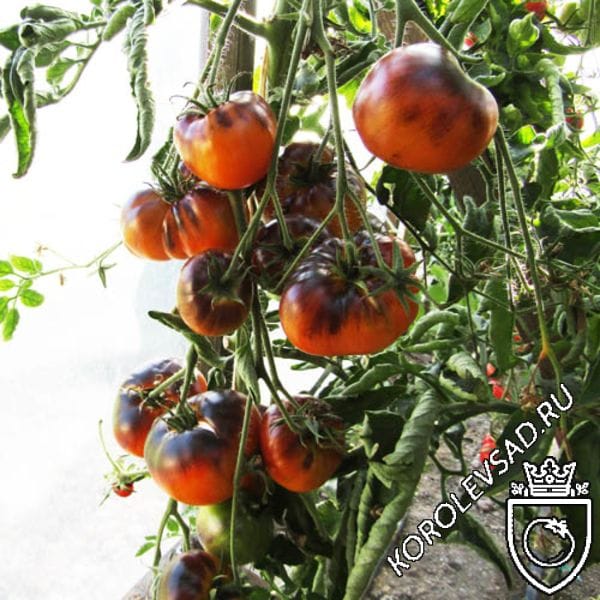
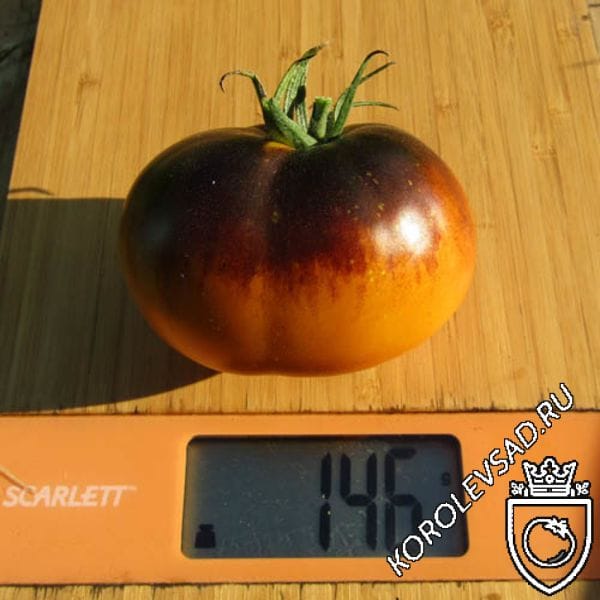
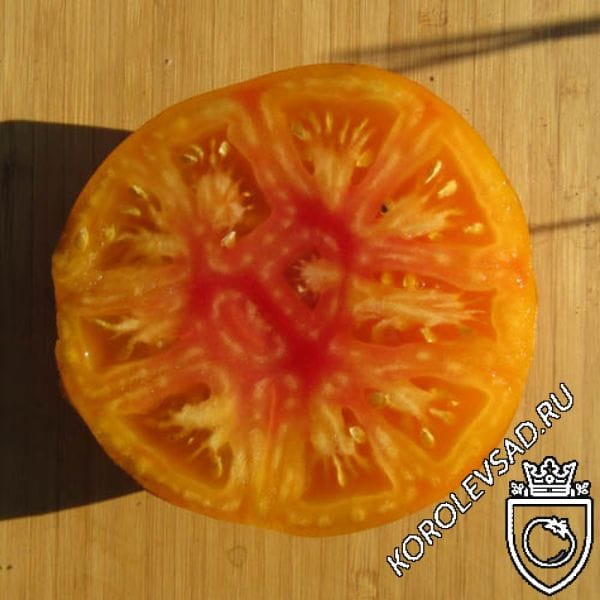
Definite favorites in my patch. Having cooperative summer weather helped a ton, of course.

Grew it for the first time, still figuring out how to manage it. Doesn’t care much for extreme summer heat, though the production potential is clearly there.
Long-Term Selections and Wild Reversions
Grown in the greenhouse during the 2019 season from Anatoly Kulik’s seed line. Vines are tidy with an airy, wispy foliage habit, reaching about 6 ft (1.8 m). Despite the delicate look, the plant never acted weak.
Fruit is slightly firmer than Lucid Gem, but side by side on a plate you would easily confuse the two. Slicers weren’t huge, but the flavor is off the charts: super sweet, tropical fruit hints, without that heavy metallic aftertaste some anthos have. Out-yielded Lucid Gem for me, didn’t crack at all, and holds its flavor during storage. Stripped the last fruit in late September, finished eating the final ones just this week.
Late in the season, fruit size tapered down to large cocktail cherries, though flavor stayed top tier. Fully ripe, they showed deep orange skin under purple shoulders with orange-red flesh. Cooler weather really brings out the indigo coloring. Definitely growing it again from saved seed to see if they size up bigger.
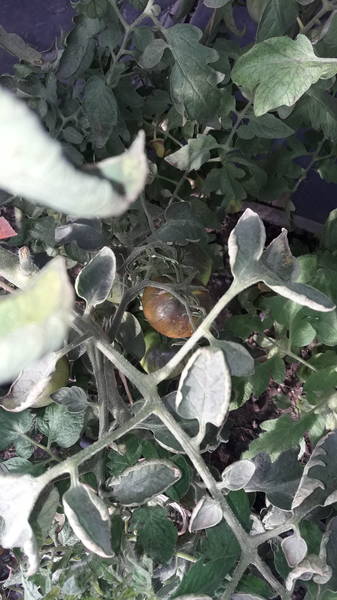
June 27, 2019 check-in: couldn’t tell whether it was Lucid Gem or BK+P20, identical vines. This was the largest green fruit on either plant:
Edited October 25, 2019 by Oksana Evgenyevna

sofochkamai:
…the second P20 plant right beside it has branches tangled together out in the open garden, and that vine is drenched in purple color.
Temperature plays a major role too. The cooler the night temps, the heavier the antho production. When you get cool temps combined with intense sunlight, antho tomatoes turn almost solid pitch black.
As for that plant next to it, maybe the second vine was casting just enough shade over it.
Oksana, it actually colored up later on. After a while, new fruits started setting with deep antho again. Didn’t update the thread at the time, still have no clue what caused the pause. Grew them in the exact same spot this season and every single fruit developed deep purple shoulders from start to finish.
Found two more shots of BK+P20 from August 8. Remember picking two fruit at the same time: one had tiger striping, while the other was a noticeably larger beefsteak. Dug through the phone gallery and found them:
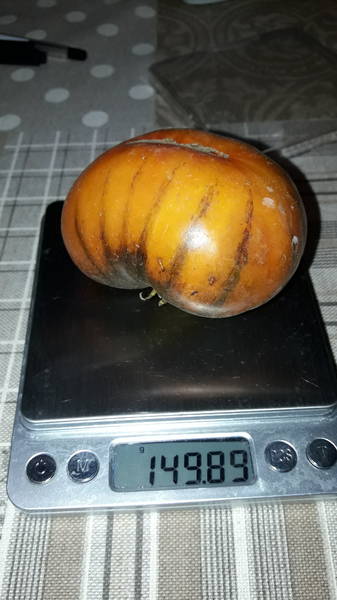
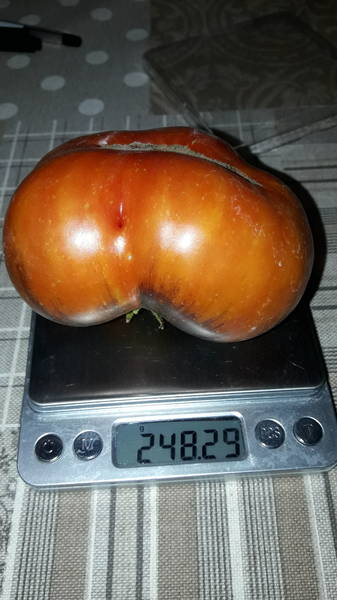
Oksana Evgenyevna:
The cooler the night temps, the heavier the antho production.
Spot on. Our summer was unseasonably chilly, and the tomatoes turned out almost jet black. Taste was sensational, cold weather didn’t hurt the sugar levels one bit.
My neighbor was peeking through the fence and raspberry bushes trying to figure out what was growing, then came over interrogating me about what kind of climbing tree-eggplants I had planted! 😂
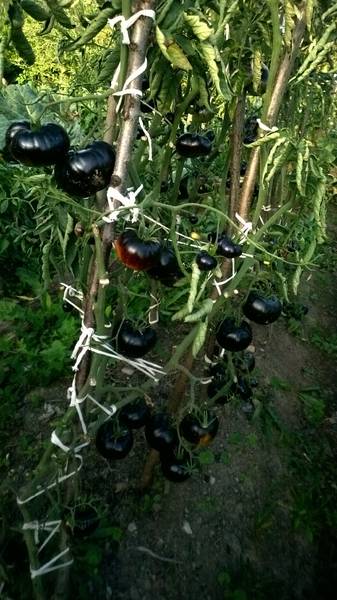
😳😳😳
Tossing in my two cents…
Got gifted a few seeds last season and ended up with this insanely delicious stunner. Instant favorite. Saved seeds and planted my own grow-out this year, and talk about heartbreak… 😭
Read that plenty of folks had color variations, but mine took a hard detour back into its wild ancestry! 🤨 Grew into a hairy monster vine that laughed at pruning, couldn’t snip suckers fast enough. And on this fuzzy runaway jungle, it set a mind-boggling number (felt like a thousand) of small yellow cherries that tasted completely cardboard. A few had faint antho streaks that did zero favors for their appearance.
P.S. Out of the goodness of my heart, I shared seed packets with all my gardening buddies and neighbors. They are definitely going to run me out of town with pitchforks! 🤦♀️ Hiding under the table over here… 🙈
Pico:
…on this fuzzy runaway jungle, it set a mind-boggling number (felt like a thousand) of small yellow cherries that tasted completely cardboard…
Like most fresh antho novelties, this line isn’t fully fixed and will throw wild recessives. The trick is growing out several plants, selecting the single specimen that holds true to the target phenotype, and saving seed exclusively from that vine.
You actually gave me a good wake-up call, I need to plant multiple seedlings of my own BK+P20 saved seed to test for segregation before relying on one vine. Thanks for sharing the heads-up! Your friends might still get normal slicers, though. With my pack of Klondike, about 10% was off-type, and the single seedling I picked for my greenhouse happened to be the rogue one (regular leaf instead of potato leaf).
P20+BK in 2020. Ran one plant in the greenhouse. Using my own saved seed, it replicated every strong trait from 2019. Ripened earlier too, acting more like a mid-early producer and trading places with Lucid Gem. Shape was noticeably smoother and more uniform, though size stayed about the same. Yield, however, was way heavier.
Edited December 14, 2020 by Oksana Evgenyevna
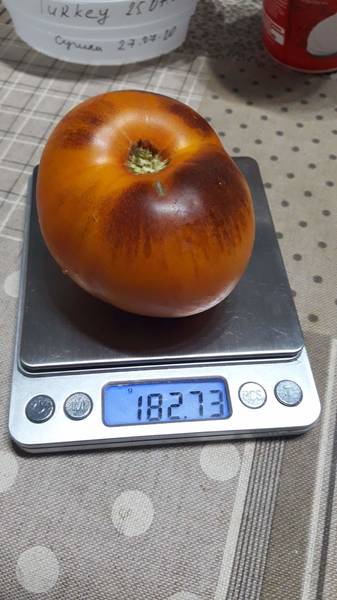
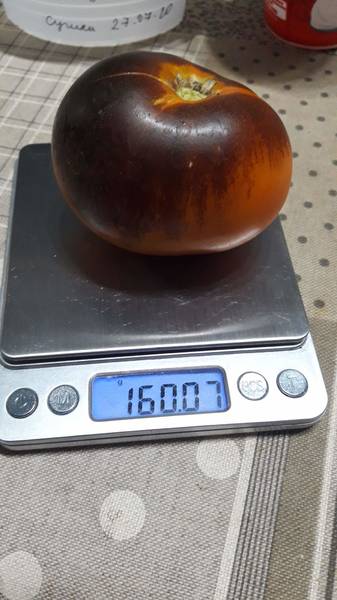
Grown it for 3 consecutive seasons now, gets prettier and tastier every year. Total favorite! For me it acts mid-late, yields heavy, and counter-ripens on the table without losing flavor. I plant 3 or 4 vines each season.
Every year, one plant throws completely globe-round fruit instead of oblate slicers. Plant architecture and taste are identical, but I never save seed from the round ones. Clearly ancestral genes resurfacing.
Ran P20-Beauty King for the first time this season. Two plants grown side by side in the greenhouse: one yielded red fruit, the other orange. Neither plant showed even a whisper of anthocyanin. Flavor was run-of-the-mill, with the red fruit carrying slightly more acidity.
My absolute favorite orange antho variety. In our scorching, arid heat, it sets trusses reliably and ripens surprisingly early, beating Lucid Gem to the punch.
Incredibly sweet, you can literally eat these like dessert. When fully ripe in September’s cool weather, its sugar concentration rivals sweet cherry tomatoes. Antho flavor is mild and pleasant, giving it a subtle spicy complexity rather than the astringency of older blue lines. Doesn’t grow into giant beefsteaks here, mostly 5 to 7 oz (140-200 g), but I have zero complaints. Heavy clusters, reliable producer, and keeps going strong right until killing frost. Stores and counter-ripens like a champion.
Edited January 13, 2022 by Oksana Evgenyevna
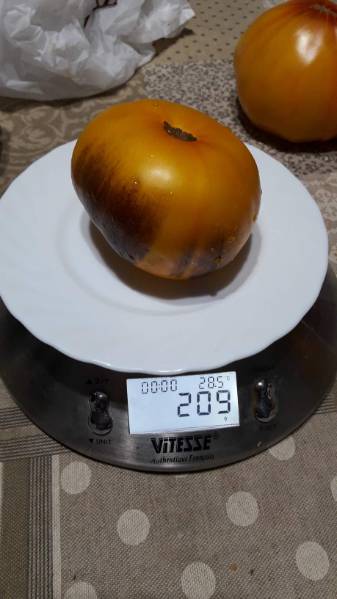
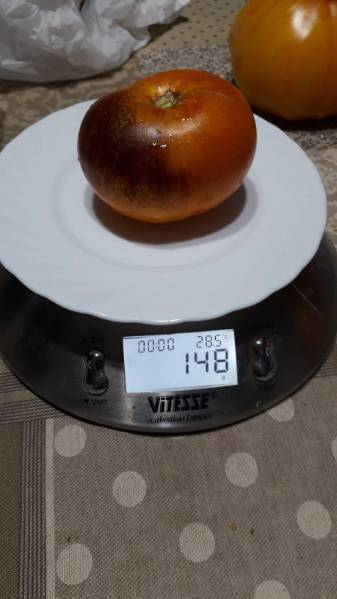
Hey everyone! Quick question: what exactly is P20? Is that the OSU Blue line (Lilac Fog)?
Dreamer:
…what exactly is P20? Is that the OSU Blue line (Lilac Fog)?
Yep, that’s the one.
Full Summary: Plant, Yield, Taste and Segregation Notes
- 🌿 Plant Architecture & Season: Indeterminate vine with airy, wispy foliage. Reaches 3.5 to 5 ft (1.0-1.5 m) outdoors and easily climbs to 6 ft (1.8 m) in greenhouses. Typically mid-to-late season, though home-saved seed lines routinely adapt into dependable mid-early producers. Benefits greatly from early indoor sowing in short-season regions.
- ⚖️ Fruit Characteristics: Oblate, medium-sized slicers running primarily in the 4 to 10 oz bracket (120-300 g). Flesh is thick, juicy, and marbled in orange, gold, and red tones under midnight-purple shoulders.
- 👅 Flavor Profile: Rated by multiple veteran growers as significantly sweeter and richer than most anthocyanin lines, frequently out-tasting Sgt. Pepper’s and Amethyst Jewel. Dessert-grade sweetness with distinct tropical fruit and plum nuances. Unripe fruit harvested before early frosts counter-ripen exceptionally well indoors without turning bland.
- ☀️ Weather & Anthocyanin Dynamics: Direct UV light exposure and cool autumn nights drive the deep indigo pigment. In extreme high heat or sheltered plastic tunnels, antho pigmentation can temporarily pause, while cool open-ground conditions produce nearly jet-black shoulders. Excellent fruit set in both hot continental summers (Kazakhstan) and cool, wet northern climates (Siberia and Urals).
- 🧬 Genetic Lineage & Segregation: Bred by Mark McCaslin (Frogsleap Farm) from a cross of OSU P20 x Beauty King (Brad Gates). Because early seed batches circulated at F5 to F7 generations, growers observe natural phenotype segregation: predominantly orange-blue striped slicers, alongside red-blue round discs, solid brown tiger-striped slicers, off-types lacking antho entirely, and rare wild regressions throwing runaway vines with yellow cherries. Multi-plant grow-outs and rigorous seed selection are advised.
The “P20” referenced throughout this thread refers to the original experimental germplasm developed by Dr. Jim Myers at Oregon State University (OSU), which introgressed wild tomato genes (Solanum lycopersicoides and Solanum chilense) to express anthocyanin in fruit epidermis. When crossed with Brad Gates’ striped heirloom Beauty King, it spawned famous segregating sibling lines like Lucid Gem and Bengal Tiger. As demonstrated by grower Pico’s throwback experience, unstable early-generation antho seeds can occasionally revert to wild cherry traits, making rogue culling and careful seed stewardship essential.