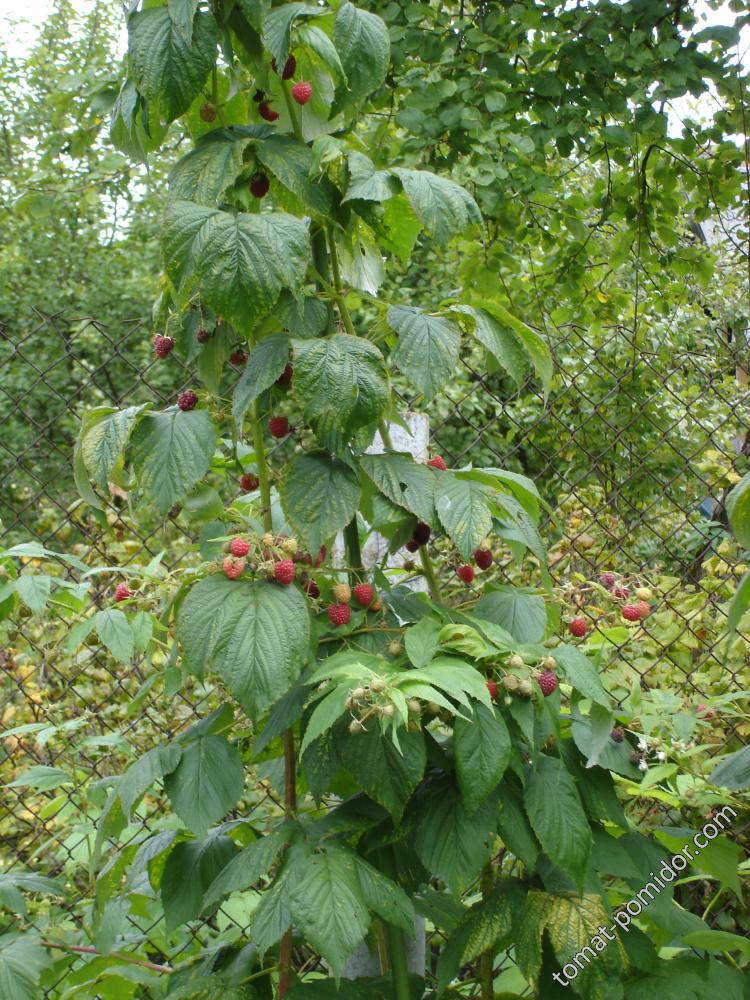
🍅 Quick take: Cold-climate grower Yuliya (Yuliya Orenburg) details her exact protocol for overwintering containerized raspberries in an unheated high tunnel and forcing early green root shoots (softwood suckers) in late winter. Storing mother root boxes in peat-perlite between raised beds under shade cloth prevents root-ball freezing and winter waterlogging. Bringing boxes indoors in early February yields hundreds of clean rooted cuttings without the fungal disease and grow-light costs of starting too early in January. Photo: Veronioka.
Jump to:
Overwintering Potted Berries: Waterlogging vs Freezing ↓ |
Forcing Green Root Shoots in February ↓
Winter Raspberry Propagation: Forcing Root Shoots & High Tunnel Container Care (USDA Zone 4/5)
Just told my husband we need to haul the raspberry crates out of the unheated high tunnel into the house to start forcing green root shoots. He made a face and grumbled that we will never hike through the snowdrifts, so I guess I am strapping on cross-country skis! 🎿
On 1/22/2026 at 1:28 PM, Yuliya Orenburg said:
…we need to haul the raspberry crates out of the unheated high tunnel into the house to start forcing green root shoots…
Hold on, color me intrigued! What is in those crates? Bare roots harvested back in the fall? Cut-back one-year-old primocane rootballs? Straight peat substrate?
And where do you store them inside the unheated tunnel: buried in the dirt beds, or sitting on the walkways and nursery benches?
This whole method fascinates me. If you have the time and energy, I would be wildly grateful to hear the full breakdown: your goals, the setup, and the subtle tricks. I have a prized variety I am dying to multiply, but zero practical experience taking green root shoots. My head is spinning with a million questions!
On 1/22/2026 at 3:29 PM, AAA said:
What is in those crates? Bare roots harvested back in the fall? Cut-back one-year-old primocanes?
Overwintering Potted Berries: Waterlogging vs Freezing
Questions are great, fire away!
Everything (primocanes, summer floricanes, two-timers) gets chopped back in late autumn and packed into Styrofoam cooler crates, nursery buckets, or pots, depending on container size and plant count. The pots and 5-gallon buckets are meant for fruit production; the flat Styrofoam crates are dedicated mother root boxes for forcing green root shoots to make nursery plugs.
Everything is bedded strictly in a pure peat and perlite blend.
We hauled them into the tunnel in late autumn right ahead of hard soil freezes. They sit down on the floor between our 16 in (40 cm) raised wooden beds, covered over the top with white spunbond agribon fabric plus a layer of black shade cloth to block winter sun from heating up the root zone. The high tunnel is left completely vented open all winter. The ceiling peaks at 11.5 ft (3.5 m), so there is a massive volume of cold air preventing greenhouse greenhouse effect spikes on sunny winter afternoons.
When overwintering raspberries in container culture, there are two fatal dangers: roots getting waterlogged and roots freeze-drying in the wind. Both will wipe you out if containers are left out in the open dirt unprotected.
Forcing green root shoots from crates is the ultimate technique if you need to generate maximum clonal plants from a limited stock of mother crowns, or if a variety is notoriously stubborn to multiply from outdoor field suckers. The only exception is Primalba, most growers struggle to get high shoot takes from crates with that one; it is far easier to dig field suckers for her.
What variety are you trying to multiply?
On 1/22/2026 at 8:51 PM, Yuliya Orenburg said:
…cut back in late autumn and packed into Styrofoam cooler crates…
Yuliya, feel free to use my first name!
Where did those crowns chopped back in autumn come from originally: dug out of the in-ground garden patch, or already grown in pots and buckets during the summer?
On 1/22/2026 at 8:51 PM, Yuliya Orenburg said:
…The pots and buckets are meant for fruit production…
And for those fruiting containers sitting shaded out in the greenhouse right now: when do you bring them into the heat to wake them up?
Forcing Green Root Shoots in February
Morning! The autumn-pruned stock in crates were our own starter plants in 3.5 in (P9) nursery pots, planted several to a crate back in early spring specifically to establish massive root networks for winter propagation.
The ones in pots and nursery buckets meant for fresh eating were stepped up gradually throughout the summer into larger container volumes. For a fruiting container, the rule of thumb is a minimum of 2 gal (7 L) of potting substrate per cane, leaving at most 2 fruiting canes emerging from the crown for maximum berry size.
For green shoot propagation, it is best to pull the crates indoors in early February. Waking them up in January makes zero sense: you deal with high seedling disease pressure and need massive grow light setups. Crates pulled out just a few weeks later in February produce far sturdier, healthier, and happier green shoots than anything forced in mid-winter.
For the fruiting buckets, wake them up whenever your calendar fits your setup. Potted fruiting canes can be pulled inside the greenhouse during late autumn to extend harvest, or even moved into a sunny indoor sunroom. Modern day-neutral lines like Shani were specifically bred for greenhouse substrate culture and handle partial shade beautifully.
Honestly, this whole container berry operation is for my 6-year-old son, Fyodor 😊 He is crazy about fresh raspberries! Out in our climate, fall primocanes out in the garden beds need to be pushed early in spring under high tunnels. Otherwise, an early freeze hits in early September, wiping out the entire unripened crop, followed by two months of dry Indian summer warmth! Pushing them early ensures our family gets the harvest the plant worked so hard to build.
Full Summary: Container Raspberry Overwintering & Softwood Propagation
- 📦 Crate Setup: Mother root stock is planted into Styrofoam cooler crates filled with 100% peat and perlite substrate. Styrofoam buffers root zones against temperature swings.
- ❄️ High Tunnel Overwintering: Kept in cold, fully vented high tunnels (11.5 ft / 3.5 m tall) between raised bed walls. Covered with spunbond fabric and black shade cloth to block winter sun from prematurely warming roots and breaking dormancy.
- ⚠️ The Two Winter Killers: Container raspberries outdoors perish from either root waterlogging (excessive cold rain/snowmelt rotting root hairs) or desiccating root freeze. Protected unheated tunnel floors eliminate both risks.
- ⏰ Timing for Root Shoot Forcing: Early February is the ideal window to haul crates into heated rooms. Forcing in December or January requires excessive supplemental PAR lighting and spikes damping off; February shoots emerge faster, sturdier, and healthier.
- 🍇 Fruiting Container Sizing: Growing raspberries for table fruit in containers requires at least 2 gal (7 L) of substrate per cane, retaining a maximum of 2 dominant canes per container to ensure large berry caliber.
In Eastern European commercial berry culture, propagating raspberries via krapivka (literally “little nettle,” referring to 1.5 to 3-inch etiolated softwood root suckers) is the gold standard for rapid clonal multiplication. Rather than waiting for dormant root cuttings to sprout slowly in spring, mother root crowns are forced in warm indoor conditions in February. When suckers emerge with 2-3 tiny leaves, they are snapped off cleanly at the root crown with a small white etiolated heel, treated with rooting hormone, and rooted under high humidity. Each mother crate can yield dozens of vigorous rooted plug liners by April.