🍅 Quick take: Sunshine Blue is an early American anthocyanin cherry derived from the famous OSU Blue lineage. It produces under 1 oz (20-25 g) round fruits shifting from ink-purple to dusty rose. The variety is characterized by extreme genetic inward leaf curling and starkly polarized performance: in hot, sunny climates (90-100°F / 33-38°C), it delivers rich, sweet-tart fruit, while in cool, cloudy northern gardens it yields poorly and splits severely. Full summary ↓
Growers’ Notes and Photos (USDA Zones 3b-6b Experience)
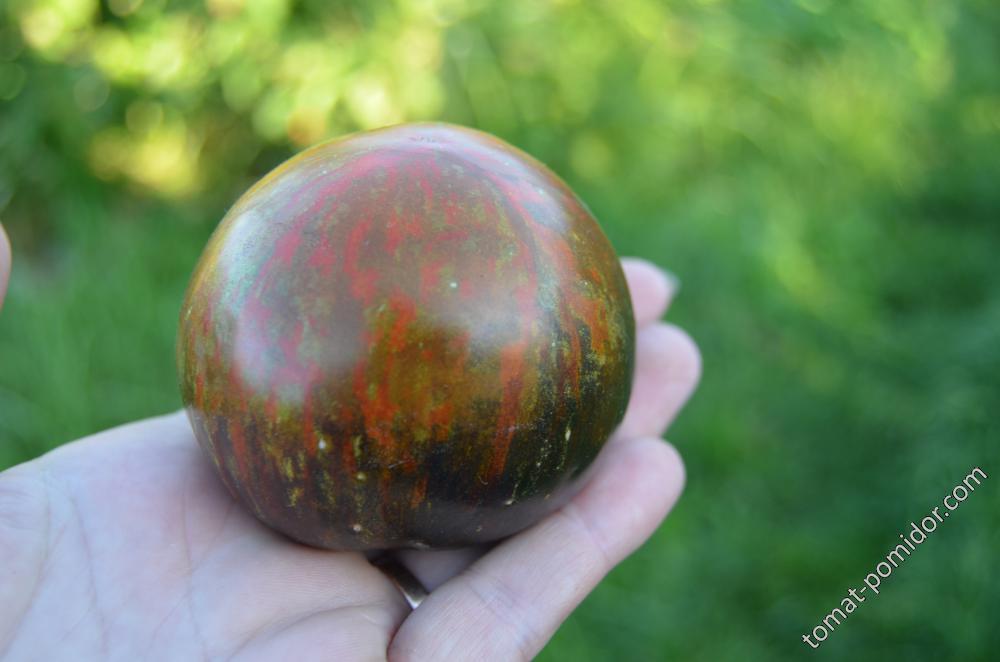
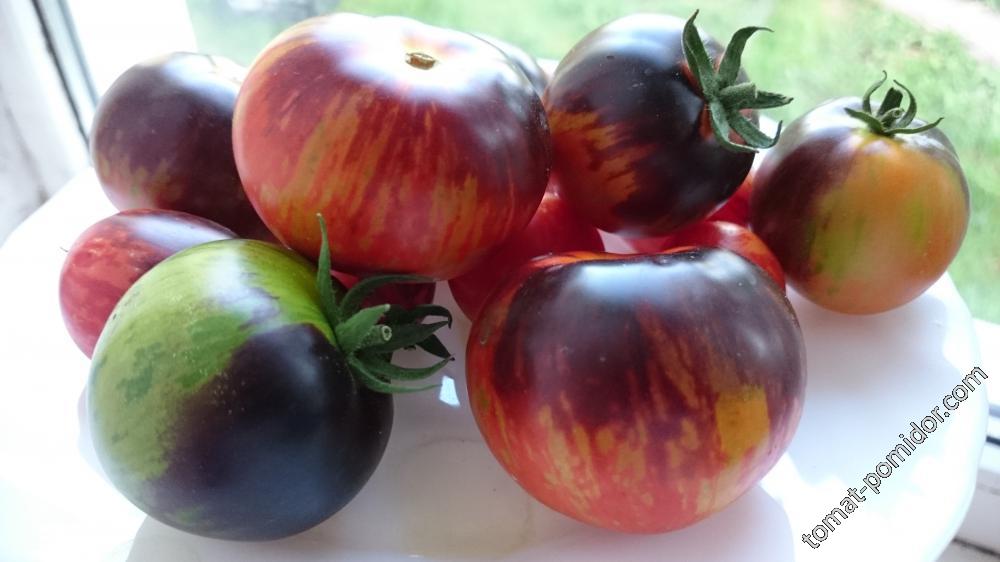
Sunshine Blue (USA). Cherry tomato in shades of black, purple, and dusty rose.
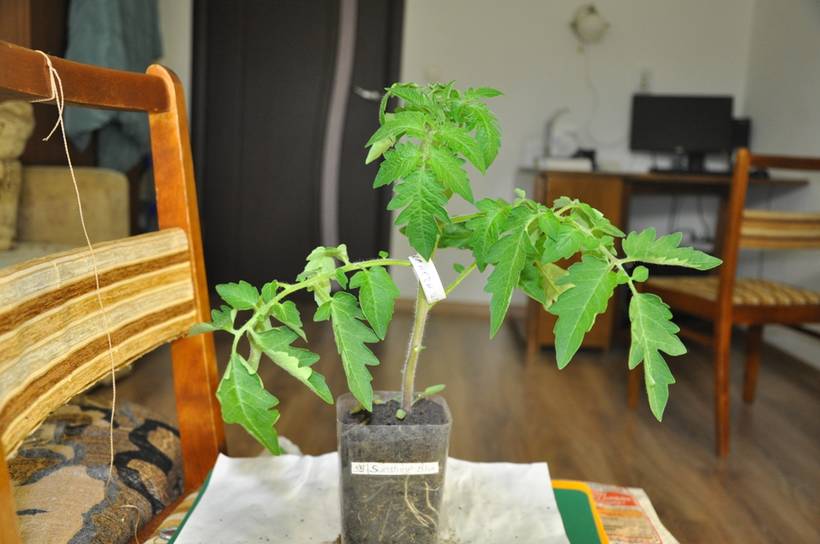
Grew mine outside in an open bed where they stayed relatively short, around 28-32 inches (70-80 cm). From the day they were transplanted into the garden, the leaves rolled up into tight tubes and never unfurled back to normal all season.
Popenko’s seed catalog notes that this variety was bred using OSU Blue on the maternal side. But while OSU Blue is an absolute masterpiece in my book, Sunshine Blue doesn’t earn that title. Sure, it starts ripening earlier, but it completely lacks the unforgettable flavor and heavy productivity of OSU Blue.
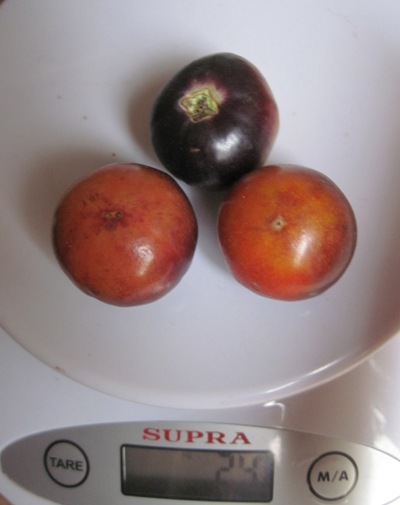
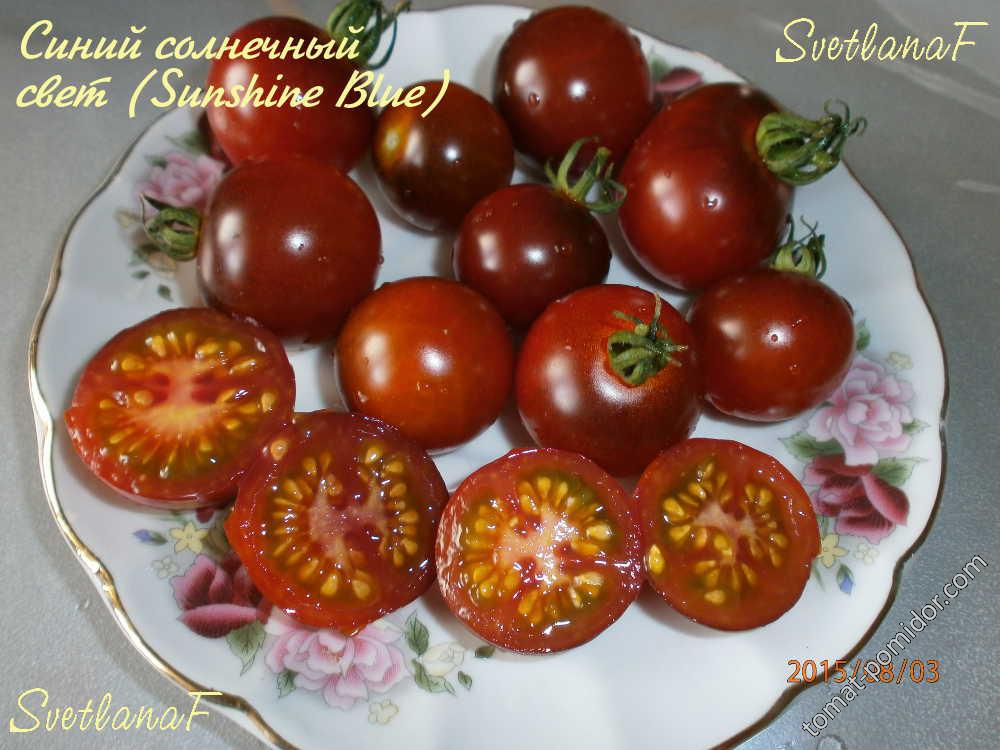
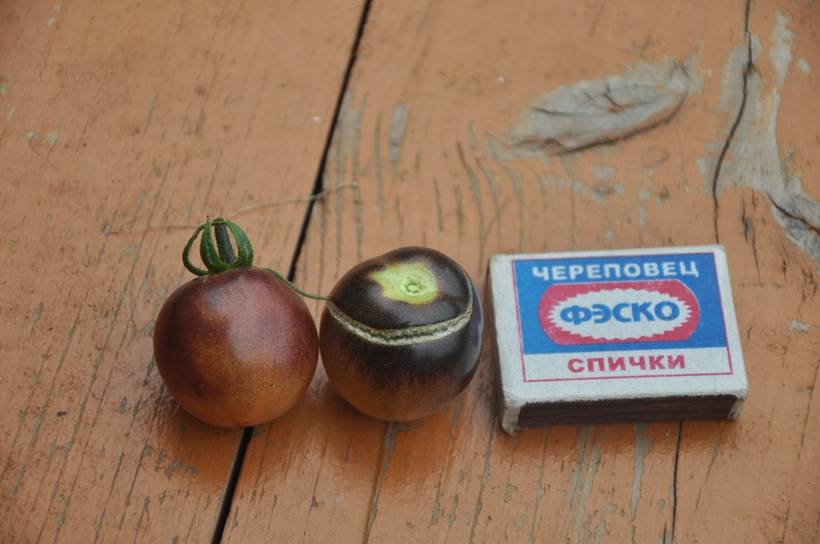
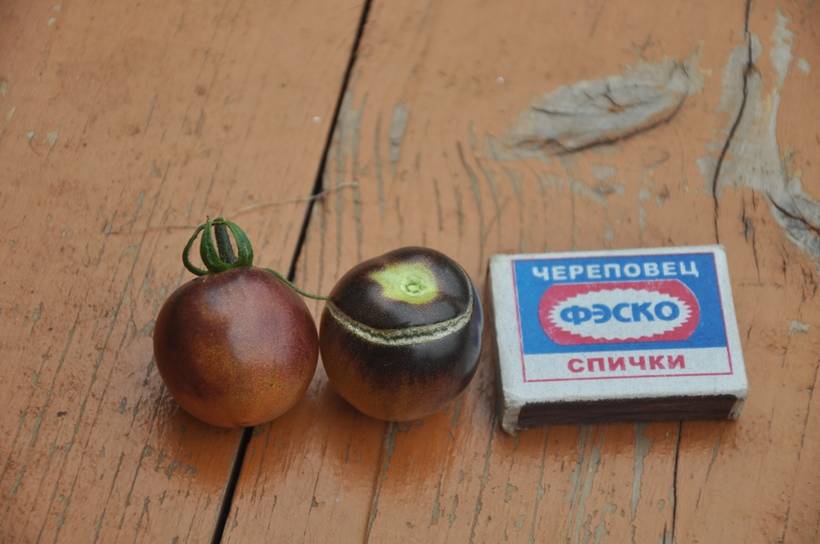
When canned in hot brine, the skin color shifts. Still an attractive tomato if you want an ornamental conversation piece. (The scale photo was taken in November – early-season fruit were larger, right around under an ounce (24 g)).
Edited January 11, 2014 by Drosera
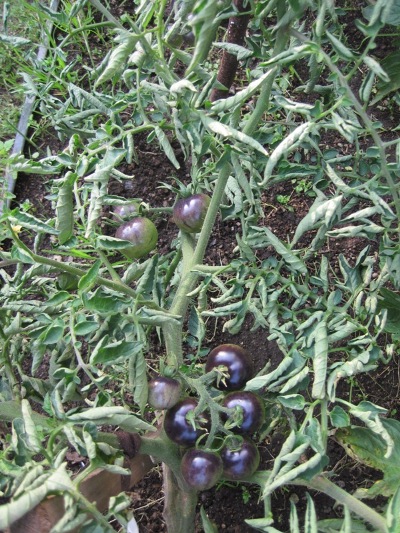
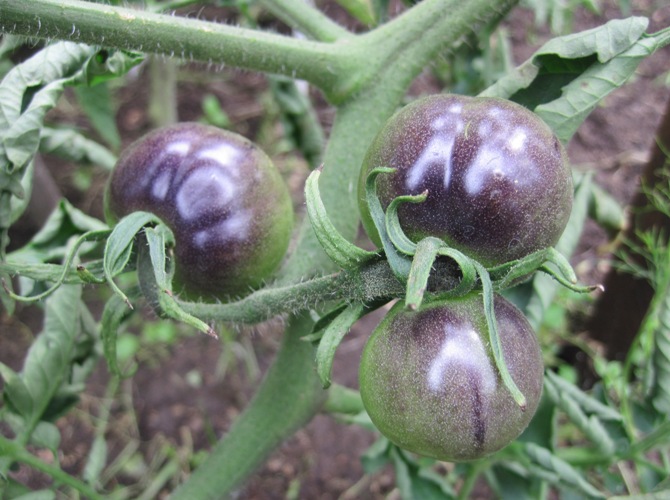
Grew mine outside in an open bed where they stayed relatively short, around 28-32 inches (70-80 cm). From the day they were transplanted into the garden, the leaves rolled up into tight tubes and never unfurled back to normal all season.
Popenko’s seed catalog notes that this variety was bred using OSU Blue on the maternal side. But while OSU Blue is an absolute masterpiece in my book, Sunshine Blue doesn’t earn that title. Sure, it starts ripening earlier, but it completely lacks the unforgettable flavor and heavy productivity of OSU Blue.
When canned in hot brine, the skin color shifts. Still an attractive tomato if you want an ornamental conversation piece. (The scale photo was taken in November – early-season fruit were larger, right around under an ounce (24 g)).
Edited January 11, 2014 by Drosera
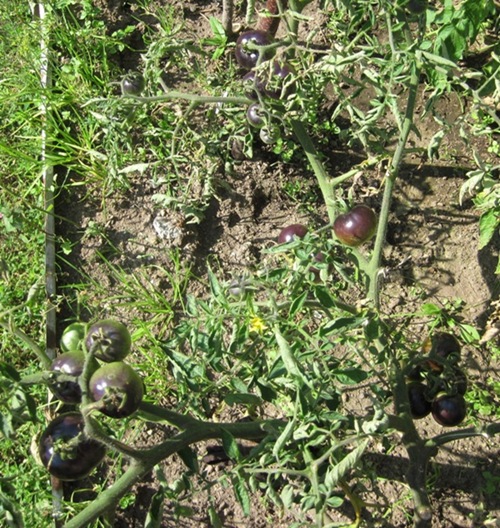
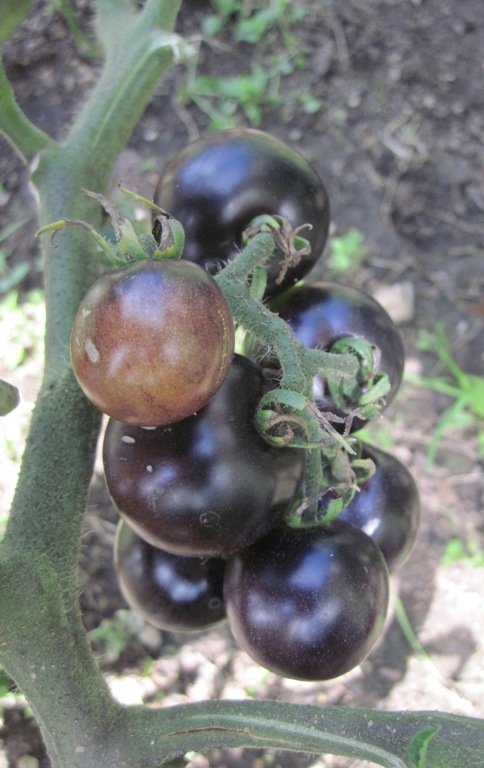
A couple more photos of the fruit and habit:
Now I’m having serious buyer’s remorse! 😲 Just ordered the seeds and this review is pretty brutal…
No need to panic! 😄 Get them in the ground, you might end up loving it in your soil.
It’s my very first time picking blue varieties. If there’s still time before they ship, I might try swapping it out for Blue Beauty or original OSU Blue…
I ran mine in the greenhouse, zero pruning, and it set a crazy amount of fruit over a very long season. Rich, old-school tomato flavor with a bright sweet-tart balance and pleasant fruity notes. Absolute winner for me – a solid 5+ out of 5!
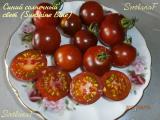
Received as a freebie gift from V. Redko. Stuck one plant in an open garden bed with zero expectations. Started it as two stems, then two more sneaked through. Very sturdy vine with thick stems.
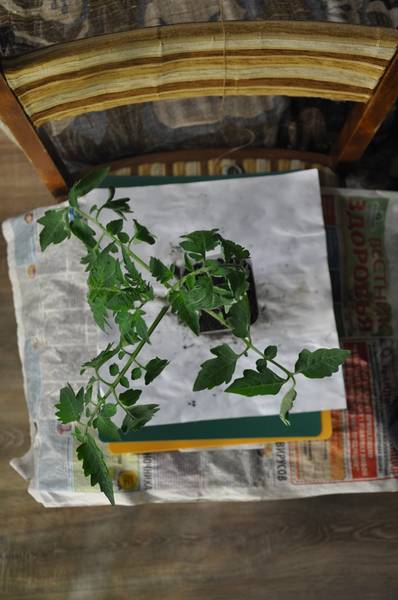
The leaves were rolled tight like cigars from day one, which makes the whole plant canopy look very open and sparse. It responds well to feeding.
At first, it took its sweet time developing purple, almost jet-black globes. But once our summer heatwave hit 90-100°F (33-38°C), it started cranking out lighter-colored fruit that ripened before the purple pigment had time to fully develop. It loves intense heat. Plant spread on a single stem was about 16 inches (40 cm).
Total yield wasn’t massive – about 4.5-5.5 lbs (2-2.5 kg). But the taste was great: bold, sweet cherry flavor, 5 out of 5. Keeping one plant as a regular!
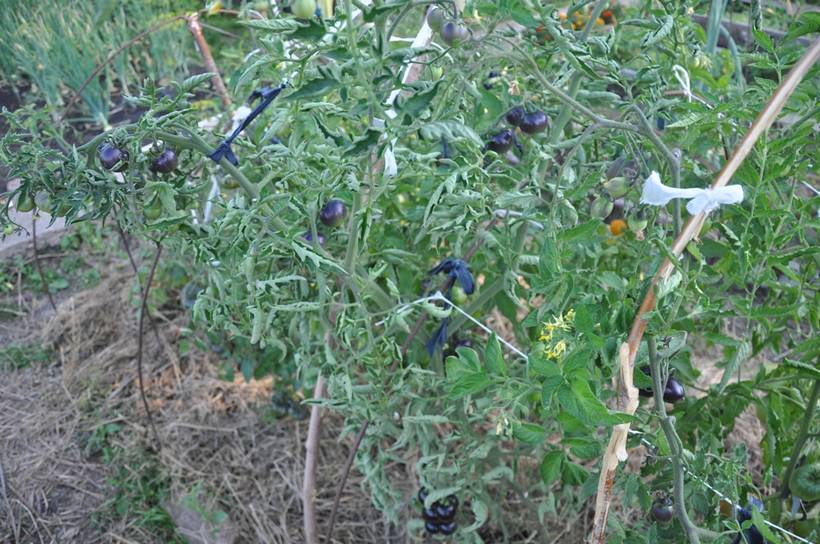
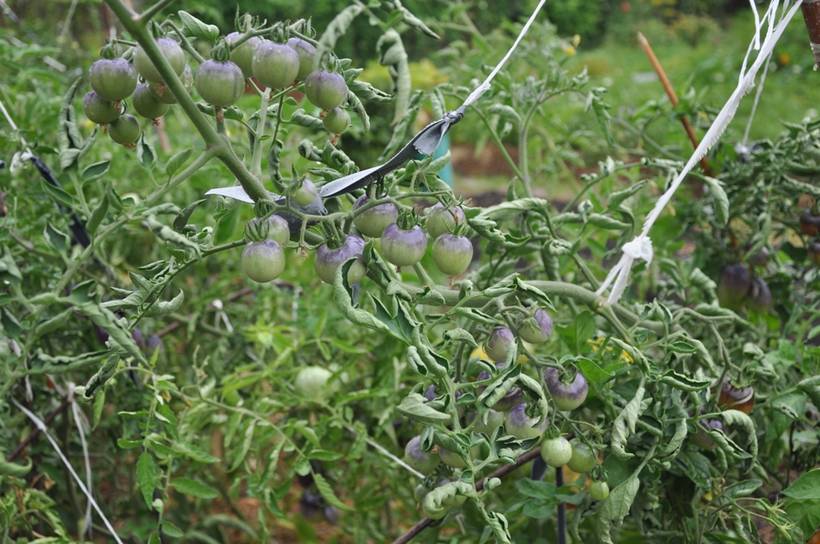
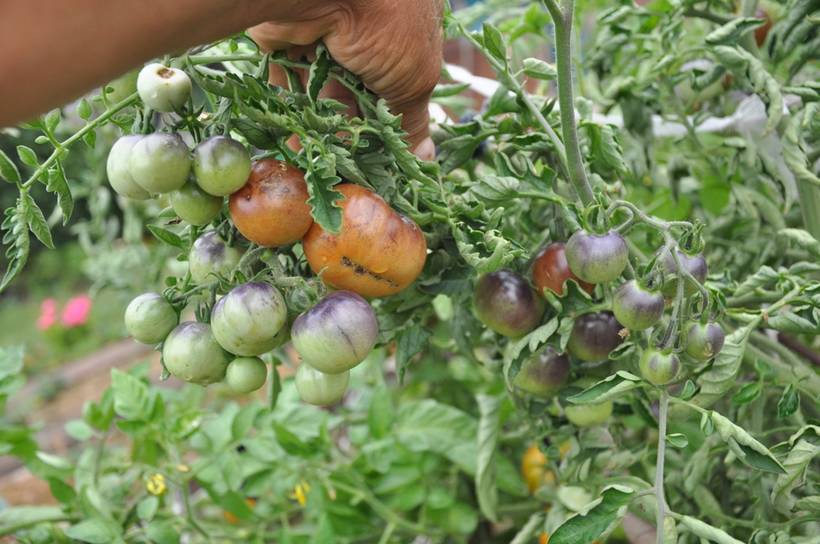
We picked them slightly underripe because we couldn’t wait. Here are early clusters, and here is how it looked after the heatwave:
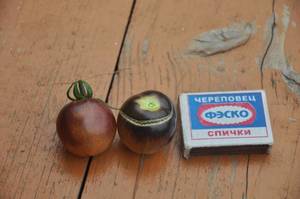
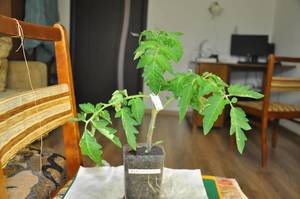
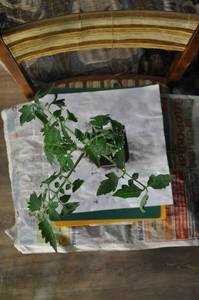
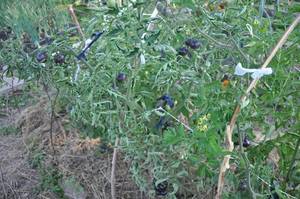
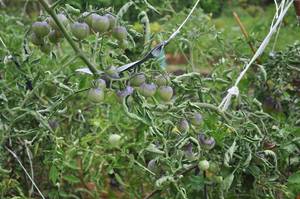
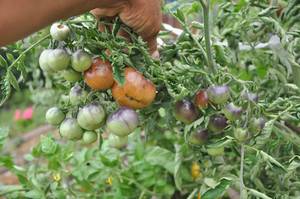
The leaves were rolled tight like cigars from day one, which makes the whole plant canopy look very open and sparse. It responds well to feeding.
At first, it took its sweet time developing purple, almost jet-black globes. But once our summer heatwave hit 90-100°F (33-38°C), it started cranking out lighter-colored fruit that ripened before the purple pigment had time to fully develop. It loves intense heat. Plant spread on a single stem was about 16 inches (40 cm).
Total yield wasn’t massive – about 4.5-5.5 lbs (2-2.5 kg). But the taste was great: bold, sweet cherry flavor, 5 out of 5. Keeping one plant as a regular!
We picked them slightly underripe because we couldn’t wait. Here are early clusters, and here is how it looked after the heatwave:
Sharing my experience on this one as well.
The moment it went into the greenhouse, the leaves curled tight into tubes and stayed rolled up the entire season. It grew into a thick 6 ft (1.8 m) tree of a plant, but set barely two dozen small fruits.
Out of all my cherries, it was by far the worst performer – couldn’t hold a candle to Barry’s Crazy Cherry, Red Cluster, Barberry, Honey Drop, or Ildi growing right next to it.
Bottom line: won’t be growing it again. Other cherry varieties run circles around it for looks, maturity timing, yield, and flavor. I completely agree with Svetlana (Drosera) – compared to this, its parent OSU Blue is an absolute masterpiece.
Dropping an August update: Once our weather turned cool and overcast, the plant basically stopped growing. Every single fruit split wide open like this, and the flavor completely fell off a cliff.
My conclusion: this variety is strictly built for hot, dry climates. Scratched from my grow list.
My conclusion: this variety is strictly built for hot, dry climates. Scratched from my grow list.
Quick Facts: Variety Summary
- 🌿 Growth Habit & Foliage: Reaches 28-32 inches (70-80 cm) in open ground beds, or up to 6 ft (1.8 m) in greenhouses. Universally exhibits severe genetic physiological leaf roll (leaves curl tightly upward into tubes from the seedling stage onward), creating an open, sparse canopy.
- 🍅 Fruit Profile: Round cherry-to-cocktail tomatoes weighing under 1 oz (20-25 g). Deep indigo-purple shoulders over a dusty-rose base. In extreme heat, fruit can ripen so rapidly that anthocyanin pigmentation remains pale.
- 🌡️ Climate Sensitivity: Heavily heat-dependent. Thrives in sustained 90-100°F (33-38°C) summer heat, delivering rich, sweet-tart fruit. Conversely, cool or overcast weather halts production and causes catastrophic fruit cracking.
- 👅 Flavor Verdict: Polarizing. Southern and greenhouse growers praise its lively fruity sweetness, while northern growers report insipid flavor and poor yields compared to established heirloom cherries.
- 🧬 Pedigree: Derived from the Oregon State University (OSU Blue) anthocyanin breeding line.
🍅 Have you trialed Sunshine Blue? Did your vines curl from day one, and how did it perform once summer temperatures cooled down? Let us know in the comments below!