Growers’ Notes and Photos (USDA Zones 3-6 Experience)
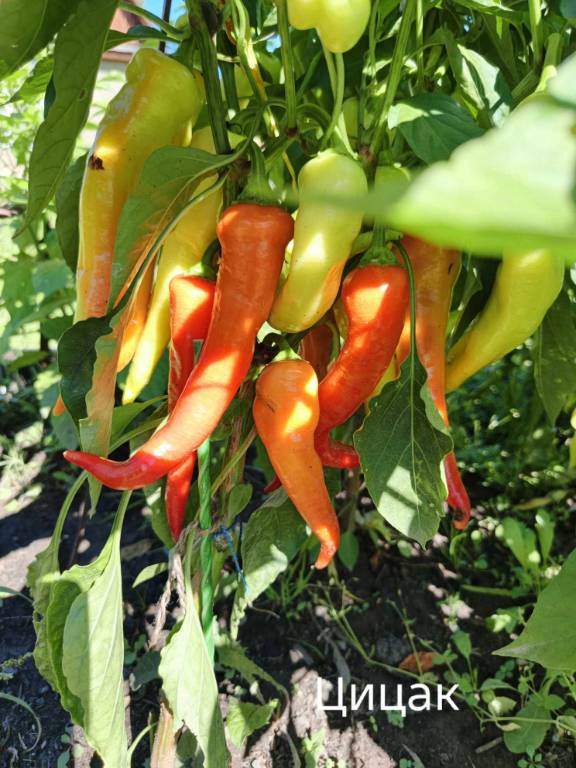
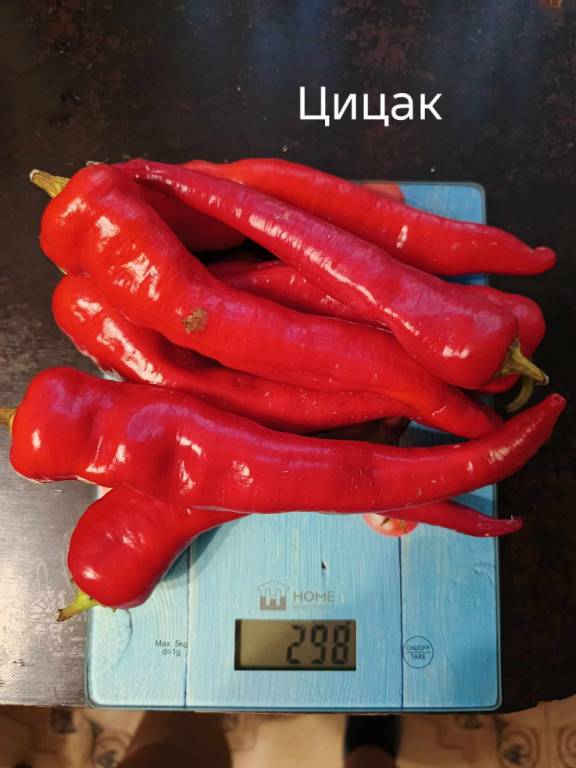
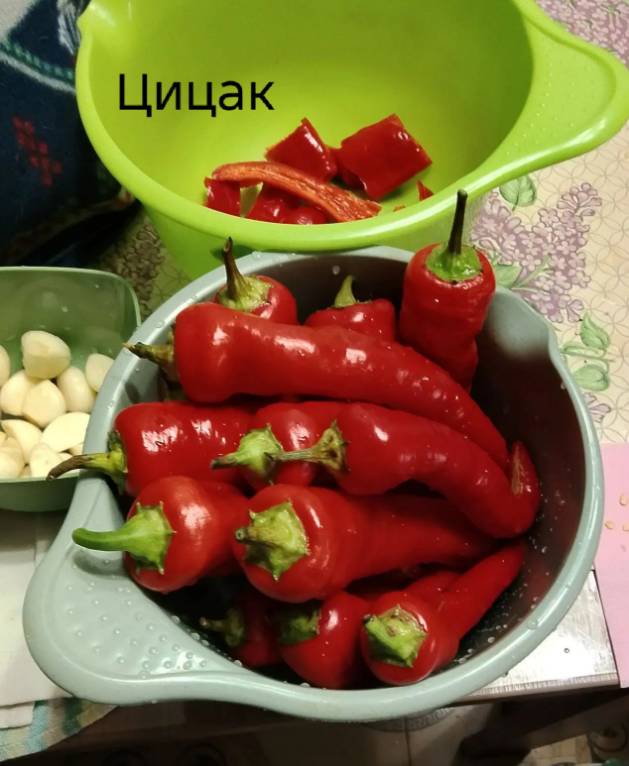
Hot pepper. A fellow forum member sent me the seeds labeled “Georgian bitter pepper Tsitsak.” Fairly branching, bushy plants, about 20-24 in (50-60 cm) tall. Turned out mid-early for me, though last season all my hot peppers started ripening in the second half of August. Long pods, at least 8 in (20 cm), loaded with fruit, slightly fewer pods than Turkish (Turetsky), though Tsitsak’s pods are 3-4 times wider 😄. Walls aren’t thick. Pale green when picked for use, turning bright red when fully ripe. In the harvest group shot, it’s the one on the far left. In the last photo, it’s pictured alongside Alma Paprika.


Nina, Sveta later corrected the origin to Armenian. I really loved this variety: early, heavy yielding, and it actually has great flavor instead of just pure heat.

Tina wrote:
Nina, Sveta later corrected the origin to Armenian. I really loved this variety: early, heavy yielding, and it actually has great flavor instead of just pure heat.
Right, Valentina, it’s that classic Armenian appetizer pepper! I’ll make a note of that in my records. Funny how early it ran for you! 👍
It was the earliest of all my peppers. That photo is the first flush, and it even put out a second flush in time. All of June was freezing cold and most peppers stalled out, yet Tsitsak handled the rough weather like a champ.
Hey folks! Mine did the exact opposite 😮 Almost none of my hot peppers stalled in the cold June weather, and Tsitsak was the only one that froze in its tracks. Won’t be growing it again. In the photo, it’s the one at the very bottom.

Hey folks, does Tsitsak only come in red? A coworker from Armenia gave my mom both red and yellow peppers and said both are called Tsitsak. Same size, both sweet, fragrant, with a nice gentle “warm” heat.
Tsitsak 2015, seeds sourced online:

Tsitsak is also a specific way of fermenting and pickling peppers. One lady asked me for Sweet Banana seeds because she said they make amazing Tsitsak whereas other peppers don’t turn out quite right… Escudero F1 might work for that too.
Vika, from the Say-7 forum:
“Tsitsak” literally translates from Armenian as “pepper,” though not just any pepper, specifically this type! Long, slender, pale greenish-yellow in color… Mildly spicy, not blazing hot! You can easily polish off one or two in a sitting with a plate of meat…
GalinaD wrote:
Vika, from the Say-7 forum:
“Tsitsak” literally translates from Armenian as “pepper,” though not just any pepper, specifically this type! Long, slender, pale greenish-yellow in color… Mildly spicy, not blazing hot! You can easily polish off one or two in a sitting with a plate of meat…
Yeah, you can match up other peppers with those traits for making Tsitsak.
I figure calling this actual variety “Tsitsak” became a folk name because it’s hands-down the best fit for that style of lacto-fermenting.
Got my Tsitsak from Ninulia and loved it. Heavy producer, ripened right on the bush outdoors even through this cold, cloudy summer. Definitely planting a couple bushes again. This year I grew 4 plants and got heaps of peppers off them, ate them fresh, tossed them into canned goods, and strung up two huge ristras to dry. Thanks so much, Nina! 🙏


Hey folks, anyone heard of a variety called “Iskra” (Spark)? Probably another folk name, Korean cooks love it for their pickles, and folks down south use it for Tsitsak too. Long pods, 8-10 in (20-25 cm), pale yellowish color… Anyone run across a description for it?
Could someone walk me through planting, pruning, when to start seeds indoors, and all that? Not much info online. I’ve got seeds in hand and no clue how to grow them 😊.
I started mine just like any normal pepper, it’s already time to sow now, and I don’t prune it at all. Only thing folks recommend is planting it separately outdoors away from sweet peppers so they don’t cross-pollinate and turn your sweet peppers bitter.
Makovka wrote:
Could someone walk me through planting, pruning, when to start seeds indoors, and all that? Not much info online. I’ve got seeds in hand and no clue how to grow them 😊.
I sowed Tsitsak this year. Took 5-6 seeds, soaked them for 20 minutes in a strong potassium permanganate solution, rinsed under running water, then soaked in plain water for 12 hours. Next morning I pulled them out, patted them slightly dry, and placed them on lightly tamped moist potting mix. Covered with soil, firmed it down, sealed with plastic wrap, and put it in a warm dark spot. Popped up in 5 days.
Plenty of folks just sow the seeds dry too.
Two out of ten seedlings came up with 3 leaves. Is that normal? 🤔
Makovka wrote:
Two out of ten seedlings came up with 3 leaves. Is that normal? 🤔
Not typical, though totally harmless! As long as the plant keeps growing fine, those 3 cotyledons will do their job and drop off 😉, and soon enough you’ll completely forget they started with three seed leaves 😄.
Makovka wrote:
Two out of ten seedlings came up with 3 leaves. Is that normal? 🤔
Had that happen last year, nothing weird happened to the peppers afterward. Grew just like all the rest. Just a minor quirk, nothing to worry about.
I actually have 2 sprouts like that right now too. Looks like a third one is on the way, hard to tell yet… Hasn’t affected yields at all in my experience.
Evening everyone! Anyone know who to contact for Tsitsak seeds? Need it specifically for brining/pickling, other varieties just don’t cut it. Thanks in advance!
I ordered mine from Sveta.
She’s active here and on Odnoklassniki.
I got my Tsitsak from Garlic Farm (Chesnochnaya Ferma). Don’t know how to paste links, just search “Chesnochnaya Ferma Staritsa” and you’ll find them.
Tina wrote:
It was the earliest of all my peppers. That photo is the first flush, and it even put out a second flush in time. All of June was freezing cold and most peppers stalled out, yet Tsitsak handled the rough weather like a champ.
Couldn’t agree more. Gave me two full flushes too, even though I grew it outdoors on an east-facing slope behind the house, right in the wind and cold. Outperformed even the local Bashkir pepper.
Is it hotter than Ram’s Horn (Barany Rog)?
Haven’t grown Ram’s Horn in a while so I could be off, but I think Tsitsak is hotter. Personally, Ram’s Horn is best eaten fresh, whereas Tsitsak shines way brighter brined and fermented (just polished off a jar with boiled potatoes last night 😄).
Sanka wrote:
…Tsitsak shines way brighter brined and fermented (just polished off a jar with boiled potatoes last night 😄).
We actually couldn’t handle eating fermented Tsitsak at all… it’s still hanging on a string dried out. Way too spicy for us 😮
Sanka wrote:
…Tsitsak shines way brighter brined and fermented (just polished off a jar with boiled potatoes last night 😄).
😳 😳
Could someone please point me to where I can find Tsitsak pepper seeds?
Tsitsak. Fantastic, heavy-yielding hot pepper variety. Most often harvested at the immature pale-green stage for lacto-fermenting, brining, and pickling. Once fully ripe it turns red and packs noticeably more heat. Pod length is around 5-7 in (13-17 cm), wall thickness nearly 1/4 in (4-5 mm), and the bush grows 24-28 in (60-70 cm) tall.


On Nov 10, 2021 at 6:48 AM, Svetikk wrote:
Once fully ripe it turns red and packs noticeably more heat.
Man, I sure wish I’d read that before tasting it.
Got my seeds from Konstantin at Garlic Farm. This year old seeds from 2019 or 2017 actually sprouted (need to check my records, definitely old though; last year’s attempt didn’t pan out).
My neighbor loved the pale ones like in the first photo. I gave her a few pale pods with a warning that they were hot. A week later she came over insisting mine weren’t hot at all and crunched right through another pod like an apple to prove it, though I still declined to try one. Ended up pulling the plants, got busy canning tomatoes, and forgot about them. By the time I got around to the peppers, they had turned completely red, so I figured hey, everyone said they’re mild…
Turns out they were VEEERY hot.
Loved the variety though: heavy producer, compact height, and decent wall thickness. Made a pepper sauce supposedly 50/50 hot and sweet, ended up closer to 1/3 hot and 2/3 sweet for my heat tolerance (plenty spicy for me).

Full Summary: Plant, Yield, Heat & Culinary Uses
- 🌿 Plant: Bushy, branching pepper plants reaching 20-28 in (50-70 cm) tall, requiring no pruning. Pods are 5-8 in (13-20 cm) long with medium-thin walls nearly 1/4 in (4-5 mm) thick, shifting from pale greenish-yellow to bright red. Mostly rated mid-early to very early, with Tina and Sanka reporting strong cold tolerance outdoors (though ElenaN saw hers stall in a cold June).
- 📈 Yield: High and dependable. Growers in Zones 3-5 repeatedly harvested two flushes outdoors and praised heavy pod loads per bush.
- 🌶️ Heat & Taste: Distinctly stage-dependent. Picked pale greenish-yellow, it offers mild-to-medium warmth with real pepper flavor (one grower’s neighbor crunched them raw like an apple). Once fully ripe and red, heat jumps significantly—turning quite spicy for fresh eating or straight ferments, though great blended into sauces or dried into ristras.
- 📦 Storage & Uses: Premier pickling and lacto-fermenting pepper (traditionally brined whole when pale green), and also dries well on strings for winter use.
- 🌎 Who Reviewed It: Dozens of growers across USDA Zones 3-6b (from Novosibirsk and Kostroma to Lipetsk and Rostov), proving it handles short, cool summers well.
In Armenian cuisine, Tsitsak refers both to this heirloom chili and to the famous lacto-fermented whole green peppers brined with garlic, dill, and celery leaves (often served alongside grilled meats and boiled potatoes). For best results, harvest pods while still pale greenish-yellow before red heat builds up. Also, two quick notes from the thread: Russian growers often sanitize seeds with potassium permanganate (in the US, a quick 10% diluted bleach or 3% hydrogen peroxide rinse is more common), and contrary to folk myth mentioned by one poster, planting hot peppers next to sweet peppers will not make this year’s sweet pepper fruit turn hot—only the seeds inside for next year’s crop.


