Growers’ Notes and Photos (USDA Zones 3-5 Experience)
Pasilla Bajio
Capsicum annuum
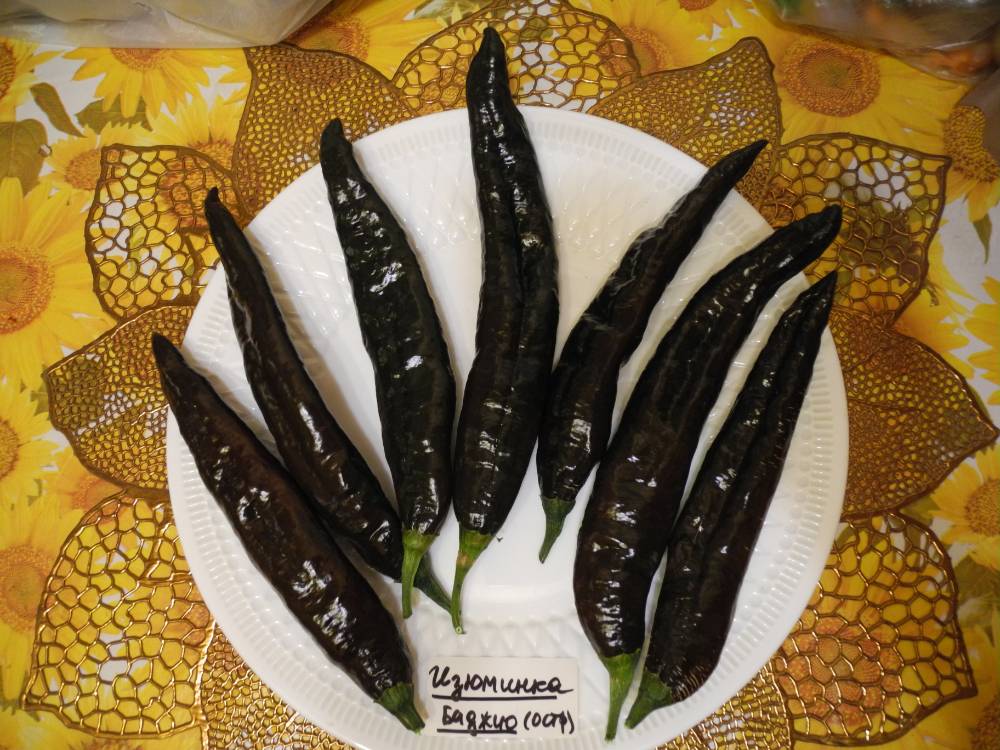
The name literally means “little raisin” in Spanish, a nod to its wrinkled skin, dark brown, almost black pods, and rich, sweet raisin-like aroma. Pasilla Bajio also goes by Chile Negro, Mexican Negro, Prieto, and Cuernillo, and is the dried form of the Chilaca pepper. It’s used fresh too, for pickling in vinegar or roasting, and tossed into escabeche, enchiladas, chiles rellenos, potato bakes, sautes, and salsas, though it’s mostly used dried, either whole or ground into powder. Fresh Chilaca is harder to find in stores, though in season you can sometimes spot it at farmers markets or specialty shops, especially in neighborhoods with large Hispanic communities.
Pasilla Bajio has mild-to-medium heat, a touch hotter than fresh Chilaca, ranging from 1,000 to 2,000 Scoville units. It brings a bright fruity, berry-like flavor with distinct smoky notes. Alongside Ancho and Mulato chiles, it’s considered one of the best peppers for making traditional Mexican mole sauce. Thanks to that flavor profile, it has also been catching on with Italian chefs. Adds great depth to all kinds of dishes and really shines alongside fruit, mushrooms, garlic, dill, honey, and oregano. Packed with vitamin C, iron, niacin, and magnesium, along with vitamins B1, B2, and D.
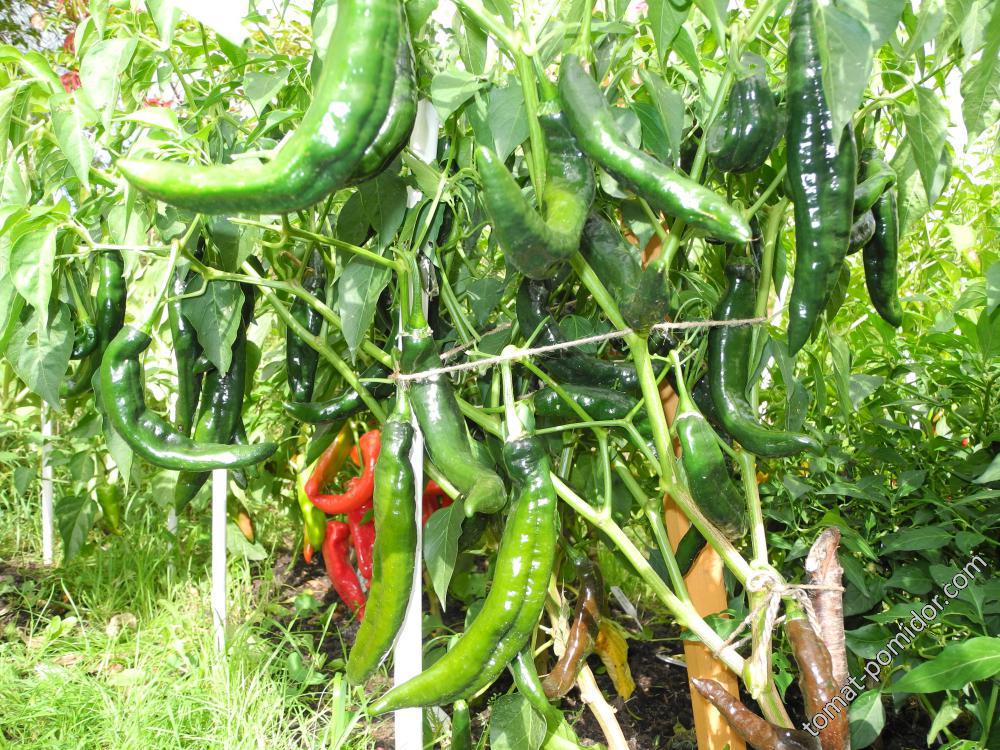
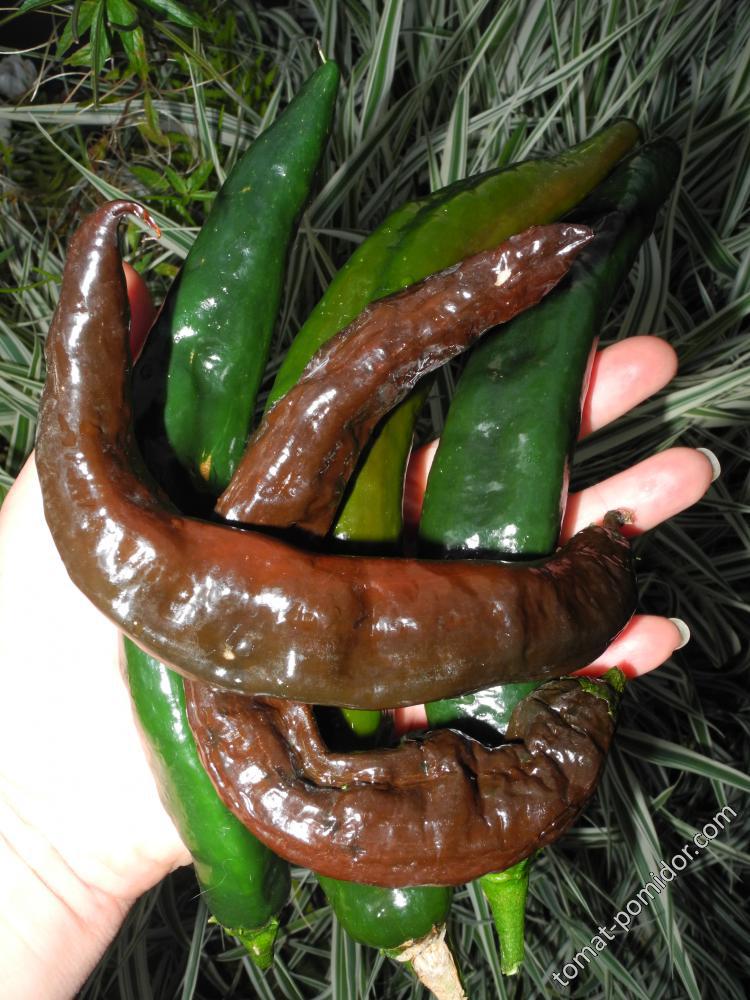
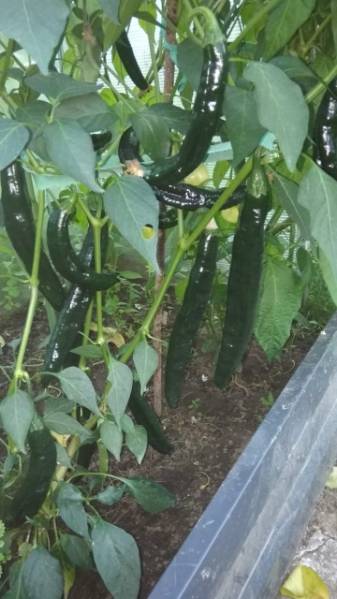
Plants reach 2.5-4.5 ft (75-135 cm) tall. Heavy producer putting out lots of thin-walled pods around 8.5 in (22 cm) long fresh, often with a slight curve. Pods ripen from dark green to chocolate brown.
Super easy to grow with solid resistance to tobacco mosaic virus. Matures about 85 days after transplanting, with each plant setting roughly 20 pods. Like most chiles, it prefers warm to hot weather.
https://plantium.ru/pasilla-bajo

Super productive 🙌 and gorgeous mild-heat variety, grew it outdoors.
It also goes by Izuminka Bajio, meaning Little Raisin Bajio. This pepper has a ton of aliases. Oksana, it’d be great to list the common names alongside the main one in the catalog, otherwise we’ll end up hoarding way too many duplicates 😅
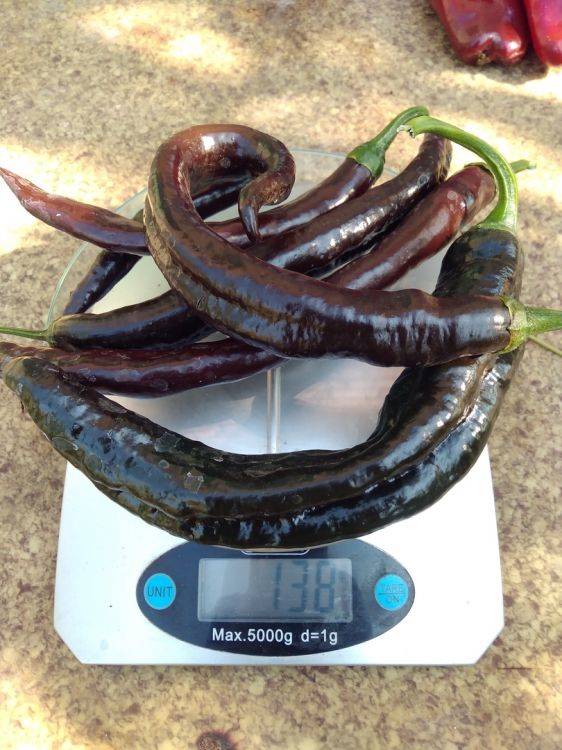
On January 11, 2018 at 3:23 AM, Ninulia wrote:
It also goes by Izuminka Bajio, meaning Little Raisin Bajio. This pepper has a ton of aliases. Oksana, it’d be great to list the common names alongside the main one in the catalog, otherwise we’ll end up hoarding way too many duplicates 😅
The name literally means “little raisin” in Spanish, a nod to its wrinkled skin, dark brown, almost black pods, and rich, sweet raisin-like aroma. Pasilla Bajio also goes by Chile Negro, Mexican Negro, Prieto, and Cuernillo, and is the dried form of the Chilaca pepper.
Well yeah, that’s literally what it’s called if you translate it straight from Spanish.
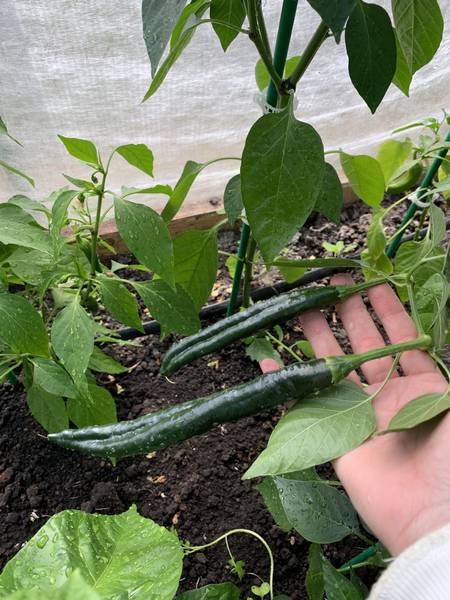
Figured I’d join the pepper measuring contest too 😁
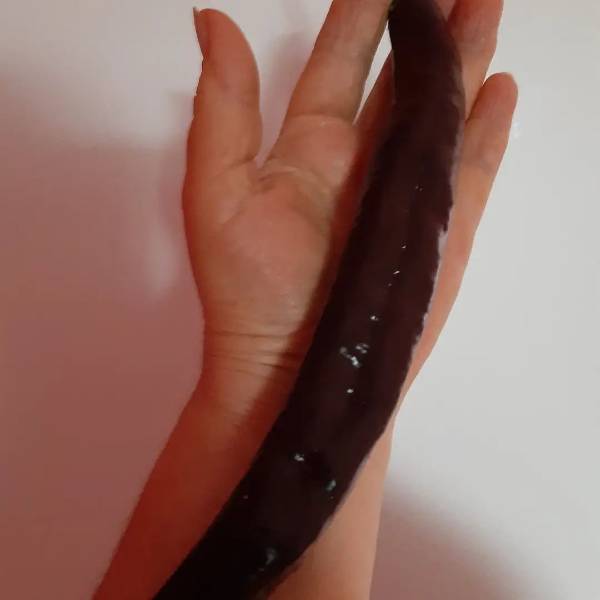
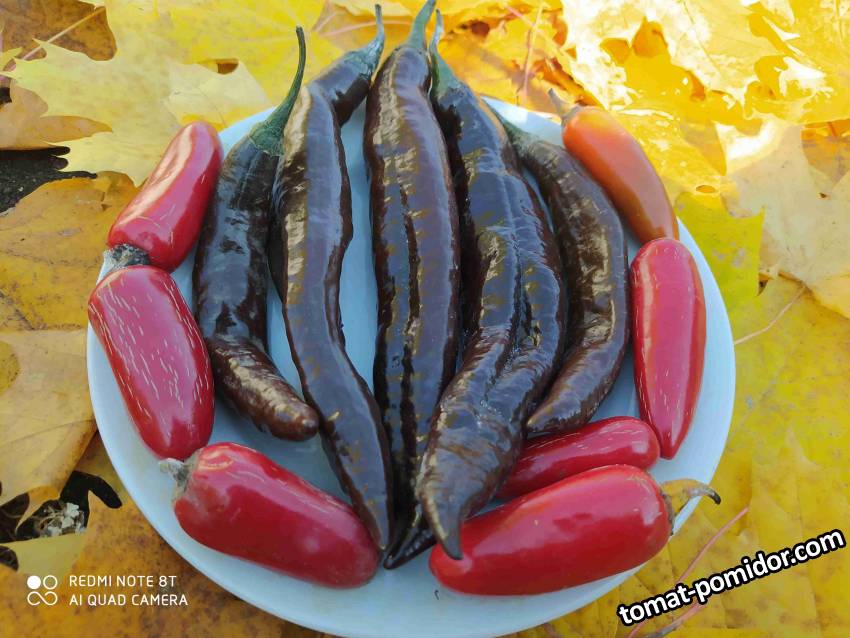
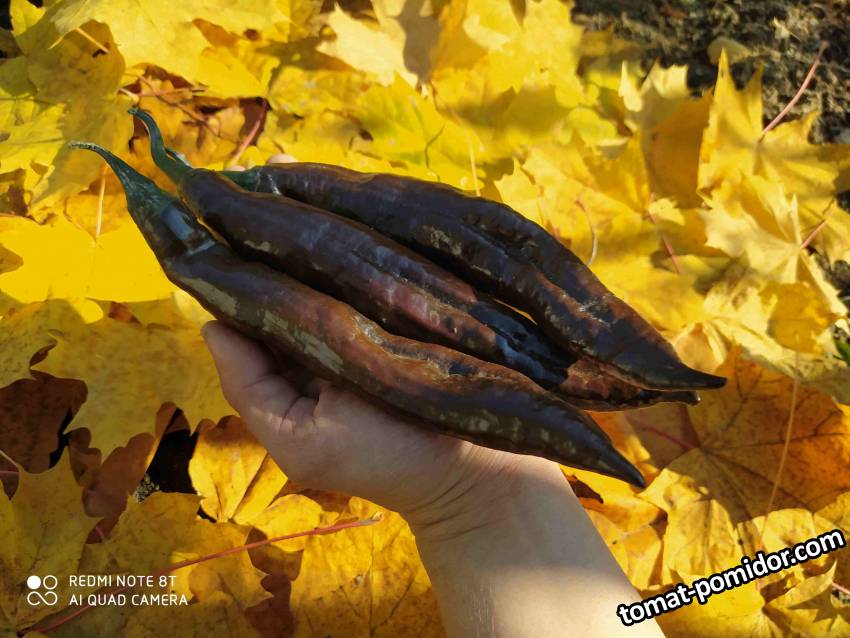
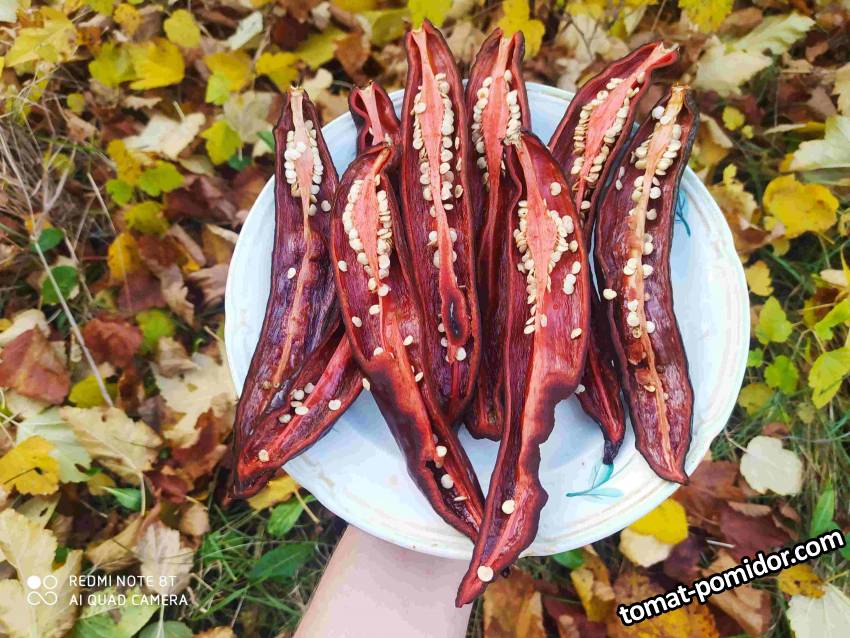
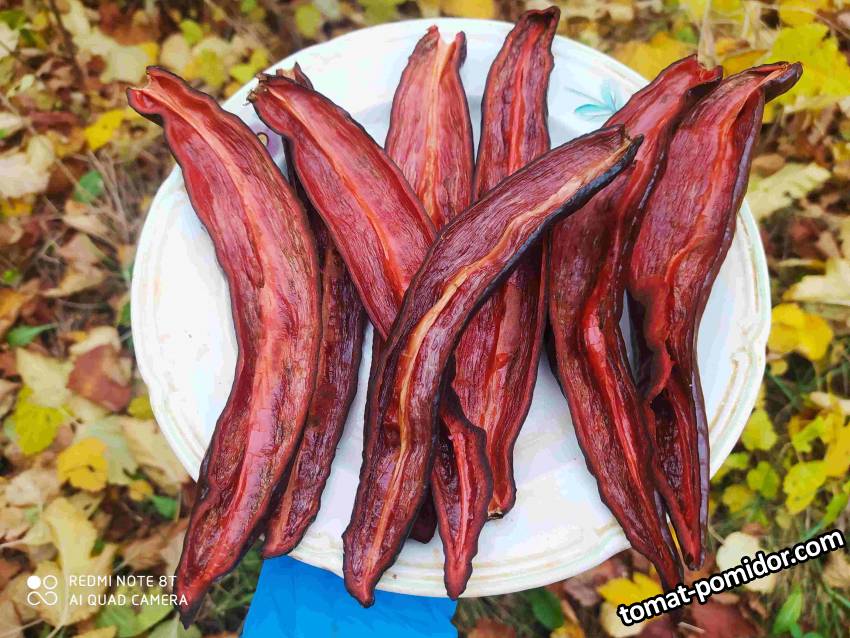
Big shoutout to Svetikk for the seeds! Izuminka Bajio is love at first pod! Grew them in a polycarbonate greenhouse. Plants got around 28 in (70 cm) tall, sturdy and super productive. The flavor blew me away, real smoky and fruity notes. Held up awesome in canning too, especially pickled.
Hey everyone, does anyone happen to have a few seeds to spare or sell? Really itching to try this one for drying, I’d be super grateful.
Thanks everyone, found some seeds! So pumped…
On January 16, 2019 at 1:43 PM, Michel wrote:
Well yeah, that’s literally what it’s called if you translate it straight from Spanish.
Why “Little” though? Doesn’t look little at all! Ran it through a Spanish translator and 🤷♀️ got nowhere…
On February 23, 2022 at 9:05 AM, Vitana wrote:
Why “Little” though? Doesn’t look little at all! Ran it through a Spanish translator and 🤷♀️ got nowhere…
In Spanish, raisin is “pasa”, so “pasilla” is the diminutive, meaning little raisin. And “Bajio” is probably from “bajo” meaning short or low, since the plant itself really is on the shorter side for pods that huge, though that’s just my guess. Plus Mexican Spanish supposedly differs quite a bit from classic Castilian, so there could be a few ways to read it 😁
Pasilla Bajio
Hey folks, when are you starting seeds for this one? February or early March?
Ancho and Mulato aren’t exactly early varieties, so if this guy falls into the same group, you’d need to start seeds by mid-February at the latest, right?
My seeds are still in the mail, wondering if I’ll have enough time.
Full Summary: Plant, Yield, Heat & Kitchen Use
- 🌿 Plant & Pods: Capsicum annuum, listed at 2.5-4.5 ft (75-135 cm) tall and about 85 days from transplanting, though Natella measured sturdy 28 in (70 cm) plants in a polycarbonate greenhouse. Produces long, thin-walled, slightly curved pods around 8.5 in (22 cm) that ripen from dark green to chocolate brown.
- 📈 Yield & Climate Performance: Both Svetikk (outdoors in Zone 4) and Natella (greenhouse in Zone 4) reported heavy yields and sturdy plants, with additional growers successfully ripening pods as far north as Altai and Udmurtia (Zone 3).
- 🔥 Heat & Flavor: Mild-to-medium heat at 1,000-2,000 SHU. Growers confirmed the catalog’s rich, smoky, fruity flavor profile, with a sweet raisin-like aroma when dried.
- 🌶️ Best Uses: Famous as a drying pepper for mole sauces and chili powder, and also tested successfully in canning and pickled marinades by Natella.
- 🌎 Who Reviewed It: Growers across USDA Zones 3, 4, and 5 (Moscow, Nizhny Novgorod, Ryazan, Samara, Saint Petersburg, Udmurtia, and Altai), showing strong adaptability across short-season gardens.