📌 Thread Highlights: Acorn Squash Shelf Life & Storage Rules
- 🎃 Real Acorn Squash Shelf Life (2 Months vs. 10 Months): While textbooks claim Acorn squash only lasts 4–8 weeks, our forum grower stored cured Paydon Family Acorn squashes all the way until May, June, and even August (nearly 11 months)! Instead of rotting with a bad odor, old Acorns undergo a dry “phase transition” where seeds sprout inside and the sweet zucchini-like flesh turns starchy like a potato.
- 🌡️ Temperature & Stem Prep Secrets: To maximize winter squash shelf life, keep storage temperatures near 8°C (46°F)—at 18°C (64°F)+ they spoil rapidly. Never wash squash before storage (it ruins the natural protective bloom), and scrape soft tissue off thick stems with a knife so the stem dries out completely.
- 💡 Which Varieties Keep Best: Thin-skinned orange pumpkins (like Rouge Vif d’Etampes) rot quickly, whereas Nelson, Sampson, Blue Hokkaido, and Blue Ballet easily last until spring.
- ⚠️ Late-Summer Frost Warning: When August nights drop near 3°C (37°F), place wooden boards under growing squashes to insulate them from cold, damp soil and prevent sudden rind splitting.
- 1. Winter Storage Prep: Optimal Temps (46°F vs 64°F), Stem Scraping & No-Wash Rule
- 2. The 11-Month Acorn Squash Shelf Life Test: Signs of Spoilage & Taste Changes
- 3. Preventing Splitting Before Harvest (Cold Damp Soil Trick)
- 4. Editor’s Note: Why Store-Bought Acorn Squash Rots in 6 Weeks vs. Homegrown
Natalya79 wrote:
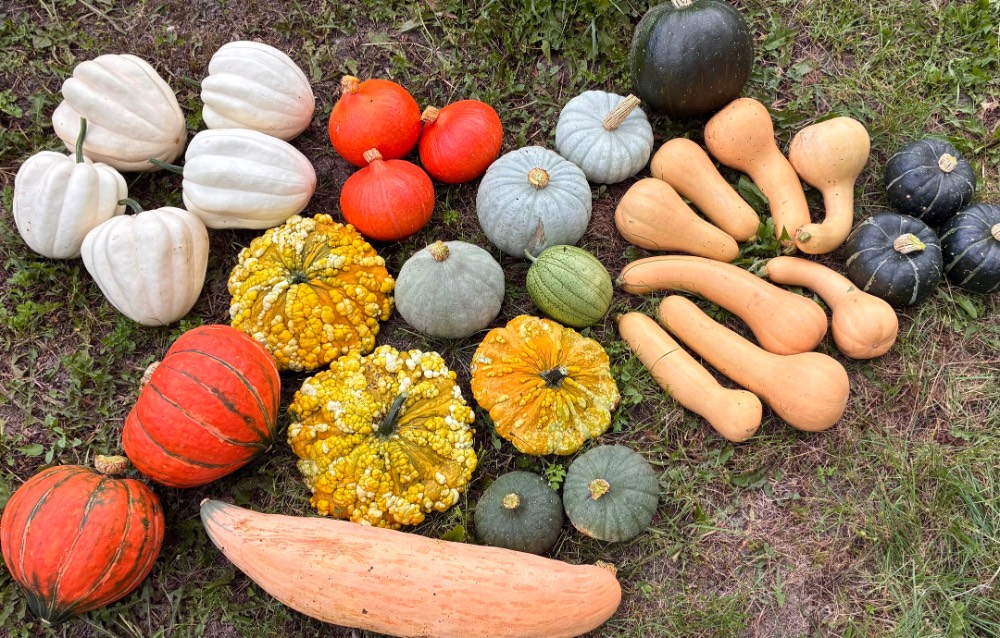
Hello everyone! I harvested half of my pumpkins today.
They are all beauties! 😍 Is the Strie Melange still edible at this stage, or is it purely decorative now?
McSimka wrote:
…especially if it cross-pollinates with a field pumpkin, you have no idea what is growing until it’s fully grown.
Are you participating [in the giant pumpkin contest] this year?
InnaK wrote:
Yes, thank you! I’m sure they won’t sit around for long anyway, we will eat them up quickly 😅😋. For long storage, I’m counting on Blue Hokkaido, Blue Ballet, Nelson, Sampson, and Pseudo Sdobnaya Pyshka.
Winter Squash Shelf Life: Temperature, Stem Scraping & The No-Wash Rule
Thin-fleshed orange varieties with thin skin don’t store well (like Rouge Vif d’Etampes). On the other hand, Ulybka, Konfetka, Kashevar, and Banana stored all winter for me. Nelson and Sampson usually keep until spring.
If you don’t keep an eye on your pumpkins and turn them at least twice a month, irreversible rotting processes can start. At temperatures above 18°C (64°F), they spoil much faster than at 8°C (46°F).
Before sending them to storage, make sure the stem is completely dry. For varieties with thick stems, you’ll have to use a knife to scrape away all the soft tissue, otherwise, it won’t dry out. The shorter the stem, the less hassle with storage. Also, you should NOT wash pumpkins before you are ready to eat them. Right after harvesting, their protective layer is very thin, and any unnecessary handling gives fungi/bacteria a chance to penetrate.
InnaK wrote:
I also bought seeds on Ozon [marketplace], in a Chinese seed shop.
How many pumpkin seeds are actually inside those Chinese packets?
JURGEN wrote:
How many pumpkin seeds are actually inside those Chinese packets?
It varies. I recently bought Green Beibei, there were 20 or 21 seeds. Hong Beibei from the same company had about the same amount. I didn’t write it down immediately, and I can’t count them now because I actively gave them away to friends.
In the Japanese Black packet, there were fewer seeds, I think 12. I also bought a Chinese butternut (Honey), and there were about 50 seeds in there! I don’t even know if I’ll dare to plant them 🙈
Jurgen, if you ever want to try the Beibei squash, I can share—I can send you a few seeds of both the red and green varieties 😉.
Iris wrote:
They are all beauties! 😍 Is the Strie Melange still edible at this stage, or is it purely decorative now?
I haven’t eaten it yet, I will report back later. But Gulnara grew these pattypans (scallop squash), and hers grew to 5 kg (11 lbs). Maybe she can advise if they are still edible or not @Gulnara.
PoOlga wrote:
Are you participating this year?
No, unfortunately for me, this season turned out to be a failure. The giant pumpkin didn’t grow, it only pollinated in August, the field pumpkin cracked, and the zucchini are tiny. So this year, I am just a spectator 😞
InnaK wrote:
Japanese Black
Thanks to your link, I will buy this one too! I had seeds from AliExpress, with no packaging, no label, just in a ziplock bag. They got lost somewhere in my unlabeled stash 🤷♀️ I thought out of naivety that they were zucchini—I didn’t even know how seeds of different squash species differed 🤦♀️ But it grew into such a wonderful little pumpkin! Unfortunately, I only got one. But oh, so delicious..! 😋
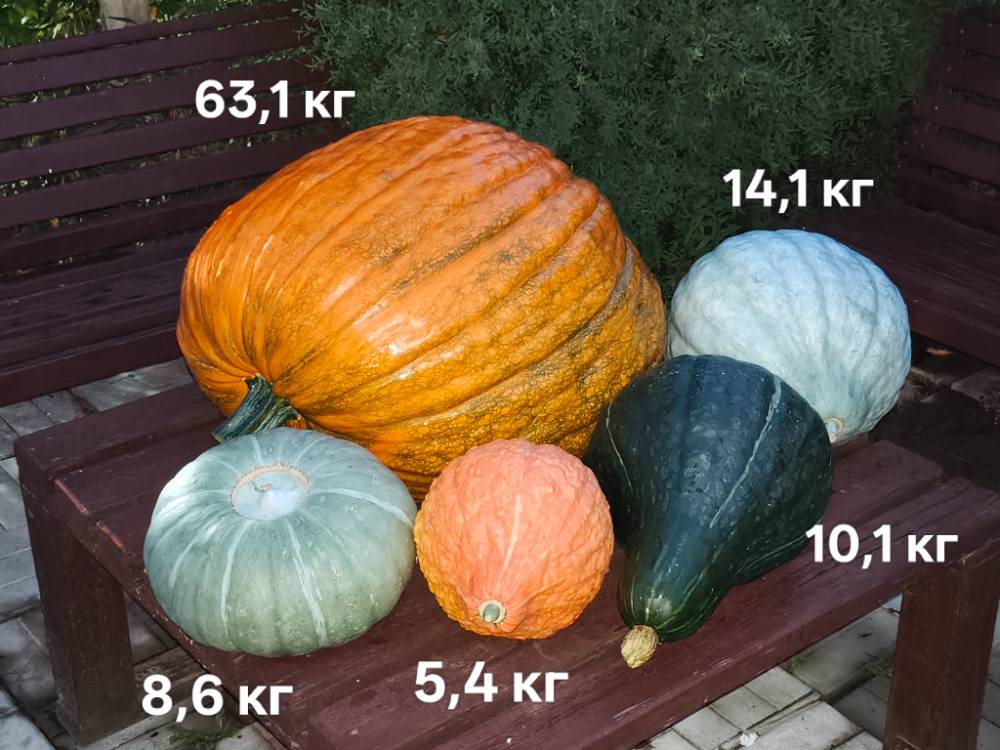
My harvest for today. I picked the Hubbard squashes that set first (they are the largest) to give the rest a chance to gain juiciness in the last week of warmth. The stems have already become woody/corked.
Acorn Squash Shelf Life Experiment: Storing Until Summer & How They Go Bad
Yesterday, one of my last year’s Acorn squashes finally went bad. The first one in my life! It was a Paydon Family Acorn, and I still had two left from last season’s harvest. Previously, my Acorn squashes never lasted quite until the new August harvest—usually keeping until May or June at the maximum (about 8 to 9 months). So, through an experiment, it turns out they don’t live forever! 😂 In short, it sat and sat, and then suddenly over 2 days it turned gray and soft, and a little mold appeared near the stem. But it didn’t rot or smell bad, it just… overripened. It underwent a “phase transition.” I extracted some seeds from it (many were sprouting inside, but not all), and naturally threw the rest away.
And the second Acorn squash? The second one just kept sitting there! But I cut it open too. It was in perfect condition after nearly a year in storage! Firm skin, dense flesh, and a very light Cucurbita pepo smell. The seeds were plump and not sprouting inside. I saved some of those too.
I fried half of that stored Acorn squash in a pan with olive oil along with the remains of an unripe, aborted Karotinovaya pumpkin. Let me tell you, the Acorn squash was much tastier! It’s not a potato, of course, but after months of storage it resembles a starchy potato much more than the rubbery flesh of the Karotinovaya, which was more like a dense zucchini. Funny, right? 😄 Because when eaten fresh (during the first half of winter storage), the Paydon Family Acorn was exactly like a tender zucchini—just deliciously sweet, with no potato texture at all.
The aforementioned Karotinovaya had almost reached full weight, but then its nose started to wrinkle, so I picked it before it started to spoil. The flesh is a warm yellow color, dense, with a faint smell of cucumber—very pleasant raw. The seed coats were fully formed but, naturally, still empty inside. Not great for frying (not enough starch yet), it was much tastier raw.
Late-Summer Harvest: Protecting Squashes from Cold Soil & Splitting
I don’t know, during the second night of 3°C (37°F) temperatures, I was running outside to rescue the Karotinovayas and two grimly green off-type (white seeds) Queensland Blues from Zolushka 🥶.
Folks and fellow sapiens, if you haven’t harvested all your pumpkins yet, put a piece of wood under the remaining fruits. In the summer it wasn’t necessary, but right now the pumpkin can crack [from the cold, damp soil]. Don’t tempt fate.

👨🔬 Editor’s Note: Why Do Guides Say Acorn Squash Only Lasts 1–2 Months?
If you look up acorn squash shelf life in standard culinary guides, you will almost always see the same rule: 4 to 8 weeks maximum. Yet, as Anna (Malanka) demonstrates above, properly cured homegrown Acorn squashes can last 8 to 11 months (all the way into May, June, or even August of the following year). Why the massive difference?
- Grocery Store Wax & Bruising vs. Unwashed Natural Bloom: Commercial Acorn squashes (typically standard Table Queen hybrids) are machine-washed, which strips their protective cuticle, and are often stored in warm supermarket aisles (above 65°F / 18°C). As JURGEN notes, leaving the natural protective layer intact and keeping temperatures cool (around 46–55°F / 8–12°C) slows respiration dramatically.
- Genetics Matter: Heirloom strains like Paydon Family develop a denser, harder shell once fully corked on the vine compared to early commercial cultivars picked prematurely.
- How to Tell If Acorn Squash Has Gone Bad: Unlike high-moisture pumpkins that leak foul-smelling liquid when they rot, an old Acorn squash usually dries out internally first. Signs it has passed its shelf life include: the dark green rind turning dull gray, soft spots near the stem, or seeds germinating inside the cavity. If you cut an older Acorn open and the flesh is still firm with a clean, mild smell, it is completely safe to cook—though its flavor profile will have shifted from sweet and zucchini-like to dense and starchy!


