📌 Quick Summary (TL;DR): Goliath
- 🌍 Origin: An old, highly productive heirloom originating from the USA.
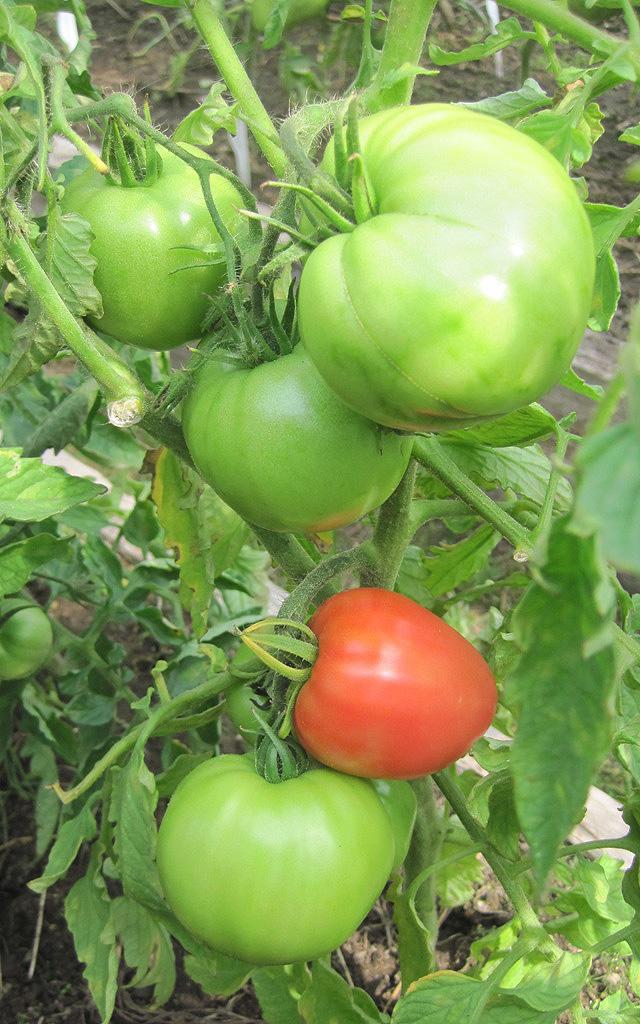
- 🌿 Plant Habit: Indeterminate (tall). The plant is an absolute monster—growers describe it as being “built like a tree.” It grows very tall (easily over 6.5 ft / 2 m) and requires heavy-duty staking, as single trusses can weigh up to 6.6 lbs (3 kg)!
- 🍅 Fruit Characteristics: Massive pink/red beefsteaks. They gain weight incredibly fast and are solid meat inside with very few seed locules.
- ⏳ Maturity: Mid-season, though it can pump out fruit late into the season.
- 👅 Flavor: Delicious, juicy, and well-balanced with a slight tang. Very meaty texture. Perfect for fresh eating, slicing, or making thick juices.
Grower Reviews & Photos
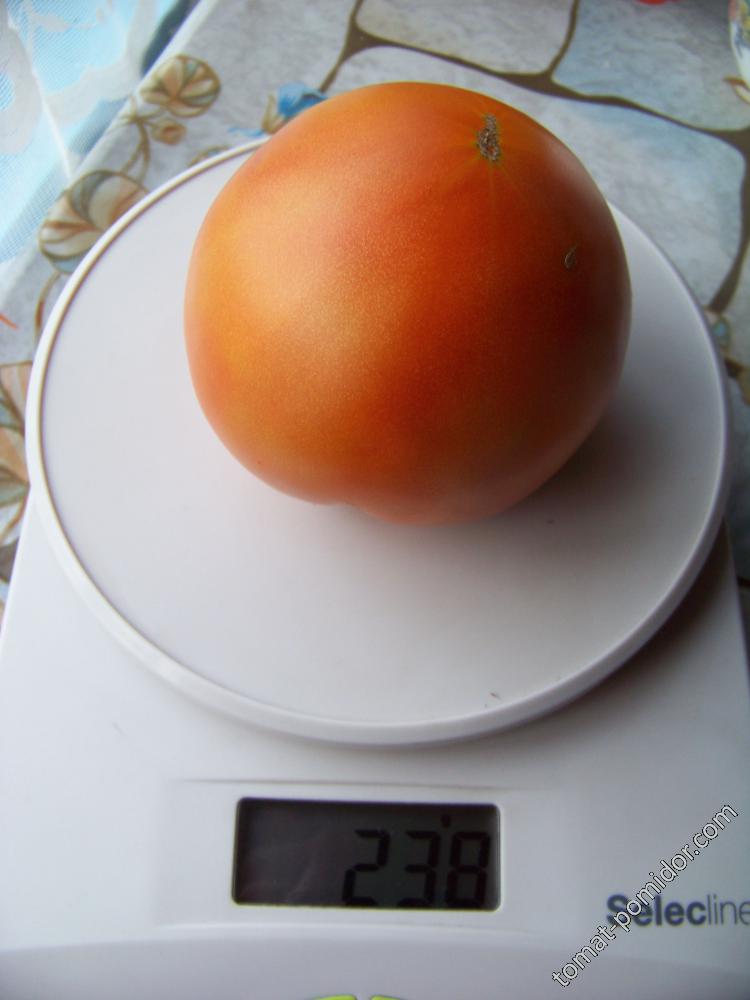
Seeds were from Popenko. Grew them both in the greenhouse and outdoors, they performed equally well in both. The fruits are quite large, and there are a lot of them on the plant. The absolute biggest ones were on the second truss. They turned out to be the tastiest of the ones I tried, but they didn’t have quite enough sweetness for a perfect 5/5, so I give them a solid 4. The photo is just the very first tomato.
Edited February 12, 2017 by Drosera
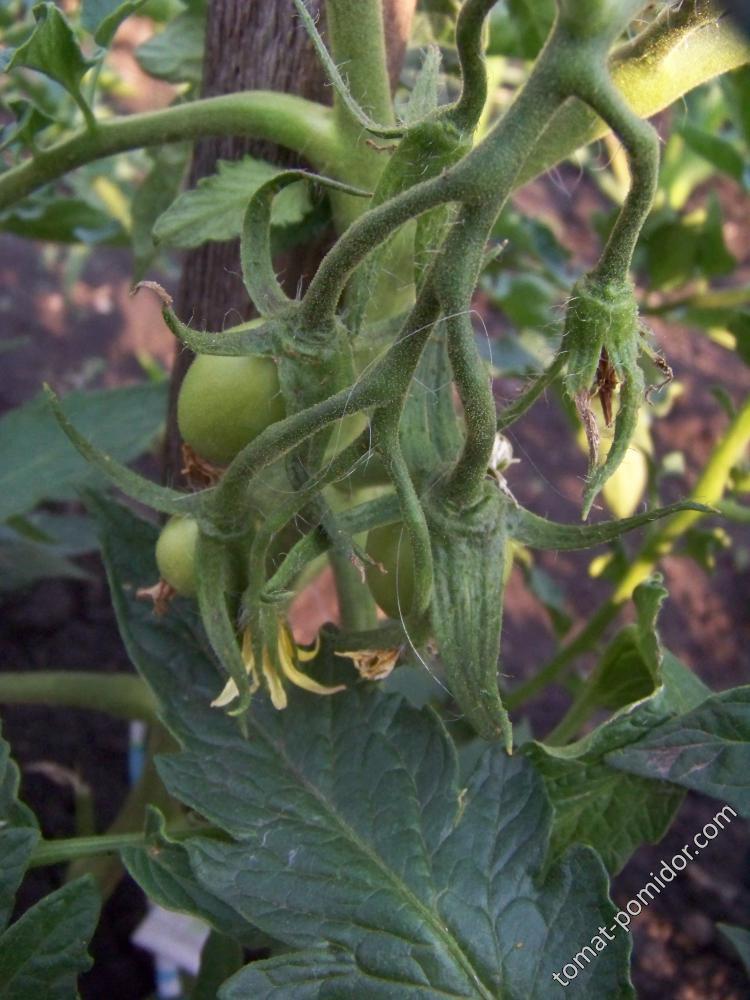
I want to show off my Goliath, seeds from Popenko. The bush is incredibly powerful, built like a tree, with 4 fruits per truss. The taste is absolutely delicious, but it has one flaw: there is a white core/veining inside. The fruits gain weight very fast, so you absolutely MUST tie up and support the trusses. Loved the variety.
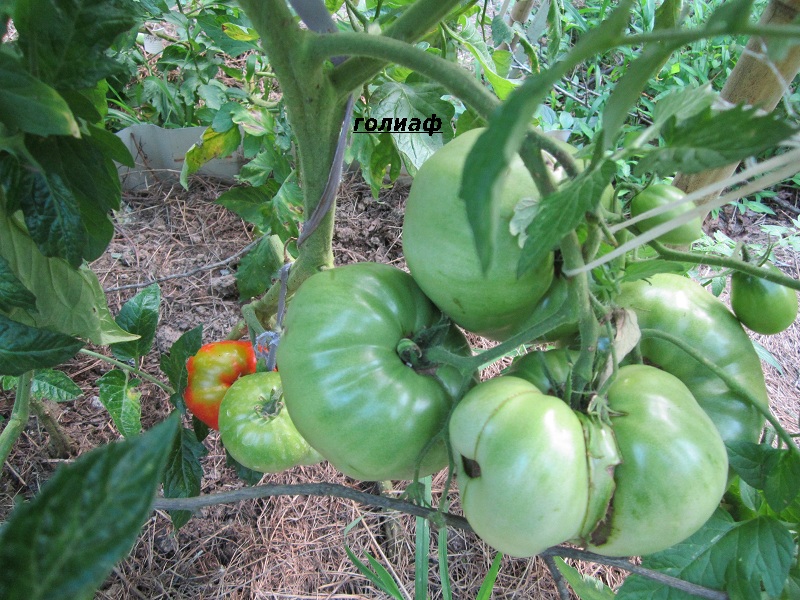

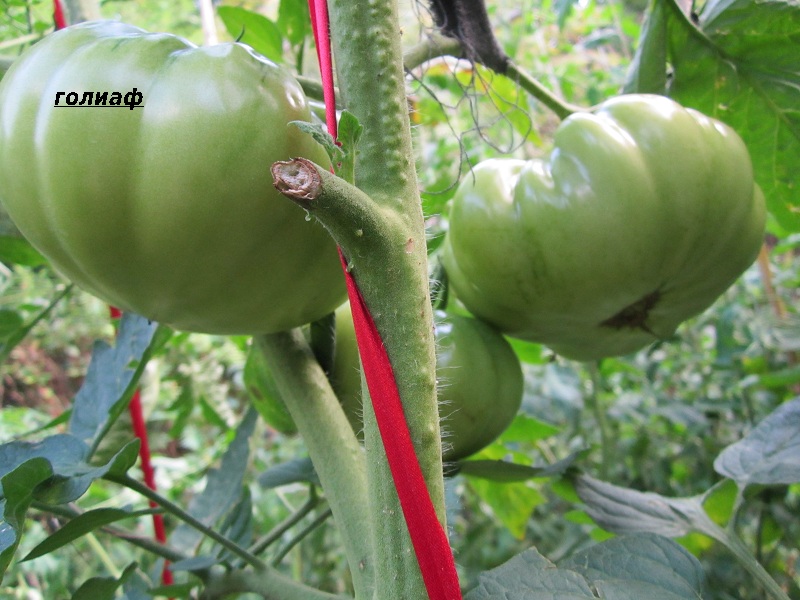
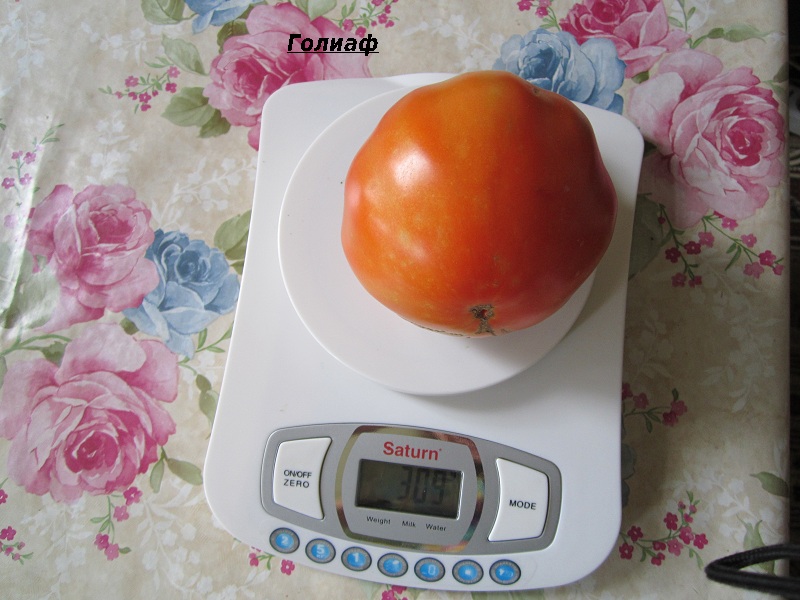
A look at the cross-section.
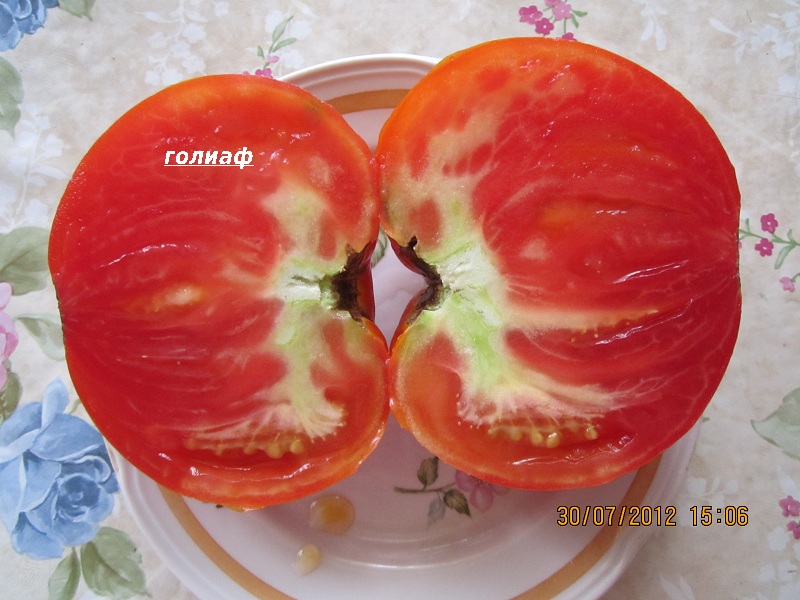
White veining means a potassium deficiency.
I feel like it might just be a genetic/varietal trait…. IMHO 😳
I think Marishka’s tomatoes have it in her photo too.
@tomatinka wrote:
I feel like it might just be a genetic/varietal trait…. IMHO 😳
Yeah, that is also a possibility.
Please let’s not get sidetracked by potassium discussions here 🤫.
Sweet, juicy, with a slight tang.
Marishka from Novosibirsk sent me my Goliath. It actually turned out to be an early ripener for me (grown in a hot, sunny greenhouse), large fruits, and NO white veins inside. True, it didn’t throw a ton of fruits, but under my conditions, it practically took 2nd place in total yield just because the individual tomatoes were so huge. And the bush is incredibly tall, over 6.5 ft (2 m) in the greenhouse.
I accidentally snapped this seedling right before planting. Felt bad throwing it away, so I stuck the top in a glass of water, and when it grew roots, I planted it outdoors 10 days later than everything else, simply because I had an empty spot.
It sat there for a long time, looked sick, didn’t grow, and then it suddenly exploded with growth and started setting fruit like crazy. I got 4 trusses! Some just didn’t have time to ripen. So I can say the yield is great, though I don’t know the taste yet. 🙂 🙂
Loved the variety, definitely a candidate for planting next year. 👍
2015 Season:
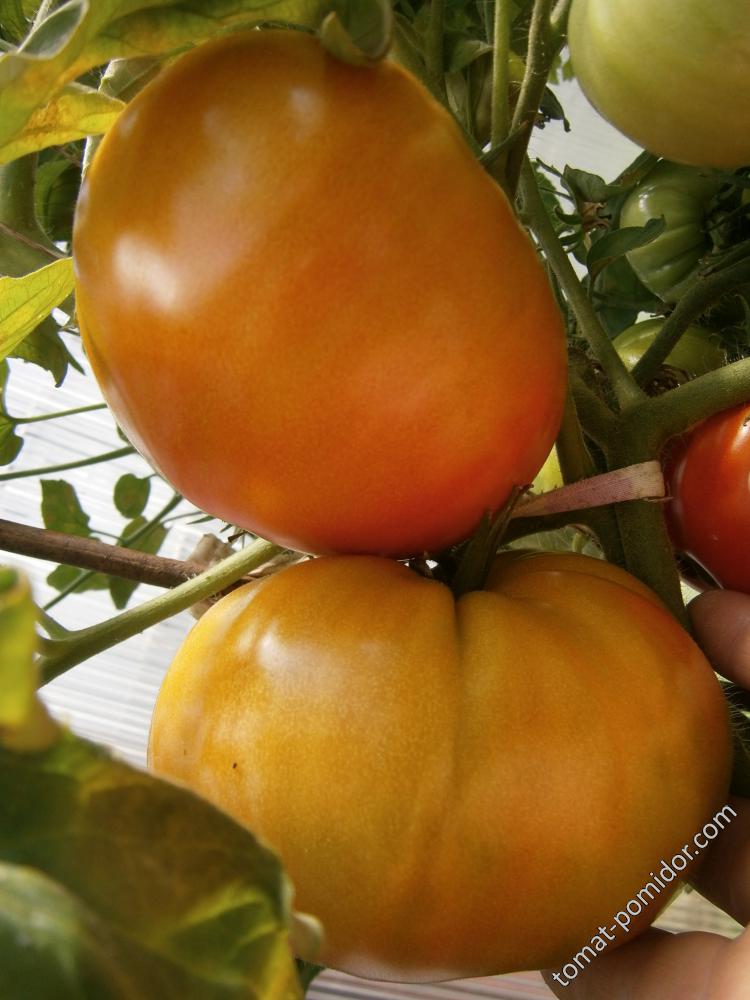
Goliath. Seeds from the USA. Super productive, old heirloom, didn’t get sick, very tasty fruits. The flesh is incredibly meaty, almost completely without seeds. The trusses can reach up to 6.6 lbs (3 kg).
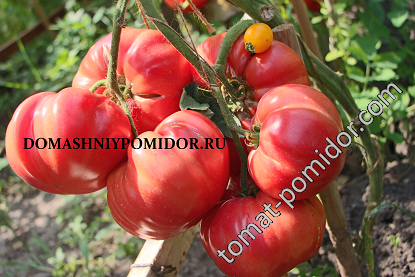
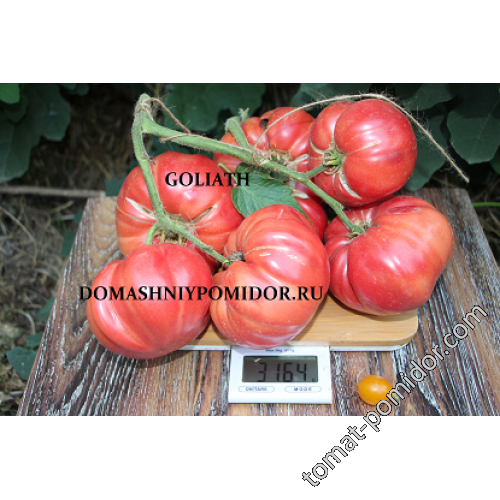
My Goliath, seeds from Vera Monakhova.
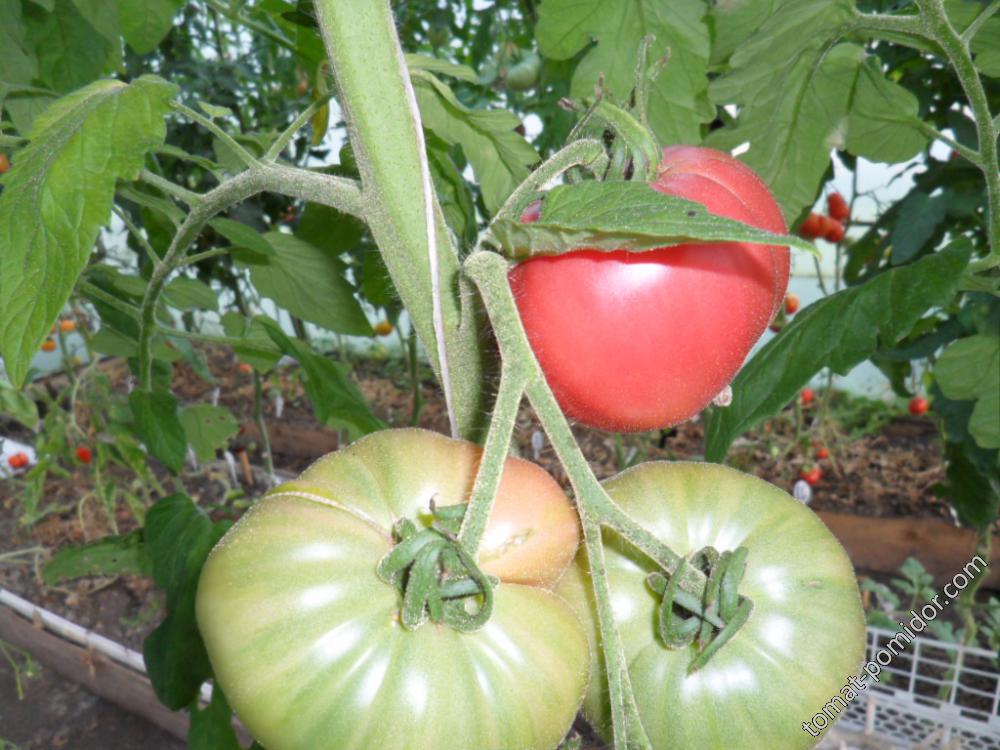
Good day everyone!!! Look how late to the party I am. I planted Goliath this year and completely fell in love. It grew into this very tall bush and just wouldn’t set fruit compared to its neighbors. I thought, wow, I planted a total dud. But then it just went crazy. It pumped out a ton of huge fruits. My only problem? I completely forgot to save seeds from it.
Edited November 15, 2022 by Raisa Sergeevna
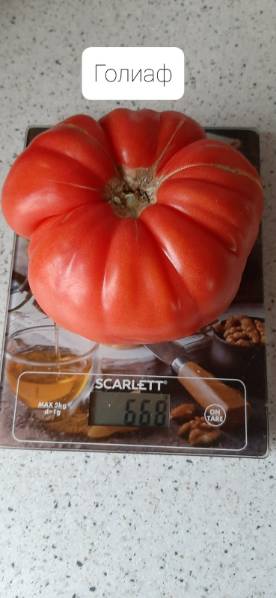
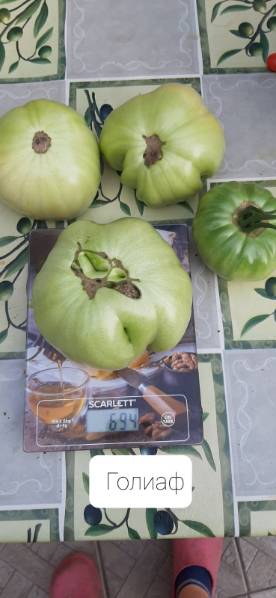
Hello! In 2022, grown outdoors, it was the absolute largest in my garden. I tried to keep it to 2 stems. During a very rainy summer, it didn’t crack at all. Taste is a 4+, great for juice and in salads.
I got this variety from Angelina. Gorgeous pink fruits, all of them large, very tasty. Powerful bush, mid-season maturity.
.jpg.3e5af8cecdbda608e8e9056f2da9287b.jpg)
Early in the thread, users debated whether the hard white core (pith or veining) inside the tomato was caused by a potassium deficiency or if it’s just genetic. This is a very common debate!The truth is, it’s often a combination of both. Many giant, old-school beefsteaks (like Goliath) have a genetic predisposition to form dense core tissue to physically support their massive weight on the vine. However, environmental stressors—specifically extreme heat, uneven watering, or a lack of available potassium during fruit fill—can cause that core to turn hard, white, and woody instead of ripening normally.
So while the trait might be in the plant’s DNA, keeping your feeding schedule balanced (especially with Potassium and Calcium) during peak summer can greatly minimize the issue!