Jump to section: Sowing & Pot Sizes · Outdoor Cold Survival · Pruning, Crown Blossoms & Feeding · 39 Reader Q&As · Full Summary ↓
Growing Eggplants From Seed to Harvest
By Pomidoroved · Published July 3, 2012
Here are my notes from my first truly successful season growing eggplants, packed with photos and hard-won takeaways I hope you’ll find useful.
Honestly, I never grew eggplants at all before 2012. Years ago I tried starting eggplant seedlings once, watched them promptly keel over early on, and didn’t lose much sleep over it. Greenhouse space is always too tight for tomatoes anyway, so messing around with eggplants felt like a pointless distraction.
Then the summers of 2010 and especially 2011 got me thinking: our summers had turned unusually warm, with zero night frosts starting in May and steady warmth right into fall. I kept kicking myself for not planting watermelons, eggplants, cantaloupes (plus apricots and oranges while I was at it…).
So to keep good weather from going to waste, in mid-February 2012 I sowed a packet of Marzipan F1 eggplants. All 15 seeds in the packet sprouted cleanly.
1. Sowing Dates, No Pricking Out & Pot Size Experiment
How do you start eggplant seeds indoors? Basically the exact same way as tomatoes. They’re close cousins after all, just a stockier purple brother born in India and a taller red brother from Central America.
One key difference: unlike tomatoes, eggplants should NOT be pricked out bare-root because they hate root disturbance. Sow each seed into its own cell or small starter cup, then pot up intact into larger containers as the plants grow.
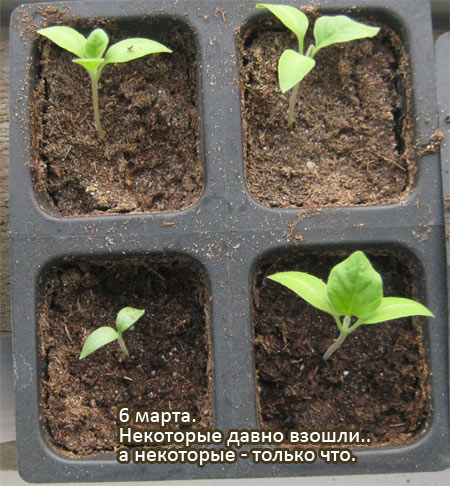
Following all those “When to sow eggplants” articles online claiming they sprout slowly and grow at a snail’s pace, I sowed mine in mid-February. From my experience (small as it is), as long as your seeds are fresh, they sprout and grow at a completely normal speed. If you have the patience and massive window space to babysit giant, floppy elephant-ear leaves indoors, go ahead and sow in early to mid-February. For a normal home without a dedicated grow room, late February to early March works just fine. (That’s speaking for Marzipan F1; haven’t tested other hybrids yet.)
Seeds emerged in 7-10 days, and just two weeks after sprouting, a clear size gap appeared between seedlings. Even on identical weekly feedings of liquid “Novy Ideal,” some plants grew big and vigorous while others stayed sad little runts.
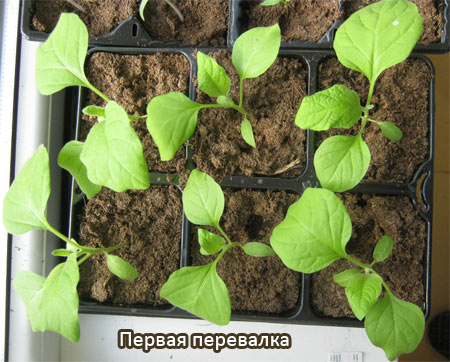
Photo taken March 19
About three weeks after emergence, the biggest plants urgently needed potting up. I moved them into 1-qt (1 L) square pots, dropping 5-7 granules of “Ispolin” fertilizer into the bottom of each pot. Always pot up BEFORE growth stalls. If you wait until roots completely pack the pot or nutrients run dry, your eggplants will stall hard and lose yield later.
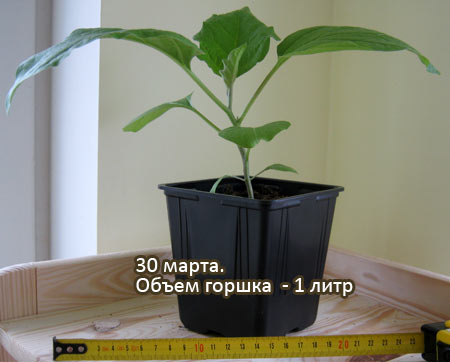
March 20, 1-qt pot.
Once settled into 1-qt pots with Ispolin granules, the eggplants rocketed upward with triple the vigor. Within another 2-3 weeks I faced a dilemma: pot up again into 3-qt+ containers, or leave them in 1-qt pots and push heavier liquid feeds? I tested it by putting one plant into a 3.5-qt (3.5 L) pot and leaving the rest in 1-qt pots. Eggplants hog a ton of room, though one nice perk is they aren’t as light-hungry as tomatoes and don’t get nearly as leggy. The lucky ones got windowsill spots while most sat on a shelf just off the window.
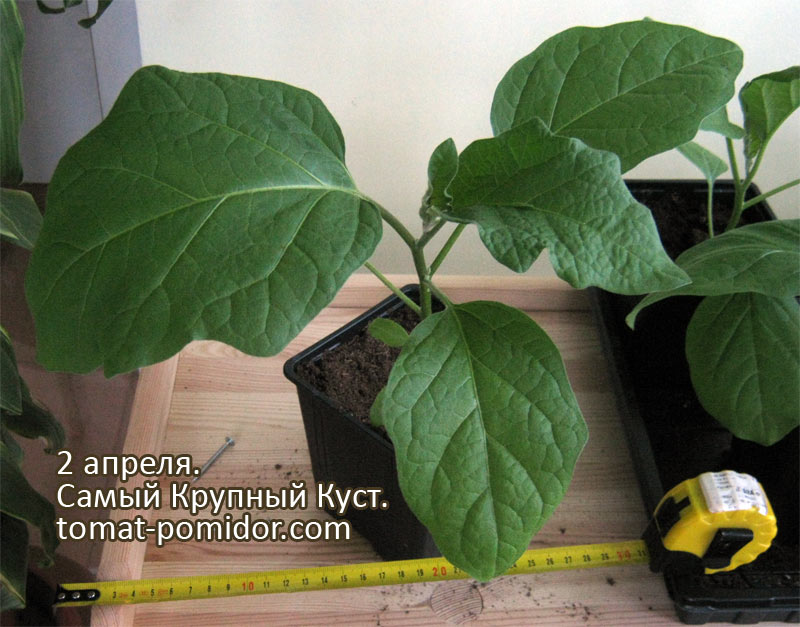
Apr. 2.
Whenever lower leaves yellowed slightly, I watered generously with balanced NPK plus micronutrients, keeping my first eggplants going right up to bloom. They actually started flowering on the windowsill while 2012 spring weather turned nasty, with frosts dragging all through April and freezing 32°F (0°C) nights well into May.
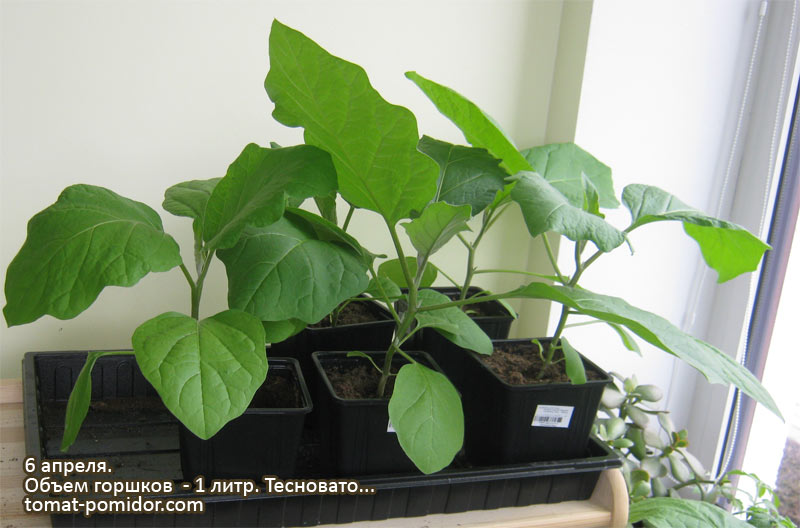
Apr. 6 – 1-qt becomes too tight…
2. Surviving 32°F Nights & Gale-Force Winds Outdoors
In early May, still hoping for warm weather, I potted everything up into 3.5-qt (3.5 L) containers and hauled them out to the greenhouse, thoroughly sick of giant leaves taking over the house. My plan was still to move them outdoors once it warmed up because the greenhouse was crammed with tomatoes, though I did plant a couple directly in the greenhouse bed early on.
That’s when the myth of fragile, pampered eggplants fell apart. Out of greenhouse space (and purely as an experiment), I planted a few straight outdoors. Night temps dipped right down to 32°F (0°C). By morning, several leaves had frost damage, yet every single plant survived! Meanwhile, the ones sitting in pots inside the unheated greenhouse didn’t even flinch at the cold and bulked up like crazy right before everyone’s eyes.

Mat 14, in the greenhouse
By mid-May I shoehorned 5 plants between tomatoes inside the greenhouse (even though I hadn’t meant to, weather made putting all of them outside too risky). Another 3 stayed outdoors, still sitting in pots; two thrived and the third limped along decently.
At the very end of May another late frost hit, forcing me to haul two of those outdoor pots into the boiler room overnight. By then the poor things had rooted straight through the drainage holes into the dirt, so I had to rip those roots off. There they sat for two nights in the utility room covered in blooms and baby fruit, looking brutal, yet survived without missing a beat. Once the final May cold snap passed in early June, I finally planted them permanently along the sunny south wall outside the greenhouse, tossing a handful of Ispolin under each bush, soaking with a 2.5-gal (10 L) bucket of water per plant, and mulching heavily.
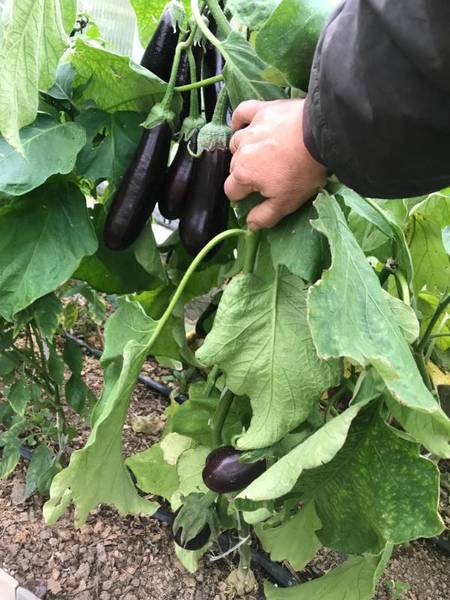
They got hammered by 67 mph (30 m/s) storm winds, lashed with freezing rain, and slimed by slugs, yet today those outdoor eggplants look even better than the greenhouse ones. They’re blooming heavily with 4-5 fruits per bush, and we already picked and ate our first eggplants in mid-June. Neighbors are stunned, since cucumbers won’t even grow in this cold weather! Heck, I’m stunned too. Our outdoor cucumbers are still sulking from the cold nights while the eggplants are thriving!
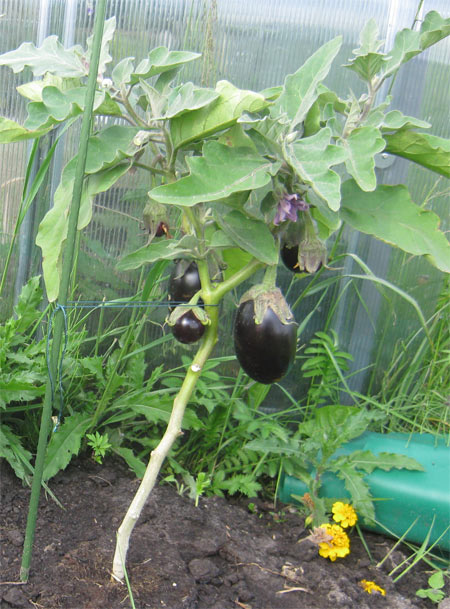
Photo taken June 20
I figure early hardening off played a big role here. Putting them out in the greenhouse back in early May through chilly nights toughened them right up. The one downside of cold nights is fruit weight: these heat-loving fruits aren’t reaching full size yet, so we’re harvesting at 7-9 oz (200-250 g). Warm July weather is in the forecast though, so they should size up bigger soon.
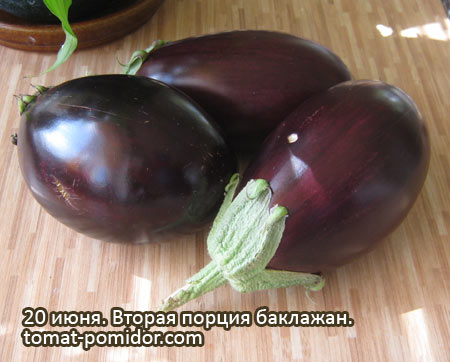
Juna 20, second portion 🙂
3. Pruning, Crown Blossom Test, Feeding & Watering
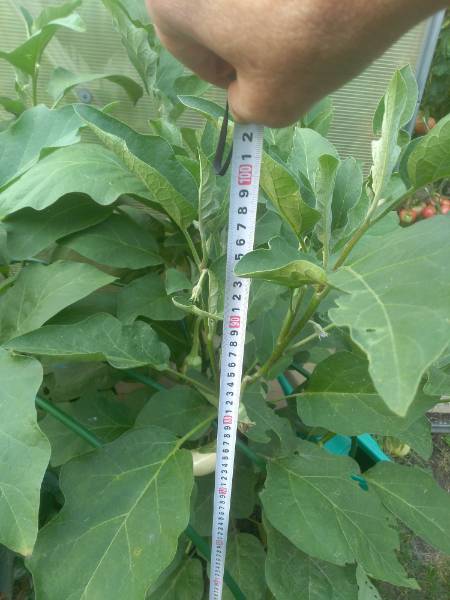
Pruning: Compared to pruning tomato suckers, training eggplants is practically effortless. Following standard advice, I pinched off all side shoots below the first main fork. Beyond that there’s no point pruning, as upper branches don’t get out of hand.
As for the classic debate on whether to pinch the crown blossom (that first flower right in the first fork), I ran a side-by-side test: pinched it off half the bushes and left it on the other half. Briefly, plants keeping that first fruit lagged slightly on setting new fruit right after. Within two weeks, though, the difference vanished completely, so I see little reason to bother pinching the crown flower.
Feeding: Nothing fancy at all. As seedlings, I gave occasional feeds of liquid Novy Ideal, then switched to balanced NPK with micronutrients once they filled out the 1-qt pots. At final planting, I mixed a generous handful of Ispolin into each planting hole.
Watering: Steady water is vital, especially early on before roots establish. On hot sunny days without water, eggplants droop dramatically fast. In sunny weather I poured about 5 qt (5 L) of water per plant daily. Once I mulched both outdoor and greenhouse beds, watering frequency dropped way down, though in hot weather I still water daily (or at least every 3 days when feeling lazy).
Bottom line, fellow gardeners: don’t be afraid to grow eggplants! They thrive right outdoors even when night temps dip below 45°F (7°C). Funny enough, my greenhouse yields aren’t beating the outdoor bushes at all, and sometimes even seem to lag behind!
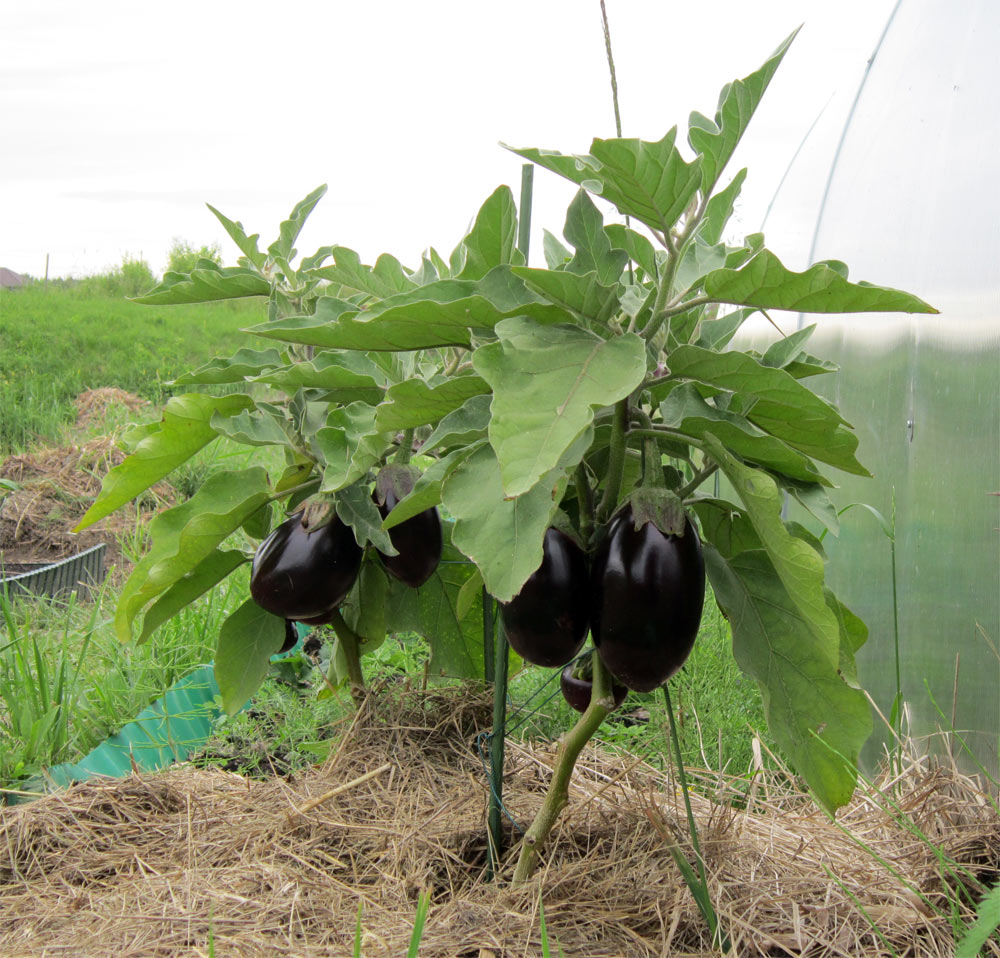
Photo taken June 20
Growing Eggplants From Seed to Harvest: Key Takeaways
- 🌱 Start Direct in Cells (Late Feb–Early Mar): Sow Marzipan F1 seeds individually in small cells rather than pricking out bare-root, and pot up into 1-qt (1 L) and 3.5-qt (3.5 L) pots before roots stall. Eggplants tolerate lower indoor light better than tomatoes without stretching excessively.
- ❄️ Tougher Than You Think: Hardened-off outdoor eggplants survived 32°F (0°C) nights, 67 mph winds, and chilly rain, fruiting by mid-June (7-9 oz / 200-250 g early fruits) and matching or beating greenhouse bushes.
- ✂️ Simple Pruning & Crown Blossoms: Only pinch suckers below the first main fork; a side-by-side test showed pinching the first crown blossom had no lasting yield advantage after two weeks.
- 💧 Mulch & Steady Moisture: Young plants wilt quickly in heat; water ~5 qt (5 L) on hot days and mulch heavily to stabilize soil moisture.
Two regional Russian fertilizers mentioned in this guide are Novy Ideal (a mild liquid humic/vermicompost-based NPK feed, comparable to liquid fish-and-kelp emulsion) and Ispolin (slow-release organic-mineral granules based on composted horse manure and humates, similar to pelleted organic vegetable fertilizer). Marzipan F1 is a popular early, sweet, bitter-free Russian hybrid eggplant noted for strong cold tolerance.
Reader Q&A & Grower Notes (2014-2023)
Loved how detailed this guide is! Clear and easy to follow, definitely going to use a lot of these tips since starting eggplants indoors can sometimes turn into a total disaster. Thanks for sharing!
Thanks for the article and photos. Super helpful info for me.
Thanks for the great eggplant write-up. Been growing them for 3 years now and really love the results, especially how big-leafed and sturdy the plants look… harvests are solid too. This year I’m going to try putting a few bushes outdoors since greenhouse space is tight. Good luck everyone!
Really liked the walkthrough, going to give eggplants another shot.
Wish there were more guides like this, straight from real hands-on experience instead of dry textbooks. Answered every question I had before I even asked! Only tip I’d add from my own garden: treat for pests right before blooming, since aphids love eggplants just as much. Happy harvesting everyone!
Since day one of my gardening addiction, I’ve only ever grown eggplants outdoors. Learned long ago they aren’t nearly as delicate as people claim. Last year mine got hit by a 27°F (-3°C) freeze, wilted flat to the ground, and dropped every leaf leaving just tiny tufts at the top. Thought that was it, goodbye eggplants. Gave them a feeding though, and two weeks later they leafed right back out like nothing happened with zero noticeable drop in yield. Grow them outdoors, I tell everyone! Only catch is they’re heavy feeders that demand plenty of water and fertilizer. Never saw late blight or other diseases once, only annoyance was spider mites. Wishing everyone big harvests!
Hi, huge thanks for the article. I tried growing eggplants in a greenhouse too since the Leningrad Region is tough for warm-season crops, though I couldn’t tell where you grew yours. Looking at your photos, your bushes stayed super compact and low. Mine shot up to 5 ft (1.5 m) tall in the greenhouse with pretty mediocre yields. Should I be topping them at some point, or is it just the variety? My greenhouse soil is pasture dirt mixed with aged manure, maybe it was too rich? Didn’t add extra fertilizer thinking aged manure was plenty of food. Anyone else grow giant bushes like that, and if you top them, when?
Hi Elena. Those eggplants grew in the Baltics near Riga.
The compact bush size comes down to the variety, they stayed the exact same height in the greenhouse.
Don’t top them in our short northern summers. In my view, by the time they push new side branches after pinching, summer’s already over.
My greenhouse yields can actually turn out worse too, and I blame watering. If only I wasn’t too lazy to water daily (especially with warm water)…
I always plant mine along the sunny south side of something (the greenhouse, a fence, or the house), out in wide-open wind it stays too chilly for them.
Thanks so much for replying! Going to try planting them along our concrete fence where sun hits from 11 AM to 7 PM, the wall heats way up and radiates warmth all night. Mine shared a bed with peppers so I didn’t water daily. Easy to use warm water too since I keep a barrel inside the greenhouse that heats up all day, or run warm hose water. Going to experiment! Learned my lesson to pick compact varieties too, since mine mostly just grew gorgeous leaves.
Hi Pomidoroved! Could you share how you prep your soil for seed starting and potting up?
Hi Ella! I don’t prep or sterilize my soil at all, if that’s what you mean. Plants have to live in normal outdoor soil eventually anyway, so why raise them in a sterile bubble? Just never scoop soil from old nightshade beds (where potatoes, tomatoes, or eggplants grew) or from a compost pile where nightshade vines were dumped.
What did you feed the seedlings with?
Running into a weird issue and can’t figure it out: sometimes seedlings stand strong, other times they flop right over looking scrawny and weak. Any tips on what to do? Thanks in advance!
Feeding is a must, I watered with liquid Novy Ideal plus tossed about ten granules of all-purpose Ispolin underneath each plant at potting up.
Still, if seedlings are so weak they’re flopping over, that’s almost never fertilizer, it’s lack of light. Back when I lived in an apartment, even south windows had a balcony overhanging them blocking light. Once I moved to a large unobstructed south window, seedling quality jumped tenfold. Since moving houses isn’t easy, add LED grow lights.
As for why some come out fine and others scrawny, early warmth combined with dim light makes them stretch fast.
Thanks so much for the answer, setting up grow lights now.
A few eggplants didn’t fit in my greenhouse, so I planted them in an outdoor bed with marigolds all around them (right next to cabbages; the marigolds grew tall and practically shaded the eggplants). Ended up getting way more fruit off those outdoor plants than in the greenhouse! Variety was King of the North (Korol Severa).
Thanks for the article. Jumping back into eggplants with fresh energy! Couldn’t find Marzipan, so I’m growing Nutcracker (Shchelkunchik) and Bernard.
Glad if the notes help you out!
Struggling with tomato seedlings stalling right after sprouting, should I fertilize them, and if so, with what? Thanks in advance!
This page is about eggplants, though for young tomato seedlings the single best “fertilizer” is strong light.
Awesome, informative write-up with great humor, pure joy to read. Was on the fence about planting eggplants, now I’m definitely growing them!
Thank you, Olga, for the kind words! 🙏
Truly a great guide. Even living down south, plenty of pointers came in handy. Plus your writing style is a blast to read 😄 Thanks!
Thank you! Looked through tons of eggplant guides that were all vague fluff, while yours is step-by-step and answered everything. Best of luck in the garden!
Thanks for the feedback, starting to feel awkward like folks will think I’m writing myself fan mail 😉
Hi! Huge thanks for such a useful article!
Quick question: why would eggplant seedlings grow tons of roots while barely putting on top growth? Sown February 23rd, and only some are even pushing their 4th true leaf yet, despite regular feeding and watering.
Could it be low light, and will they catch up once real sun returns? (Been overcast three weeks straight with no grow lights.) Worth transplanting them now into a warm compost-heated greenhouse bed under heavyweight frost cloth, or wait till May so they size up first? Thanks!
Loved the article! Same exact story here. Eggplants sprouted late February and are already blooming. Potted them up 3 times into bigger pots, one is sitting in a 5-qt (5 L) tub now. Hauling trays out to the greenhouse every morning and back inside at night… worn out! Been searching to see if anyone planted them into cold weather and what happened. On April 2nd I planted 2 eggplants in the greenhouse and they’re GROWING, even with nights dropping to 19°F (-7°C) amid snow and rain outside! If they’re still thriving in a week, the rest are going out under frost cloth and plastic. Next year I’m sowing in March so neither me nor the plants suffer.
Hi! Yes, lack of light can definitely stall top growth noticeably. Some seed packets just throw occasional slowpoke runts too, though if every single seedling stalled together, low light is very likely the culprit.
I live in Omsk and grow eggplants outdoors every single year. Pre-soak seeds and sow around March 10th, prick out into individual cups once bigger, and keep on windowsills. All my windows face north so light is dim, yet they grow fine. Never fertilize seedlings in low light so they don’t get leggy. Transplant outdoors June 10-12th, water weekly, and last year fed with steeped weed tea. Harvests are always awesome, plenty for us and neighbors too.
Hi, first time growing eggplants. Weird spots popped up on the leaves and leaves are drying out. What should I do? Thanks in advance.
Hi Elena. Unfortunately there’s not enough detail there to say much beyond “find the root cause and fix it.” Almost always, seedling trouble comes down to overwatering, too little light, bad potting mix, or temperatures too cold or hot.
Sowed my eggplants March 3rd and only now realize how late that was for my setup. Right now they look like your biggest bush back in April, worried I’ll end up with nothing but green shoots. Planted Maria and Diamant hybrids.
Hi! Any idea what’s wrong with my eggplants? Undersides of leaves broke out in tiny bumps like a rash and started turning yellow. Such a shame.
Massive thanks for the eggplant guide, super clear and practical! Definitely had a big gap in my eggplant know-how before reading this. Thanks again.
Hi! Poor fruit set here, plants are huge and bloom heavily, then flowers just drop off. Could slugs be eating them?
Most likely they got overly vegetative from too much nitrogen. Switch to a phosphorus-potassium bloom fertilizer to encourage fruit set.
First time growing eggplants. Spots showed up on the leaves and leaves are drying out. What should I do? Thanks in advance.
My eggplant routine: last year I grew Destan F1. Sowed indoors March 8th, transplanted outdoors under frost cloth over low hoops around May 15th, ran drip irrigation, worked compost/organics into the bed, and fed twice with fermented weed tea. I never plant more than 10 bushes. Wishing everyone big harvests! Here’s a bush loaded with fruit:
Edited March 10, 2023 by Vladimir
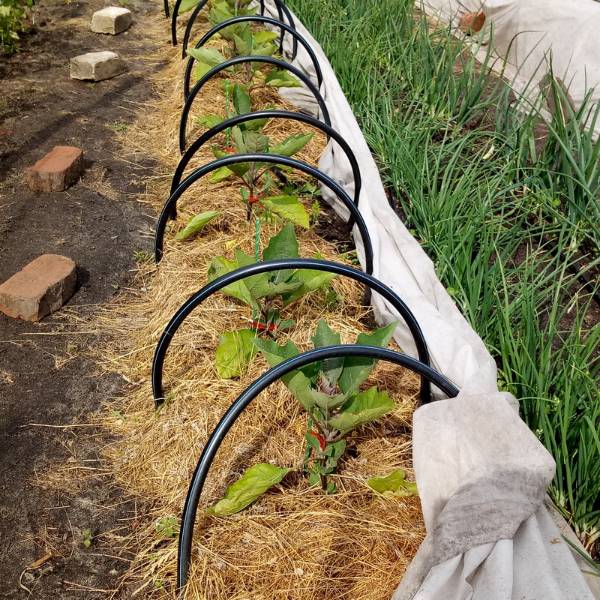
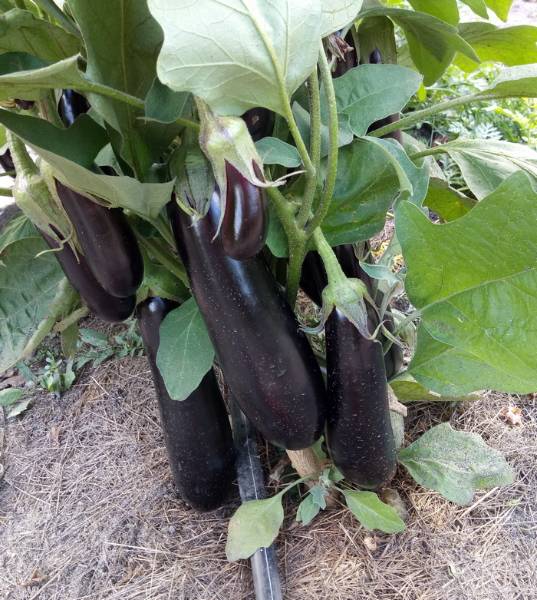
Sharing a few notes from my own eggplant routine. I sow them indoors alongside peppers and tomatoes in late February to early March. Tried both 7 oz (200 ml) individual cups and shared trays pricked out later—didn’t notice any speed difference myself. Lightly feed half-strength all-purpose fertilizer now and then so they don’t get overly vegetative. Move them out to the unheated greenhouse in late April or early May in 1-qt (1 L) pots, no bigger. Depending on the forecast, they go outdoors under lightweight row cover in late May or early June and stay covered until July. That row cover doesn’t just block cold—it keeps Colorado potato beetles completely out without spraying poisons or hand-picking bugs daily. Once the cover comes off in July they grow uncovered until fall frost. Beetles sometimes wander over in fall after potatoes get dug, though chilly nights slow them down so I only hand-pick 2-3 times and we’ve already eaten and canned plenty by then anyway. Oh, and I don’t prune or pinch anything early on, the bushes shape themselves nicely.