📌 Quick Summary: The Early Harvest Container Trick
- 🪴 The “Pot-on-Soil” Method: To get super early cucumbers, zucchini, or eggplants, don’t plant them directly into freezing spring greenhouse soil. Instead, plant them in black nursery pots and set those pots on top of the greenhouse beds. The black plastic absorbs the sun, heating the root zone weeks before the ground thaws.
- 🌱 Roots Find a Way: You don’t even need to cut the bottoms out of the pots. Just leave the standard drainage holes. By the time the roots outgrow the pot, the soil underneath will be warm, and the roots will grow right through the holes into the main bed.
- 📦 Free Planters: Resourceful growers use plastic produce crates (the kind used for shipping vegetables to grocery stores) lined with straw as free, portable raised beds for early crops.
- 🌿 Mint vs. Lemon Balm: A quick tip from the thread: True Lemon Balm (Melissa) usually spreads by dropping seeds, while mint aggressively spreads via underground runners.
LavandaN wrote:
…I cut a water jug on both sides, poked holes in it, planted cucumbers in it, and eventually buried it in the greenhouse soil. The roots refused to grow past the boundaries of the bottle and died early. I did something wrong.
Natasha, here is what worked for me. I liked this method so much that it is the only way I do it now. Marina originally suggested it to me. She grows early cukes in bottomless soil bags just sitting right on top of the greenhouse beds.
I tweaked it a bit. I start my cuke seedlings indoors on the windowsill in standard 4-inch to 6-inch nursery pots. In the fall, I set out large black nursery pots (the kind you get when buying bare-root trees) directly on the greenhouse beds. I fill them with heavily amended potting mix. The pots aren’t buried, just slightly hilled up with dirt around the base. I don’t cut the bottoms out either, whatever drainage holes they came with, stay there.
Come spring, I transplant my cukes and even zucchini into these pots. They stay like that all the way to fall. You could pull the greenhouse zucchini once the outdoor ones start producing, but honestly, once you see the insane yields, you probably won’t have the heart to pull ’em!
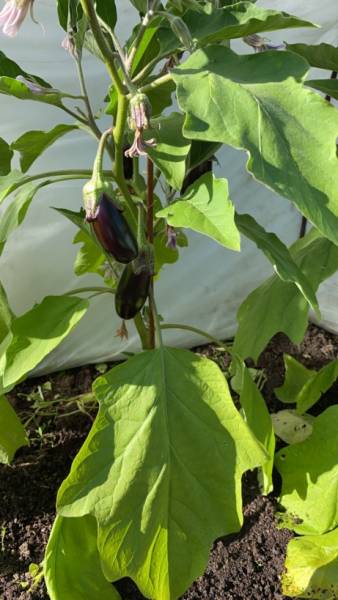
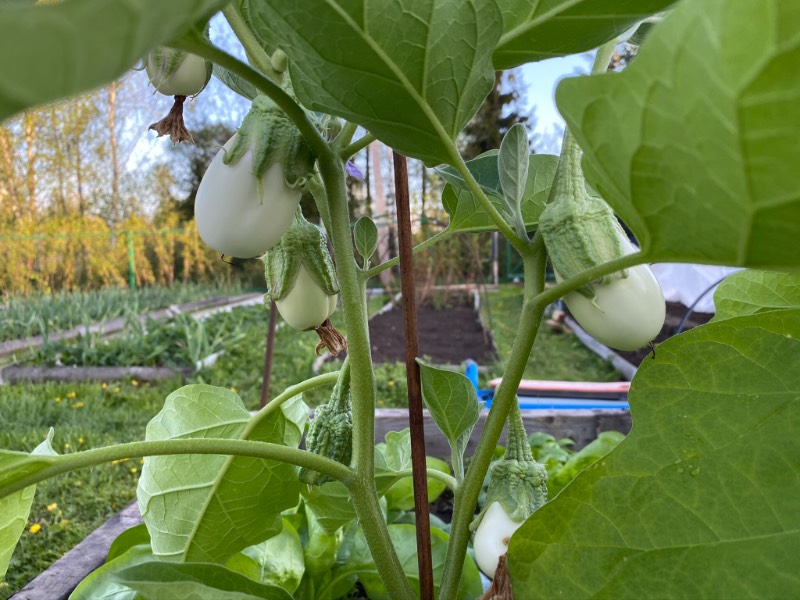
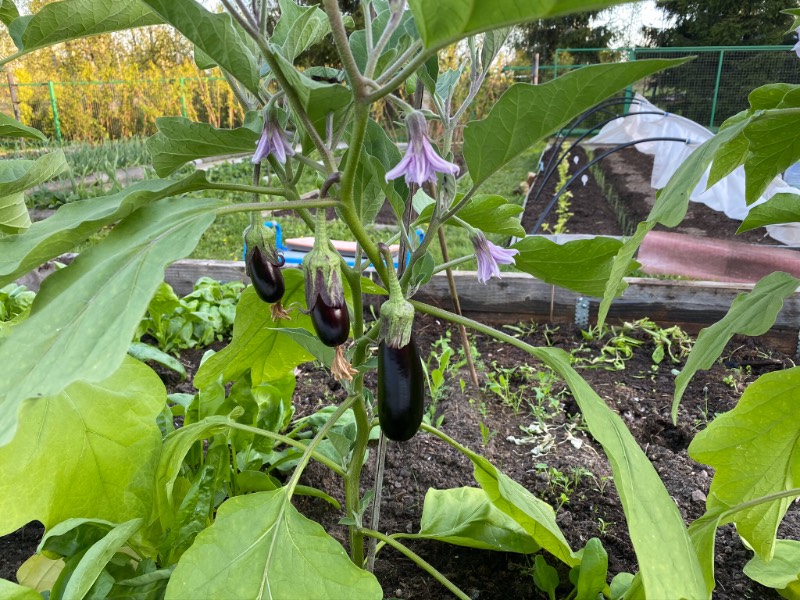
The only downside is you have to water them a lot more often at first. Later on, you can pack grass clippings around the stems and mulch the main bed. This year, I also grew a few eggplants this way, just nesting the pots a little deeper into the dirt. I start my seedlings indoors in larger pots, and there was absolutely no difference in yield between the ones in the ground versus the ones in the pots.
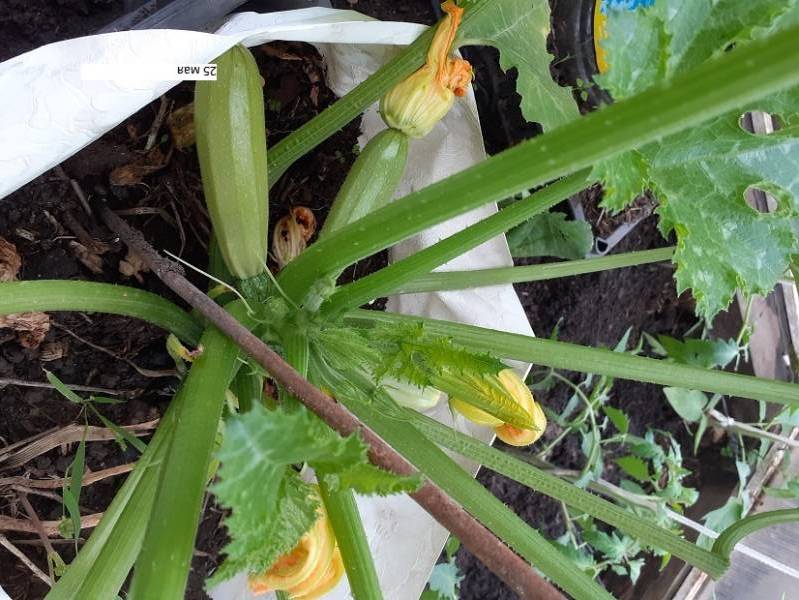
Tanya, what size gallon pots are you using for those eggplants?I don’t have any big nursery pots, so I use plastic produce crates. You can find them stacked up behind grocery stores in all different sizes. We love our zucchini. This photo is from May 25th. I line the bottom of the crate with straw. As an experiment, I planted late-season tomatoes along the sides. Since I didn’t want the zucchini hogging space forever, I just picked up the whole crate and moved it outside the greenhouse two weeks later.
Horn1051 wrote:
You can find them stacked up behind grocery stores…
You’re so lucky! No matter how much dumpster diving I do behind the grocery stores, I never spot any empty produce crates…
Galiy wrote:
But at the dacha, we mostly drink tea with mint.
I grow 5 different varieties of mint plus Lemon Balm (Melissa). They’re delicious and fragrant, but we still have one absolute favorite. I got a cutting from a neighbor. She swears up and down it’s Melissa. However, it spreads aggressively by underground runners, and I’ve never once seen it self-seed.
Horn1051 wrote:
Tanya, what size gallon pots are you using for those eggplants?
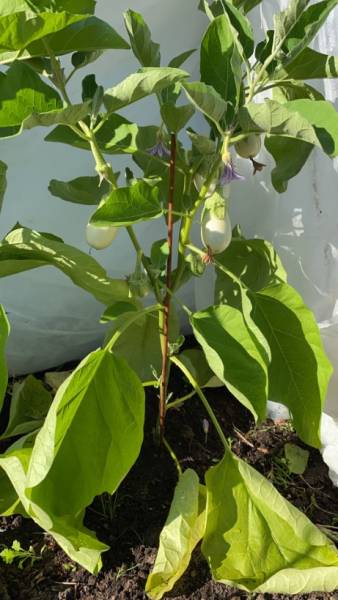
At least 1.5 to 2-gallon pots. You have to be able to lug them around for a while, but the juice is worth the squeeze. I just don’t have the back to haul around truly massive pots anymore, plus I don’t have the space. I don’t grow a ton of eggplants anyway.
Here are some pics from May 17th of last year. I grew them in the greenhouse again this season, but I can’t find the photos on my phone right now.
👨🔬 Editor’s Botanical Note: The Physics of “Pot-on-Soil” Planting
In this thread, Tatyana drops an absolute goldmine of a tip for northern gardeners. She notes: “The pots aren’t buried, just slightly hilled up with dirt around the base. I don’t cut the bottoms out either, whatever drainage holes they came with, stay there.”
Why does this result in a super early harvest? It all comes down to Thermal Mass and Soil Temperature.
In early spring, the air inside a greenhouse gets hot during the day, but the deep ground soil stays frozen and cold for weeks. Tomatoes, cucumbers, and eggplants hate cold roots! By placing a black plastic nursery pot above the ground, you create a micro-environment. The black plastic acts as a solar heater, rapidly warming the small volume of soil inside the pot. The plant thrives in this warm root zone.
By the time the plant grows large enough that its taproots reach the bottom drainage holes, the actual greenhouse bed underneath has finally thawed and warmed up, allowing the roots to seamlessly grow down into the earth. It is essentially a temporary raised bed!