Growers’ Notes and Photos (USDA Zones 3-5 Experience)
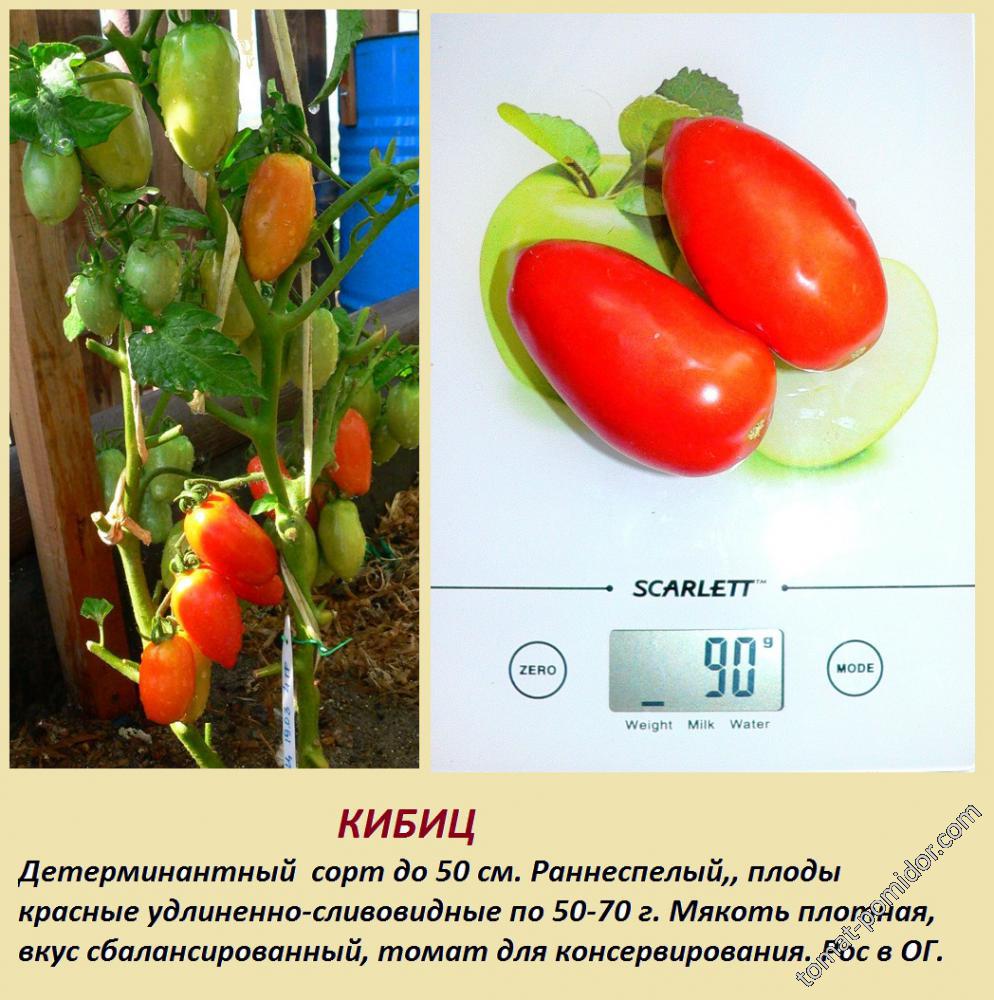
Determinate, grows up to 20 inches (50 cm), early season 95-105 days, fruits are red, elongated plums about 1.7-2.5 oz (50-70 g). I had seeds from two different sources, but the true one only grew from Balashov’s seeds.
As a seedling, Kibic is beautiful – sturdy, stocky, and doesn’t get leggy at all. In the description, Balashov recommends not pruning the suckers, and that’s basically what I did – I only removed suckers up to the first flower cluster. I tied up only the main stem, and the rest tried to hold themselves up, but mostly just sprawled on the ground.
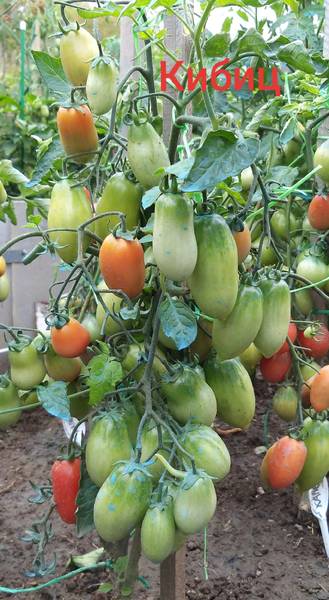
Fruit set is excellent, I didn’t notice any dropped blossoms. The bush is absolutely loaded with fruit.
Drawbacks: the ripe fruits drop off the bush very easily.
As for the taste: just okay. I grew it strictly for sun-drying and canning.
Regarding diseases: no leaf roll, it was healthy as a horse, but towards August the leaves yellowed a bit – didn’t affect fruiting at all. It didn’t resist late blight, like everything else, but the damage was less severe than on other varieties.
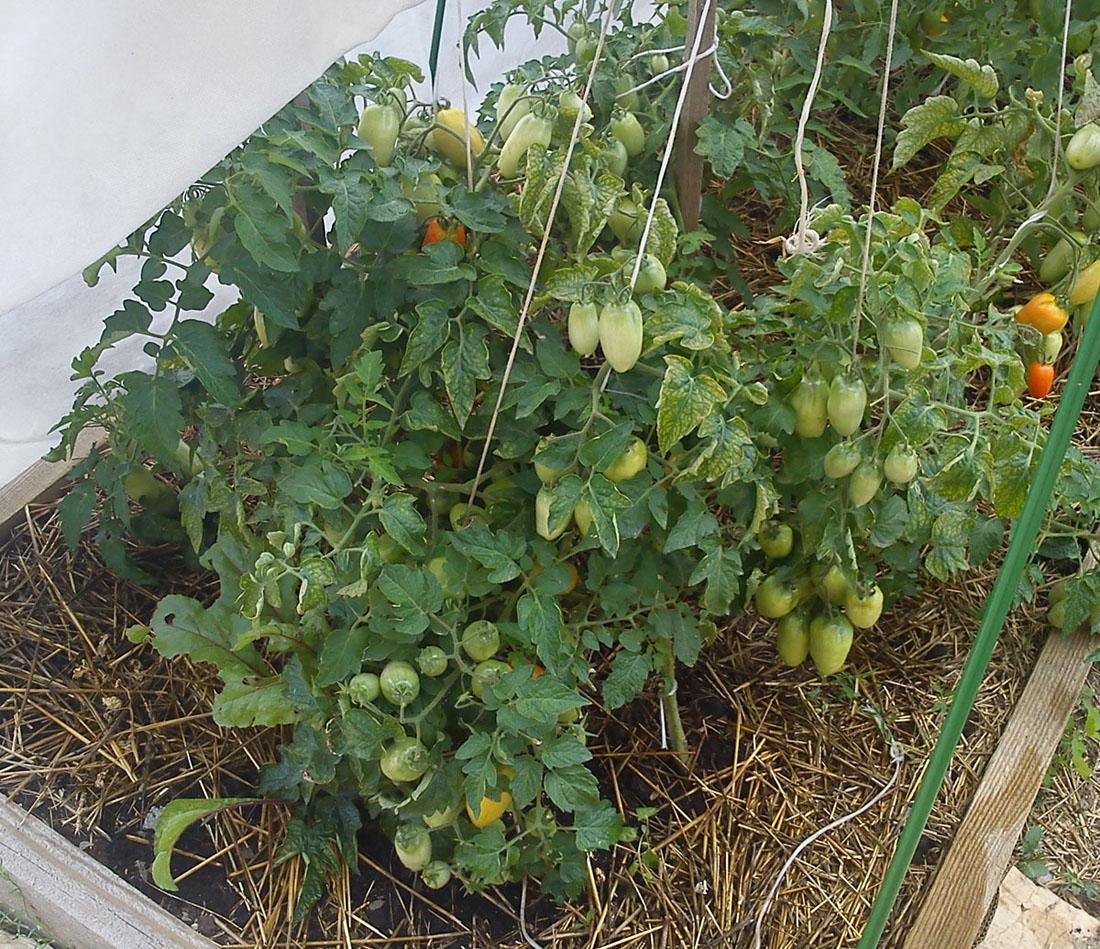
I sowed seeds on March 7th, potted up on April 11th, and planted them outside under low tunnels on May 3rd. The sunny side of the bed was shaded with row cover.
First red fruits showed up on July 2nd.
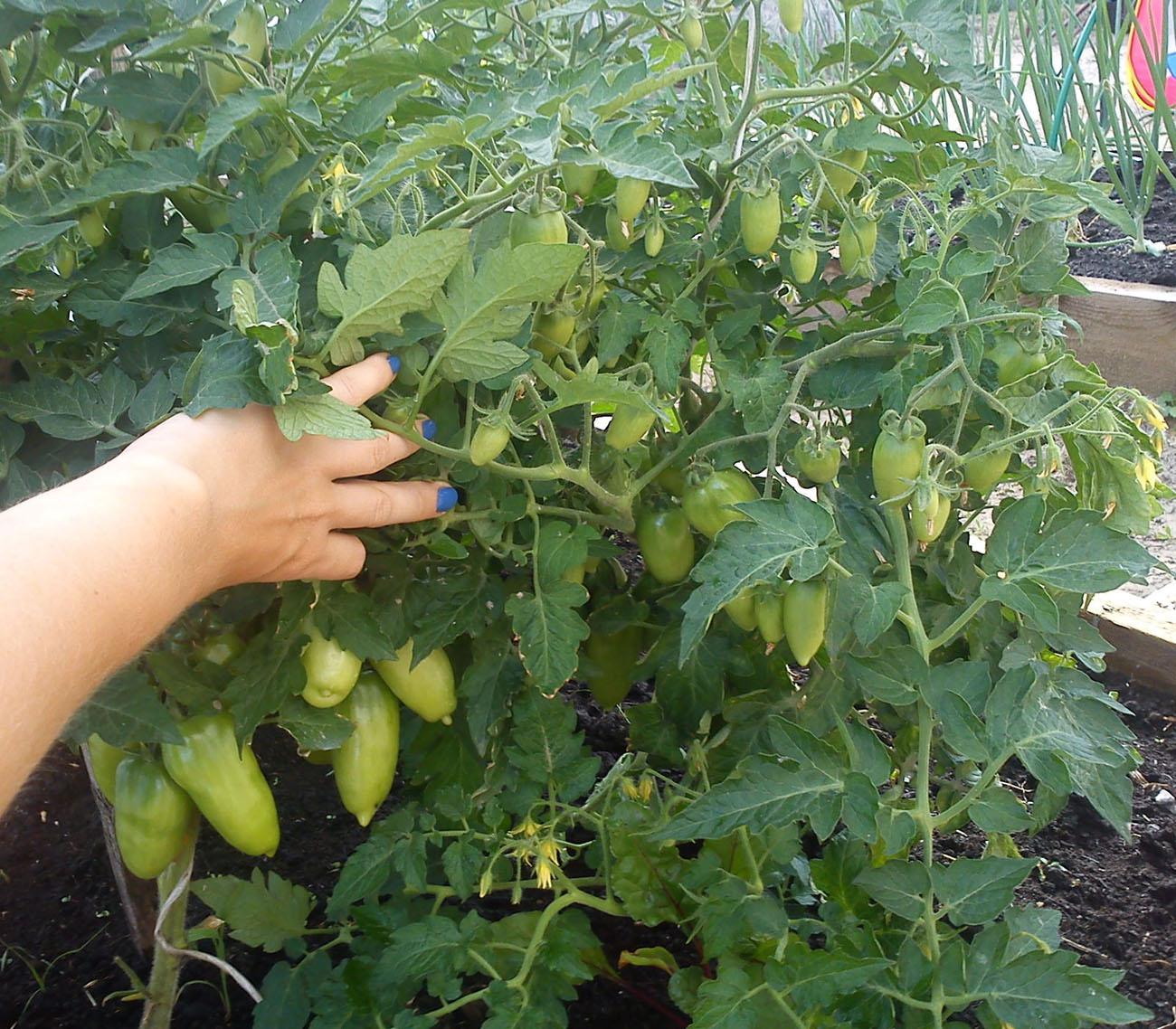
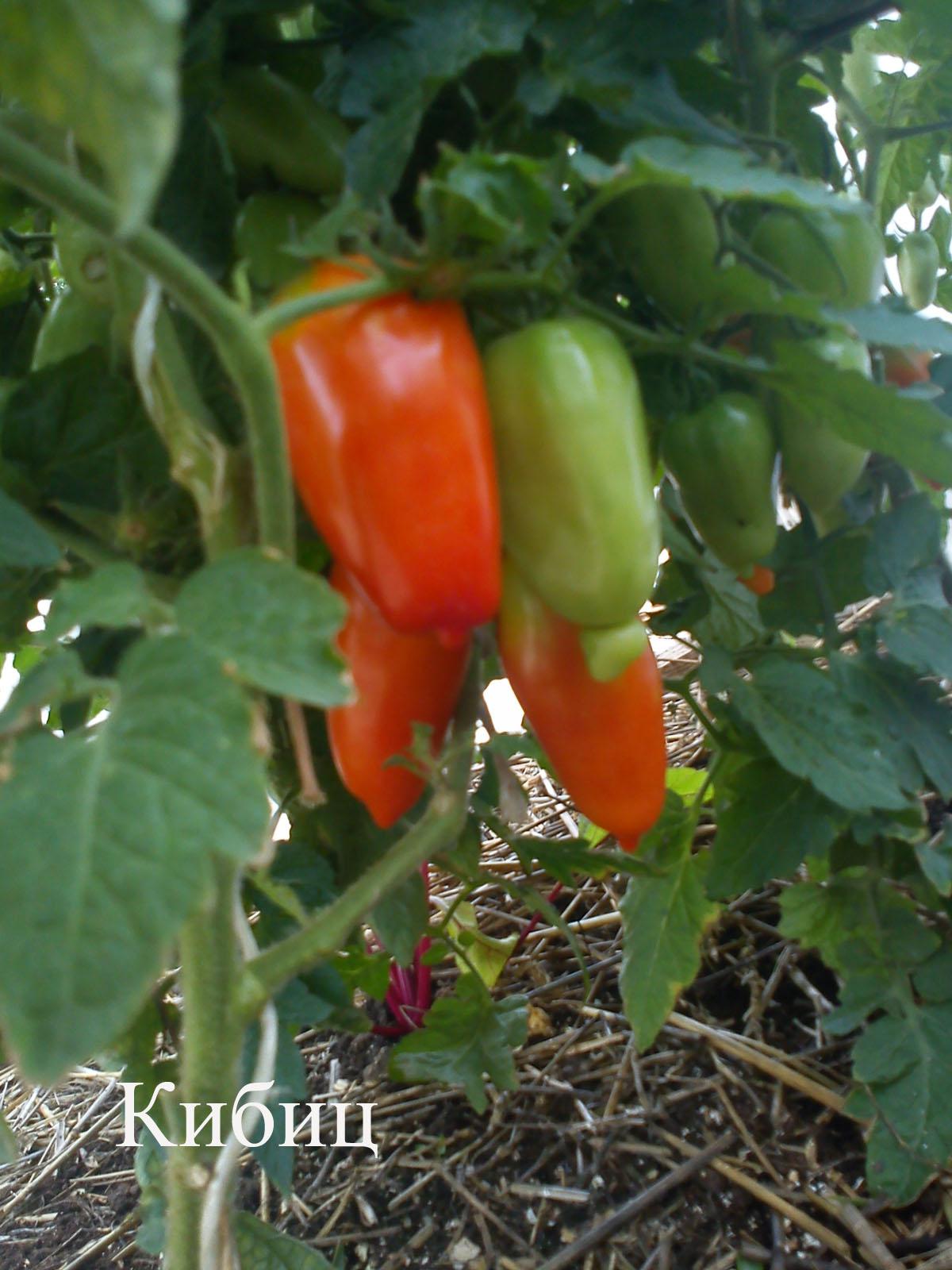
Here’s an overall view of the garden bed as of July 18th:
I actually gave up on Kibic. It grows poorly for me in my sandy soil–low fruit count, and the bush doesn’t develop well. The taste isn’t bad for an early tomato, but it’s a bit too small for me.
Got my seeds from Nadezhda Berezhnova. Can’t wait for the harvest!
Hey y’all, aren’t Kibic and Chibis the same thing? I have Chibis, and looking at the photos, it’s an exact match!
Elena35 wrote:
Hey y’all, aren’t Kibic and Chibis the same thing? I have Chibis, and looking at the photos, it’s an exact match!
I think it’s the exact same variety. It’s Polish, I believe. People call it Kibis, Kibic, or Chibis depending on how they translate it.
My Kibic seeds came from Ukraine, I’ve been growing it for about 7 years now. Productive, low-maintenance, stocky little beauty! At first, I tried growing it in the greenhouse, but it’s way too hot for it in there. In our climate zone, it does perfectly fine outdoors in the dirt. I have loamy soil. The bushes are short, sturdy, and fruit set outdoors is highly satisfactory! The fruits are dense, pepper-shaped, excellent for canning.
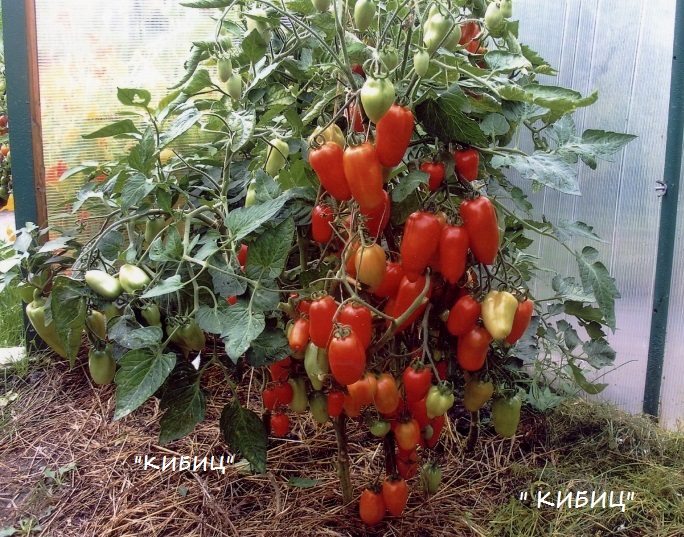
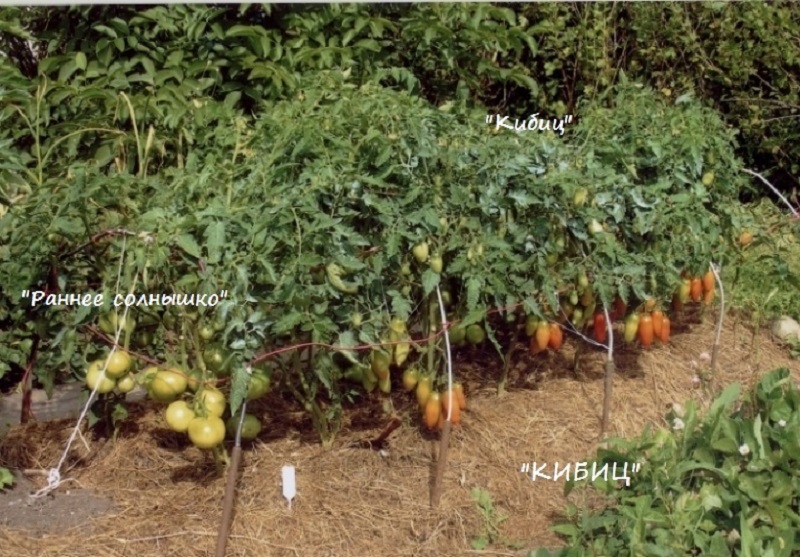
Natasha, do you think it would have enough time if I direct sow it outdoors? Looks gorgeous! Kicking myself for not planting it this year.
Elena, my Chibis is completely different. The tomatoes are little fingers. Just slightly bigger than cherries.
Vera, of course it’ll have enough time! It’s an early variety! You’ve successfully grown far later varieties than this out in the dirt. It’s never too late to try.
I bought Chibis, and the packet says 2-2.5 oz (60-70 g). That’s fairly large, I know from growing Luch, they are about the same size. If Chibis turns out like that, I’d be thrilled.
Vera, how does it taste?
Marina, it’s pretty decent. Definitely not a sour bomb.
That’s good, the main thing is that it’s not sour or watery. Needs to be firm and meaty, without hollow cavities inside.
pomidorka wrote:
I think it’s the exact same variety. It’s Polish, I believe. People call it Kibis, Kibic, or Chibis depending on how they translate it.
Whether Kibic is Ukrainian or Polish is up for debate, but I definitely wouldn’t go looking for the Russian “Chibis” in this thread.
I split the topic, the Chibis variety is discussed elsewhere.
Kibic turned out to be extremely responsive to heavy feeding. I’m growing it for the third year, and I finally got to see it truly dripping with fruit. At first, I actually thought I overfed it with too much nitrogen and that it had fattened up – I gave it a very generous dose of Ispolin fertilizer at planting, just like I do with my massive indeterminates. But as a result, the variety absorbed it all and exploded with a huge yield. I guess I accidentally found the right approach for it.
In German, Kiebitzer means lapwing or peewit (Vanellus vanellus L.).
A good, productive little tomato for canning, fruits are red, fairly firm, up to 1.7 oz (50 g).
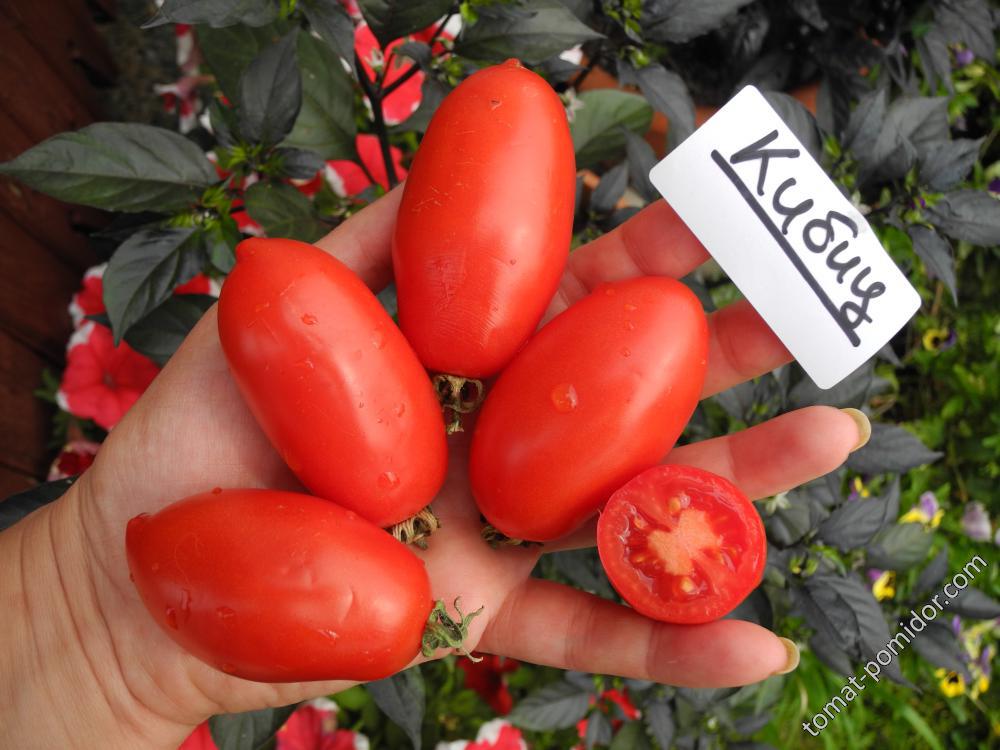
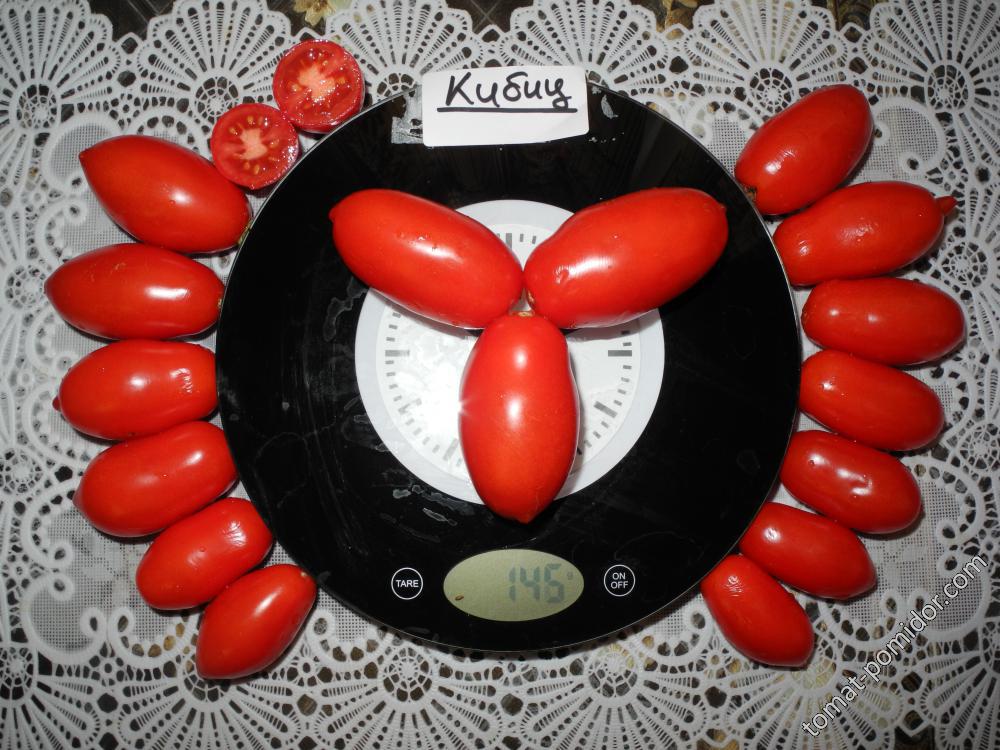
I plant Kibic every year. For me, it’s one of the best varieties with this fruit shape.
Yes, Kibic is great. Productive, trouble-free. These little bushes grew outdoors without any cover at all. A massive thank you to Sveta @Svetikk for the seeds.
Full Summary: Plant, Yield, Taste and Storage
- 🌿 Plant: A highly compact, sturdy determinate. It usually maxes out around 20 inches (50 cm). Growers highly recommend growing it outdoors rather than in a greenhouse, where it gets too hot. It rarely requires staking beyond the main stem and can be left unpruned (or pruned only up to the first cluster) so it can sprawl slightly under the weight of the fruit.
- 🍅 Fruit: Small, red, elongated plums/paste tomatoes. Most weigh between 1.7 and 2.5 oz (50-70 g). They are dense, meaty, and hold their shape well, making them ideal for processing. One drawback noted is that the fruits drop off the vine easily when fully ripe.
- 📈 Yield: Very high, especially for such a small plant. It sets fruit reliably and early (95-105 days). One grower noted it responds incredibly well to heavy feeding, pumping out a massive harvest.
- 👅 Taste: Rated as an average, classic tomato flavor. It’s not a fresh-eating slicer, but rather a workhorse paste tomato that excels when sun-dried, canned, or cooked down into sauce.
In this thread, you’ll see users debating whether “Kibic” and “Chibis” are the same tomato. While the name Kibic translates to “Lapwing” (a bird) in German/Polish, and “Chibis” means the exact same bird in Russian, they are typically considered separate varieties in the seed trade today. Kibic is the older Polish heirloom paste, while Chibis is a registered Russian commercial variety that is often described as slightly smaller and more finger-shaped. Seed mix-ups between the two are extremely common due to the translation!