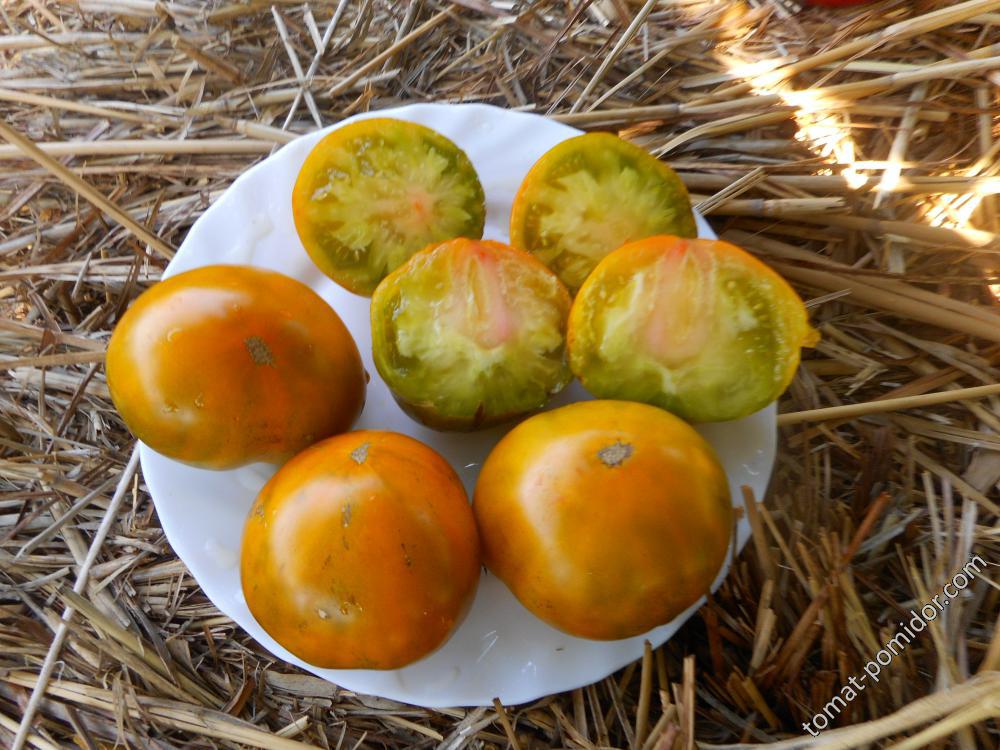
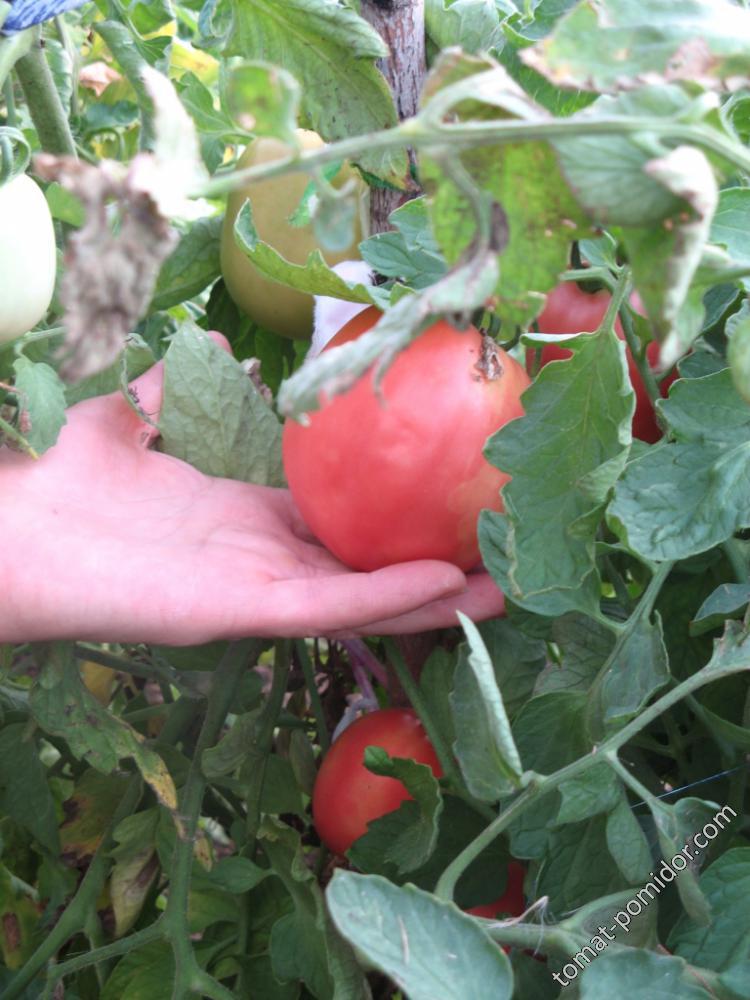
📌 Quick Summary (TL;DR): Klusha & Super-Klusha
- 🌍 Origin: A very popular commercial Siberian variety bred specifically for harsh outdoor conditions. “Klusha” translates roughly to “Mother Hen.” A pink variation called “Super-Klusha” was released later by SibSad.
- 🌿 Plant Habit: Determinate (bush). An extremely compact, sturdy tree-type (rugose) plant reaching only about 20 inches (50 cm) tall. It does not stretch under grow lights and requires absolutely zero pruning. Perfect for tight spacing (up to 5 plants per square meter).
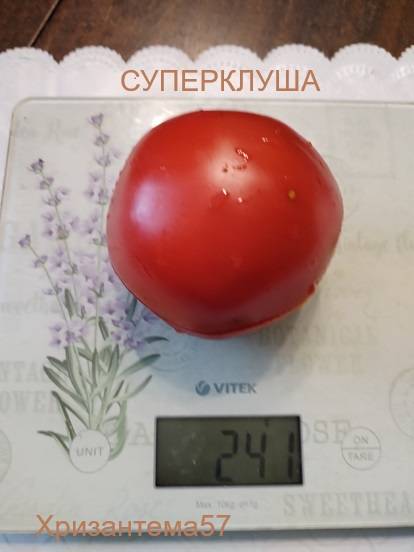
- 🍅 Fruit Characteristics: The original Klusha produces round, red tomatoes weighing up to 5 oz (150 g). The fruits often hide under a thick canopy of leaves. Super-Klusha is supposed to produce pink fruits of a similar size.
- 👅 Flavor & Use: A standard, workhorse tomato flavor. It leans toward the acidic side, especially since the fruits hide under heavy foliage (trimming some leaves to expose them to the sun helps sweeten them up). Excellent for canning and pickling.
Description from the seed packet: Mid-early, short-growing variety for open ground. Sturdy tree-type bush, up to 20 inches (50 cm) tall. Requires no pruning, does not get leggy in the seedling stage. Fruits are red, round, weighing up to 5.3 oz (150 g). Photo credits: MADanilich.
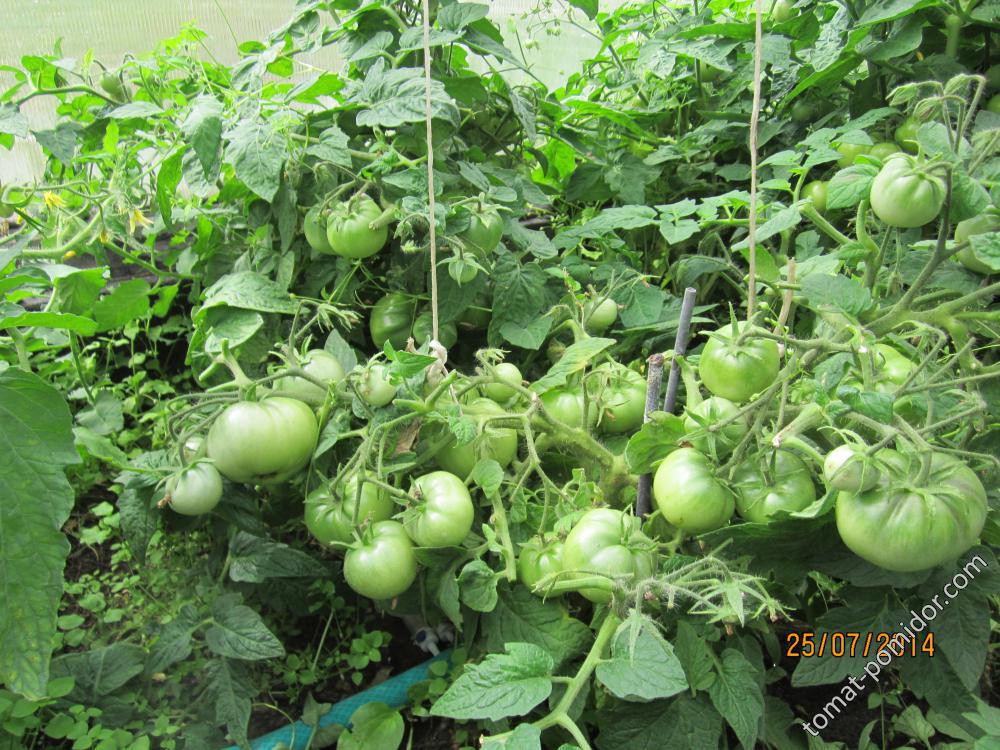
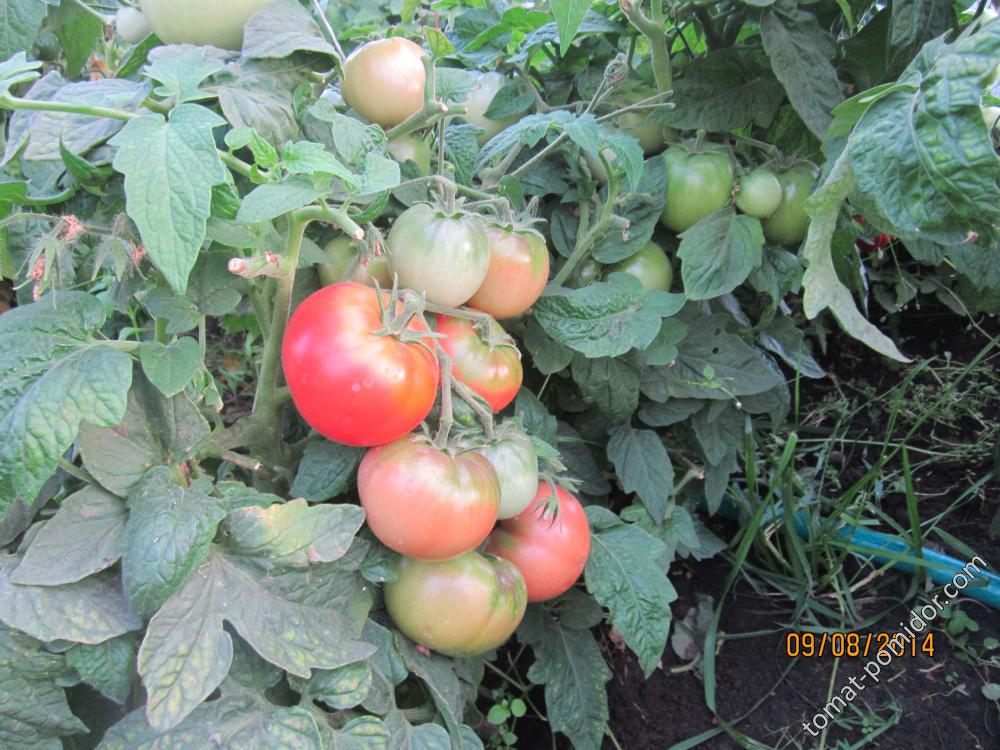
I absolutely love this variety. I bought a bunch of new varieties to try, but I’m definitely sowing this one from my saved seeds for the third time… It grows outside in the dirt, never gets sick, yield is reliable. The fruits are firm, never crack, and I haven’t seen a single spot of BER (blossom end rot) on them. During the freezing cold summer of 2014, it was the prettiest and most productive among my outdoor plants (Benito F1, Nikola, Siberian Early), and the very first tomatoes to ripen were from this variety. Maybe it just adapted to my garden over three years, while the others were fresh from store-bought packets!?
I planted Klusha outdoors in the dirt for the first time this year. I only had one plant (the second one died). The seeds were supposedly from Redko (a friend gifted them to me). Now, maybe it’s just me, but did it seem like the entire harvest ripened all at exactly the same time? I walked up to the plant, picked everything that was ripe, and there was literally nothing left… I pulled a little over 2.2 lbs (1 kg) off that beautiful plant in one go. But considering how short it is, that’s probably normal. By the way, my plant definitely didn’t reach 20 inches (50 cm).. As for the taste… I don’t remember it being mind-blowingly delicious, but it obviously didn’t turn me off either, since I decided to save seeds and plant it again this summer 😊
I actually really like this variety. It’s not sprawling, it’s very compact, short, and you can pull about 4.4 – 5.3 lbs (2-2.4 kg) of tomatoes off one plant. It terminates itself.
The yield per plant might seem small, BUT!!! you can easily cram 5 plants into a single square meter (4 in the corners and one in the middle). Because of that, the yield per square meter actually competes with really good determinate varieties.
It’s great for salads or for canning/pickling.
Because the trusses hide UNDER the foliage canopy, the fruit tends to have a bit more acidity. But if you give the plant a haircut in time and expose the trusses to the sunlight, the tomatoes actually taste very good. 👍
It is a very good variety! I like it too. 👍
Today I gave in and bought the new release from SibSad. I wonder what this “Super-Klusha” is all about? I’m hoping it’s larger, more productive, and tastier 😋 Photos taken with my phone. (The color is off, it added too much yellow). The packet shows a pink tomato. Let’s see what actually grows! 😛
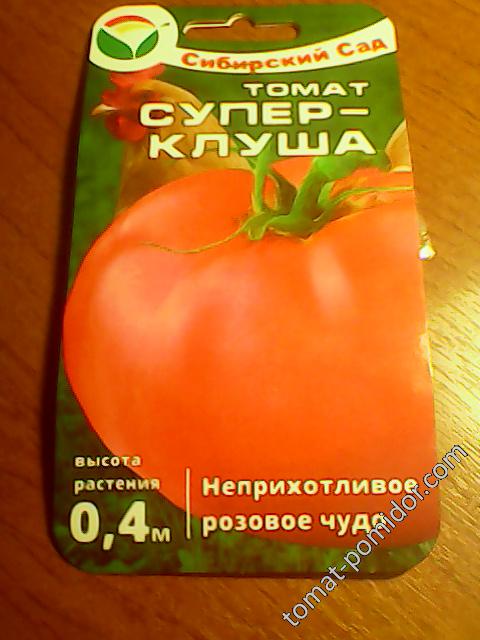
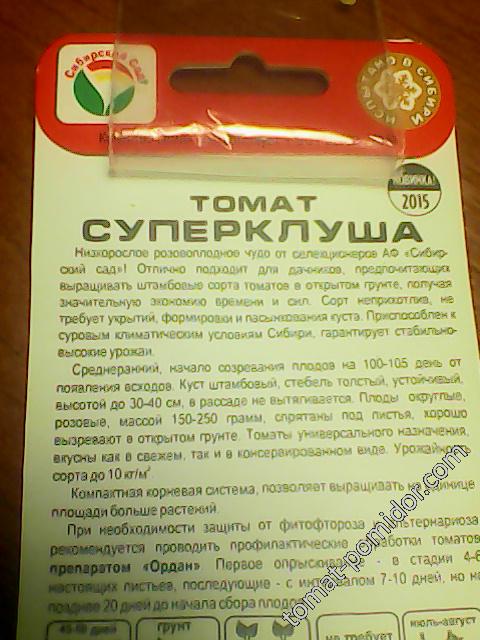
Tatiana Kemerovo wrote:
Today I gave in and bought the new release from SibSad. I wonder what this “Super-Klusha” is all about?
Tatiana, what’s supposed to be the difference?
Tatiana Kemerovo wrote:
Today I gave in and bought the new release from SibSad. I wonder what this “Super-Klusha” is all about? I’m hoping it’s larger, more productive, and tastier 😋
What’s wrong with the regular KLUSHA??? It’s a wonderful little variety, ripens all at once, pretty heavy yielder, very versatile in the kitchen. Because it ripens so early, it’s honestly almost TOO EARLY to start making canned goods!
But since a SUPER Klusha has hit the market, I’d honestly love to test it out and see the differences for myself. I grow my determinates in the greenhouse, they give 100% of their harvest that way. I doubt our local vendors will bring those seeds here, but they might have them down in Tomsk… I’ll try to order some.
I can share some with you, I don’t need a lot, I’ll pour you about 10 seeds. Send me your address in a PM 😊
Next season they’ll probably release a “Super-Duper-Klusha”! 😊
So I planted the Super-Klusha and…………. 4 plants and…. they are all completely different!! 🥳 Where is the “Super”? AND WHERE is the “Klusha”?? Nobody knows.
I did save seeds from one of the Superklushas, just labeled it “Unknown” in my garden log, haven’t tasted the others yet.
Compared to the regular “Klusha” it’s just………….. how should I put this??? Night and Day….. the difference is MASSIVE. Looks like a horrible batch of off-types. It doesn’t even remotely resemble KLUSHA or SUPERKLUSHA! 🤣 🤣
Andrey, did your Superklusha happen to grow into a Bull’s Heart (Bychye Serdtse)?
Nata N. wrote:
Andrey, did your Superklusha happen to grow into a Bull’s Heart (Bychye Serdtse)?
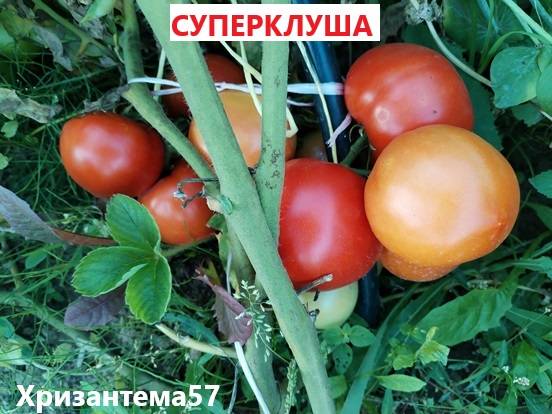
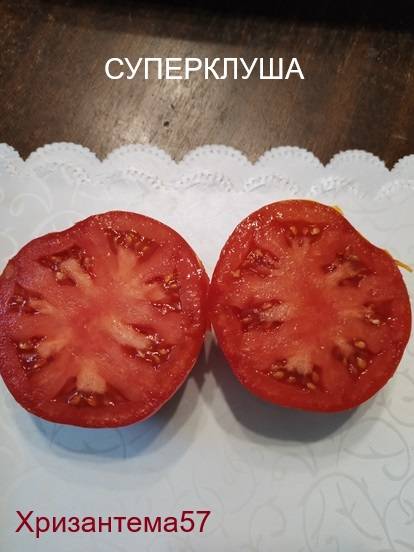
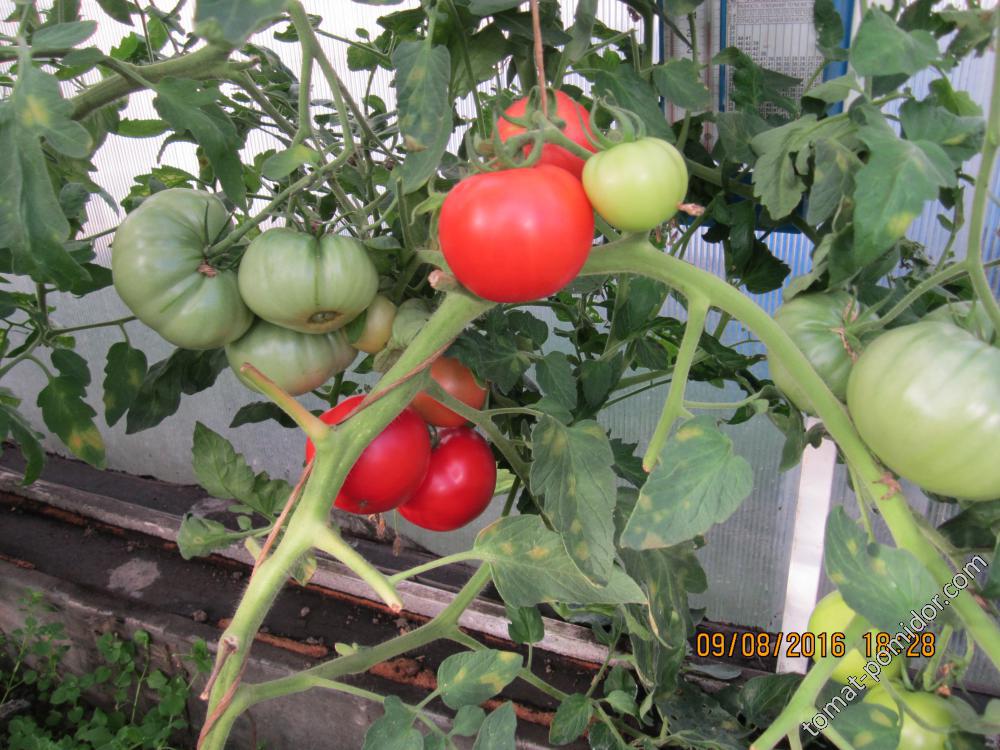
Nah! They don’t quite measure up to a “bull’s heart”….. it’s more like……….. this……….. 🥳 A shortened version of “French Cluster” (Frantsuzskiy Grozdevoy) by about 1.5 times. I assume that one is the “SUPER,” but I have no idea what the rest are – a couple plants look like “Aurora,” one plant grew 4.5 – 5 feet (1.4-1.5 m) tall, but the fruits look like standard commercial tomatoes – thick walls, four seed cavities, juicy, pretty decent taste when fully ripe. Pruned it to two stems, it set fruit on the first and third trusses (the second truss aborted on both stems). I’ll try to save seeds. The variety seemed interesting to me. The pretty red fruits belong to “Superklusha”, the others are just its neighbors.
sel4anka wrote:
what’s supposed to be the difference?
The only difference is the fruit color. The manufacturer named the pink variation of the variety “Superklusha”.
I guess I got lucky. My Klusha and Super Klusha turned out practically identical in plant habit and only differed in color! My Super Klusha actually grew out pink just like it was supposed to 😊
I planted Super Klusha from a standard SibSad packet.
That being said, I don’t consider Klusha to be a massive masterpiece. There are heavier yielding, earlier, and tastier varieties out there. But the people really do love this variety!
Last year I grew 3 plants of Klusha and 12 plants of Super-Klusha – and it was a total disappointment. If it was an off-type, I could understand. But there was absolutely no sign of 5-7 oz (150-200 g) fruits. Klusha gave me tiny, sour tomatoes that fell apart—couldn’t even tie them up. SK gave me tiny hearts with green shoulders. They weren’t lacking nutrients, Zhorik-Obzhorik was growing right next to them and performed exactly as advertised, tasted better, and was great for canning. I tried throwing these two “birds” into a marinade, and they just dissolved into mush. I never want to taste them again, there’s no point. There are plenty of great varieties for open ground without them. I’d rather have a smaller yield but a better taste, but that’s just my opinion 🍅
I planted Superklusha in 2019 out in the dirt with no cover. It got hit by Late Blight, but by harvesting the fruits a bit early, I managed to save the crop. All 4 of my gorgeous plants grew out completely identical, so no off-types for me. Yield was about 2.2 lbs (1 kg) per bush. Here is my video review.
Vladimir Baranov wrote:
Here is my video review.
Thank you for sharing the video!
Super-Klusha from Sibirskiy Sad.
Grew three lovely plants in the greenhouse this season. I wasn’t expecting anything special from it, just needed to refresh my seed stock.
It didn’t turn out early at all, more like a mid-season variety. The plants were short, about 20 inches (50 cm). Large, dense rugose leaves. The fruits are pink, weighing anywhere from 4 to 12.5 oz (120 to 350 g), and actually have a very decent (!) flavor. The yield in my conditions was over 5.5 lbs (2.5 kg) per plant.
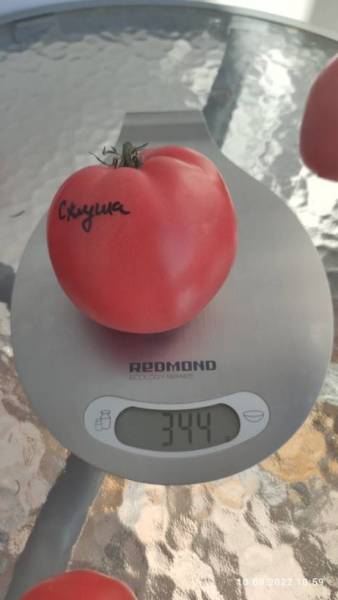
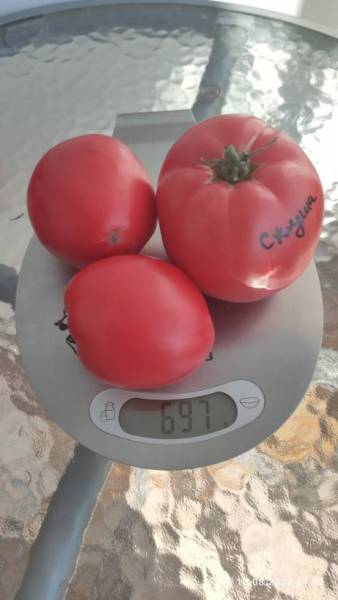
neLENtyayka wrote:
Super-Klusha from Sibirskiy Sad. It didn’t turn out early at all, more like a mid-season variety.
I really love this variety. It only turned out “early” for me once in 4 years), but I still love it for its yield and compact bush.
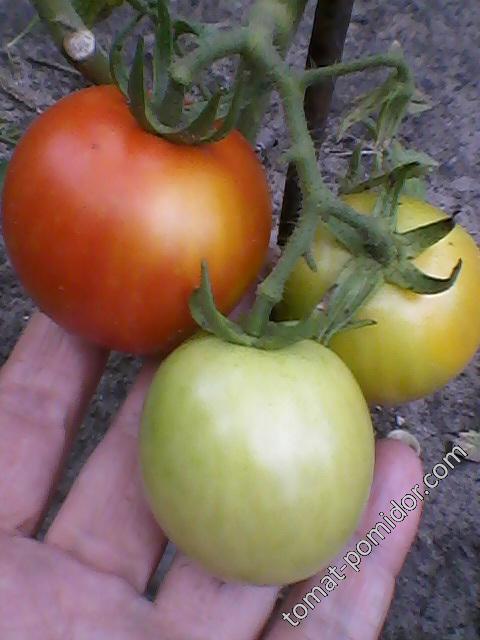
This year I planted Superklusha in open ground for the first time. I picked them green on August 27th because of a forecasted cold snap. Now here’s the funny part: there were no other round varieties planted near it, so I’m pretty sure it’s this one. I have 4 tomatoes, the only variety that has lasted this long in storage. Today is October 30th, and they look like this—just starting to soften up and change color (the color in the photo is accurate), stored in a dark room. Is this really Super Klusha? Can it really store this long? For the record, not a single one colored up on the vine, I picked them green, smooth, and shiny, basically perfect for storage. I’m going to keep watching them, curious to see what happens next.
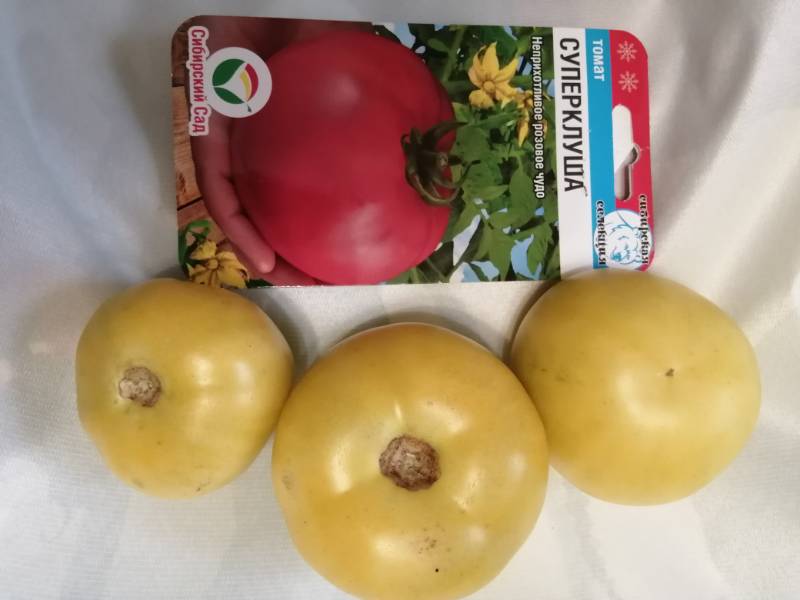
Vinogradinka wrote:
I’m going to keep watching them, curious to see what happens next.
In case anyone is curious, the little tomatoes sat there for another month with no visible changes. We got tired of waiting, cut them open, tasted them, and spat them right out, because they tasted like weird garbage. Must be an off-type, I’ll try again. I didn’t even bother planting it last year.
Good morning, girls and boys! 🌻
I’ve pretty much “stabilized” my methods over the last few years. In terms of sowing and growing tomatoes.
I “split” them into three goals:
— growing to eat fresh until we’re full.
— maximizing vine-ripening as much as possible.
— making preserves for the pantry (tomato juice, whole peeled, and pickled).
That’s what gets consumed really well during the winter-spring period.
On top of that, I set a goal: Maximize vine-ripening by applying a few specific techniques during the growing season. I only grow in the greenhouse now.
As for open ground, in our region, it’s only possible if we get a “good summer-autumn” season. But I’ve adapted to growing in a “warm” raised bed with a small roof. That is an absolute must, otherwise, the torrential rains and winds ruin it. The autumn fogs (in August) make it impossible to get a mass harvest of vine-ripened tomatoes… For that specific purpose, I ONLY grow one or two varieties in that bed, specifically ones meant for any kind of canning—whether whole peeled or pickled. (Varieties like “Sasha” and “Yamal-200”).
These are practically identical varieties, the only slight difference is in the ripening time and fruit color. “Yamal-200” is slightly pink, “Sasha” is red, leaning towards crimson, very firm, perfect for canning.
For the greenhouse, I’ve also narrowed down my list. Usually THREE, maybe four large-fruited beefsteak varieties and 5-6 plants of “cluster/truss” type varieties.
(I’m just talking about my own process here)—not giving advice! Everyone decides for themselves WHAT and how many VARIETIES TO GROW. I’ve just “played around” enough in my life and I want stability now.
I didn’t come to this conclusion by accident either. As basic “agronomy” shows, specific varieties (whether determinates or indeterminates) require a specific palette of fertilizers—the fewer varieties you have with similar feeding requirements, the less hassle and running around you have to do to get the job done. The only thing that forces “adjustments” is the changing climate, which has clearly shifted over the last three decades. But it’s easier to adapt to those changes than to try and “concoct” and mix custom fertilizers for a massive hoard of different varieties.
Of course, very few people actually think about this, and they just feed everything “in bulk” (without tailoring fertilizer requirements to different varieties). But to each their own. If you want to be pedantic, there are a lot of factors to consider:
– climate and soil conditions, solar insolation, feeding, pruning, length of the growing season, and other “minor details”.
I wish everyone success in THIS gardening adventure, grow for the joy of your families and your own pleasure. 🌻 🥳
A very good variety. I bought some seedlings in tiny 1 oz (30 ml) cups just for laughs. And that beautiful plant produced a massive harvest out in the open ground.