📌 Quick Summary (TL;DR): Rooting Tomato Tops
- ✂️ The “Chop & Prop” Method: If your tomato seedlings become severely overgrown and leggy indoors, you can cut the tops off and root them in water to create a shorter, sturdier plant.
- 🕒 Timing is Everything: If you are forced to do this, aim to chop the tops about 3 weeks before your outdoor planting date. This allows 1 week for new roots to form in water, and 2 weeks for the plant to establish in soil.
- 📉 Impact on Yield: Growers are highly divided on this. While it does create a massive root system, the physical shock to the plant usually delays your first harvest by 1 to 3 weeks. Most experienced growers consider topping a “last resort” rather than a standard practice.
Good evening! Luda, can I ask for some advice? If I chop the top off a tomato seedling and root it, will it hurt the final yield of the new plant? I can’t find a straight answer anywhere.
Marina, I personally believe that cutting the tops off isn’t the best option for seedlings, and people usually only do it out of desperation.
What’s the actual problem? Are the seedlings just way too overgrown and leggy?
I think the yield will suffer a bit, or at the very least, your first fruits will ripen a couple of weeks later than usual. But if you have no other choice, you gotta chop them.
What does a seedling need at planting time? A thick stem, good leaves, the very first flower buds, and young, vigorous white roots that are ready to explode into the soil. In regular cups, getting a massive root system is hard—you have to constantly pot up to larger sizes.
But with chopped tops, you just have to time the cut right. If you root it in water for 6-7 days, then put it in a soil cup for 15 days, you should chop the tops about 3 weeks before plant out… If done right, this seedling might actually yield more than a standard, leggy overgrown one.
Last year I chopped the tops off right around planting time, and they grew out just fine. True, they lagged behind the others by about 4 weeks. But if you chop them 3 weeks before planting out, they’d only lag by a week at most. And the root systems you get are incredible! 📝
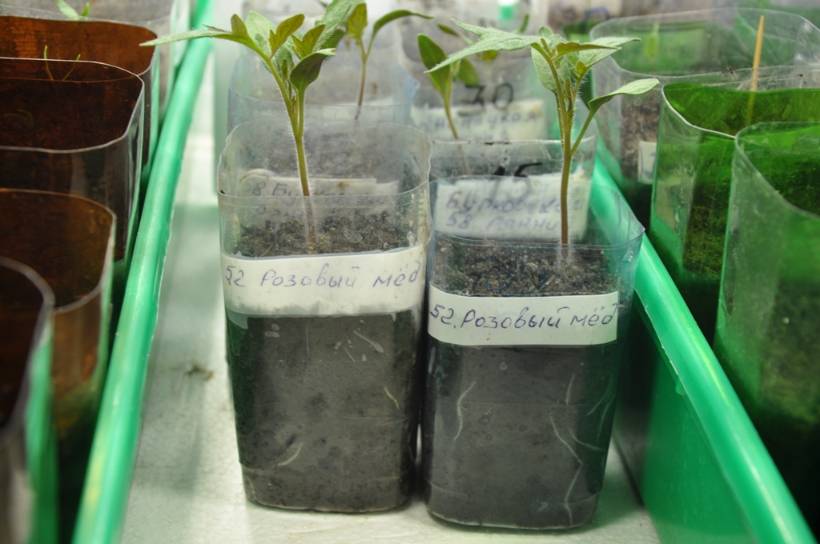
I’m actually running an experiment. I have 2 roots of Pink Honey (Rozovyi Myod) and 2 of German Red Strawberry. I’m going to chop the tops off one of each at the 3-week mark, and the others at the 4-week mark before planting. I want to find the optimal chop time. I’ll report back…
Valtwelve: If done right, this seedling might actually yield more than a standard, leggy overgrown one.
Valeriy, there are plenty of people on the internet who support the “chopped seedling” method, and many have tried it at least once. But I don’t see anyone raving about it. It’s strictly a necessity thing.
I once had to plant two chopped tomato plants (ants ate the stems). I kept them in water until white roots formed, the roots grew fast, and I planted them out in their final spot. Compared to the regular, uncut seedlings, they looked stunted and pathetic. I had to shade them, give them extra water and fertilizer, and in the end, they didn’t produce anything spectacular—just extra headaches early in the season.
Good luck to you though! Give us a detailed update later. Are your seedlings getting overgrown already? Mine are still tiny. When I pot up to larger cups, I always snip off the cotyledon leaves—this gives the tomatoes a slight shock and pauses their upward growth for about a week, which helps keep them short.
Good evening! Lyudmila, can I pick your brain for a second? If I top a tomato (chop off the main growing point) and root the top as a clone, will it hurt the yield of that new plant? I can’t seem to find a straight answer anywhere.
I’ll share my two cents on topping while we wait for Lyudmila to reply.
I’m actually a big fan of this technique and I want to try a really cool experiment with tomato tops this spring.
Think about what a seedling needs the second it goes into the dirt outdoors: A thick stem, healthy leaves, the very first flower buds forming, and—most importantly—powerful, young, actively growing white roots so it explodes with growth right out of the gate.
It’s super hard to get a root ball like that in standard nursery cups; you constantly have to pot them up into bigger containers. But with cuttings, you just have to time the chop right. It takes about 6-7 days to push roots in a glass of water, and then 15 days in a cup of dirt (8 days for roots to fill out, 7 days for leaves and buds). So, ideally, you want to snip the tops off about 3 weeks before your plant-out date.
If done right, a cloned top can actually out-produce a standard, root-bound, leggy seedling. Or at the very least, you won’t notice any drop in yield compared to a perfectly grown regular seedling.
Valtwelve: It takes about 6-7 days to push roots in water…
Some of my cuttings never pushed out any roots at all. Like, zero.
SvetaR: Some of my cuttings never pushed out any roots at all. Like, zero.
Every time I’ve taken cuttings, they always rooted. The trick is you have to strip off a lot of the lower leaves. If the cutting has no roots yet, it physically cannot pull up enough water to support a giant canopy of leaves, so it just stalls out and dies.
(Thinking out loud to myself here…) Actually, if you strip the leaves off, and you want them to recover in 7 days… is 3 weeks prior to plant-out enough time? Last year I chopped the tops off almost exactly when it was time to transplant, and they grew fine, though they were about 4 weeks behind the others. I might do a test batch 4 weeks out this year just to compare.
SvetaR: Some of my cuttings never pushed out any roots at all. Like, zero.
I’ve had that happen before—they just sit there in the water and eventually the stem rots at the bottom.
I skip the water glass entirely now. I stick the fresh cutting straight into moist potting mix and cover it with an upside-down white plastic dairy cup to act as a humidity dome. They root beautifully this way. I actually used this method way ahead of schedule to clone some really expensive F1 hybrid seeds. I managed to get three separate plants out of a single seed. The harvest was fantastic!
Valtwelve: What does a seedling need right at the moment of transplanting outdoors? … powerful, young, actively growing white roots.
If the only goal here is to avoid root-bound plants (where the roots circle the bottom of the cup) and make sure you have fresh roots at transplant time, there’s a much easier hack than topping.
Just cut the bottom off your nursery cup. Put a layer of fresh potting soil in a larger holding tray, and set your bottomless cup directly on top of it. The roots will grow straight down out of the cup and into the tray, ensuring they never get old or tangled up.
SvetaR: Some of my cuttings never pushed out any roots at all. Like, zero.
Try adding a tiny bit of Fitosporin paste to the water—it should look like very weakly brewed tea. It acts as an incredible root stimulator and prevents the stem from rotting. It even makes my topped pepper cuttings throw out roots!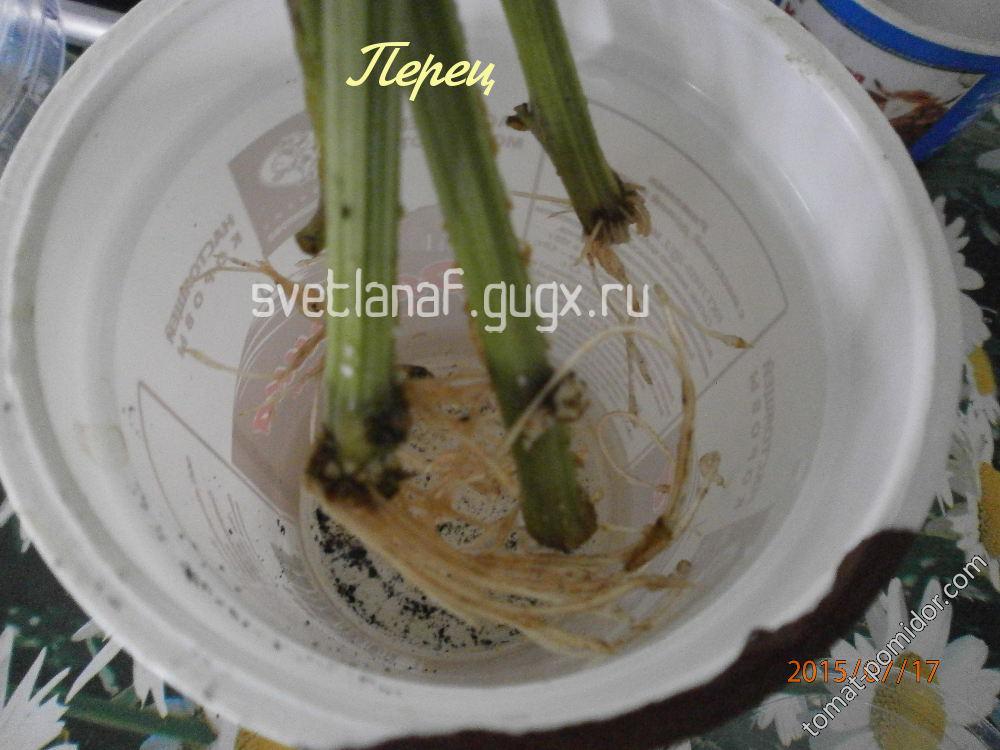
For US-based growers, you can achieve the exact same rot-prevention and root-stimulating magic by adding a drop of Hydroguard, Southern Ag Garden Friendly Fungicide, or any organic Bacillus-based root inoculant to your clone water.