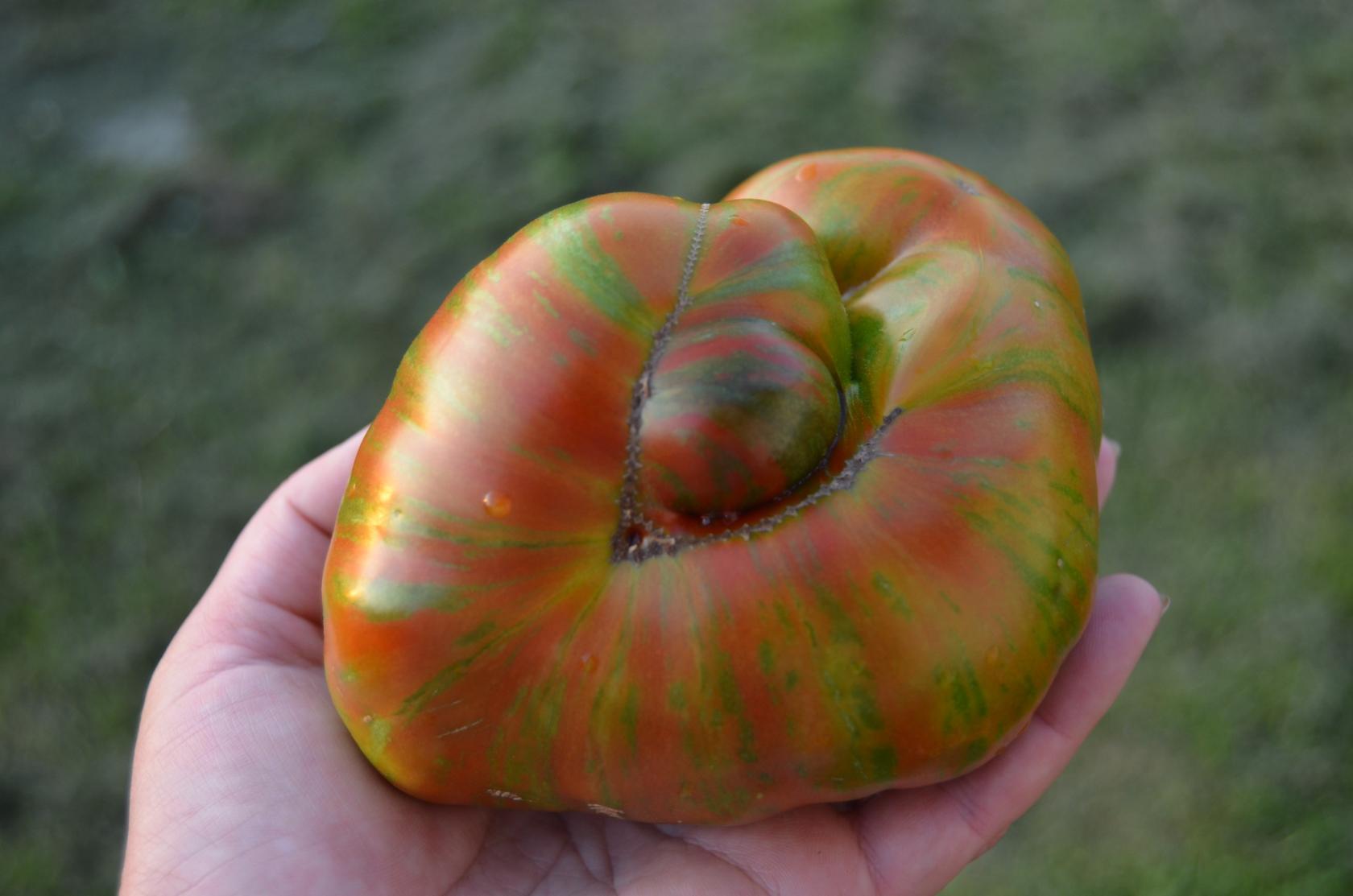
Growers’ Notes and Photos (USDA Zone 3b/4a Experience)
Lehrertomate.
Indeterminate, mid-season slicer variety.
Fruit are red, large to exceptionally massive beefsteaks running 14-25 oz (400-700 g), lightly ribbed at the shoulders, dense, meaty, with very few seeds. Outstanding, well-balanced classic flavor.
It sets fruit readily, but my vine was planted in the greenhouse right in the full sun trap, so the top clusters fried and dropped blossoms, just like every other variety planted along that scorching south row.
This variety definitely demands consistent potassium feedings to perform at its best.


Full Summary: Plant Vigor, Fruit Load & Nutritional Needs
- 🌿 Plant Habit: Vigorous indeterminate beefsteak vine with strong climbing growth. Best managed by pruning to 1 or 2 main stems with sturdy trellising to support its heavy fruit load.
- 🍅 Fruit Size & Structure: Large to giant oblate beefsteaks weighing between 14-25 oz (400-700 g). Features gentle ribbing over the shoulders, thick flesh walls, and small seed cavities packed with dense red meat.
- 👅 Taste Profile: Classic old-world heirloom flavor. Rich, savory, and balanced with equal parts sweetness and clean acidity.
- 🧪 Fertilizer & Potassium Needs: A greedy consumer of potassium. Because of the sheer mass of fruit bulking simultaneously, adequate potassium is critical to prevent blotchy ripening and ensure full sugar development.
- ☀️ Heat Management: While setting easily during cooler early-summer conditions, extreme solar heat in enclosed high tunnels can cause blossom drop on upper trusses without overhead shade cloth or cross-ventilation.
- 🌎 Tested Climate: Grown under unheated polycarbonate cover in the short-season Upper Volga region of Russia (Kostroma, USDA Zone 3b/4a).
Lehrertomate translates literally from German as “Teacher’s Tomato” (Lehrer = teacher, Tomate = tomato). It is an old family heirloom preserved through German seed-saver networks (such as those documented by German heirloom authority Gerhard Bohl), prized for producing gigantic, traditional red slicers with rich flesh and few seeds.
The grower’s note about upper clusters “frying” on the south side of the greenhouse illustrates a fundamental challenge when growing large heirlooms under plastic. Tomato pollen becomes sterile when ambient greenhouse temperatures exceed 90-95°F (32-35°C) paired with low humidity. Plants situated along the unshaded south wall absorb the strongest solar radiation, causing unpollinated blossoms to dry out and drop. Using 30-40% shade cloth overhead or providing active exhaust airflow during July heat spikes helps preserve upper cluster sets.