Growers’ Notes and Photos (USDA Zones 3-6 Experience)
Long Tall Sally (Dolgovyazaya Salli).
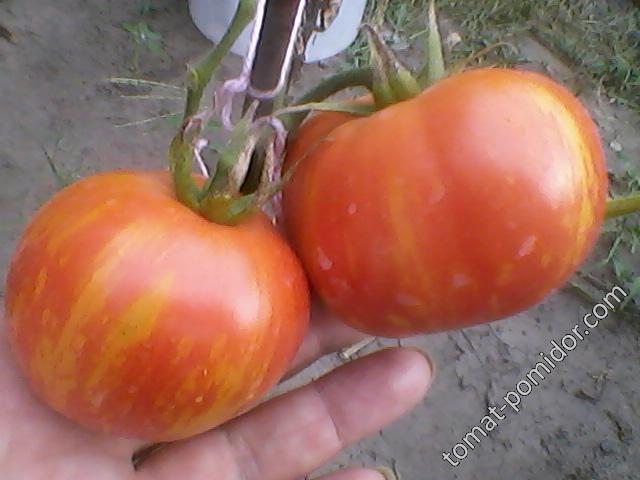
Indeterminate, gorgeous novelty variety with a genuinely heavy yield. Ran it in the greenhouse pruned to two leaders. Foliage is a distinct pale green. Fruit are fairly large pink hearts adorned with golden stripes, very delicious, reaching up to 17.6 oz (500 g).

Well, I am torn on this one. Beautiful? Absolutely! Productive? You bet! Tasty? For my palate, not really. It is not bland and it is not overly acidic, just mild and slightly sweet. It lacks that deep, punchy, bold flavor that knocks your socks off in other varieties. Bottom line, won’t be returning to my garden lineup.


I really liked Long Tall Sally. A high-yielding beauty with a solid, enjoyable flavor. Grew it in my polycarbonate greenhouse. Mid-season and puts out serious size.
Seeds came from Lena (@LenaV). Thanks a bunch!


Sally won me over too, gorgeous looker, great cropper, and big beefy fruit! Big shoutout to Elena (@LenaV) for the seeds 😊
The vine itself is super wispy and delicate. Looking at it early on, you would never believe that scrawny little plant could churn out and fatten up such absolute beasts 🙌
As far as the taste goes, it was good, straightforward tomato flavor. I did not plant it expecting an exquisite gourmet salad tomato anyway. I wanted massive size and dense, meaty flesh with almost no seeds, and that is exactly what it gave. Big meat like this is perfect for canning whole tomatoes in their own juice, which my family goes crazy for 😋


I grew my Long Tall Sally (seeds originally from Lena Danko) back-to-back in 2019 and 2020.
In 2019, out of two vines planted, one came out true to type as a big pink heart with gold stripes. The second one threw a split and ripened up as a red heart with gold stripes. Taste-wise, the pink one was average for me, nothing extraordinary, but the red segregation had a noticeably punchier flavor.
Because of the high yields, looks, and a bit of curiosity to see where this line would head, I planted two pink and two red vines in 2020. One of the reds split again. Same vine structure, same heavy production and heart shape, but the fruit turned out as a full bicolor.
We ran a family taste test between all three, and the bicolor segregation took top honors hands down.


Tasty? For my palate, not really. It is not bland and it is not overly acidic, just mild and slightly sweet. It lacks that deep, punchy, bold flavor that knocks your socks off in other varieties.
Funny how that works. In 2020 my Sally had a rough time out in the open dirt. The heat here was brutal, the leaves thinned out and curled crisp, and the vine stayed stunted. Fruit size was right at the lower end of the spectrum, but it still managed to push out about five medium-sized tomatoes with textbook heart shape and striping.
And that flavor was something else. To me, it was remarkably complex and fruity, an intense, sharp sweetness paired with a distinct, pleasant berry-like tang. Explosive and concentrated.
Growing it outdoors in our arid climate is just torturing the plant, but I suspect that in a protected greenhouse it might lose that concentrated punch and end up mild or bland. My seeds were also from Lena Danko.
Edited December 12, 2020 by Oksana Evgenyevna


Following up on my earlier post with interior cross-sections showing the pink, red, and bicolor variations. The camera did not quite capture the exact pink hue, but you can see the seed gel and dense flesh structure.


Full Summary: Plant Habit, Yield, Taste & Genetics
- 🌿 Plant Habit: Indeterminate vine, mid-season maturity, with classic wispy, droopy foliage and pale green leaves typical of heirloom oxhearts. Despite its slender, fragile appearance, it handles heavy fruit loads without issue. Best managed when pruned to 1-2 stems.
- 🍅 Fruit & Weight: Dense, blunt heart-shaped tomatoes weighing anywhere from 10 oz up to 17.6 oz (300-500 g). True type features a soft pink exterior with vibrant golden-yellow metallic striping. The interior is virtually seedless, packed with solid, meaty flesh.
- 👅 Flavor Profile: Varies significantly by climate. Under standard greenhouse conditions in cool northern zones, growers report a pleasant, sweet, but mild flavor that lacks sharp acidity. In hot, dry outdoor conditions with intense UV exposure, the flavor concentrates into a rich, sweet profile with distinct berry notes and a sharp, pleasant tang.
- 🧬 Genetic Stability: Growers note occasional segregations. Multiple growers tracked lines splitting into red-with-gold stripes and true bicolors, with the bicolor off-type winning family blind taste tests.
- 📦 Culinary Use: Excellent meaty slicer, and an exceptional paste/puree candidate due to dense flesh and extremely low seed count. Widely favored for whole-canning in tomato puree.
- 🌎 Grower Zones: Tested across USDA Zones 3 through 6, thriving in unheated polycarbonate tunnels in Siberia and the Urals, as well as surviving severe summer heat in Central Asian steppe zones.
Long Tall Sally was bred by independent American breeder Blaine Horton of Jackson, Mississippi, known for naming varieties after classic rock and blues tunes (along with varieties like Pit Viper and Crazy Cow). Two important horticultural notes for growing this variety: