📌 Quick Summary (TL;DR): Grushka Oranzhevaya (Orange Pear)
- 🌍 Origin: A Russian/Eastern European commercial variety. The name translates directly to “Orange Little Pear”.
- 🌿 Plant Habit: Determinate / Semi-determinate. It has regular leaf foliage and grows to about 3.3 ft (1 m). It can be staked, caged, or simply allowed to sprawl on the ground outdoors.
- 🍅 Fruit Characteristics: Small, bright orange, pear-shaped cherry tomatoes. They produce in abundant clusters.
- 👅 Flavor: Exceptional. Growers rate it as incredibly sweet—on par with the famous Medovaya Kaplya (Honey Drop)—but with an added layer of complex, rich flavor that makes it stand out.
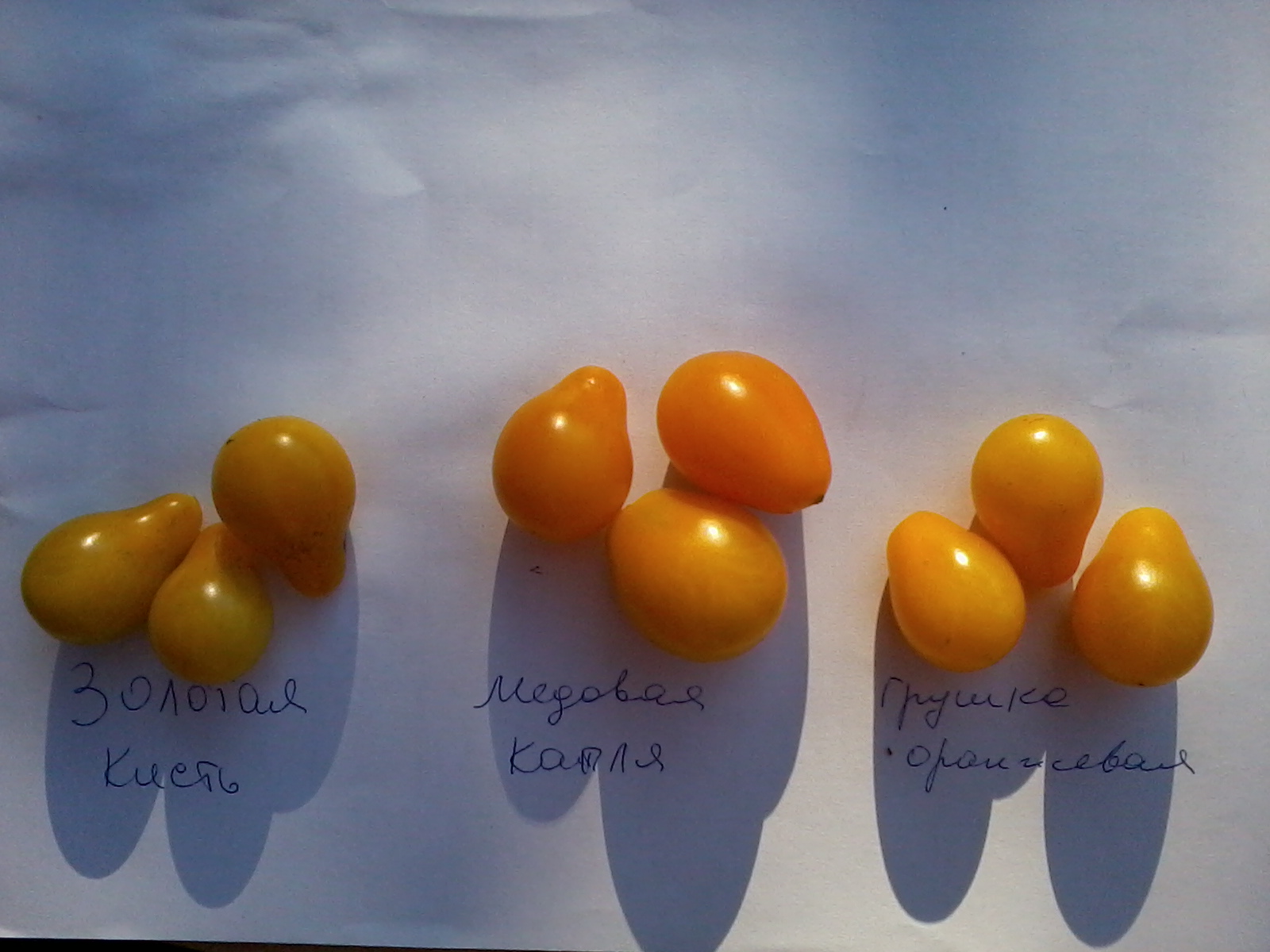
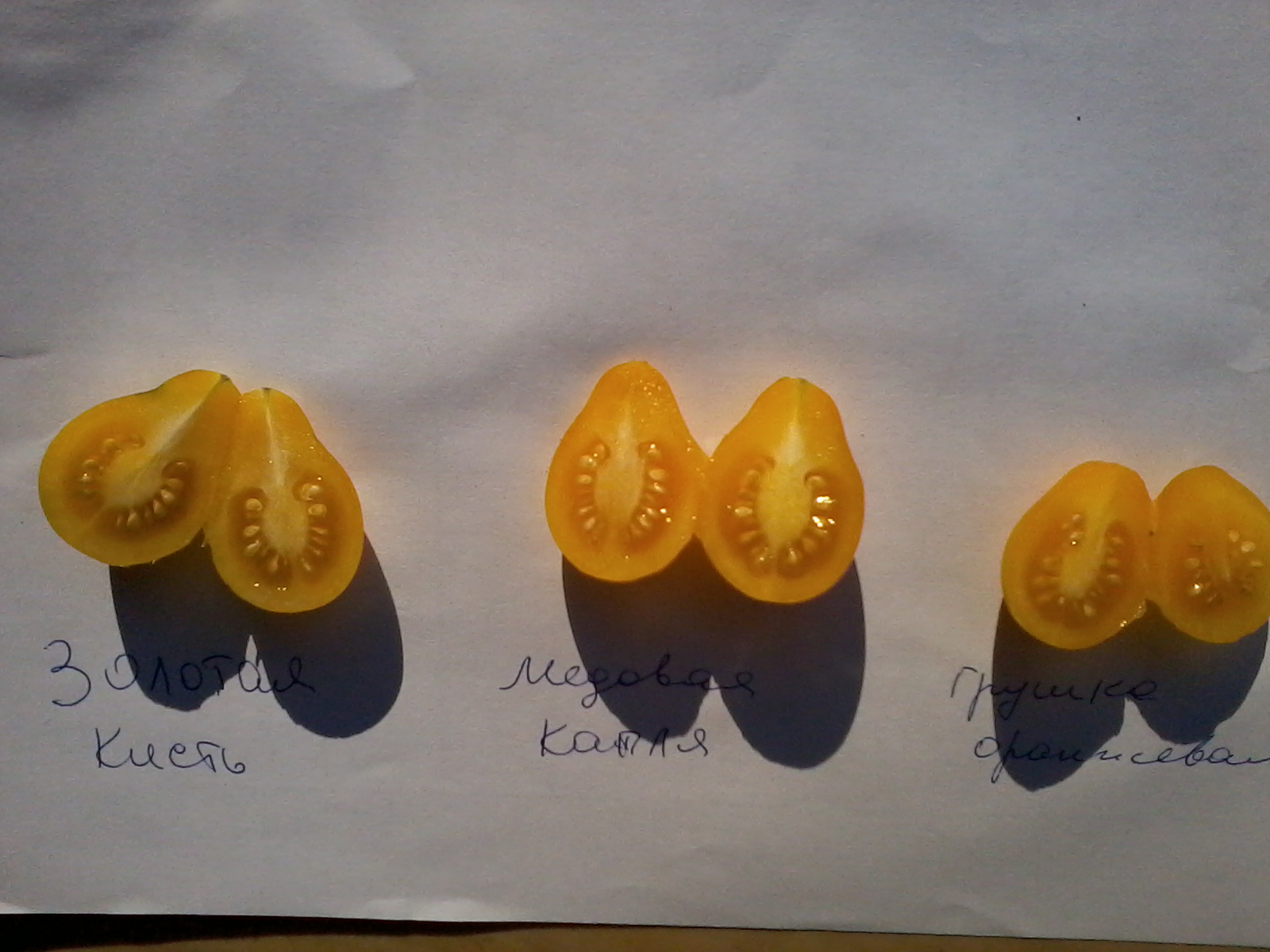
It turned out that I have three varieties with practically identical fruits. They are Medovaya Kaplya (Honey Drop), Zolotaya Kist (Golden Truss), and Grushka Oranzhevaya (Orange Pear), though of course there are some slight differences in color and size.
Honey Drop has potato leaves, while the other two are regular leaf. They grew outdoors in open ground. I didn’t stake them at all, so over time they just sprawled over, but they all reached about 3.3 ft (1 m) long. In terms of yield, Grushka and Drop are about equal. Golden Truss was less productive, maybe because it was growing in a worse spot.
The reason I decided to compare them is because practically everybody loves Honey Drop, so I was curious to see how these other varieties stacked up against it.
Here’s what I found: Honey Drop is probably the sweetest, or practically tied with Grushka, but Grushka has this extra flavor profile that Drop doesn’t have. No matter how much I taste-tested both varieties, I couldn’t figure out which one I liked more. Each has its own unique thing going on, but basically, I loved the taste of both. Golden Truss is more acidic.
Aleksandr mentions that he didn’t stake these plants at all, letting them naturally “sprawl over” the ground.
In commercial agriculture and among many home gardeners with large plots, this is a perfectly valid way to grow determinate (bush) cherry tomatoes like Grushka Oranzhevaya! While staking and caging keep the fruit clean and save space, allowing the plants to sprawl on the ground requires zero labor. The trade-off is that fruits touching bare, wet soil are highly susceptible to rot and slug damage. If you plan to let your tomatoes sprawl, it is highly recommended to lay down a thick 4-inch layer of straw or hay mulch first so the fruits rest on a clean, dry bed!
.jpg.61ffe26fbe136219354219a436287d39.jpg)