📌 Quick Summary (TL;DR): Gumanitarnyi iz SShA (US Humanitarian Aid)
- 🌍 Origin: A fascinating piece of Cold War/Post-Soviet history! These seeds were originally distributed to Russian citizens in 1995 in commercial packets as part of United States humanitarian aid programs. The original variety name was lost, so Russian seed savers preserved and circulated it under the name “US Humanitarian Aid”.
- 🌿 Plant Habit: A small, compact determinate (bush) variety. Very early to ripen.
- 🍅 Fruit Characteristics: Small, red, elongated paste/plum tomatoes with a distinct little “beak” or nipple on the blossom end. They weigh around 2 to 2.5 oz (60-70 g).
- 👅 Flavor & Use: The flavor is a standard, slightly sweet tomato taste, but the texture is incredible for processing. It has very thick, dense walls that do not turn to mush when canned or boiled, making it an elite paste tomato.
I’ll tell you about one more variety. People ask me about it a lot—I’ve sent it to many folks. I don’t have the original name because in the 90s, they handed out seeds at my work labeled “US Humanitarian Aid”. By the way, there were peppers too, but that variety didn’t impress me and I lost it.
I had seeds saved from my own tomatoes, but last year I grew them from the *original* packets—they were labeled and dated 1995. All the seeds were treated with some pink stuff. I didn’t even hope they would sprout, but almost all of them did!
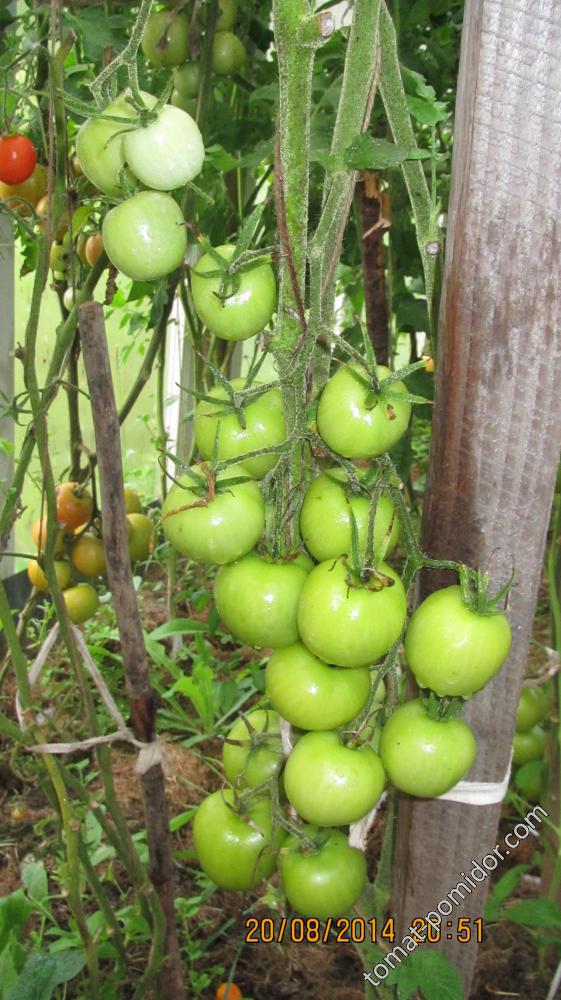
The tomato is a small det (determinate), early. The little tomatoes are slightly elongated, not large, around 2-2.5 oz (60-70 g). In the close-up of the truss, you can see the little tomato has a beak (nipple). Ripened very quickly, started in early July, and by the end of the month almost the whole thing was ripe.
The taste is ordinary, tomatoey, with a little sweetness. But it’s very firm and thick-walled. Recently opened a jar of canned ones—I specifically picked this variety, well it turned out very tasty and didn’t fall apart in my hands. I felt like you could even slice it with a knife 😂. It’s probably great for canning peeled. I sent it out under the names “From the USA” and “American”. So let’s agree on a single name.


Nin, so even though the skin is on the thick side, it slips off easily?
I feel like I’ve run into this one somewhere before and it definitely has a real name 🙂
Polin, I don’t know if it’s “easy”, but the skin is thick. And on the canned ones, it peeled off really well.
So try to remember… where you saw it…
Ninulia wrote:
Polin, I don’t know if it’s “easy”, but the skin is thick. And on the canned ones, it peeled off really well.
So try to remember… where you saw it…
I’ll dig through my notes and seed packets, I’ll take a look 🙂
This thread is a fascinating tomato mystery! Nina notes that she successfully germinated seeds from 1995 because they were “treated with some pink stuff.” American growers will immediately recognize this: in the 1990s, almost all commercial US agricultural seeds were coated with Thiram or Captan, which are pink-dyed antifungal dusts. That commercial coating is exactly what preserved these seeds and prevented them from rotting for nearly 20 years in a drawer in Russia!