📌 Quick Summary (TL;DR): Zhritsa (Priestess)
- 🌍 Origin: A commercial variety released by “Semena Altaya” (Seeds of Altai), a major Russian seed company operating out of Siberia, known for breeding robust and highly productive tomatoes.
- 🌿 Plant Habit: Indeterminate (tall). Very productive and performs well even in less-than-ideal, shaded spots in the greenhouse.
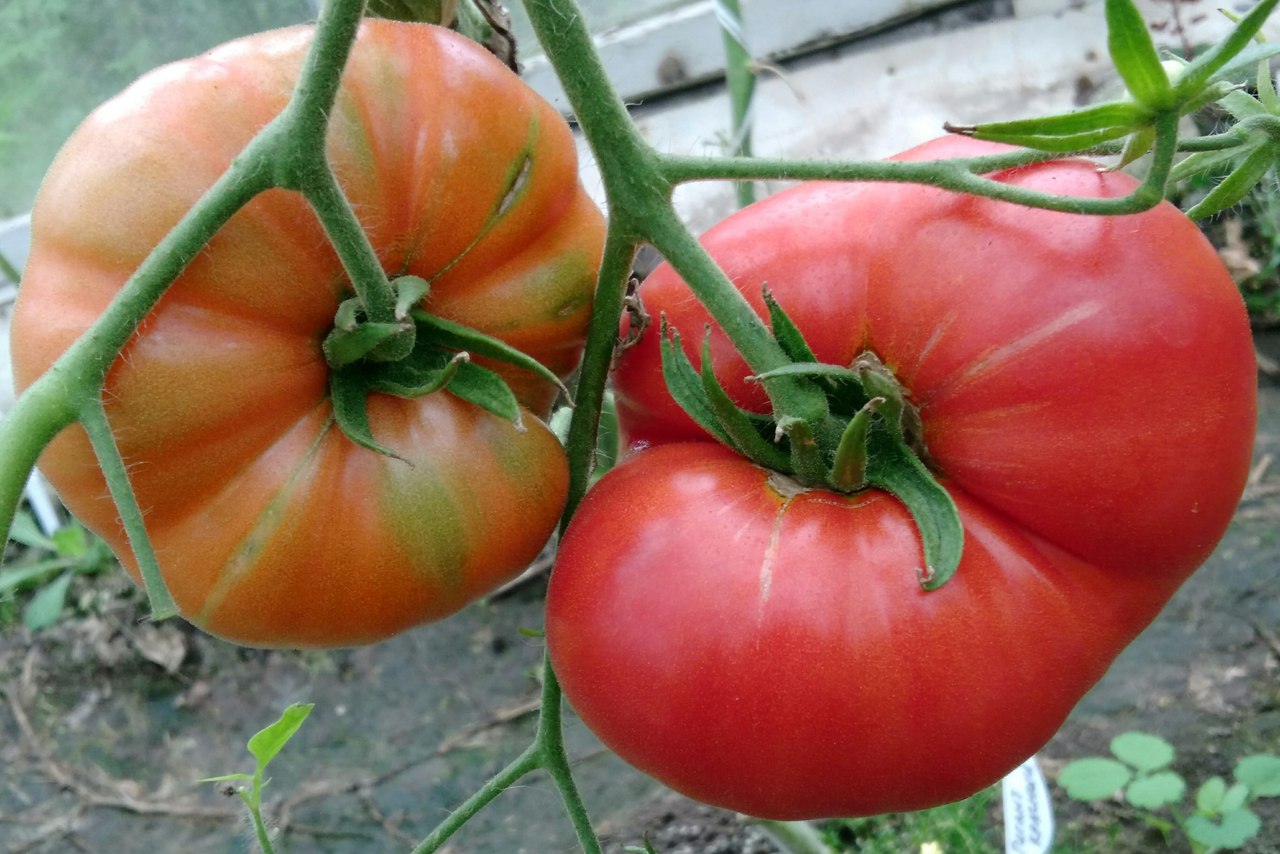
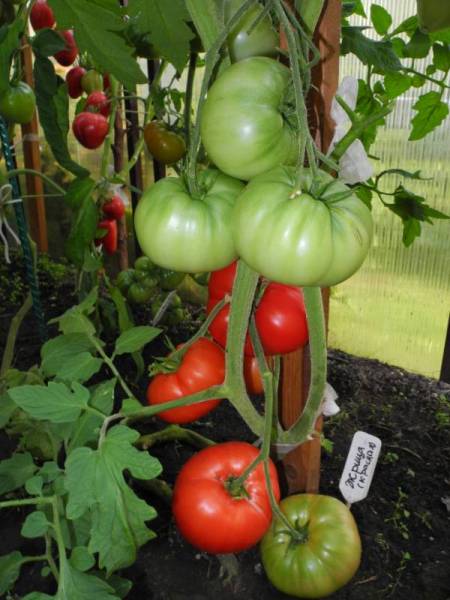
- 🍅 Fruit Characteristics: Deep red, uniform, oblate (flattened globe) beefsteaks. Average weight is around 8.8-14 oz (250-400 g) or more. It consistently produces large fruits with no small ones on the plant.
- 👅 Flavor & Texture: Moderately meaty with a great classic flavor.
- ⚠️ Grower Warnings: Does not handle extreme heat waves well. Under severe heat stress, it is prone to developing “Yellow Shoulders” and tough white internal cores.
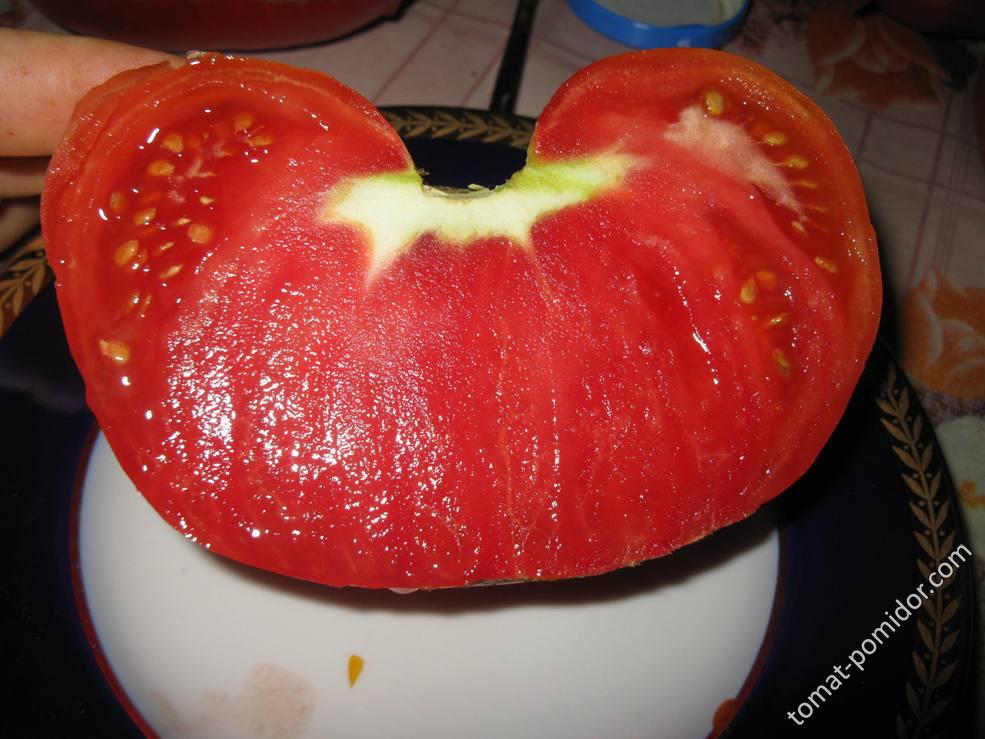
Zhritsa (Priestess). A variety from Semena Altaya (Seeds of Altai). Indet, the fruits are a deep red color, uniform oblate beefsteaks weighing 8.8-14 oz (250-400 g) and up, there were no small ones at all. I really loved the taste and the texture (it’s moderately meaty)! It was planted in a terrible spot, in the second row of the bed right up against the greenhouse wall, but it still showed a solid yield. It has great potential, I will definitely grow it again.
In the description on the Semena Altaya seed packet, the color is listed as raspberry-pink, but in their own promo videos, it is clearly red. The seed from their packet was shared by @Mokushka 🙏
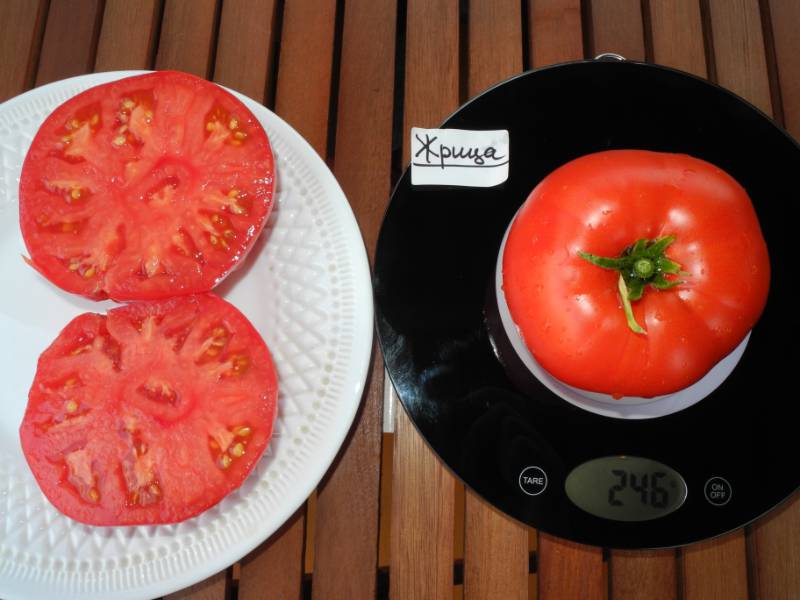
Svetikk, thank you!
My bush also turned out to be very productive, but everything absolutely scorched in the wild heat! The tomatoes were hanging there with yellow shoulders taking up half the fruit, and inside it was just tough white veins/cores. So I threw them all out, I didn’t even bother tasting them!
- Yellow Shoulders & White Cores: Natalya mentions her tomatoes were ruined by the heat wave, developing hard yellow tops and tough white veins inside. This is a well-known physiological disorder called Yellow Shoulders Disorder (YSD). When the ambient temperature gets too hot and intense direct sunlight bakes the fruit, the tomato stops producing lycopene (the red pigment) at the top of the fruit. This heat stress also prevents the plant from moving potassium into the tomato, resulting in hard, woody, white cores inside the flesh that never soften. Using shade cloth during extreme heat waves can prevent this!
- Color Discrepancies: It is very common for Russian commercial seed packets to list a tomato as “raspberry-pink” (малиновый) when the tomato is actually red. Russian breeders often use the term “raspberry” loosely for any deep, vibrant red with cool undertones, which can be confusing for growers expecting a true pink tomato!