📌 Quick Summary (TL;DR): Pruning Strawberry Leaves After Harvest
- ✂️ The Debate: Should you cut off all strawberry leaves after the summer harvest? The short answer: you can get great yields whether you do a full prune, a partial prune, or no prune at all. It depends entirely on the health of the plants.
- 🔴 Red Leaves: Red spots or entirely red leaves in mid-summer are often signs of fungal diseases (white or brown leaf spot) or high soil acidity.
- 🔥 Why Prune? Cutting off old, diseased foliage removes a massive amount of fungal spores and pests (like spider mites), forcing the plant to grow a fresh, healthy canopy before winter.
- 🌱 Aftercare: If you do prune your strawberry beds (a process known as renovating), you must feed them immediately with a balanced fertilizer or good compost so they have the energy to regrow.
We all know that after strawberries finish fruiting, we absolutely must cut off all the newly emerging runners (unless, of course, we plan to use them for propagation). But what about the leaves? Do we need to do anything with them at all?
This is where doubts often creep in. On one hand, some people insist that foliage should be completely sheared off after harvesting. On the other hand, some argue that you should never do this under any circumstances.
Sometimes, serious debates break out over this post-harvest care topic. A beginner gardener, lost in thought, might confidently grab their garden shears, only to second-guess themselves and hide the shears back on the top shelf of a dark shed. I won’t hide it—I’ve been there myself. Ultimately, I decided that no one could give me a better answer than my very own experience.
Jumping ahead, I will admit: you can get wonderful strawberry harvests by cutting off absolutely every single leaf, by not cutting them at all, or by selectively pruning just the oldest ones. You simply need to understand why this is done (or not done). Once you know the reasoning, it’s easy to decide what to do. So, let’s break it down right now 😉
Why Do We Prune Strawberry Leaves?
It’s a well-known fact that all sorts of pests and diseases breed and multiply very rapidly on garden strawberries. Quite often, after the fruiting period, the bushes look something like this:
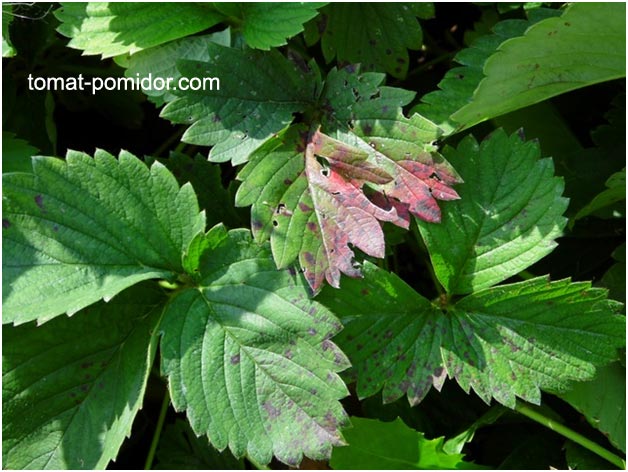
The appearance of red, reddish-brown, or purple spots and dots on strawberry leaves is probably the most common sight, especially in the second half of summer (right after fruiting).
Why Are My Strawberry Leaves Turning Red?
Someone might say: “Old age.” And to some extent, they’d be right. But that’s only true when it happens closer to autumn—the lower leaves lose their green color, turn red, and then die off naturally.
Sometimes, however, strawberry leaves start turning red as early as the beginning of summer. The most likely cause for this is high soil acidity. You can easily fix this situation by applying wood ash to the soil.
But when the foliage starts getting covered in distinct red spots or merging dots, that is a clear sign of disease—specifically, white and brown leaf spot (common fungal infections). These spot diseases are nowhere near as harmless as they might seem. If left unchecked, we risk losing a significant portion of our future harvest. Pruning the leaves is one of the very first steps in preventing and fighting these diseases.
How to Prune Strawberry Leaves After Harvest (Renovating the Bed)
We start pruning immediately after the harvest is complete. This gives the plants enough time to grow a new, healthy, green canopy before autumn. It is best to cut the leaves with pruning shears or garden scissors—never tear them off by hand—making sure to leave a few of the youngest, innermost leaves intact. This is, of course, the ideal method, and it works great for those who only have a couple of strawberry beds.
But what if you have an entire strawberry plantation? In that case, you can literally mow them down (a process often called renovating strawberry beds). Yes, the emerging young leaves will get slightly damaged by the mower, but if the plants are well-fed and treated, it won’t stop them from recovering and gathering strength for next year’s harvest.
The cut leaves must be immediately removed from the strawberry patch. Bury them deep in a compost pile or take them off the property entirely—basically, isolate them from your growing area. By doing this, we won’t eliminate pests and diseases entirely, of course, but we will destroy a very massive chunk of their population. Also, it is much easier to apply any necessary sprays or treatments to a freshly shorn plantation (for example, if the plants were heavily infested with spider mites).
Should You Cut Strawberry Leaves? The Case Against Full Pruning
This method—completely removing the foliage—is not favored by all home gardeners and agronomists. The argument is that the plants lose a lot of energy, photosynthesis is disrupted (since there are no leaves for a while), and generally, it is an unnatural and harsh process that will inevitably affect future fruiting.
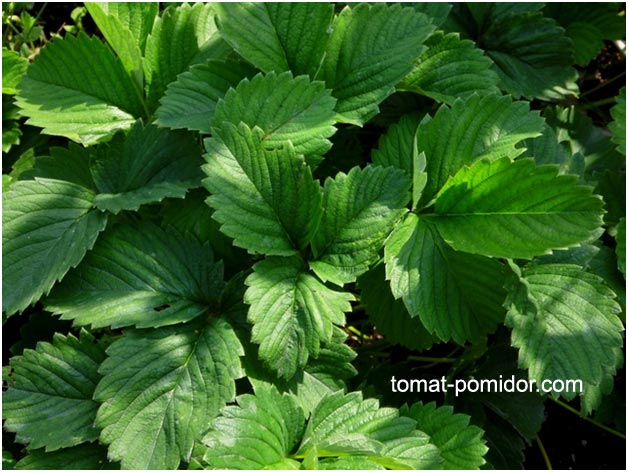
Here is what I’ve noticed regarding fruiting: when given proper care, pruning the leaves does not reduce the yield—sometimes it actually increases it. Everything depends on the condition of the plants. If, after picking the berries, our strawberries look cheerful and vigorous—standing there clean, green, and not heavily chewed up by bugs—then you don’t really need to cut them at all. It’s true.
My Personal Post-Harvest Routine
Personally, I always cut off the old leaves, at least partially, no matter what. Why? Because their lifespan is practically over anyway, and they offer almost no benefit—neither to us nor to the strawberry plant. However, they serve as the perfect first safe haven for all kinds of diseases, especially fungal ones.
And if the plants are visibly infected or damaged by something or someone, I ruthlessly cut off all the leaves (even though I used to be terrified to do it).
Crucial Step: After pruning, you absolutely must feed your strawberries. They have a big job ahead of them: regrowing beautiful, healthy, powerful new bushes from scratch. For this, a balanced mineral fertilizer, a specialized strawberry fertilizer, or, of course, good quality compost or humus mixed with wood ash will work perfectly.