Growers’ Notes and Photos (USDA Zones 2-5 & European Experience)
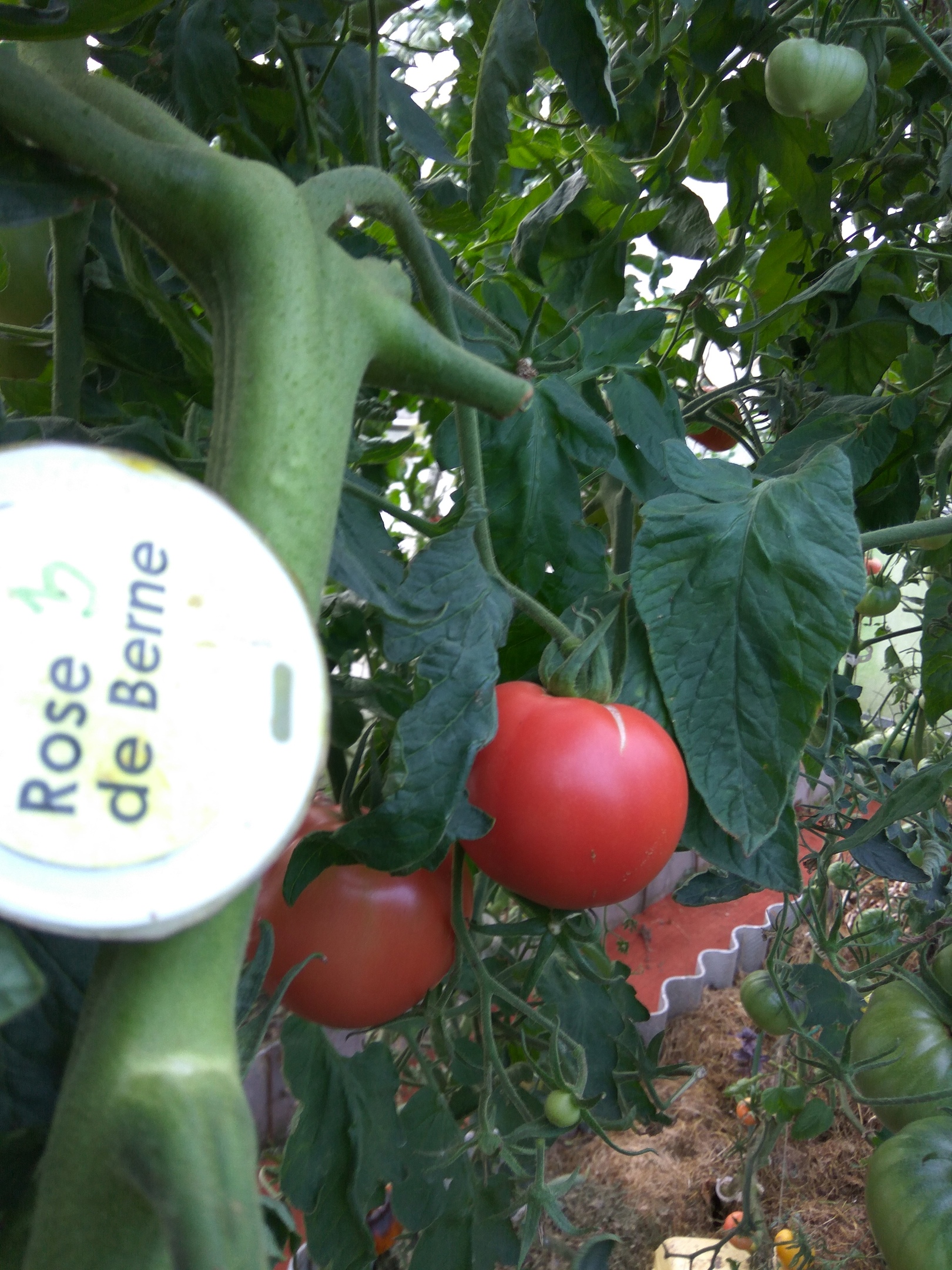
Bought nursery starts at the local market (got my Cornue des Andes from the exact same vendor). So thrilled I bought it. The tomatoes are on the modest side, very uniform in size, slightly flattened with a gentle scalloped blossom shape.Edited September 20, 2015 by Drosera


Swetlana wrote: People always say it is super tasty but a light producer. Katya, how did the yield turn out for you?
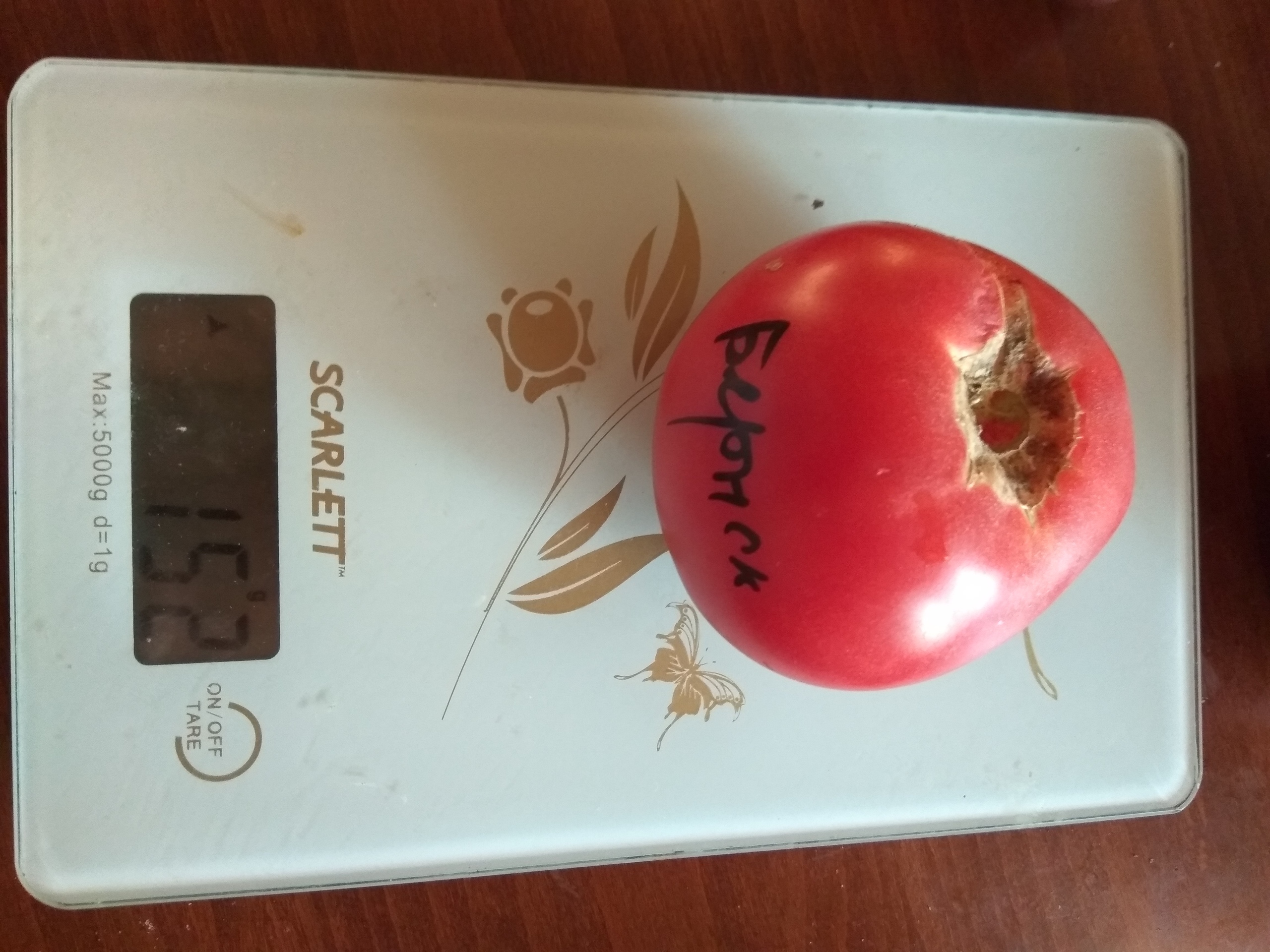
By my standards this season, it turned out very productive! I will have at least 3 to 4 full clusters carrying 4 to 6 tomatoes each, weighing around 3.5 to 7 oz (100-200 g). If every fruit finishes ripening, that will easily make around 6 to 7 lbs (3 kg) off a single plant grown outdoors in open ground. For me, that is fantastic.
Keep in mind, the nursery starts were top-notch. I messed up my own seed starts and planted late, but this purchased start was robust, so I got it into the ground immediately. Bought three starts in total: one Rose de Berne and two Cornue des Andes, and both outproduced most of my home-started varieties. Healthy early starts plus early transplanting definitely played a major role.
After tasting a few more, I noticed that the locular gel around the seeds has a slight tart kick, while the meat of the fruit is pure sweetness. Not the single best tomato in my patch this year (nothing has topped Malachite Box yet 😄), but still an exceptionally good variety. Plus, fruit set was flawless: even, uniform clusters without skipping a beat.
The Yield Controversy: Shy Bearer or Heavy Producer?
Cross-posting a discussion from the “Tastiest Tomatoes” thread:
Russi wrote: Rose de Berne was hands down my biggest revelation this season. Sweet, delicious, meaty, with skin that is sturdy enough not to split yet completely tender to the bite. Reminds me a lot of Yablochnyy Lipetskiy (another top performer for me). Planting a whole lot more of it next year.
Zulfiya wrote: Anya, which seed vendor did you use, and did you run it outdoors or in a greenhouse?
Russi wrote: Grown in a greenhouse, seeds from Tanya Keti.
Aleksander wrote: Folks, I am finally giving up on Berner Rose after this season. In my garden conditions, it is just too stingy on yield. I trialed it from multiple seed lines: seeds scooped from Swiss grocery store fruit, a commercial seed packet bought in Switzerland, and a packet bought at the Moscow VVC expo from Prestige.
Only one single time did a vine hit 9 lbs (4 kg) of fruit; that same year another vine gave just 3.5 lbs (1.5 kg), and after that it averaged 3.5 to 5.5 lbs (1.5-2.5 kg). That is simply too low for me; any variety yielding under 6.6 lbs (3 kg) gets kicked straight out of my rotation. If it produces well for others, I’m happy for you, but it’s not for me.


Flavor Breakdown: Sweet Flesh vs. Tart Seed Gel Dynamics
Katya iz Kieva wrote: After tasting a few more, I noticed that the locular gel around the seeds has a slight tart kick, while the meat of the fruit is pure sweetness. Not the single best tomato in my patch this year (nothing has topped Malachite Box yet 😄)…
Katya, you really can’t compare Malachite Box and Rose de Berne; they belong to completely different flavor profiles: exotic fruity versus classic heirloom tomato.
To my palate, Rose de Berne is a rock-solid 4.5 out of 5 (that is a 9 out of 10 on any scale). On top of that, it stores well, holds up on the counter, and works as a true all-around dual-purpose tomato. Far tastier than Cuore di Bue types that share similar keeping qualities. If I had unlimited garden space, I would grow it every year without question.
As for that tartness around the seeds: while extracting seeds from some of my pouch-shaped oxhearts, I noticed that a salad made purely from the seeds and seed gel had a delightful, lively sweet-tart kick. The pericarp meat can sometimes taste mild, but that locular jelly delivers balanced acidity and sugars. That exact dynamic is why sauces and canned preparations made from these tomatoes often taste richer than eating them raw off the vine.

Fruits are neatly rounded, pink, medium-sized, juicy, sweet, and literally melt in your mouth. During our extreme summer scorchers, the fruit couldn’t bulk up to maximum weight, but it packed on serious sugar!


Praising the flavor once again, though sadly not the yield. Most likely my own fault somewhere along the way.
Still, this is one of those varieties you definitely want to grow again. Hopefully next time I can dial in the productivity. The flavor turned out like a top-tier bicolor: sweet, complex, and fragrant.
Full Summary: Plant, Yield, Taste and Dual-Purpose Use
- 🌿 Plant Architecture: Classic indeterminate vine (commercial French selections like Vilmorin can display semi-determinate 4 to 4.5 ft / 1.2-1.4 m habit). High truss regularity with zero blossom skip when given adequate early nutrients.
- ⚖️ Fruit Characteristics: Perfectly globe-to-oblate, smooth salad slicers averaging 3.5 to 7 oz (100-200 g). Features tender, melt-in-the-mouth pink skin that resists cracking surprisingly well for an old heirloom.
- 👅 Flavor Profile: Rated by multiple growers as a 9/10 classic heirloom. The secret lies in its contrast: sweet, buttery pericarp flesh balanced by bright, mildly acidic seed jelly.
- 📊 Yield Debate: Highly polarized. Growers with robust nursery starts and fertile soil report heavy 6 to 7 lb (3 kg) harvests per plant; others report modest 3.5 to 5.5 lb (1.5-2.5 kg) yields, leading some commercial growers to cull it in favor of modern hybrids.
- 🌎 Reviewed In: Western Europe (France, Germany) and Eastern Europe/Siberia (USDA Zones 2 to 6).
• Swiss Lineage & Commercial Strains: Originating in the canton of Bern, Switzerland, Rose de Berne (Berner Rose) is universally cherished across Central Europe as the benchmark for pink slicer flavor. Over decades of commercial packaging by French houses like Vilmorin and German seed savers, minor variations have surfaced, including slightly more compact semi-determinate growth habits.


