Growers’ Notes on Seed Soaks & Sprout Damage (USDA Zones 4-6)
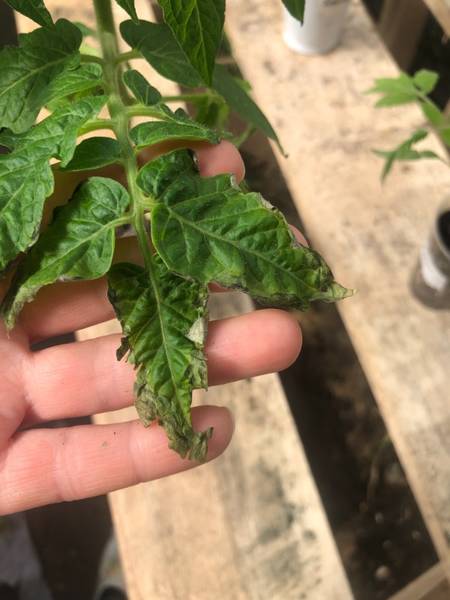
My tomato seedlings are coming up little by little, though not nearly as fast and evenly as the first two batches. Out of 50 cups sown on March 19, 5 popped up on day three and 10 on day four. As usual, more germinate overnight than during the day.
Edited March 23 by T@tk@
T@tk@ wrote:
Oh no, of course not! 🤦♀️ The 19th!
Fixing it right now, thanks!
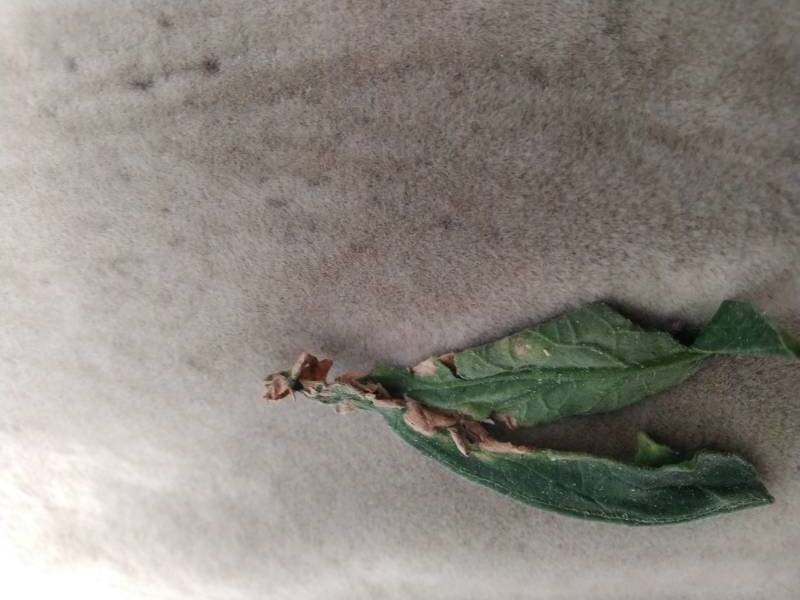
Morning everyone! I’ve got some wonky tomato sprouts this year too 😅 Some came up headless, and some have cotyledons looking just like your photo. Pretty sure the Quadris messed them up 😂 Played it safe and treated them before sowing. Or maybe the seeds were already carrying something and Quadris treated them to death, honestly I’d rather lose a few than grow diseased plants. Gonna sow a few extras just in case anyway.
Oh, and my roses, dahlias, and tissue-culture plugs from Italy are arriving soon from Nastya’s group buy, just a little spring warm-up before the real garden work kicks off 🙂
Yulia Orenburg wrote:
Pretty sure the Quadris messed them up 😂
Folks, Quadris is super phytotoxic, what are you doing? Why on earth would you put that on seeds? Just the other day I quoted Alexander’s point that fungal diseases don’t travel on seeds anyway, and any viruses live inside the seed where no seed treatment can reach them!
Serebryanka wrote:
Folks, Quadris is super phytotoxic, what are you doing? Why on earth would you put that on seeds? Just the other day I quoted Alexander’s point that fungal diseases don’t travel on seeds anyway, and any viruses live inside the seed where no seed treatment can reach them!
Nothing in that statement is actually true, not gonna argue since there’s no point, we just take different paths. Prevention beats trying to cure something later at any stage.
And if you’re going to quote Alexander, be accurate. He said it’s tough to sanitize seeds that are less than two years old, and I mostly try to stick to aged seed too. I totally agree with him that plain chlorhexidine won’t cut it, but sometimes you’ve got fresh seeds you need to plant right away or other reasons.
Yulia Orenburg wrote:
I’ve got some wonky tomato sprouts this year too 😅 Some came up headless, and some have cotyledons looking just like your photo. Pretty sure the Quadris messed them up 😂
Yulia! You sure are a bold gardener. What possessed you to hit seeds with Quadris? Didn’t you jump the gun a little there? Quadris targets active pathogen reproductive structures, germinating conidia and zoospores. None of that exists on dormant seeds yet. A Quadris soak does zero good right now, whereas it could easily seep through a dry seed coat and burn the embryo if the seeds weren’t pre-soaked. Going by the book, all tomato seeds really need before sowing is a 30-minute heat treatment at 122-126°F (50-52°C).
DRYGAN wrote:
Yulia! You sure are a bold gardener. What possessed you to hit seeds with Quadris? Didn’t you jump the gun a little there? Quadris targets active pathogen reproductive structures, germinating conidia and zoospores. None of that exists on dormant seeds yet. A Quadris soak does zero good right now, whereas it could easily seep through a dry seed coat and burn the embryo if the seeds weren’t pre-soaked. Going by the book, all tomato seeds really need before sowing is a 30-minute heat treatment at 122-126°F (50-52°C).
Evening, Vadim! Oh, they were definitely pre-soaked first, I was just playing it safe and sowed a few extra knowing it might nip or burn a couple 🙂
Maybe 30 minutes is plenty, you just have to hold that temp steady for half an hour, which is tricky at home when you’re running a bunch of varieties with three seeds each. If you’ve got a tried-and-true trick for pulling that off, I’m all ears. I’ve got an instant-read probe thermometer, pots, everything needed to soak or cook ’em 😉
I did actually boil a few trays of seeds by mistake once back in my rookie days trying that boiling-water sowing method!
Morning, here’s a screenshot from your resident nerd, meaning me 🙂
This lists the official Quadris rates for sanitizing vegetable seeds, and that’s the exact dilution I used. Not telling anyone else to do it, it’s just my own approach. I only switch to biologicals once pre-harvest intervals become an issue or fruit starts setting. At the seed or seedling stage, if I have doubts, I’d rather use it now than kick myself later.
Vadim, Alexander, please tell me what else I can use to sanitize seeds if I need a variety now and can’t wait two years 🙂 I’d happily try your methods too. People write all kinds of garbage online and leave the rest of us to suffer for it.
Sure, holding 122-126°F (50-52°C) is easy in a thermos, until you’ve got 100 varieties with 2-3 seeds each to keep separated 🙂
Application rates:
For seed potatoes: 15.5 fl oz per US ton (0.5 L/metric ton)
For vegetable seeds: 9-12 fl oz per US ton (0.3-0.4 L/metric ton)
For infected potato sprouts: 18.5-24.5 fl oz per US ton (0.6-0.8 L/metric ton)
For infected tomato seedlings: 15.5-18.5 fl oz per US ton (0.5-0.6 L/metric ton)
For cabbage, carrots, and beets: 21.5 fl oz per US ton (0.7 L/metric ton)
Edited March 24 by Yulia Orenburg
Hot-Water Seed Treatment in a Thermos (126-140°F / 52-60°C)
Yulia Orenburg wrote:
Vadim, Alexander, please tell me what else I can use to sanitize seeds if I need a variety now and can’t wait two years 🙂
Yulia, I haven’t sanitized seeds in about fifteen years, ever since I read that no surface treatment can penetrate the seed coat to reach viruses sitting inside the embryo. Before that, here’s what I used to do: tamp down the potting mix in the pot, lay the seeds on top, put 1-3 drops of potassium permanganate or hydrogen peroxide on them with a dropper, wait half an hour, cover with soil, tamp down, water with hot water, and wait for sprouts. Peroxide and permanganate are nice because they break down fast once their job is done.
As for heat-treating seeds at 126-140°F (52-60°C), which supposedly kills viruses inside the seed, here’s the trick I came up with. At first I used disposable tea bags to lower them into a thermos, then I switched to cutting little squares of spunbond row cover. Drop the seeds in the middle, fold it over a few times depending on the pouch size and thermos neck so nothing spills out, stitch it shut with a needle and thick thread leaving a long tail, and lower the pouch into the thermos by the string. You can do a bunch of different variety pouches all at once that way. Start the water at 140°F (60°C), leave the lid slightly loose, and over 30-40 minutes it cools down to 122°F (50°C). You can check the temp with either a kitchen probe thermometer or an infrared thermometer gun.
Wishing you great luck and big harvests!
Edited March 24 by Aleksander
Yulia Orenburg wrote:
Maybe 30 minutes is plenty, you just have to hold that temp steady for half an hour, which is tricky at home when you’re running a bunch of varieties with three seeds each.
Afternoon, Yulia! Honestly, I don’t heat-treat or sanitize my store-bought treated seeds at all before sowing. And I don’t soak or fuss with my own saved seeds either. Basically I just don’t sweat it. Look at it this way: if some late blight or leaf mold spores are sitting on a seed coat, those same diseases are gonna blow into the greenhouse from outside anyway. And if a virus or bacterial pathogen is tucked inside the seed, 122°F (50°C) isn’t knocking it out either. Knock on wood, I’ve dodged viruses and bacterial diseases so far. Fungal issues are a lot easier to deal with if they pop up. Still, if you really want to heat-treat your seeds, heating water to target temp and dropping them in a thermos for the right time should work fine, even if the temp drifts a tiny bit either way.
DRYGAN wrote:
Afternoon, Yulia! Honestly, I don’t heat-treat or sanitize my store-bought treated seeds at all before sowing. And I don’t soak or fuss with my own saved seeds either. Basically I just don’t sweat it. Look at it this way: if some late blight or leaf mold spores are sitting on a seed coat, those same diseases are gonna blow into the greenhouse from outside anyway. And if a virus or bacterial pathogen is tucked inside the seed, 122°F (50°C) isn’t knocking it out either. Knock on wood, I’ve dodged viruses and bacterial diseases so far. Fungal issues are a lot easier to deal with if they pop up. Still, if you really want to heat-treat your seeds, heating water to target temp and dropping them in a thermos for the right time should work fine, even if the temp drifts a tiny bit either way.
Thanks for the reply. A thermos is easy enough, just not with my variety count 🙂 Usually it’s close to 100 varieties at two or three seeds apiece, wrapping each one up individually just to cram them in… hard to even picture! I was actually thinking about setting a heat mat to the exact temp and floating water in little deli condiment cups to keep track of them 🙂 Just thinking out loud though. Honestly, it’s way easier to just do preventative sprays at the seedling stage or after transplanting, there are tons of products out there. Looks like I’ve had my fill of soaking and fussing experiments. Time to act like a normal gardener and toss my lucky charm, it’s clearly out of tune anyway 🙂
Full Summary: Seed Sanitization Methods & Takeaways
- 🧪 Fungicides on Seeds (Quadris): Yulia Orenburg noticed headless and stunted seedlings after pre-treating tomato seeds with Quadris (azoxystrobin). Serebryanka and DRYGAN warn against using it on dormant seeds due to phytotoxicity and lack of active spores to target, while Yulia shares commercial agricultural seed-treatment rates for context.
- 🌡️ Thermos Hot-Water Method: Aleksander shares a clever DIY hack for sanitizing multiple varieties at once: stitching seeds into tiny spunbond row-cover pouches with long thread tails, dangling them in a thermos starting at 140°F (60°C), and letting the water cool to 122°F (50°C) over 30-40 minutes.
- 💧 Low-Tech & No-Treat Options: Aleksander used to drop 1-3 drops of hydrogen peroxide or potassium permanganate onto surface-sown seeds before covering, though he hasn’t treated seeds at all in 15 years. DRYGAN also skips pre-treatments, noting airborne fungal spores will enter the greenhouse regardless.
- 🌎 Who Participated: Five growers across USDA Zones 4 to 6 (Kazan, Orenburg, Moscow Region, Volgodonsk, and Minsk).
Quadris (Azoxystrobin): Quadris is a commercial broad-spectrum strobilurin fungicide (sold in the US by Syngenta, mainly for row crops and commercial vegetables, not home gardens). Using concentrated agricultural fungicides on individual tomato seeds at home carries a high risk of burning the emerging embryo.
Boiling-water sowing: Yulia mentions accidentally cooking seeds with “boiling-water sowing.” This is a popular home-gardener technique in Eastern Europe where growers pour near-boiling water over the potting mix right before or after laying down dry tomato seeds to warm the soil and soften hard seed coats, though pouring water that is too hot directly onto the seeds easily kills them.
Potassium permanganate: Widely used by Eastern European gardeners as a purple seed-soak disinfectant; in the US, home growers more commonly use a 3% hydrogen peroxide soak or diluted household bleach (or TSP) for seed-coat sanitation.