Quick Summary of Sanka
- 🌍 Origin: A massively popular Russian commercial variety. “Sanka” is an affectionate, folksy nickname for Alexander. It is widely considered a staple “workhorse” tomato across Eastern Europe.
- 🌿 Plant Habit: Ultra-early determinate (bush) type. Very compact, typically reaching 40-60 cm (16-24 inches) in height. The main stem thickness at the base is about 1 to 1.5 cm (0.4-0.6 inches). It requires minimal to no pruning (a true “plant-and-forget” variety).
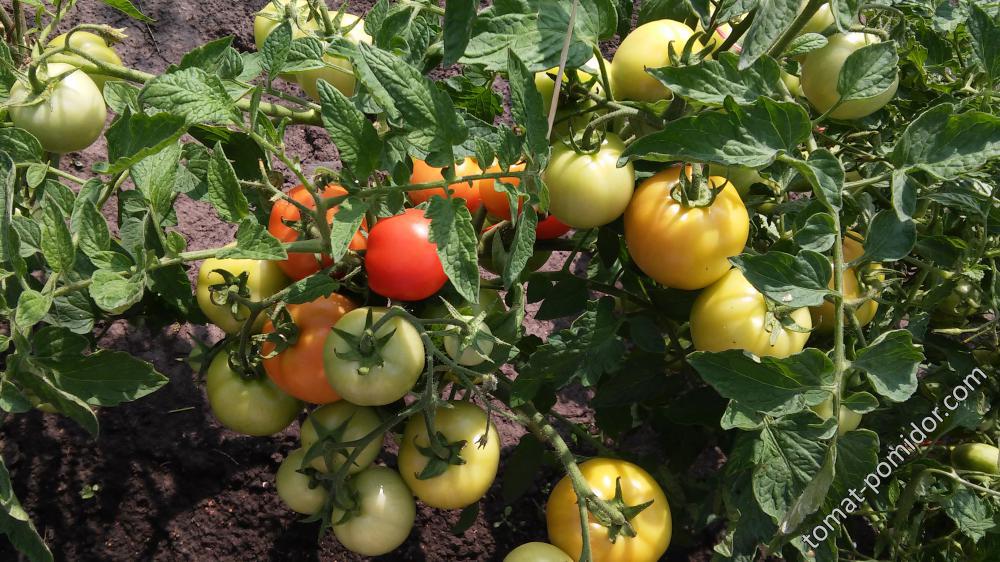
- 🍅 Fruit Characteristics: Round, slightly ribbed, bright red fruits weighing 70-100g (2.5-3.5 oz). They have a thick skin and a very firm structure, which prevents cracking even during heavy rains following a drought.
- 👅 Flavor & Use: Highly debated! Gourmet growers often find the taste ordinary, acidic, or “like a store-bought tomato.” However, it is universally praised as a top-tier processing variety—perfect for whole-fruit canning, pickling, and making juices or salsas.
- 💡 Pro Tips: It is incredibly rugged. It resists Blossom End Rot (BER) and often survives Late Blight simply because it produces its crop so early. Since it is an ultra-early variety, do not start seeds too early indoors—seedlings should only be 40 to 50 days old when transplanted outdoors, otherwise they will flower in their pots.
Description from the seed packet:
A popular ultra-early (78-85 days from germination to fruiting) high-yielding determinate variety, suitable for both open ground and greenhouses. The plant is compact, 40-60 cm (16-24 inches) tall. The first flower truss forms above the 5th-6th leaf, with subsequent trusses every 1-2 leaves. Fruits are round, slightly ribbed, bright red, weighing 70-100g (2.5-3.5 oz). Taste quality is good. After yielding its early crop, the plant regenerates well and continues to fruit until the first frosts. It is a salad variety that is also perfectly suited for whole-fruit canning. Resistant to major diseases and low light conditions.
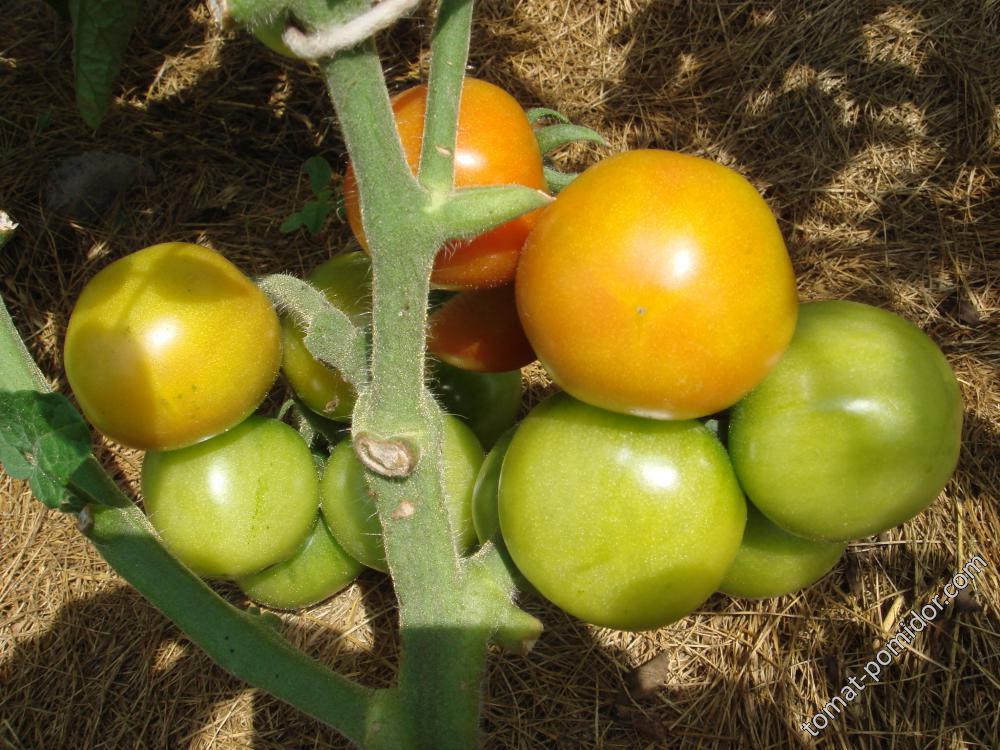
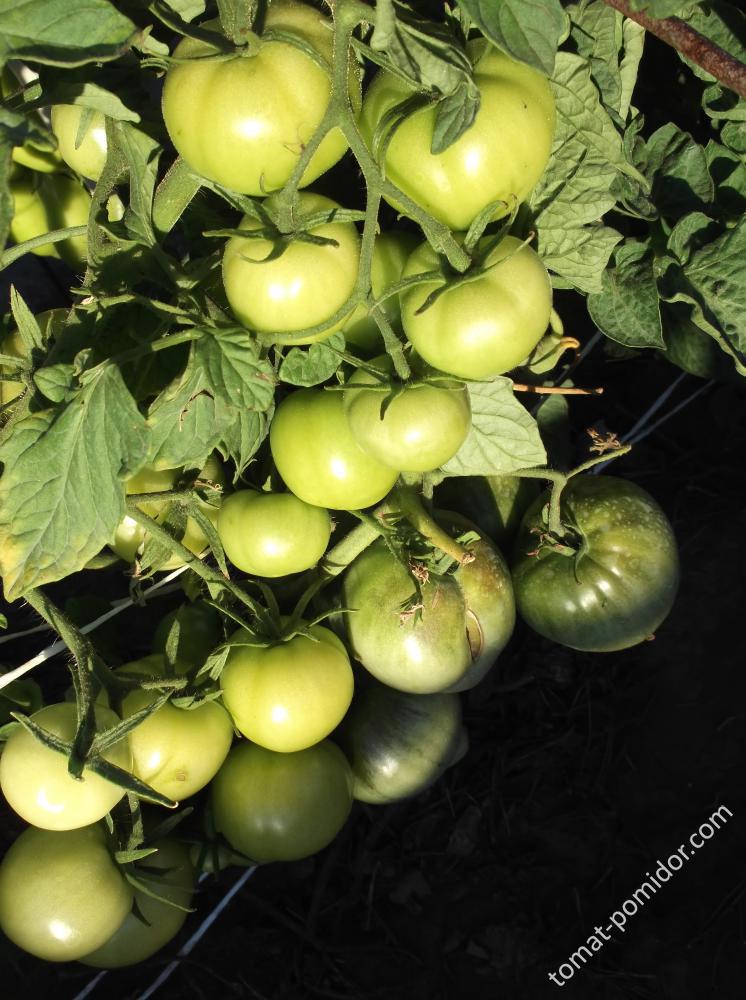
Sanka has earned a permanent residency in my garden due to the beautiful shape of the fruits, high yield, and disease resistance. The fruits are tasty. It is a completely fuss-free variety.
I liked Sanka too. The fruits are dense with a slight tartness. For such an early tomato, it is very decent.
I plant Sanka constantly. Outdoors in open ground, it ripens before anything else. There are always a ton of fruits, it resists bad weather, doesn’t get sick, and is fantastic for canning.
I planted Sanka two years in a row. The first year, I put 4 bushes in their own separate bed, meaning they had full sun from all sides and zero shade. All the bushes were literally showered in tomatoes; I had to tie up the trusses, otherwise they snapped under the weight. The first fruits were about 100g (3.5 oz), the last ones were 70-80g (2.5-3 oz). They ripened first, the taste is simple with a little acidity, but they were great in canning jars.
The second year, I planted them in the middle of a bed surrounded by other tall varieties. The yield was much, much lower due to the shade.
A very worthy variety. If anyone is looking for a tomato from the “plant-and-forget” category, this is exactly it. Mine grew without any staking, just under agricultural fabric without hoops. Sure, pruning is better—but if you forget or don’t have time to remove suckers, nothing terrible happens. It forgives many mistakes.
One year, I was away from my garden for a month. After a long drought (with no watering), heavy rains hit, and many of my other tomatoes cracked. But Sanka’s fruits were perfect—no cracks, no Blossom End Rot, no ugly mutants. You could literally take them to the market and sell them! 😄 And the yield is impressive, especially for an early tomato.
The only downside is that all this comes at the expense of taste. Alas, miracles don’t happen… So it probably won’t suit true tomato gourmets; the taste is roughly like store-bought tomatoes… But for beginners, or simply lazy gardeners, I highly recommend it. A very successful variety.
I planted it for the first time and really liked it, not so much for the taste, but for its appearance and resilience. The fruits are beautiful and withstood all weather tests—heat, cold, and rain. The taste is just so-so, but for pickling/marinades, it will do just fine.
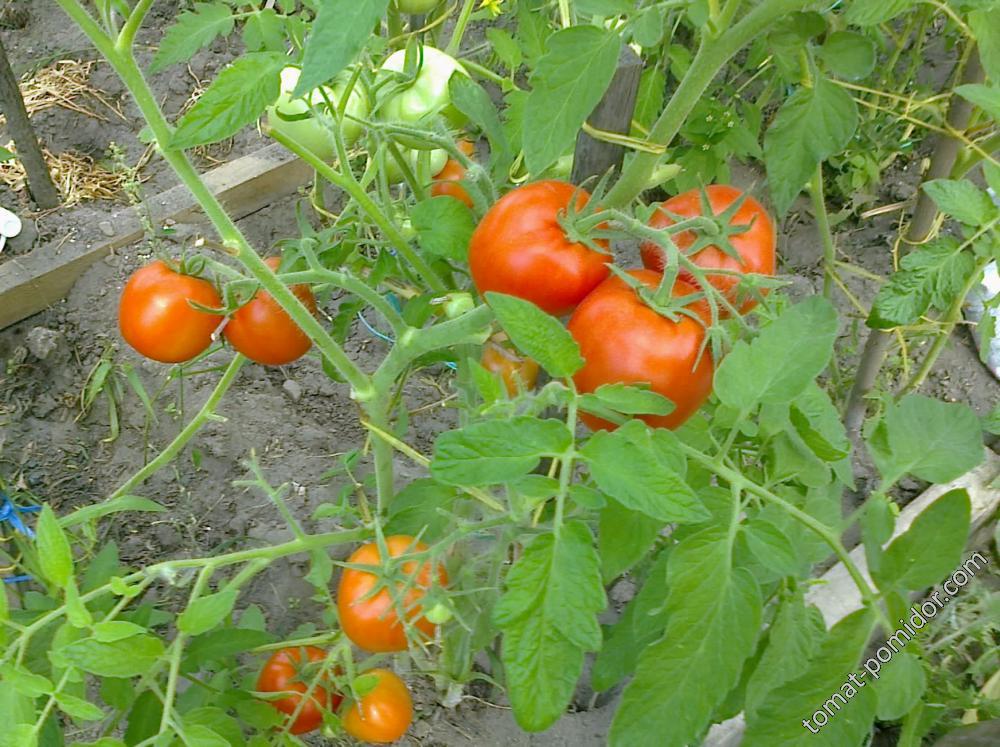
It also has a pretty good shelf life. We were eating them until the end of November. The skin wrinkled a bit, but the taste didn’t deteriorate.
COULD YOU PLEASE TELL ME, WHEN IS THE BEST TIME TO START SEEDS FOR OUTDOOR PLANTING?
Tatyana29 said:
COULD YOU PLEASE TELL ME, WHEN IS THE BEST TIME TO START SEEDS FOR OUTDOOR PLANTING?
I start Sanka seeds at the end of January for a super early harvest. I plant them out in open ground under plastic tunnels.
If it is so ultra-early, then at what *age* should the seedlings be transplanted?
You can’t keep them indoors for 60 days like regular varieties… at 60 days, it will probably be in full bloom. If it produces fruit in 80 days, it doesn’t make sense. Does that mean the seedlings should be planted out when they are only 40 days old?
Andrey_K said:
Does that mean the seedlings should be planted out when they are only 40 days old?
In the south, the standard age for transplanting early determinate seedlings is indeed 40 days.
In the middle latitudes it is 45 days, and further north (without grow lights) it is 50 days.
To speed up ripening, growers in the middle latitudes will prune them. More stems = higher yield but later ripening. Varieties with some acidity like this are necessary to add to tomato juices and sauces to balance out the overly sweet heirloom varieties or bland hybrids.
Did anyone experience Blossom End Rot (BER) with this variety?
Fotinia said:
Did anyone experience Blossom End Rot (BER) with this variety?
Svetlana, Sanka is very heat-resistant. Varieties like this don’t get BER under normal agricultural practices. Just add some dolomite lime to the soil before planting.
I shouldn’t have cursed Sanka earlier; it’s an excellent variety! At first, I didn’t like it because my seedlings were weak and spindly. But once planted, it quickly caught up, and literally within a week, it set so many fruits! It just keeps setting and setting without skipping any trusses. No Blossom End Rot, and it stores for a long time. It is absolutely perfect for juices, canned salsas, and pickling. We decided we will plant it every single year.
Sanka is a completely inedible variety… absolutely.
Even though seedling sellers praised it to me as a great early tomato, there is absolutely zero flavor in it.
Well, I guess I’ll just make a note of that 📝 😉
Andrey_K said:
Sanka is a completely inedible variety… absolutely.
My Sanka had a perfectly normal, classic tomato flavor, especially considering how early it is. The first early salads from it are a massive hit, and later, when the other (better) heirlooms ripen, Sanka goes straight into the canning jars because it never cracks. A totally fuss-free variety.
I gave this variety permanent residency in my outdoor beds a long time ago. Once, I had a bed full of different varieties, and all the tomatoes turned black and died from Late Blight. Sanka stayed green and healthy for another two weeks and was the very last one to get sick.
The taste isn’t great, but for its unpretentiousness, yield, and resistance to Late Blight, it is one of my favorites. It is exactly what you need for winter preserves.
Apparently, not everything labeled “Sanka” is actually Sanka…
I planted 3 Sanka bushes. Two of them were completely inedible! Thick skin, sour juice, and an ungodly amount of seeds. Just terrible. I ripped them out and threw them away along with their ripe tomatoes.
But the 3rd bush! 😋 👍 It was productive and delicious. We ate all the tomatoes and wanted more. I saved seeds from that one.
IrinaVinn said:
But the 3rd bush! 😋 👍 It was productive and delicious…
Irina, I am tormented by vague doubts regarding your “Sanka” 🙁 If you look at the photos on the first page of how Sanka is supposed to look, yours is clearly from a completely different opera 😉
Andrey_K said:
…just throw it away and that’s it.. there are plenty of normal varieties.
I completely agree. It is absolute nothingness—neither in taste nor in yield.
This year I grew 2 Sanka bushes outdoors in open ground. I am very satisfied with the huge yield! The taste is very decent, the tomatoes are firm, not tiny, medium-sized. I am very happy with it and plan to keep growing it. The seeds were bought 100 years ago 😄 and just sat around unused. This year I finally got to them and didn’t regret it for a second!
Hello everyone. Could someone tell me what the thickness of the main stem is near the ground for this variety? Just approximately.
About a centimeter to a centimeter and a half (0.4 – 0.6 inches). It is a good technical (processing/workhorse) variety. Very unpretentious and super productive.