Quick Summary of Sibirskiy Kazak (Siberian Cossack)
- 🌍 Origin: A commercial Russian variety (often sold by the Aelita seed company). The name translates to “Siberian Cossack.”
- 🌿 Plant Habit: Indeterminate. Outdoors in open ground, it usually stops around 1.2–1.3m (4 ft), but in a greenhouse, it easily reaches 1.8m (6 ft). It is a mid-to-late season variety, so growers strongly recommend planting it in a greenhouse in cooler climates.
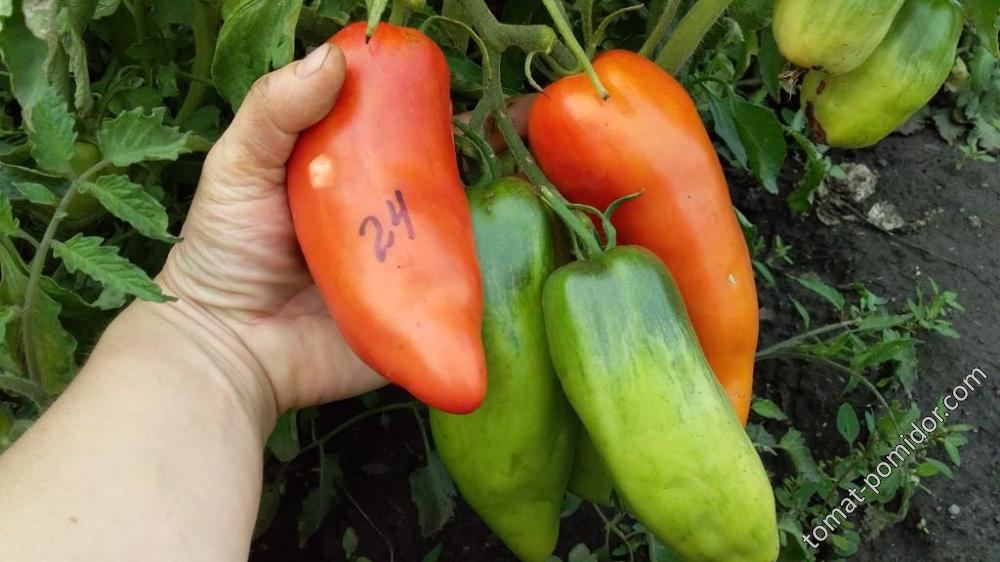
- 🍅 Fruit Characteristics: Large, elongated, pepper-shaped red fruits. Average weight is around 200–250g (7–9 oz). They are incredibly dense, solid, and contain very few seeds and almost no free liquid.
- 👅 Flavor & Use: Like many giant paste tomatoes, opinions on fresh eating are mixed—some find it sweet, while others find it a bit mild/bland. However, it is an absolute superstar for processing: it is perfect for thick sauces, tomato paste, canned salads (it holds its shape when sliced), and dehydrating/sun-drying.
Indeterminate. Grew outdoors in open ground to about 1.30m (4.2 ft), but then I pinched off the top (topped it). Very few seeds. I only grew one bush, but it showed itself in all its glory. My seeds came from Kazakhstan from a collector. The bottom truss turned out to be very impressive. In a greenhouse, it would probably be absolutely gorgeous.
The taste is a bit mild/bland. Not dry, quite juicy. I actually don’t know where to use it other than in salads, but the shape… I just couldn’t calmly walk past this bush without admiring it.


I grew it in 2017. I grew about 5 varieties of this specific type (long, red, sweet paste tomatoes) including Italian Plum, Dragon’s Tooth, Opalka, Sabelka, and Walrus Tusk. They were all roughly the same size, but Siberian Cossack was noticeably larger. The bush was a little over 1.2 meters (4 ft) tall, but didn’t quite reach 1.5m (5 ft). The fruits are meaty and sweet. It’s a great variety for both salads and processing.
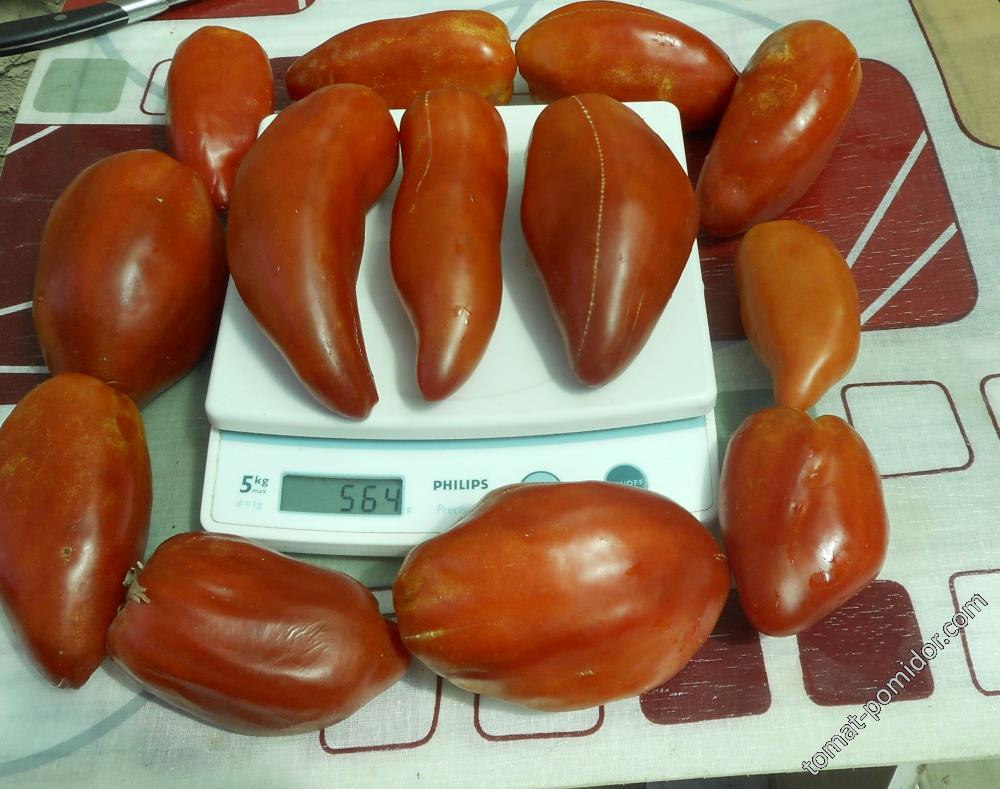
I planted Cossack this year in the greenhouse. Seeds were from Aelita. I liked it very much—it had a nice sweetness, not bland at all, had very few seeds, and was highly productive. I will definitely repeat it.
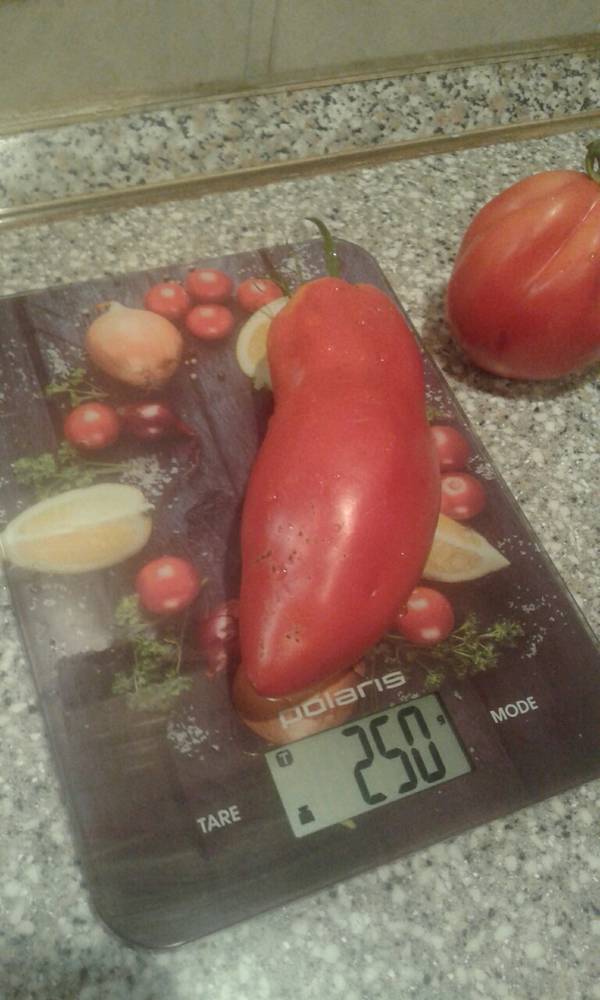
It was extremely similar to the variety American Long, but it started setting fruit and ripening earlier than the American one. It’s very possible they are genetic twins/duplicates.
A productive variety.
.JPG.dfb8faf96f3d59020592a41ad715c164.JPG)
.JPG.64a251239223cf664398e91cd5a21609.JPG)
Trying it for the second year. Yes, they are beautiful, but what on earth are you supposed to do with them?
They are too big for whole-fruit canning, and eating them fresh is a very mediocre experience flavor-wise. Plus, they are one of the latest-ripening varieties I have.
It didn’t cross the 0.5kg (1.1 lbs) harvest threshold until August 24th. I pruned it to 4 stems, height was 1.8m (6 ft). Total yield was 4.05 kg (8.9 lbs) or 37 fruits. The largest fruit was 253g (9 oz). Last year it was slightly more productive (4.8 kg / 10.5 lbs).
I think this is strictly a greenhouse variety. Mine was very tasty and sweet. It is fantastic for making canned chopped salads—it is so dense that it doesn’t turn into mush in the jars when sliced.
I liked this variety. Grew it in the greenhouse; it was productive, meaty, and dense. I used my entire harvest for dehydrating/sun-drying. It would also be perfect for juices and tomato paste. I planted 3 bushes of it this year.
Evgenia said:
I liked this variety. Grew it in the greenhouse; it was productive, meaty, and dense.
Did Siberian Cossack also turn out to be late-season for you? How were the ripening times in your conditions?
Sergey said:
Did Siberian Cossack also turn out to be late-season for you?
It is definitely not early; it’s a solid mid-season variety. Outdoors in open ground, it would undoubtedly be too late for our climate.