Quick Summary of Stan Ley
- 🌍 Origin: A bit of a mystery! Cultivated and popularized by Russian seed collector Alexey Kulik, who lists its origin as the USA. The name is likely a transliteration of “Stan Ley” (or Stan Lee).
- 🌿 Plant Habit: Indeterminate, but on the shorter side. Outdoors in open ground, it reaches about 1.3m to 1.5m (4.2 to 5 ft). In a greenhouse, it can reach up to 1.8m (6 ft). It is a vigorous plant that responds well to being pruned to 2 or 3 stems. Note: The main stem often naturally forks/splits on its own.
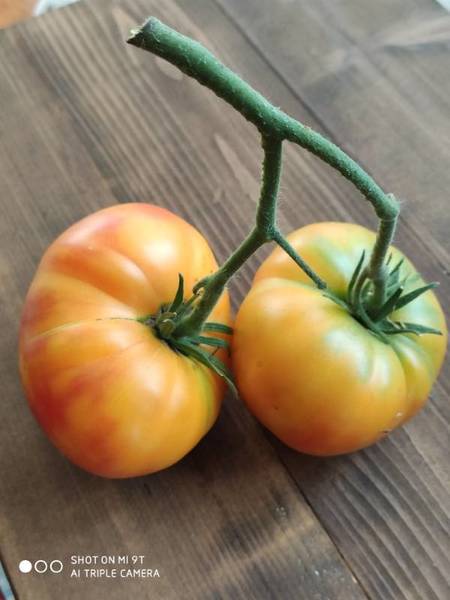
- 🍅 Fruit Characteristics: Large, oblate (flat-round) beefsteaks with slight ribbing. They are stunning bicolors: yellow-orange with dense golden and red marbling inside and out. Average weight is 250–300g (9–10.5 oz), though the breeder claims it can reach up to 800g (1.7 lbs).
- 👅 Flavor & Texture: Exceptional. Consistently rated by growers as one of the sweetest, most perfectly balanced bicolors they have ever grown. It has a distinct, delicate fruity flavor and remains sweet regardless of the weather.
- 💡 Pro Tips: Like many yellow bicolors, it can be slightly difficult to tell exactly when it is fully ripe. Look for a softening of the flesh and the strong emergence of the red/pink blush on the blossom end.
A mid-season indeterminate variety. It grew outdoors in open ground, reaching up to 1.3 meters (4.2 ft) tall. The fruits weighed around 250-300 grams (9-10.5 oz), although the seed provider stated they could reach 500-800g. However, my bush grew in a very unfortunate spot, practically in the darkest corner of the garden, and sharing a planting hole with another variety, so it didn’t get to show its full potential. Nevertheless, the uncomfortable conditions did not affect its taste at all 👍
Out of the roughly 20 bicolors I grew this year, this variety was the absolute tastiest, most balanced, and sweetest. It didn’t lose its flavor at any point during the summer 😋👍
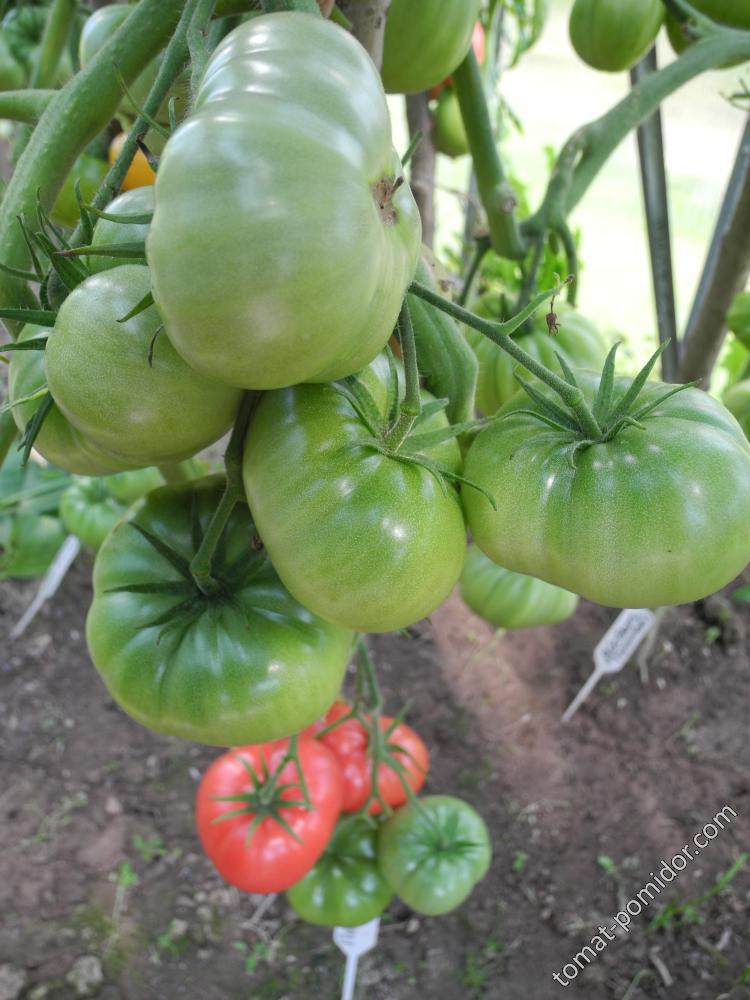
The fruits are oblate (flat-round), slightly ribbed, and meaty. This variety has become a favorite.
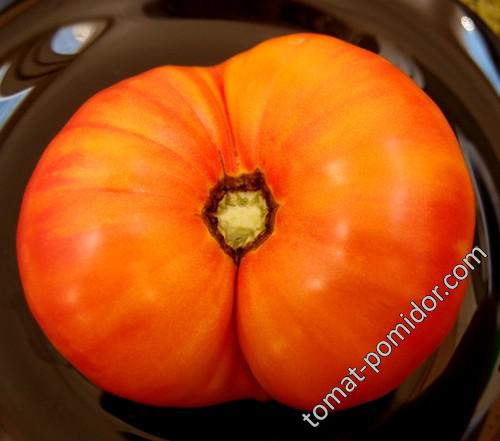
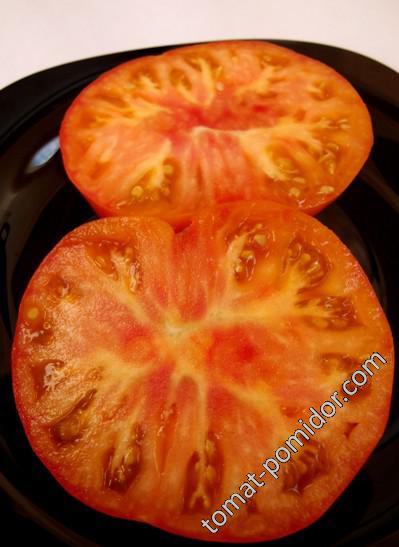
How beautiful, and what an interesting name 📝
The name is Stanley, a male name. Split in two, “Stan Ley”, it almost sounds Chinese. Elena, where did this tomato come from?
Oh, I don’t know about the name. To be honest, I tried to search for this variety using the English spelling, but I couldn’t find anything.
The seeds are from Alexey Kulik, and he lists the origin as the USA.
Here is the description from his catalog:
“Stan Ley (USA).
Mid-season. Height 1.5m (5 ft). Weight 500-800g. Oblate.
Vigorous. Yellowish with thick yellow marbling, slightly ribbed. Unsurpassed juice, beautiful and sweet. Very productive.”
Season 2015. The absolute sweetest Bicolor of this year:
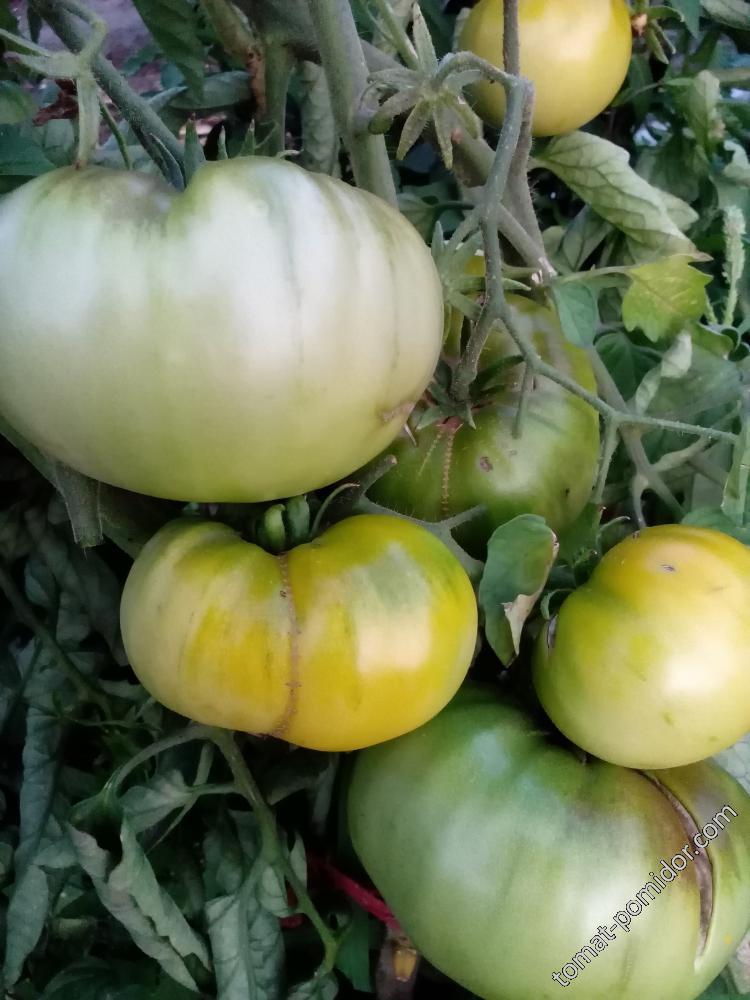
Could you advise on the best way to prune and train this variety?
I grew 2 bushes outdoors in open ground and two under a polycarbonate roof. Outdoors, it wasn’t very tall, about 1.30 meters (4.2 ft). It ripened 3 trusses very uniformly. I didn’t keep a close eye on them and they got a bit overripe, turning almost completely red—you could only tell it was a bicolor when you sliced it open.
Under the roof, especially with a shade cloth on top, they were much lighter in color. In the photo, the ones that are red on the inside are from the open ground.
Sweet and delicious. Outdoors I pruned it to 1 stem, and in the greenhouse to 2 and 3 stems. For me, 3 stems was optimal.
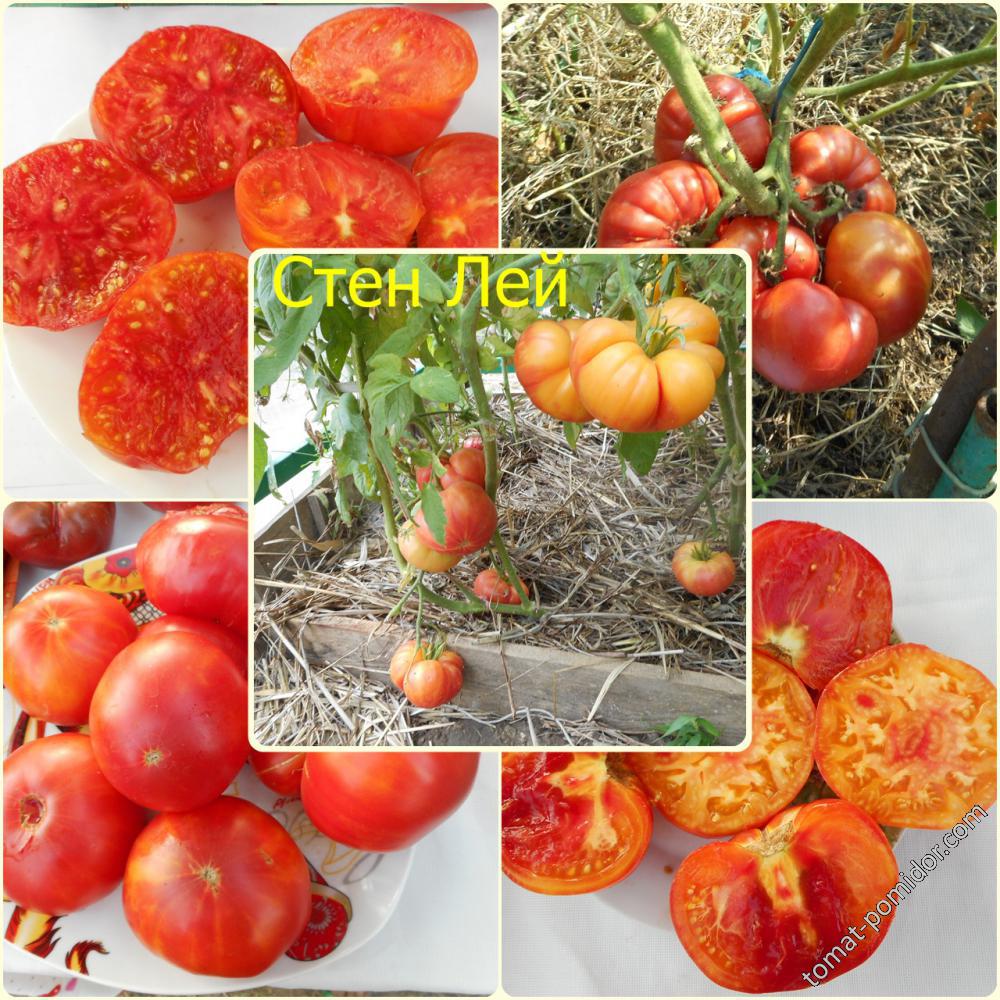
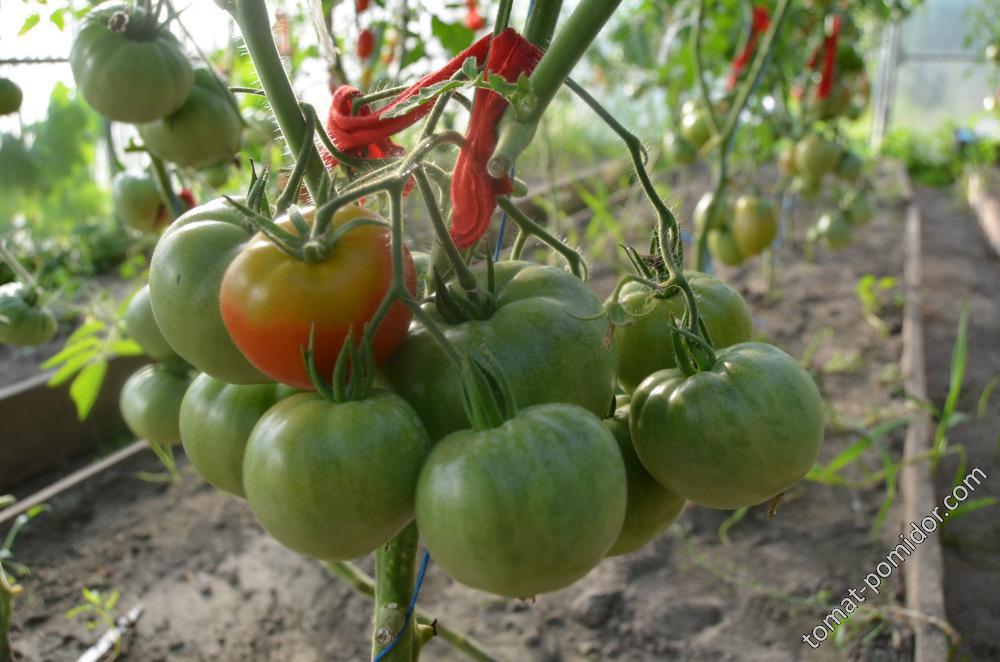
I grew the Stan Ley tomato variety in a polycarbonate greenhouse. Seeds from A.I. Kulik. The bush ended up with 3 stems (because the main stem naturally forked/divided on its own). It was 1.80m (6 ft) tall, sturdy, and strong. The variety is productive. The fruits are very beautiful, tasty, meaty, and sweet. The average fruit weight was 250-300g (9-10.5 oz).
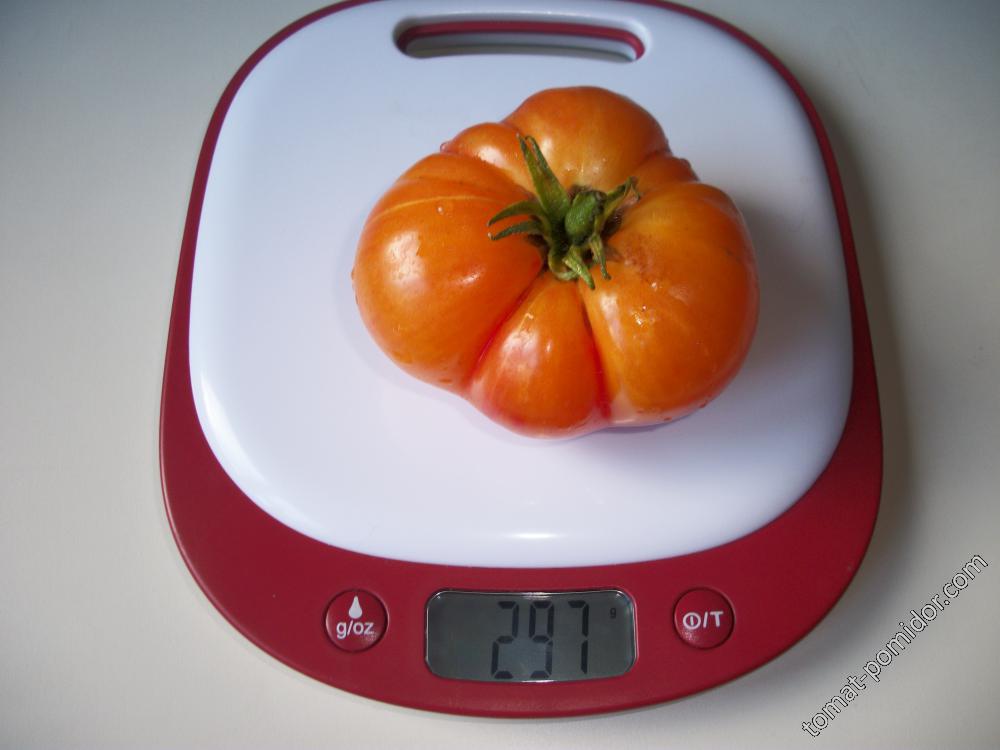
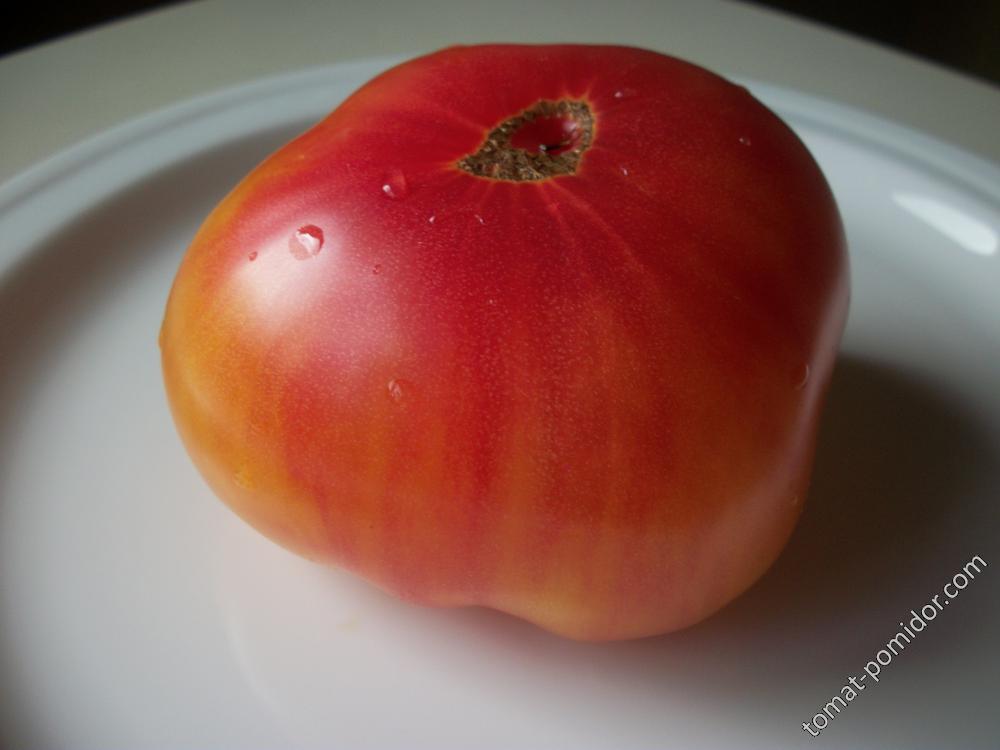
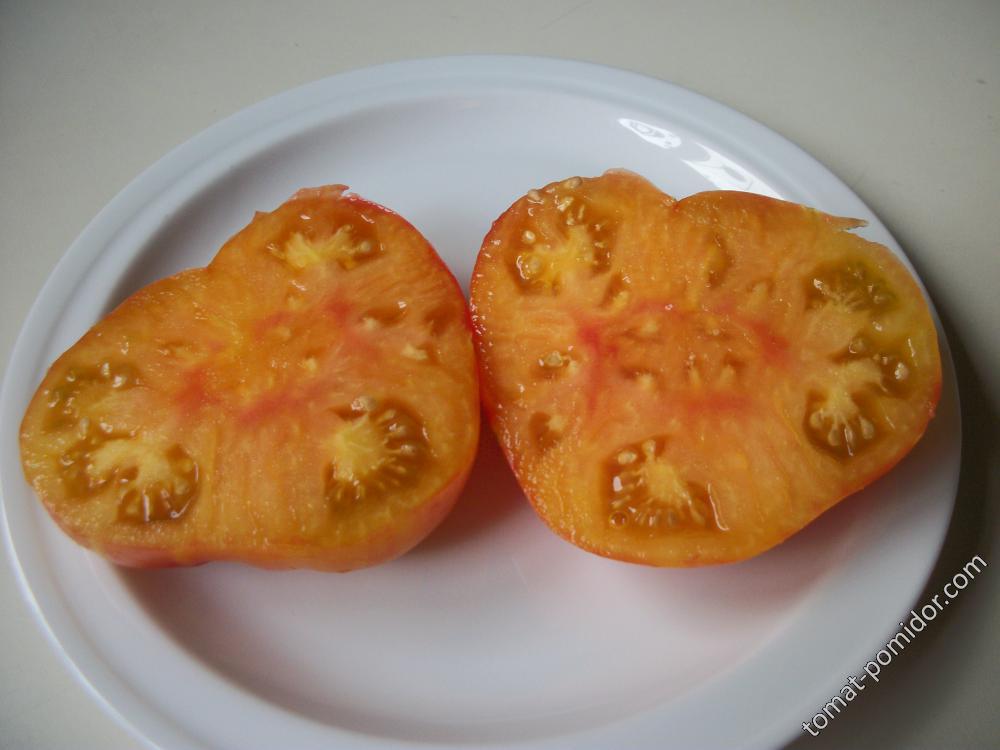
A tasty, beautiful variety. I pruned it to 2-3 stems. Yield is good. Grew in a greenhouse, height was 1.6m (5.2 ft).
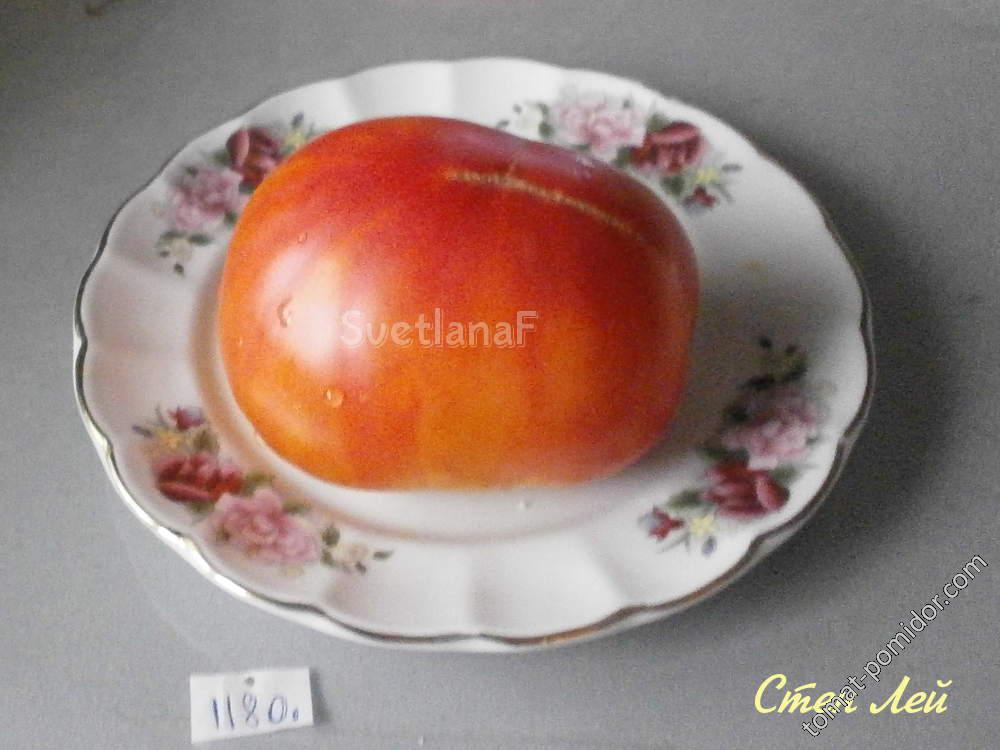
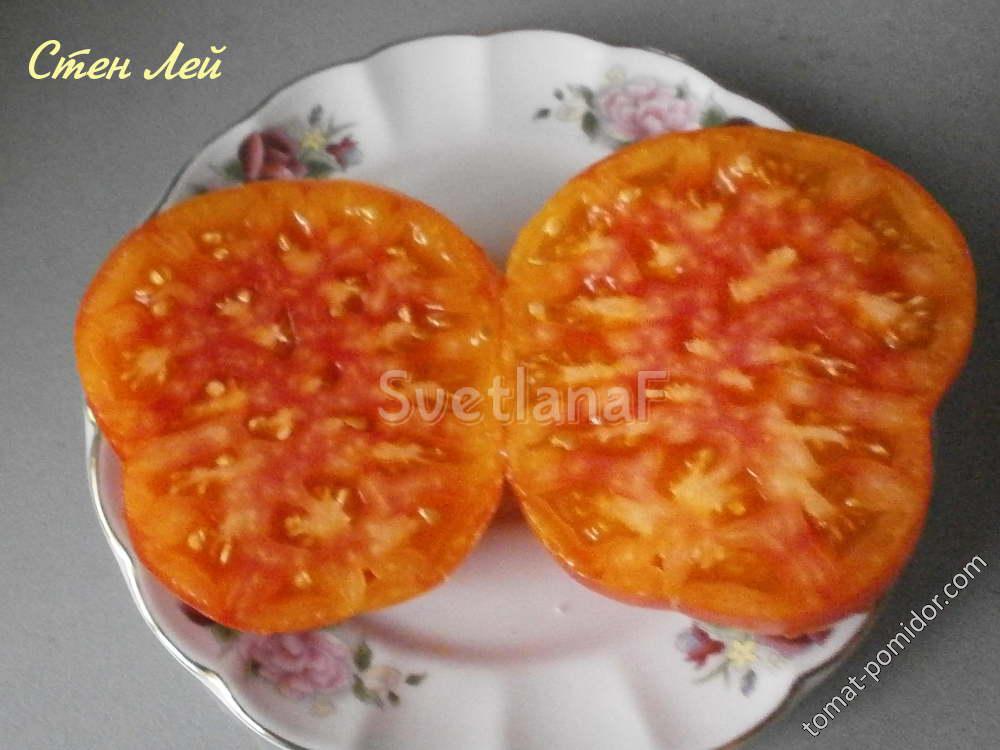
I grew 1 bush pruned to 2 stems in a polycarbonate greenhouse right in the baking sun and a draft. 15 medium-sized fruits fully ripened. It set fruit well on the bottom and middle tiers. Higher up, I picked a few more green ones. The ones that vine-ripened had an extraordinary taste! I haven’t found a better bicolor yet (and I’ve grown about 10 varieties).
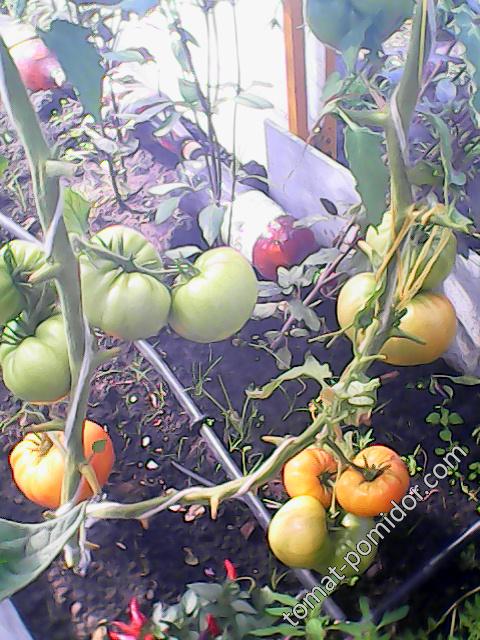
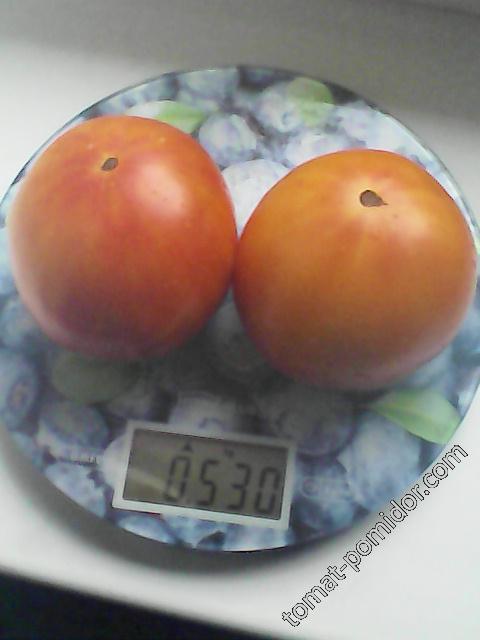
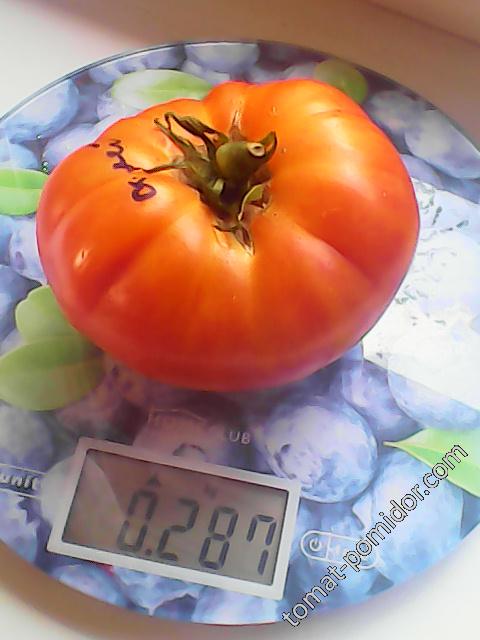
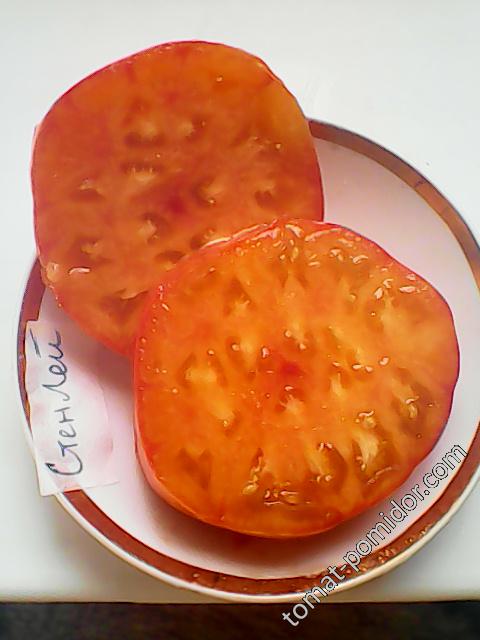
My Stan Ley in the greenhouse was about 1.5 meters (5 ft) tall, productive, mid-season ripening. The fruits are large, yellow-orange, and oblate. Very tasty, sweet, with a fruity aftertaste.
I grew Stan Ley this past summer. Grew outdoors in open ground. Height was about 1.3m (4.2 ft). Like all tomatoes this past summer, it ended up being late. There weren’t many fruits, but they were large and tasty.
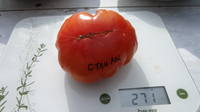
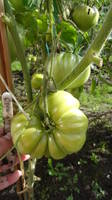
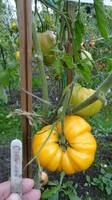
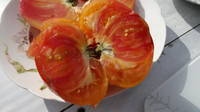
One of my absolute favorite bicolors.
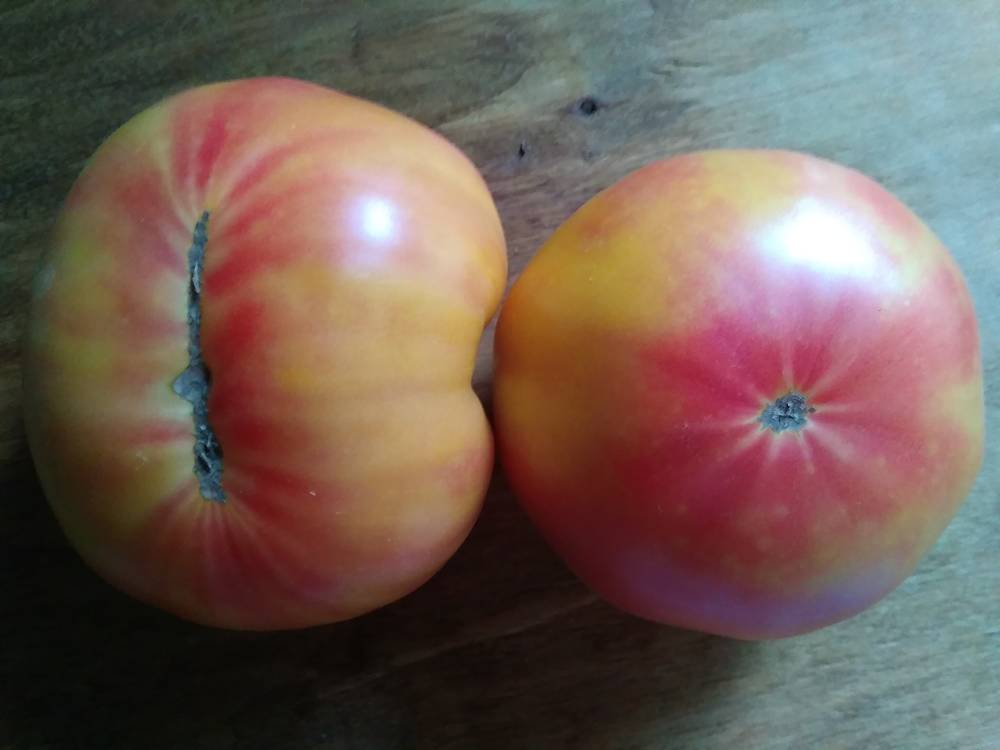
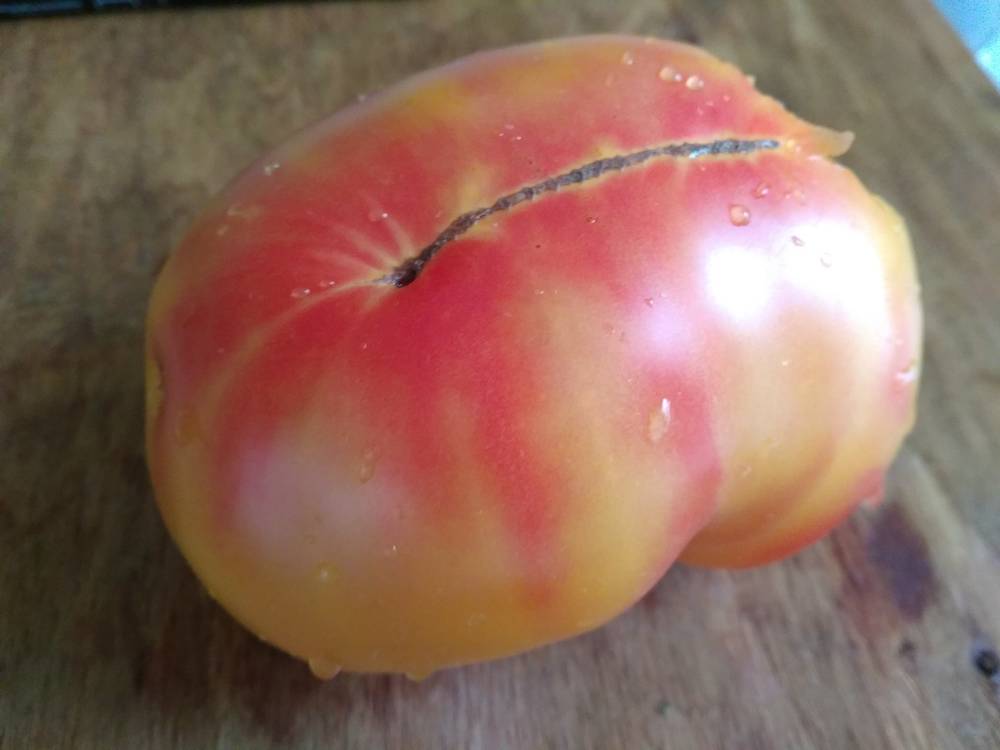
Grew it in the greenhouse in 2019. It was in a bad spot, yet it performed very well. I absolutely loved the taste. The fruity flavor was very noticeable. In terms of taste, it is in 3rd place for me behind Harvard Square and Wolf Zossi. Bush height was about 1.5 meters (5 ft), yield was 2.2 kg (4.8 lbs) per bush, average fruit weight up to 200g (7 oz). At first, it was hard to tell when the fruit was completely ripe, but then I got the hang of it.
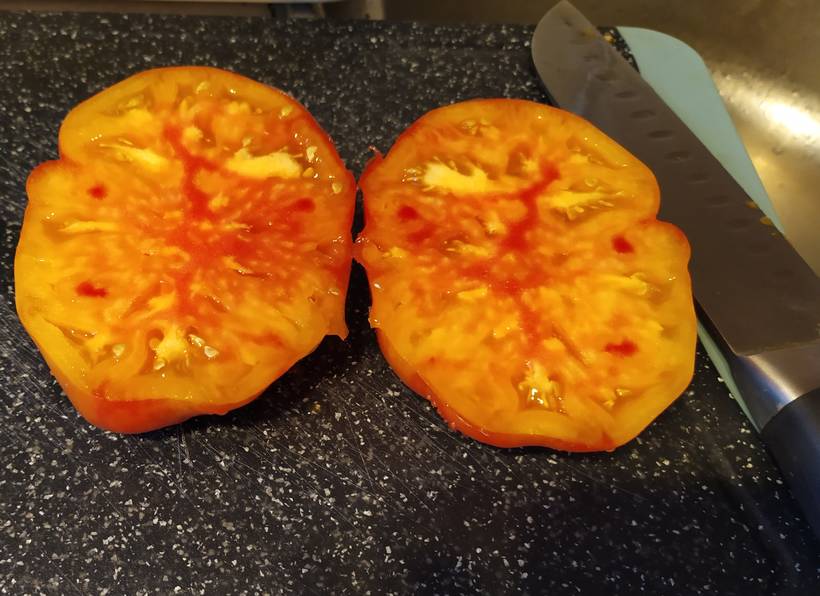
Last year (2019), these tomatoes gave me a few different types of fruits: some had thin walls and lots of seeds, and were irregularly shaped. While the perfectly shaped fruits were much meatier. Oddly enough, the taste of these fruits differed. The irregularly shaped fruits had a more delicate, fruity taste, and more delicate colors when sliced open. This year I am trying the irregularly shaped ones.
And here is the beauty that ripened for me just recently. Simply insanely delicious. Neither overripe nor underripe.
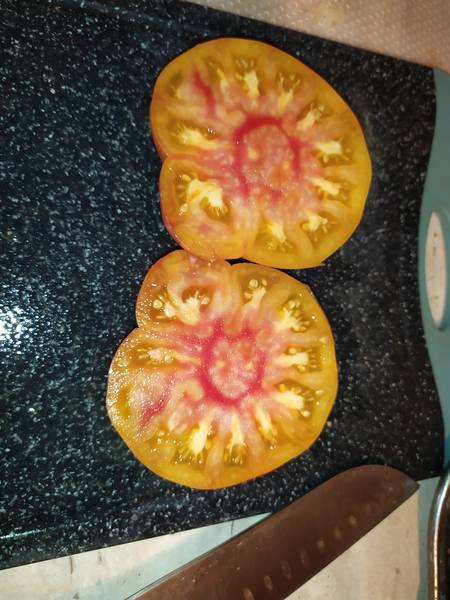
Grew it in a polycarbonate greenhouse. Yield was average, fruit weight around 200-250g (7-9 oz). Tasty and beautiful. I liked it.
Seeds were from Lena. Thank you!