📌 Quick Summary (TL;DR): Zelenushka F1
- 🌍 Origin: A commercial F1 hybrid from the Russian seed company Ilyinichna. The name roughly translates to “Little Green One” or “Greenfinch”.
- 🌿 Plant Habit: Billed as determinate (bush), but forum members report it behaves more like an aggressive indeterminate in a greenhouse, easily shooting past 6.5 feet (2 m). Plants are slightly leggy with sparse foliage.
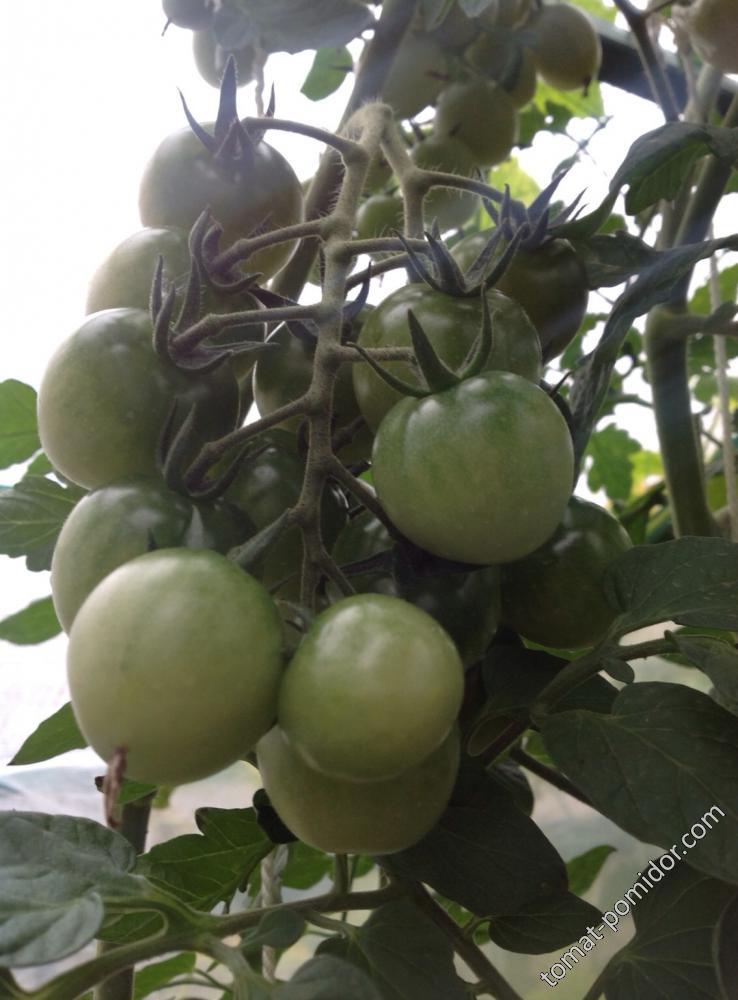
- 🍅 Fruit Characteristics: Small cherry tomatoes, about 1 to 1.2 inches (2.5-3 cm) across. They start deep green and mature to a yellowish amber-green “gooseberry” color. Very firm with thick skin, giving them an incredible shelf life.
- 👅 Flavor: Tart and punchy rather than sweet. Better suited for processing, canning, and freezing than fresh snacking.
Here is the description straight from the breeder’s website (Ilyinichna seeds):
F1 Zelenushka (cherry) TF
This hybrid features a unique amber-green color and highly dense flesh, making it ideal for long-term storage and shipping. Recommended for all types of greenhouse cultivation and for open ground in southern zones. A determinate, mid-season hybrid with fantastic fruit set. Plants are medium-tall, somewhat leggy, with sparse foliage. Trusses are single (rarely double), quite compact, and it doesn’t drop blossoms. Each truss holds 10 to 15 small, round cherry tomatoes, about 1 to 1.2 inches (2.5-3 cm) in diameter. Fruits are smooth, glossy, and highly uniform in shape. At the unripe stage, they are dark green with a dark shoulder that disappears as they ripen. At full botanical maturity, they turn a greenish-amber with an orange tint (resembling a gooseberry). Very firm, salad-type tomato. Great for harvesting whole trusses, long-term storage, and transport. Shows good heat and cold tolerance. Resistant to TMV and Fusarium wilt (race 1).
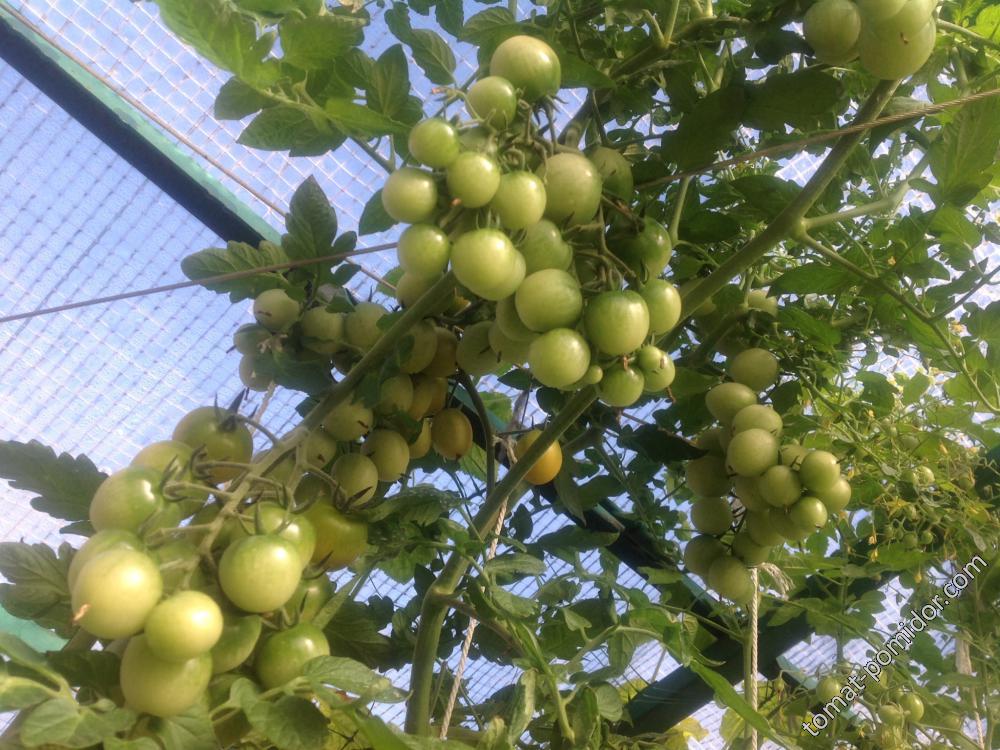
I’ve been growing this hybrid in my hoop house for several years now, and I’m a big fan. It’s supposed to be determinate, but for me, it always pushes past 3.3 feet (1 m), and usually gets even taller. The trusses are super tight and compact, they literally look like bunches of grapes. The color fits the grape vibe perfectly, too. 🙂
The skin is sturdy but not overly tough. Since they are so dense, they are excellent for canning, freezing, and processing, but honestly, they are a bit too tart for fresh salads. Shelf life is amazing, especially if you pick them at the breaker stage. It’s a really solid workhorse hybrid, definitely keeping its permanent spot on my grow list.
Last year, this variety went absolutely rogue on me and shot right up to the roof of the greenhouse (which is over 6.5 feet / 2 m tall). Maybe my raised beds were just too well-amended, or maybe the hybrid genetics showed some instability. Also, last year I let the tomatoes hang on the vine until they were dead ripe, and my Zelenushka actually started turning red. It wasn’t a classic bright tomato red, more of a muted blush, but there is zero mention of this in the breeder’s description. I even double-checked their website. Maybe the red blush only shows up when they sit on the vine forever, or during long winter storage in a box, kind of like those Long Keeper varieties.
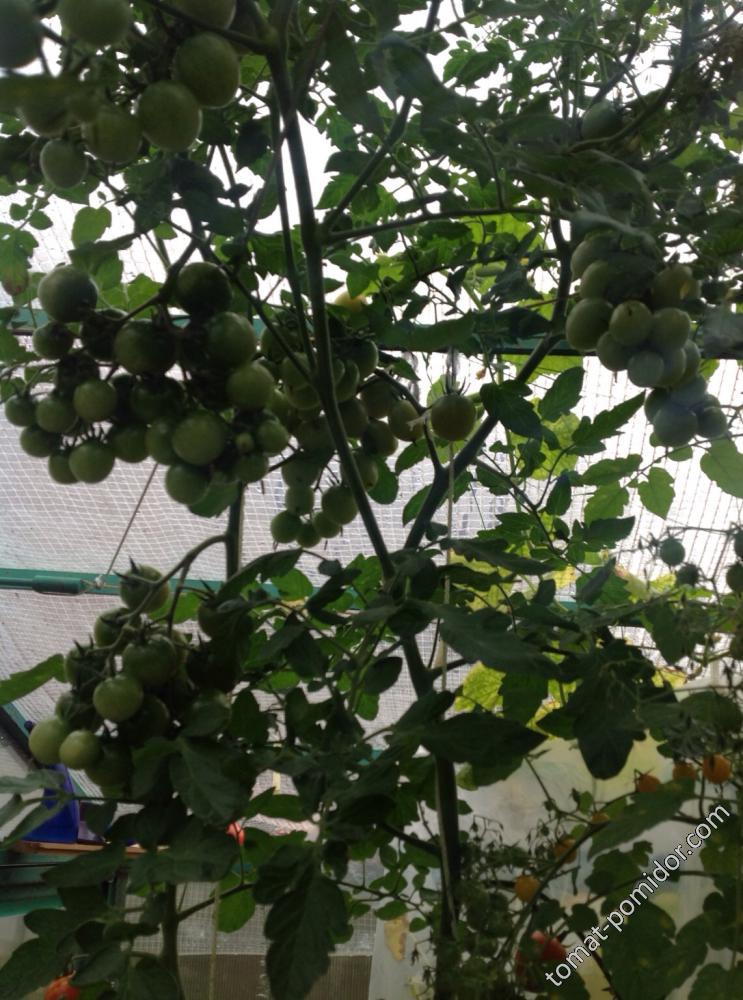
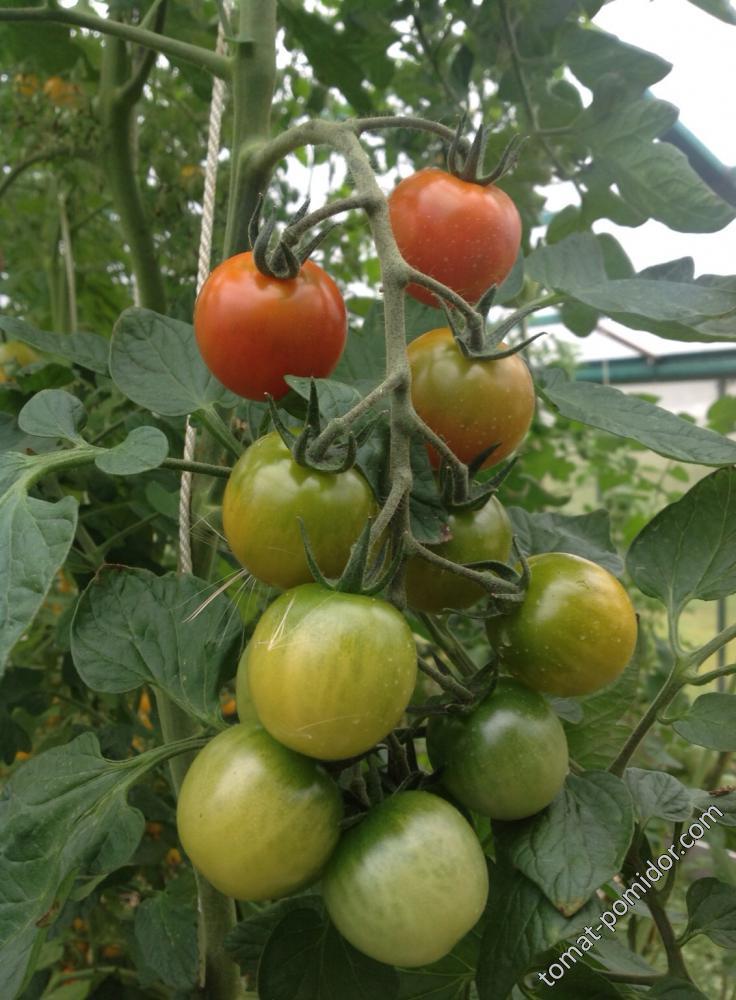
Natalya, it sounds like you might have just gotten some mixed-up seed or a cross last year, since both the growth habit and the color changed on you. 🙂
The outward appearance of the fruit looked exactly like the photos on the Ilyinichna website, but yeah, the growth habit was definitely NOT a bush type. 🙂 They started blushing red very late, after hanging on the plant for a long time. I don’t think it was crossed seed, I’m leaning more towards genetic segregation, a mutation, or something along those lines. The Ilyinichna company doesn’t sell anything else that looks like this, so it couldn’t be a simple seed mix-up.
In this thread, Natalya mentions that Zelenushka has sturdy skin and is “excellent for canning.” In the US, cherry tomatoes are almost exclusively grown for fresh snacking, so we typically prefer thin, tender skins. However, whole-canned marinated tomatoes are a massive part of Eastern European food culture. For this process (which involves pouring boiling hot brine over whole fruit in jars), growers specifically look for firm tomatoes with thick, tough skin so they don’t split, crack, or turn to mush during processing.