📌 Quick Summary (TL;DR): Berberana F1
- 🌍 Origin: A highly disease-resistant commercial F1 hybrid, popular in Europe and Russia for greenhouse production.
- 🌿 Plant Habit: Indeterminate (tall), but with short internodes, keeping the plant compact and manageable without having to constantly reach for the greenhouse ceiling. Produces strong, bushy dark green foliage.
- 🛡️ Disease Resistance: Highly resistant to nematodes, Verticillium wilt, Fusarium wilt, Leaf Mold (Cladosporium), and Tomato Mosaic Virus (TMV). Growers confirm its excellent resistance to leaf mold in humid greenhouses.
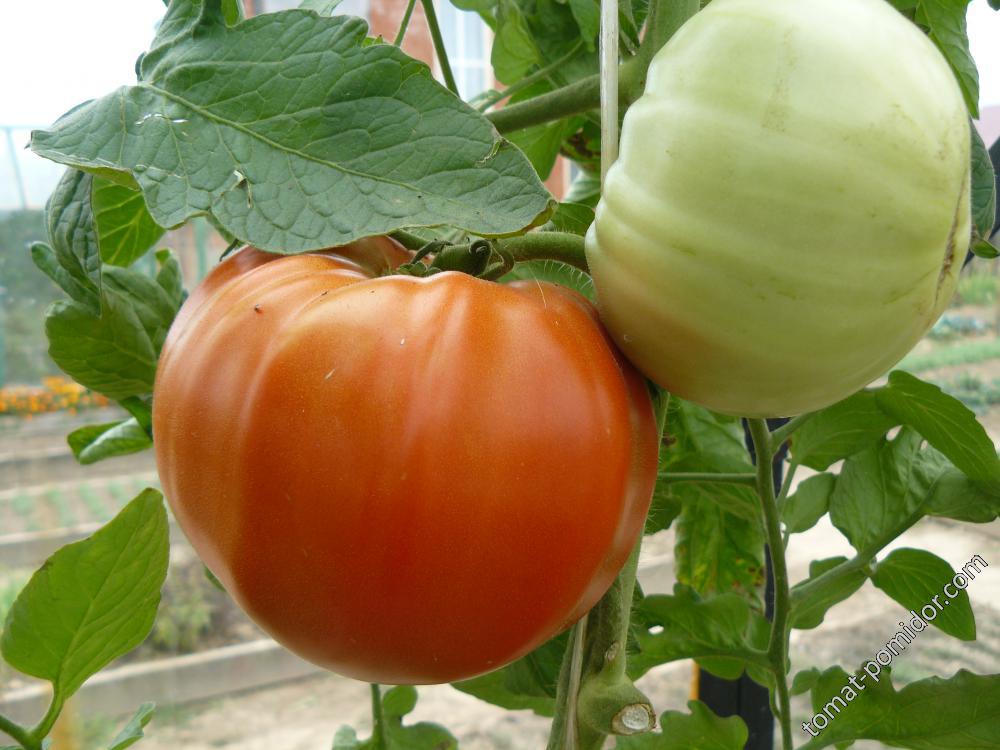
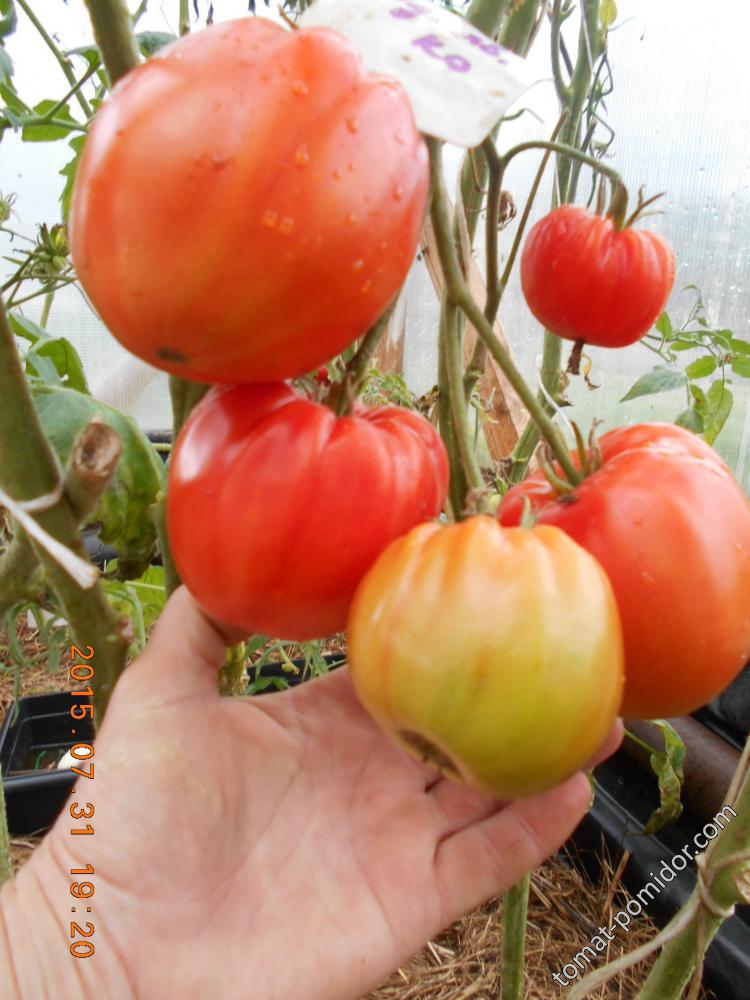
- 🍅 Fruit Characteristics: Perfectly uniform, bright red oblate slicers with absolutely no cracking or blemishes. Average weight is around 5-7 oz (135-200g), with some reaching up to 10.5 oz (300g). Extremely long shelf life.
- 👅 Flavor & Harvesting Tip (IMPORTANT!): This hybrid reaches “market maturity” (turns completely red) weeks before it is actually ripe inside. If picked as soon as it turns red, it will be hard, plastic-like, and tasteless. You must leave it on the vine for at least 10-14 days after it colors up. Once fully vine-ripened, it develops a surprisingly sweet, rich, and delicious flavor with a dense, meaty texture.
Description from the State Register:
Early maturing. Indeterminate plant. Leaves are large and green. Simple inflorescence. The fruit is oblate, moderately ribbed, and firm. Unripe color is green; ripe color is red. Contains 4-6 locules. Fruit weight is 170-200 g (6-7 oz). Excellent taste. Resistant to nematodes, Verticillium wilt, Fusarium wilt, Leaf mold (Cladosporium), and TMV.
Photo credit: vasilevna
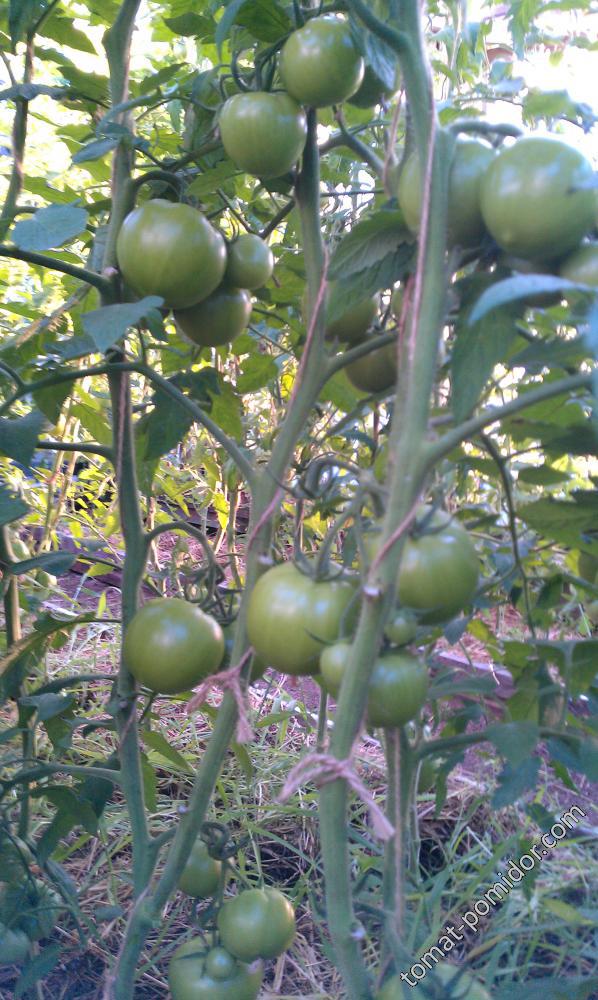
It had 3-4 tomatoes per truss, set fruit perfectly without dropping any blossoms in the heat. After the 3rd truss, one of the main stems terminated itself (I pruned it to 2 main stems). The taste is typical for a hybrid. 😉😉 Turned out to be a good “utility” tomato with large fruits, but the yield was average for me.
An excellent hybrid! It is genuinely resistant to leaf mold (Cladosporium)! Mid-early season. I really liked its pleasant, sweet flavor, provided you let the fully red fruit hang on the vine for an extra week before picking.
An excellent hybrid! Thanks to Zulfiya, who told me to wait longer to pick them after I posted an angry review. The first one I ate, I practically spit it out—it was hard, plastic, and tasted like flavorless garbage! It turns out that Berberana colors up very early, but after turning red, it needs to hang on the vine to ripen internally for another 2 weeks minimum (if not 3, depending on conditions). So, you have to determine the actual ripeness experimentally on your own plants.
But wow, a properly ripened one wasn’t just “pleasant and sweet,” it was absolutely delicious! Genuinely sweet, rich, with a proper old-school tomato flavor and a firm texture. Just incredibly tasty! I’m very spoiled when it comes to tomatoes: our climate is dry, hot, with tons of sunshine, I use drip irrigation in the aisles, and my tomatoes ripen fully on the vine, so they are usually very tasty. But this hybrid truly surprised my picky soul. It made it into my Top 10 for 2019, right alongside the heirlooms.
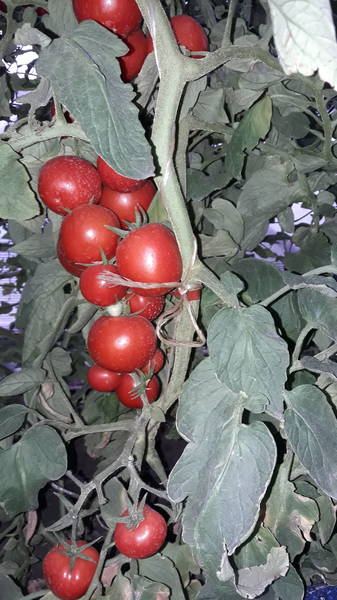
It was very productive, as a hybrid should be. The fruits are small-to-medium, but the plant is absolutely loaded with trusses. It set fruit perfectly in both heat and cold, didn’t get sick, and has short internodes, so I didn’t have to climb to the ceiling to tie it up. The plants are vigorous with dark green, sprawling leaves. The trusses themselves are short, so they don’t kink or break. And the fruits are gorgeous: flawless in shape, bright red, with excellent shelf life. But again, you MUST pick them when they are truly ripe inside! Don’t counter-ripen them after they color up; pick them by taste. Otherwise, the flavor will be much worse, even though they might last longer on the counter. Also, like all hybrids, it needs to be fed heavily.
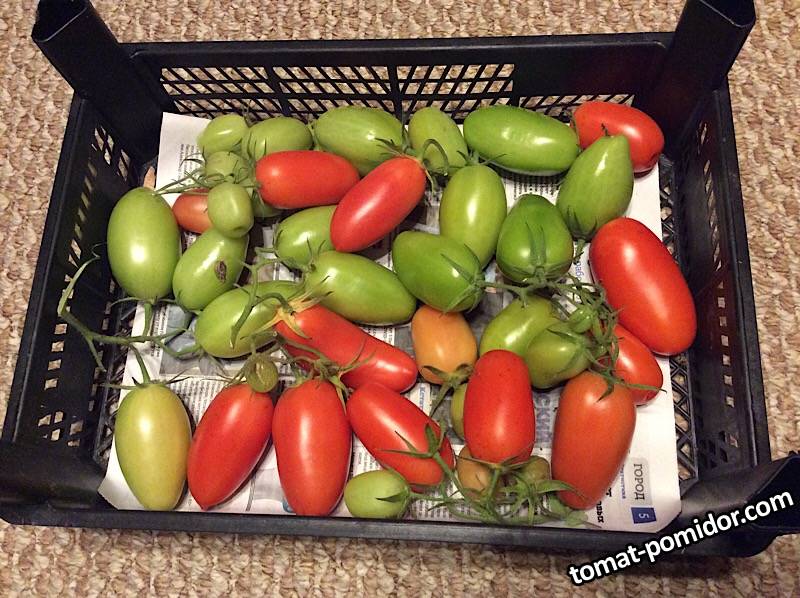
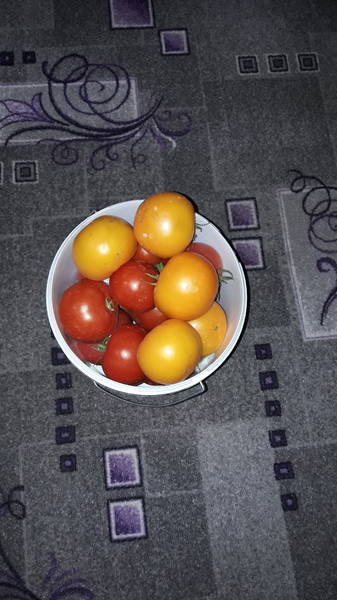
The photos are from July 26th. The largest one on the scale is 10.4 oz (294g). The rest are smaller. The tomatoes are firm and meaty. This is what the trusses look like—they form close to each other. The second or third truss has already been mostly picked. In the bucket, there is Berberana F1 and Golden Sun F1 (the yellow-orange ones). They are beautiful, of course: the fruits are very smooth, uniform, with absolutely no defects, cracking, green shoulders, or misshapen bottoms… The best qualities of a commercial hybrid.

I planted it once in ’18. It yielded pretty well, just under 11 lbs (5 kg) per plant, and the average weight was about 4.7 oz (135g). But they were bulletproof and completely tasteless, so I never grew it again.
Feniks said:
But they were bulletproof and completely tasteless, so I never grew it again.
They are tasteless until they hang on the vine long enough. I fell into that same trap. This hybrid colors up EARLY, way before it builds up all its natural sugars. This is known as “market maturity”—it’s designed so commercial growers can see when to pick it and ship it to stores. It was specifically bred this way so it looks pretty on the shelf and survives the journey to the consumer. These things can sometimes sit in storage for weeks.
But for a home gardener, you are much better off leaving a fully red tomato to continue ripening on the vine for about two weeks (eventually you just develop a gut feeling for exactly when to pick it, it gets a little softer to the touch), or at least 10 days. It’s tough sometimes because the tomato is so bright and alluring, it practically begs to be picked and you think it’s ready. But it really needs that extra time. If you pick it early and counter-ripen it, the taste is much worse. But a Berberana that has properly ripened ON THE VINE is surprisingly delicious—it is very sweet with this dense, “chewy” texture… firm, but not hard. My mom absolutely loved it.
Nowadays, though, it’s honestly easier to just plant Sarra F1—it’s even prettier, tastes just as good, and you don’t have to play guessing games about whether it’s actually ripe inside or not.