🍅 Quick take: A tall, indeterminate Siberian heirloom producing sweet, elongated barrel-shaped (or “glass”-shaped) orange fruits. Excellent for greenhouse growing and very comparable to Golden Königsberg. Full summary ↓
Growers’ Notes and Photos (USDA Zones 4-6)
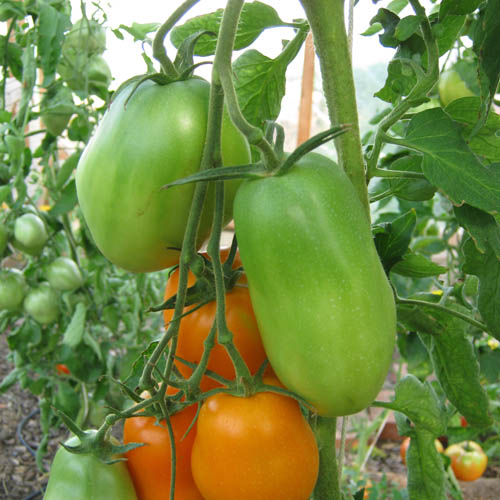
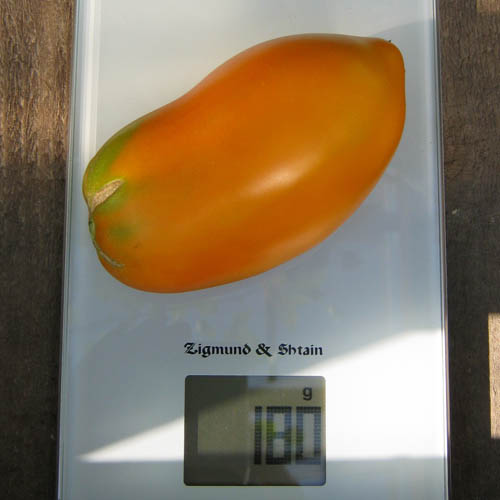
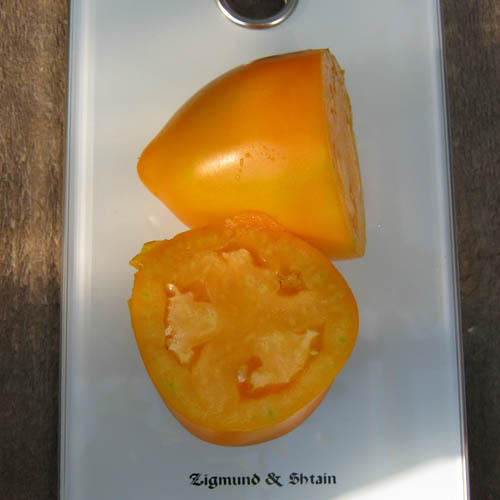
A local heirloom from Minusinsk (*see Editor’s Note*). Indet, reaches 5.5-6.2 feet (1.7-1.9 m) tall in the greenhouse. The fruits have an elongated barrel shape, they are very sweet, and weigh 5.3-10.6 oz (150-300 g).
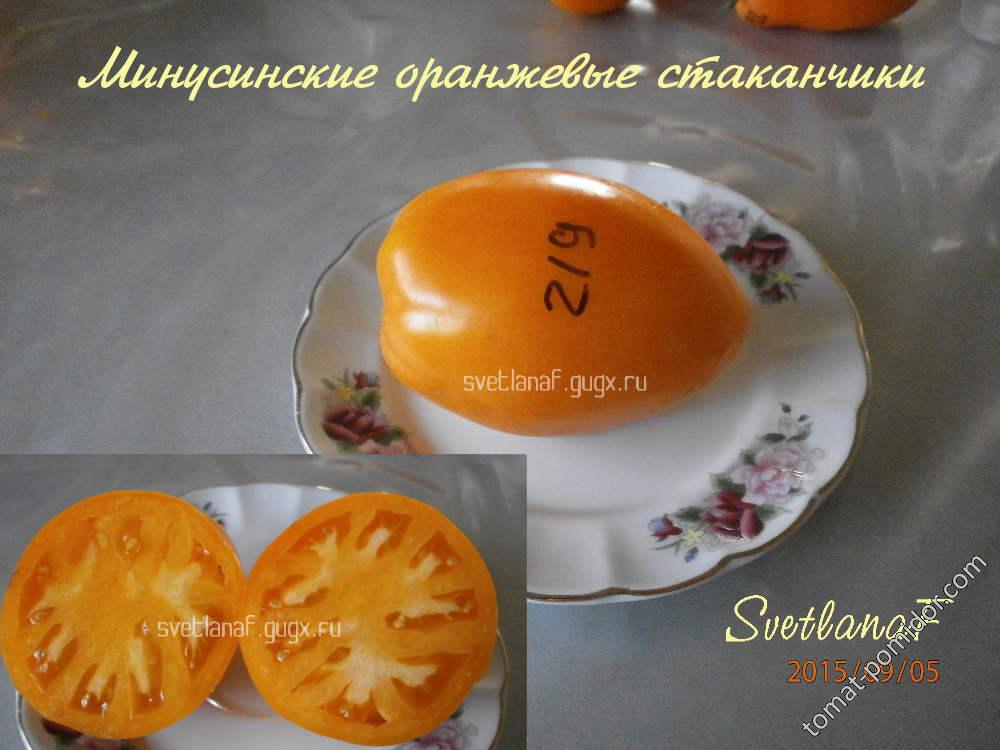
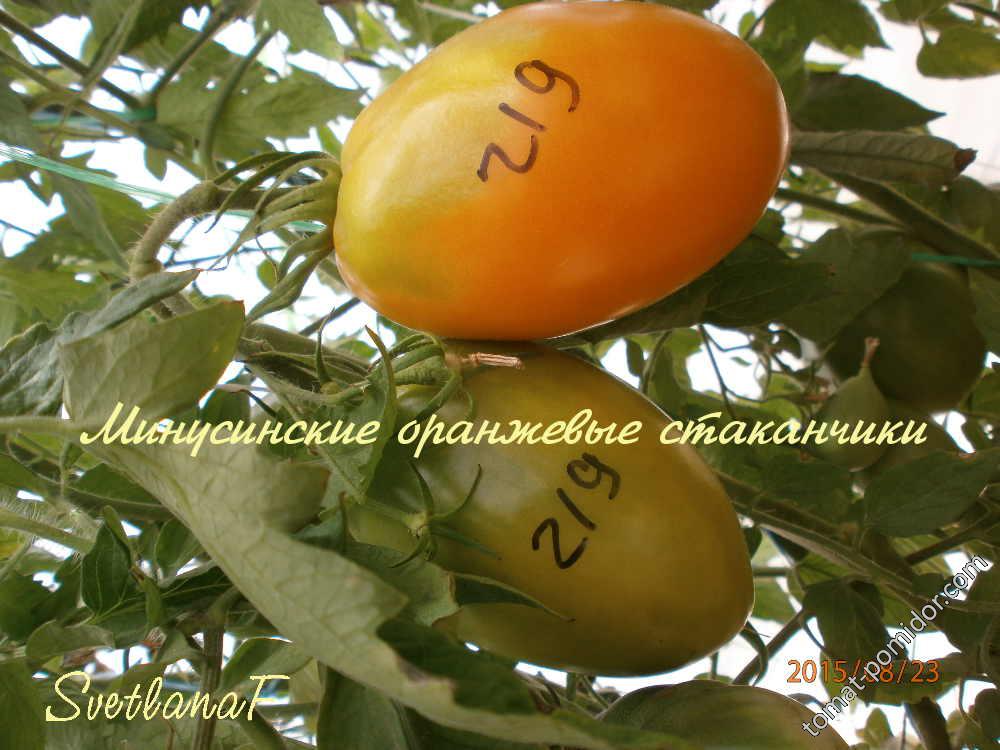
Mine are labeled as Orange Minusinsk Glasses. I’m pretty sure it’s the exact same variety.
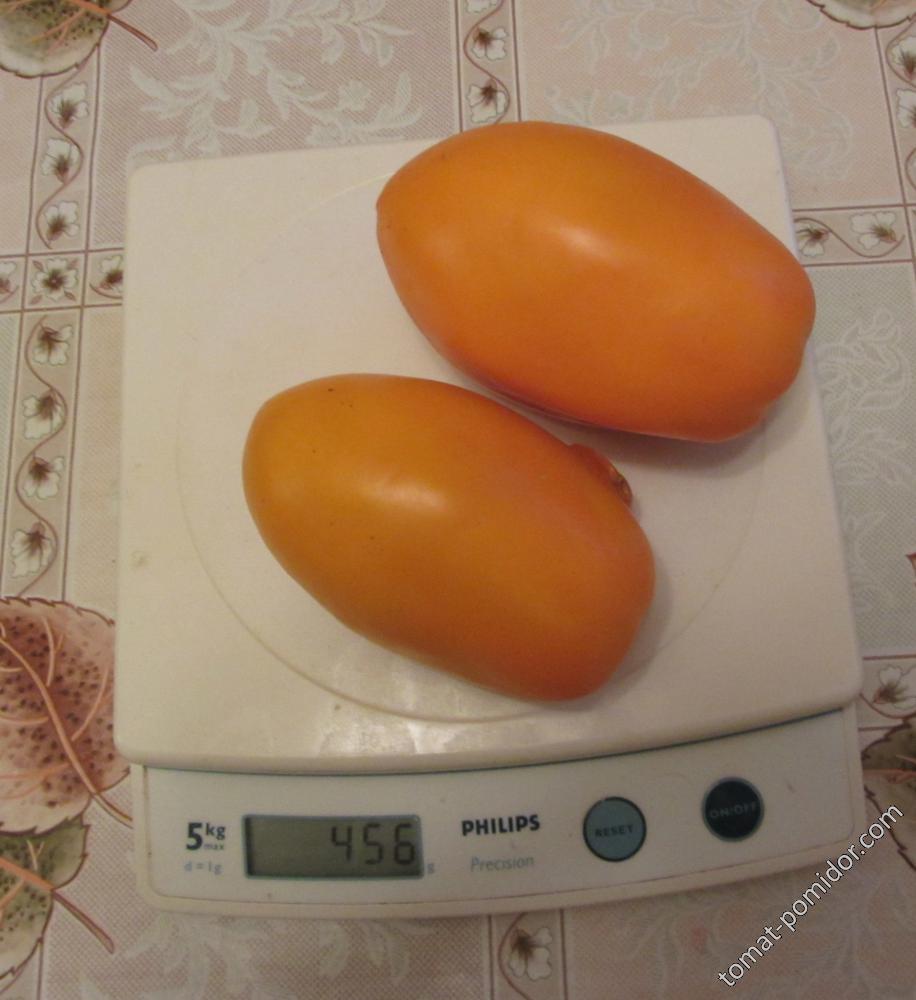
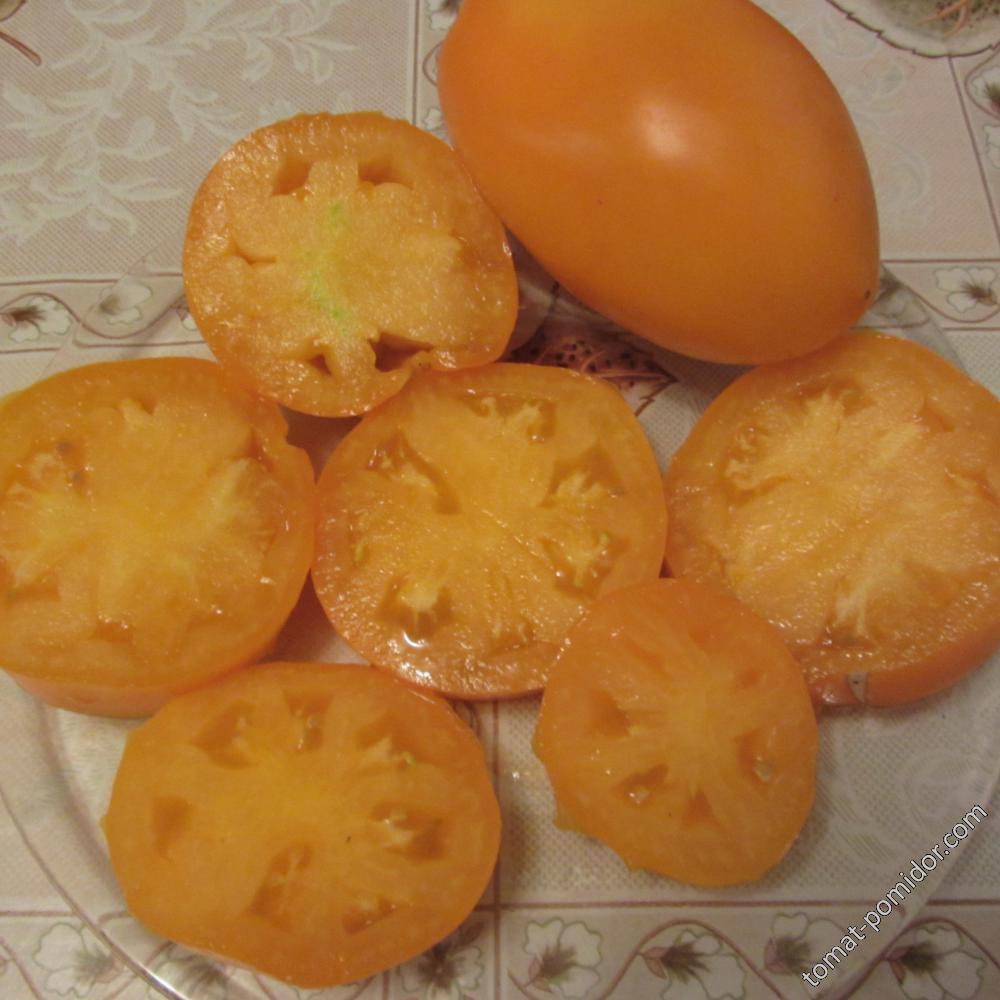
The fruits look a lot like Golden Königsberg (Zolotoy Kenigsberg) and Radunitsa. What do the actual bushes look like?
Zulfiya wrote:
The fruits look a lot like Golden Königsberg and Radunitsa. What do the actual bushes look like?
The bushes look just like the Reyna variety. I placed the fruits side-by-side and there was barely any difference. The only minor distinction was the size and the number of seed locules.
Zulfiya wrote:
The fruits look a lot like Golden Königsberg and Radunitsa.
I had the exact same associations: Golden Königsberg & Co.
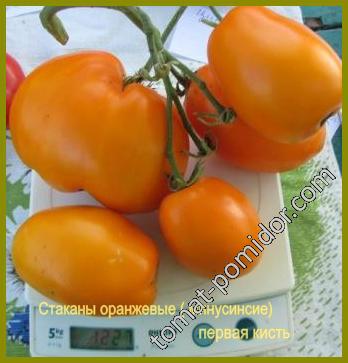
Here is another photo, showing the first cluster on the scale. The second and third clusters were pretty decent too, though there weren’t any huge ones, they were all very uniform. After that, they started setting in sets of just 1 or 2 per truss.
You can see one tomato got a tiny touch of blossom end rot (BER), just a small spot. But that was it, no more issues after that. The color on Golden Königsberg was a bit more orange, and the shape was a little chubbier, while these seem a bit longer. But overall, they are definitely very similar.
This variety was super productive in the high tunnel, reaching 6.5-9.8 feet (2-3 m) tall. The fruits are tasty and sweet.
Full Summary: Minusinsk Orange Glasses
- 🌿 Plant & Foliage: A vigorous, tall indeterminate heirloom that thrives in greenhouse/high tunnel environments, commonly reaching 6.5-9.8 feet (2-3 m) tall.
- 🍅 Fruit & Shape: Produces elongated, barrel-shaped (or “glass”-shaped) orange fruits weighing 5.3-10.6 oz (150-300 g). The shape and color are often compared to the popular Golden Königsberg variety, though these tend to be slightly longer and less chubby.
- 📈 Yield & Health: Very productive, especially on the lower and middle clusters, where it pumps out very uniform fruit. Production can taper off to 1-2 fruits per truss on the highest clusters. Generally healthy, though it can occasionally show minor susceptibility to blossom end rot (BER) on early fruits.
- 👅 Taste: Consistently praised for being incredibly sweet and flavorful. The dense, meaty texture makes it versatile for fresh eating or slicing.
🍅 Have you grown Minusinsk Orange Glasses? Drop a comment below! How did it compare to Golden Königsberg for you in terms of yield and sweetness?
👨🌾 Editor’s Note: Minusinsk Tomatoes
Minusinsk is a city in the Krasnoyarsk Krai region of Siberia. It is legendary in Eastern European gardening circles for its unique microclimate that allows gardeners to grow massive, incredibly flavorful heirloom tomatoes. The city even hosts an annual “Tomato Champion” festival, making “Minusinsk” a prestigious geographical indicator for heirloom tomato varieties.
Minusinsk is a city in the Krasnoyarsk Krai region of Siberia. It is legendary in Eastern European gardening circles for its unique microclimate that allows gardeners to grow massive, incredibly flavorful heirloom tomatoes. The city even hosts an annual “Tomato Champion” festival, making “Minusinsk” a prestigious geographical indicator for heirloom tomato varieties.