Growers’ Notes and Photos (USDA Zones 3-6 Experience)
Really liked this variety. Good yields, indeterminate vine. Grew it in the greenhouse in a less-than-ideal spot that had some shading, but it still performed very well. Truly a gorgeous tomato.
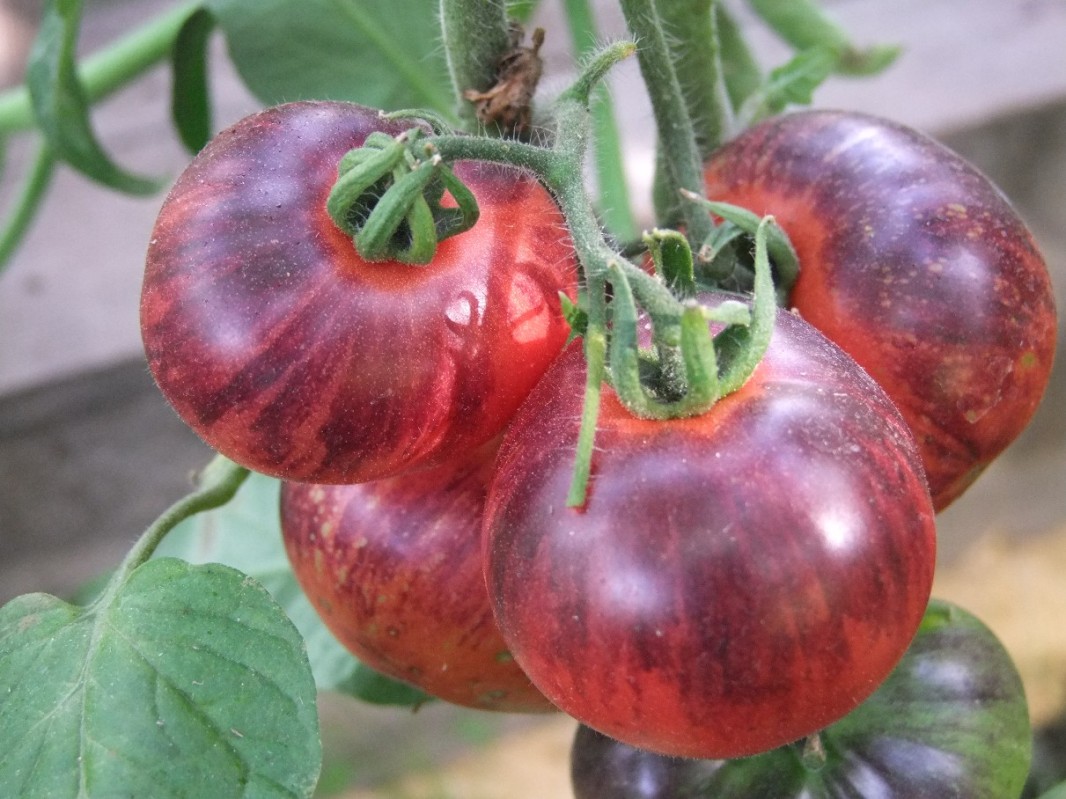
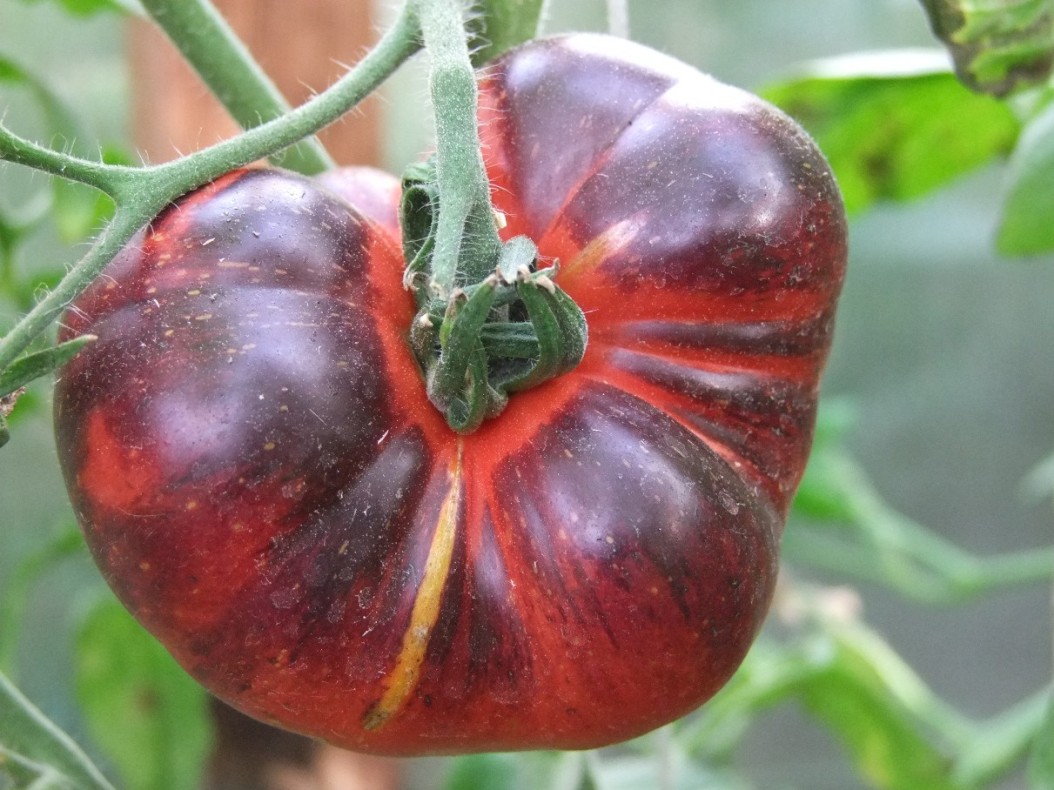
Really liked this variety. Good yields, indeterminate vine…
Truly a looker! Aleksandr, what kind of fruit weight did you get, and how tall did the plant get for you?
Fruits averaged around 5.3 oz (150 g). The largest ones, which there were fewer of, hit around 8.8 oz (250 g). The vine reached about 5 feet (1.5 m) in the greenhouse, but that was in shade, in full sun it would clearly grow taller.
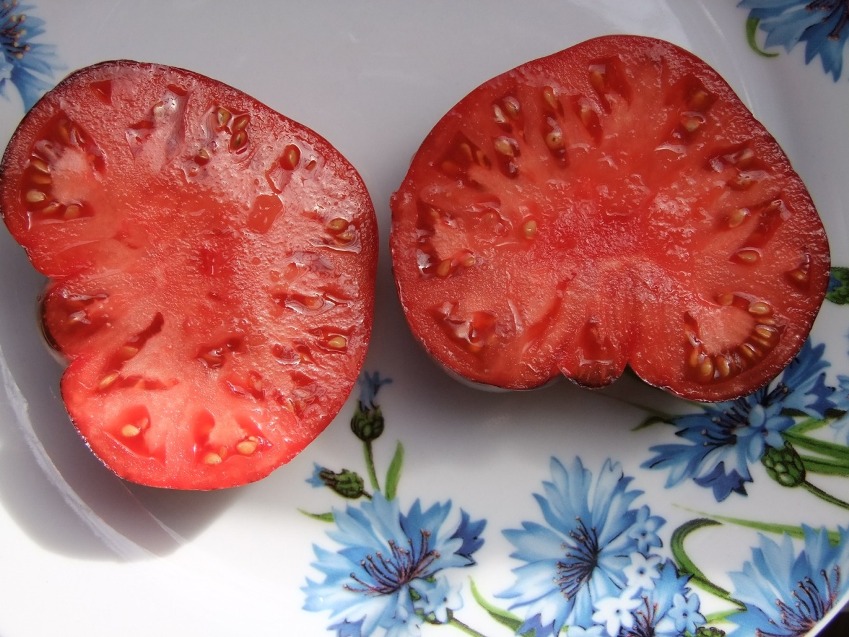
The vine reached about 5 feet (1.5 m) in the greenhouse, but that was in shade, in full sun it would clearly grow taller.
Aleksandr, in my garden it’s usually the other way around. In the shade and in the greenhouse, vines tend to get leggier and stretch taller reaching for light, while out in direct sun they stay stockier and shorter, both in the greenhouse and outdoors. Under glass they can grow 1.5 to 1.7 times taller than outdoors, again, purely because of lighting differences.
Grew it outdoors in open ground. The plant stayed compact at 3.3 to 4 feet (1-1.2 m), vigorous grower, solid production.
Fruits ran 3.5 to 8.8 oz (100-250 g), just unbelievably gorgeous, like they glow from the inside out. Flavor was remarkably sweet, pleasant, and not bland at all. Hands down my absolute favorite of the year.
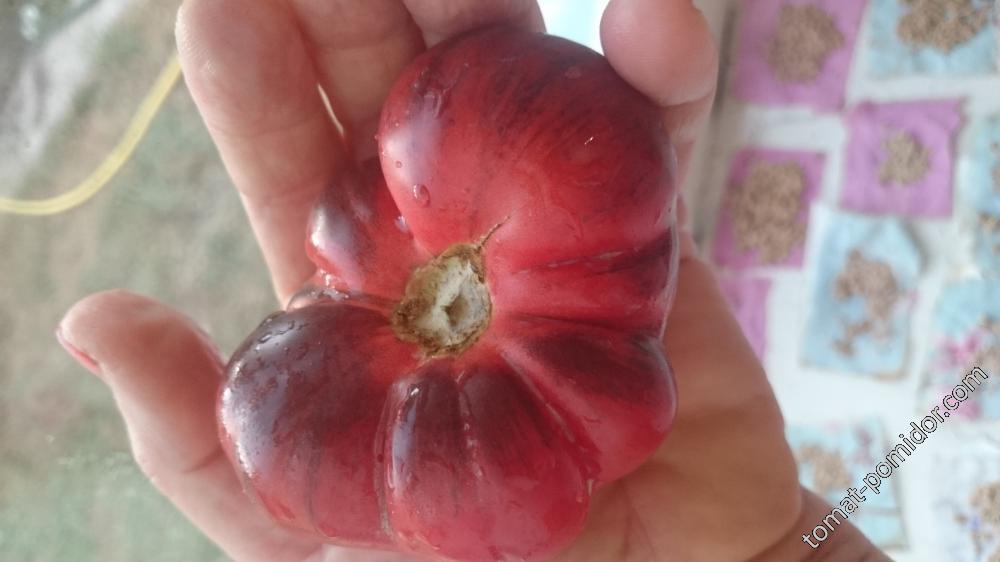
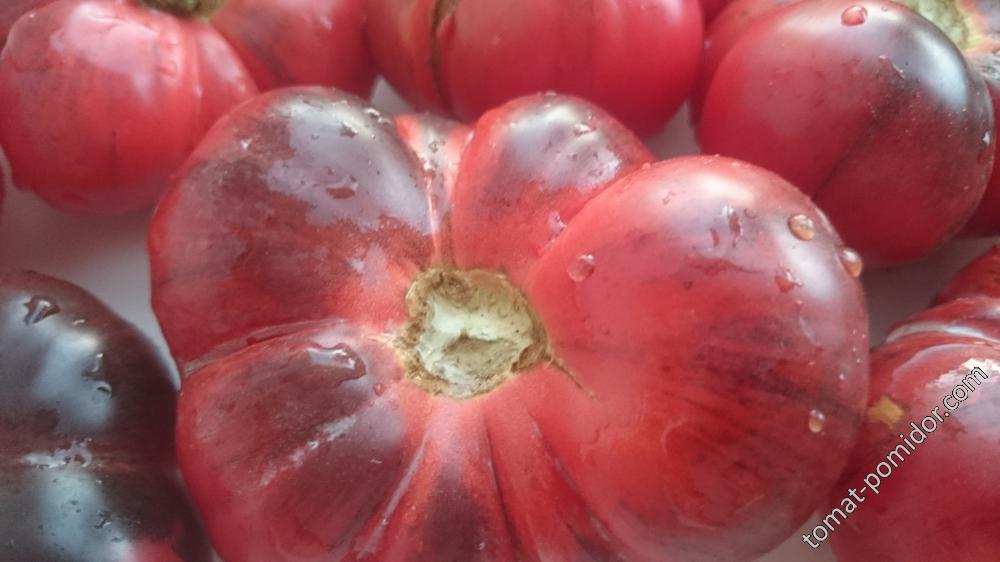
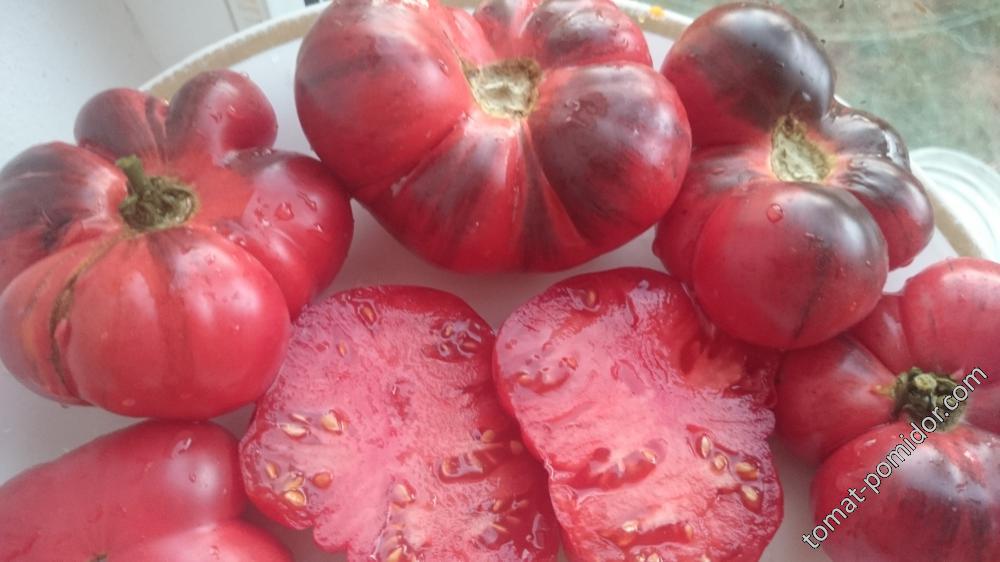
Aleksandr, did you grow it again this year? Curious to hear if it stayed completely true to type for you.
My Ozark Sunrise. Realized too late that I had already picked all the ripe tomatoes before taking a photo of the entire cluster! A truss with ripe and green fruits together is just stunning.
Plant grew in the greenhouse, good production, fruit flavor was very good with pleasant sweetness. Gorgeous variety, with the fruits looking slightly different from each other depending on how much direct sunlight hit them. Seeds came from Aleksandr.
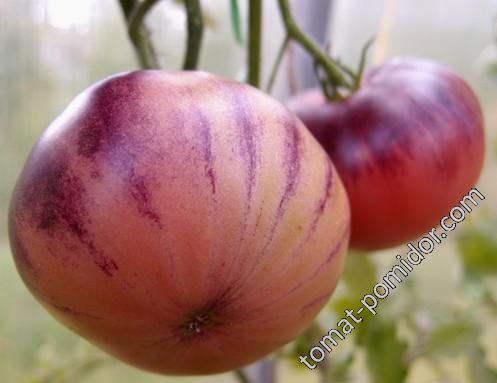
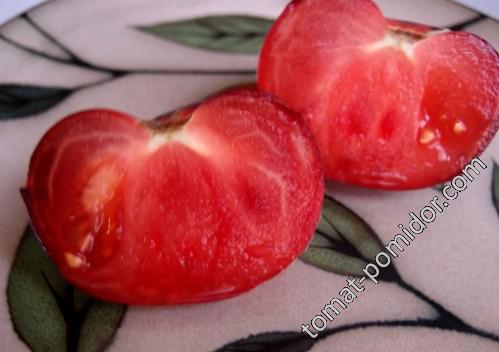
My Ozark Sunrise. The tomatoes are firm, sweet, and yet very juicy at the same time.
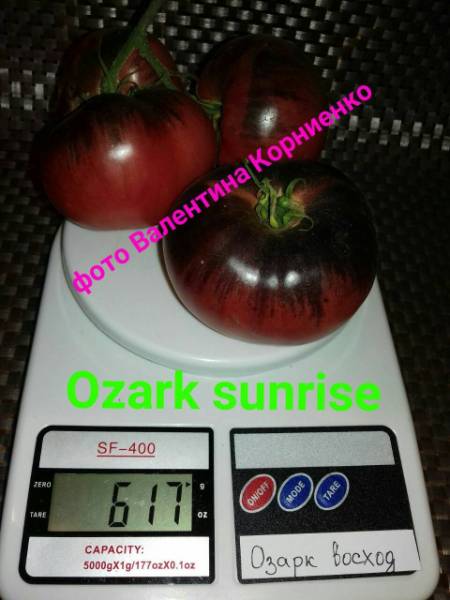
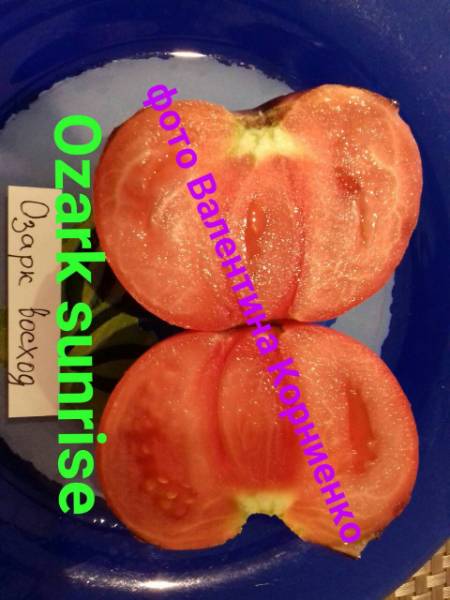
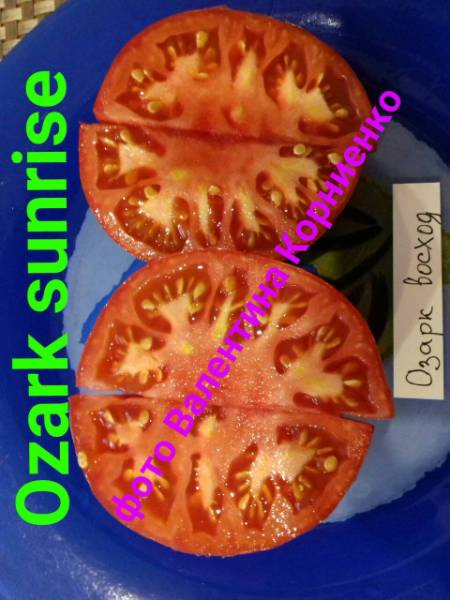
Planted two vines this year, and both ended up with orange flesh underneath the anthocyanin! The seed was about five years old. Wondering if the variety is prone to segregating off-types. But the sweetness was out of this world! Had that real, authentic field-grown flavor.
Full Summary: Plant Habit, Yield, Sunlight and Genetics
- 🌿 Plant & Breeding Background: Bred by the late Dr. Mark McCaslin of Frogsleap Farm (Minnesota). Grows as a compact, manageable indeterminate vine reaching 3.3 to 4 ft (1-1.2 m) in open ground and 5 ft (1.5 m) in greenhouses. Performs reliably in both protected structures and uncovered garden beds.
- 📈 Yield & Sunlight Factors: Heavy producer of 3.5 to 8.8 oz (100-250 g) slicers. Anthocyanin pigmentation is strictly UV-dependent: fruit exposed to direct sunlight develops deep, midnight-purple caps, while shaded fruits show softer bronze-purple blush over a glowing red or gold base.
- 👅 Flavor Profile: Outstanding eating quality that challenges the reputation of early anthocyanin varieties being bland. Delivers genuine old-fashioned, field-grown sweetness with plenty of juice and firm texture.
- 🧬 Genetic Stability: Growers note occasional color segregation from older seed lines, sometimes throwing an intensely sweet orange-fleshed variant under the dark indigo splash.
- 🌎 Who Reviewed It: Six growers across USDA Zones 3 through 6, including West Siberia (Vera), Moscow/Kostroma/Tula (Aleksandr, Elena, Gala), and Ukraine (Valentina).
Ozark Sunrise was developed by Dr. Mark McCaslin (Frogsleap Farm) by crossing wild-derived anthocyanin lines (carrying the Aft gene) with heirloom slicers like Cherokee Purple and German Red Strawberry. Growers in this thread noted two important traits: first, anthocyanin requires direct solar UV exposure to produce deep indigo pigmentation (fruit shaded by foliage will remain pinkish-red). Second, Gala’s observation of orange-fleshed fruit highlights natural recessive segregation in open-pollinated anthocyanin lines, often dubbed “Ozark Sunset” or orange-fruited off-types by seed savers.