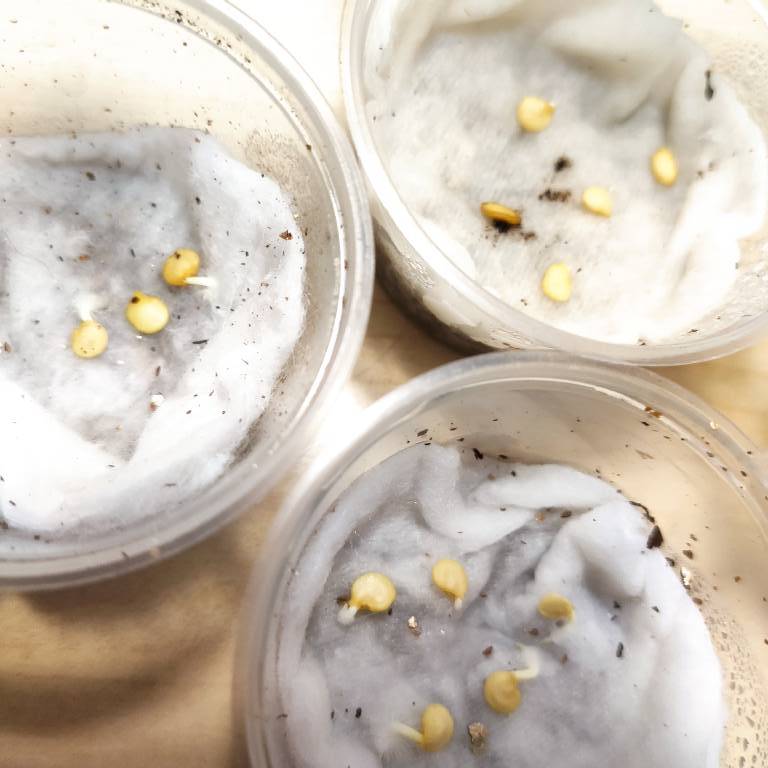
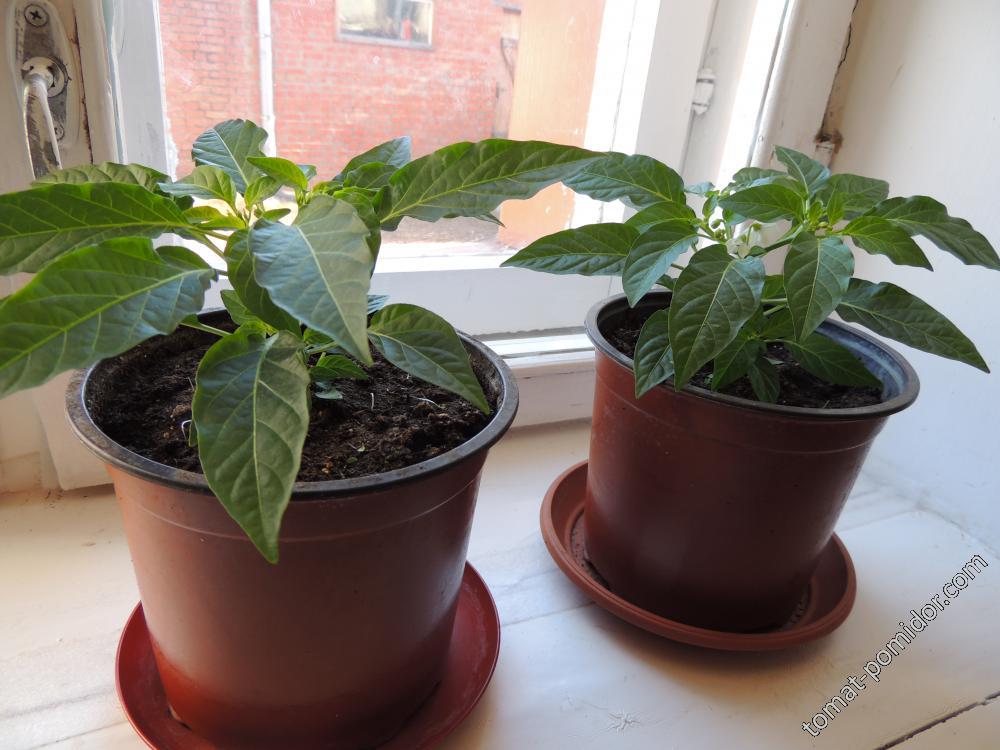
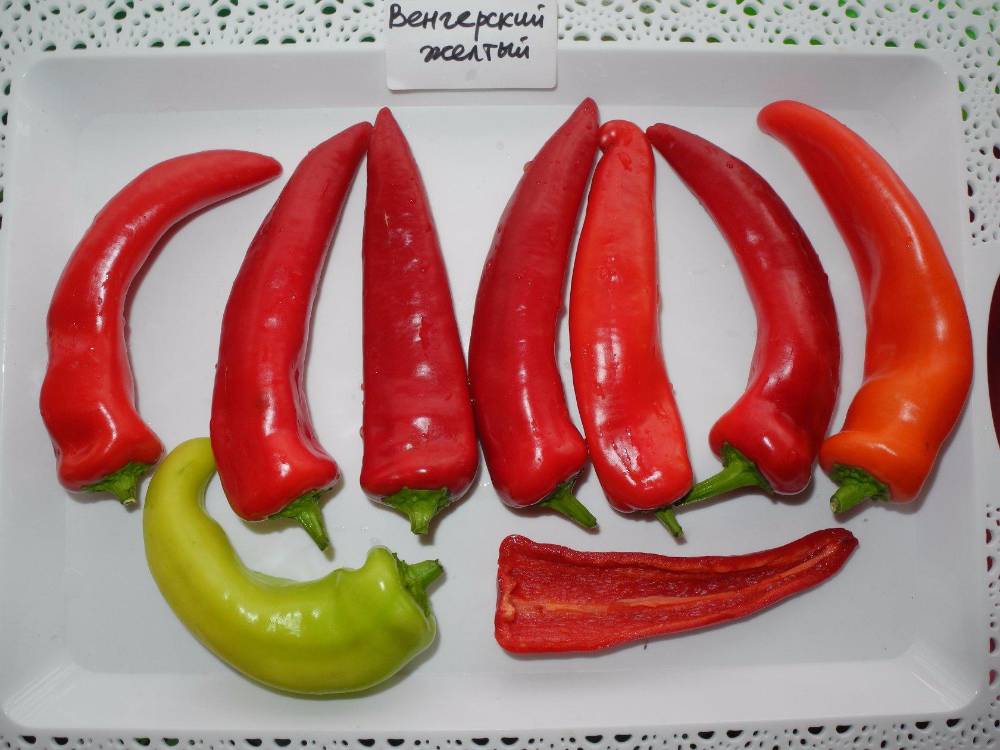
🌶️ Quick take: Growing strong sweet or hot pepper seedlings comes down to fresh seed (pepper viability drops sharply after 2-3 years), warm 77-85°F (25-30°C) germination, and avoiding root shock—start seeds in individual 2-3.5 oz cups and pot up into roomy 1-2 qt containers rather than pricking out from shared trays. Also protect starts from cold windowsills with styrofoam insulation, plus check out 57 real reader Q&As below covering wood-ash/lime pH fixes, topping, saving grocery-store pepper seeds, and pest trouble.
Jump to section: Seed Freshness & Timing · Light & Container Size · Temps, Feeding & Windowsill Tips · 57 Reader Q&As ↓ · Full Summary ↓
How to Grow Strong Pepper Seedlings at Home
By Pomidoroved · Published October 25, 2012
Almost everyone who starts tomato seedlings at home ends up growing pepper starts too. Whether you’re growing sweet bells or fiery hot peppers, their indoor seedling care is pretty much the same.
What do you need to raise thick, sturdy pepper seedlings? First and foremost, a sunny windowsill. For any nightshade crop (and most veggies, honestly), that rule never fails: more light equals better seedlings, everything else comes second. (Yeah, I like telling stories backwards.)
1. Seed Freshness, Germination Tests & When to Sow
Still, let’s start from the actual beginning.
Seeds. We’ll cover choosing varieties separately another time. Pepper seeds differ from tomato seeds by having a much shorter shelf life. While tomato seeds happily sprout 5 or even 10 years later, pepper germination drops to roughly 50% after three years and falls off faster every year after that. When buying pepper seeds, always check that they’re fresh: 1-2 years old is great, 3 years still has decent odds, and older packets might give you nothing at all depending on how they were stored (and we all know how seed storage varies).
Suppose you already bought your prized seed packets and spend long winter evenings sorting them out, itching to start planting. Hard to wait, right? So don’t wait—run a test! Sow a few test seeds early to check two things:
1) What percentage actually sprouts.
2) How fast they come up.
Both numbers matter, especially #2. At the exact same temperature, pepper seeds can take anywhere from 5 to 30+ days to emerge. Obviously 30 days usually means old seed, though even fresh packets can take 2-3 weeks from sowing to sprouting.
Why does that timing matter? Because it lets you nail the exact answer to when you should sow your peppers indoors.
So… when? Using plain common sense, count backwards from your outdoor transplant date.
Unlike tomatoes, peppers are ideally transplanted into their permanent spots right as the first blossom at the first stem fork opens. That usually happens about 2 to 2.5 months after emergence. So if you plan to plant out around May 10th, you want seedlings emerging between March 1st and 15th—meaning you should sow (subtracting germination time) roughly between February 20th and March 5th.
Honestly, I could’ve skipped that whole nerdy calculation and just said: in northern/short-season zones, late February to early March is the sweet spot for sowing peppers. Personally, I sow as late as mid-March because I have huge south-facing windows, and bright light speeds up seedling growth dramatically.
2. Lighting & Why Pot Size Matters More Than You Think
Since we brought up light, let’s stick with it. Earlier I said “more light equals better seedlings.” Still, compared to tomatoes, peppers are noticeably more shade-tolerant. They don’t stretch out and collapse as fast during a few gloomy days, so you can actually raise decent pepper starts even on a northeast or northwest window—though a south-facing window will obviously produce stronger plants.
As for grow lights, you can see from the above that artificial lighting isn’t strictly mandatory for peppers on a bright window, though it definitely helps.
What to sow in? Best bet is sowing directly into small 2-3.5 oz (50-100 ml) individual cups or cell trays. Peppers hate root disturbance from pricking out. If you sow a whole batch together in a flat and transplant bare-root seedlings later, they’ll stall for a week to a week and a half. Whenever possible, start each pepper in its own small cup, then pot up intact once roots fill the rootball.
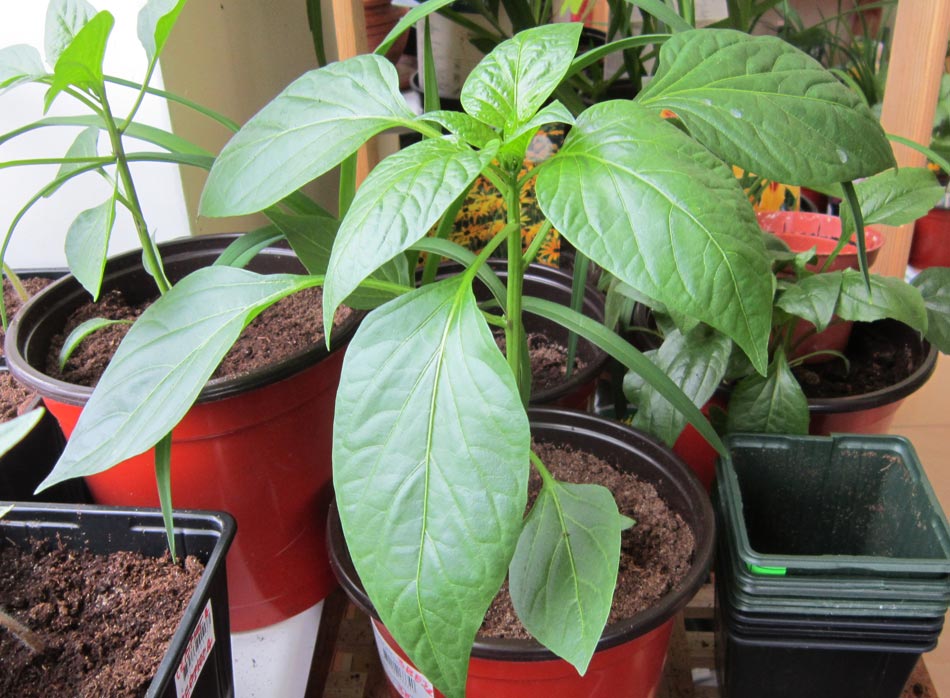
Don’t fall for the myth that peppers don’t need much root room and a 7 oz (200 ml) cup is plenty for a 2-month-old start. Sure, it’ll limp along, yet you’ll never see its real yield potential. Never cramp pepper roots. Whenever space allows, aim for 1-qt (1 L) pots, or even better, 2-qt (2 L) containers per plant. Yeah, in an apartment that’s almost a pipe dream, still worth aiming high 😊. The photo above shows a pepper in a 2-qt (2 L) pot—truly the ideal size, if only we had room to put them all.
3. Soaking, Temperature, Feeding & Cold Windowsills
Should you pre-soak pepper seeds? Unlike tomatoes, which I sow dry because soaking feels like extra busywork, peppers are a bit trickier. Soaking—especially in mild growth stimulants—can genuinely boost germination rates and shave days off sprouting time. On the flip side, if your seeds are fresh and tested near 100% germination, soaking isn’t necessary.
Pepper seeds will sprout at 63-66°F (17-19°C), just veeery slowly, and plenty may rot before emerging. Give them a warm spot around 85°F (30°C) and they’ll pop fast and thick; 77°F (25°C) works nicely too.
Feeding: Feed seedlings once a week using any balanced all-purpose water-soluble fertilizer mixed per label directions. Ideally pick one with micronutrients included, especially iron.
Lately garden centers also carry plenty of great organic amendments like pelleted poultry manure, sapropel, and worm castings. Those work great when potting up from 2-3.5 oz starter cups into larger pots. How much should you add if you’ve never used them? Better to underfeed than burn roots—with worm castings, roughly 1 tsp per plant is safe. Mix it into the soil at the bottom of the larger pot, moisten lightly, set your intact rootball on top, and fill in around the sides.
Watch out for cold drafts and icy windowsills. Touch your windowsill with your hand or lay a thermometer right on it—windowsills often run 10-18°F (5-10°C) colder than room air. To keep damping off at bay, slide a sheet of styrofoam (or at least a wooden board) under your pepper trays.
Watering: Water as the top soil dries out, avoiding both soaking swamps and bone-dry wilt. Honestly, even as a total beginner I never had trouble watering peppers (unlike tomatoes)—they’re surprisingly forgiving and straightforward to grow.
Got questions about growing pepper starts? Drop them in the comments below!
Reader Q&A & Comments
Awesome article! Even though I already have some experience growing pepper starts, I still picked up a few new tricks here.
My pepper seedlings are already setting flower buds, and I can’t plant out until late May. What do I do?
Pot them up into large 2-3 qt (2-3 L) containers and mix in a handful of gentle organic fertilizer like worm castings. And next spring, hold off a bit on sowing so early.
Could someone tell me what’s eating my cucumbers, dill, and lettuce in the cucumber greenhouse—leaving just a bare root stub? Something wiped out all my carrot seedlings too! Help please, thanks!
Big thanks for the practical tips. I’ve grown pepper starts for years and still hit rough patches sometimes—cleared up a lot of details for myself!
Any tips on getting rid of ants in the greenhouse? Thanks in advance!
I’m ruthless—use bait/pesticide! Had it up to here with those “forest janitors.” They farm aphids and haul them up into apple trees, and after wind and rain the aphids drop down onto roses and spread tulip breaking virus from infected bulbs onto healthy tulips.
Excuse me, quick question: can you plant seeds scooped straight out of a store-bought pepper? I have no clue how any of this works yet, really want to grow them, please help!
Sure, you can definitely save seeds from a fresh pepper—germination is usually great and plants turn out fine, just keep in mind a store pepper is often an F1 hybrid, so the offspring may not grow completely true to the parent fruit.
Please tell me what to use to get rid of bugs in the potting soil of seedlings growing on my windowsill. Something is chewing on them and I can’t see anything. Could it be because I scooped dirt straight from the garden without heat-sterilizing it?
Yana, you first have to know for sure what’s actually damaging them—might turn out bugs aren’t even the culprit. As for insecticides, garden centers carry plenty of options these days; I don’t use them myself, so store staff will know current product names better than I do.
Sowed peppers February 7th. Sprouted after 3 weeks, put out one pair of true leaves, and froze completely—refusing to grow. Pricked out into peat pots with Terra Vita potting mix, east window, grow lights, fertilized and watered with root stimulant, zero luck. SOS!!!
Can you raise the pH of bagged potting soil at home using charcoal briquettes? If yes, how—dissolve in water and drench? Any advice?
Don’t confuse charcoal with wood ash—charcoal won’t neutralize soil acidity at all. Better question: why buy an overly acidic bagged mix in the first place instead of buying a slightly acidic or balanced mix? To raise pH, use ag lime, chalk, dolomite lime, or wood ash (we have dosing guides on the forum).
(Replying to the SOS comment) Try repotting a couple of seedlings into a completely different potting mix after gently rinsing the old soil off the roots. Just a shot in the dark, though I’ve seen a similar bad-soil batch case before. Oh, and hold off on fertilizing for now.
Quick question: is it safe to grow hot pepper seedlings on the same windowsill next to other plants like tomatoes? Won’t the tomatoes turn bitter/spicy? Thanks in advance!
(Replying to Olga’s June 13 pest question) In our garden, black field crickets were the culprit—walk in and they scatter, leaving patches clipped right down to a root stub 😞 awful pests.
Hello! We plant seedlings out into the garden between June 1st and 10th, and I just put eggplants and peppers in to soak today—is that timing okay?
(Replying to Olga’s cross-pollination question) Totally fine while they aren’t blooming—only once true flowers open can crossing happen.
Seems a bit late for eggplants, honestly… Though seedling speed depends heavily on conditions, especially light. Or maybe fall doesn’t hit until January where you live, in which case they’ll have plenty of time 😉
My pepper seedlings hit 4 in (10 cm) tall, and now bottom leaves are dropping while the lower stems are turning brown. What should I do?
Lower pepper stems are supposed to turn woody, so hopefully that’s the only reason they’re browning. If lower leaves turn yellow first before dropping, that usually points to nitrogen deficiency or overwatering. If the stem base is rotting soft instead of firm wood, it’s most likely overwatering combined with cold soil.
Ants hate garlic. Lay chopped garlic greens around wherever ants gather and they’ll clear right out. Tried-and-true trick!
Please tell me, should you pinch/top pepper seedlings, and when?
I wouldn’t top them, and here’s why: our summers are short, and topping slows a pepper plant down, pushing harvest back by several weeks. Even though it could theoretically produce more total fruit, in short climates they simply run out of summer before ripening.
Hi! Moved my pepper starts (with 4 true leaves) out in cups to harden off. Daytime is 73°F (23°C), nights are 50°F (10°C). Better to bring them inside overnight, or can they stay outdoors? Thanks in advance.
Hi! As long as nighttime temps don’t dip below 50°F (10°C), they can stay outdoors. Main thing is avoiding sunscald—for the first few days keep them under dappled tree shade so sunlight hits them gently as wind moves the branches.
Sowed peppers February 24th, and right now they’re still only 2 in (5 cm) tall. No idea what to do, practically ready to tug them up by the ears.
(Replying to Olga’s windowsill question) Totally fine, flavors won’t cross between tomatoes and hot peppers, only downside might be limited windowsill space.
How do you grow starts straight from seeds scooped out of a fresh pepper? Do they need fermenting first like I read for tomatoes? Also, I live in Peru—June is winter here, around 64-66°F (18-19°C) with zero sun. Can anything grow now, or should I wait until summer sun comes back?
If there’s truly zero sun, harvests will be pretty pitiful—better to wait for spring. As for the seeds, no prep needed, you can sow fresh pepper seeds straight away.
Fed mine with Kemira fertilizer and the results were awesome—within a week the pepper starts shot up and were ready to transplant out into the garden.
Hi! Planted peppers and eggplants outdoors a month ago and just realized I spaced them way too close. Can I dig and space them out now, and how? Should I pinch the peppers? Plants are just starting to bloom. Thanks!
Hi! How’d you find out—did they start arguing with each other? 😄
Neither peppers nor eggplants like being dug up and moved, especially after a month in the ground. If they’re way too crowded, better to thin them by pulling every other plant—or try transplanting every other one as an experiment to see how much it sets yields back. Sounds like you’ve got nothing to lose either way. Let us know how it goes! 😉
Easy—neighbor came by and pointed out how packed they are 😄 My husband spaced them 8-10 in (20-25 cm) apart, and now it’s one solid green carpet. Will do as you suggested and report back!
I start mine in peat pellets, pot up into 16 oz (0.5 L) plastic cups, and then into 1-qt (1 kg) mayo tubs—where do you even find 2-qt (2 kg) tubs?
Thanks for the info!
Good day! Put my pepper seeds into plastic bottles cut lengthwise onto 6-8 layers of toilet paper with a humidity dome. Worried—will anything sprout? Really appreciate replies!
If the seeds are viable and temps are warm enough, why wouldn’t they sprout? Though why make extra work for yourself—just sow them straight into potting mix where they belong 😊
How deep should you sow pepper and tomato seeds? Do you really have to pot them up into bigger pots later? And why not sow straight into big pots from day one if they hate transplanting?
Planting depth is 1/2-3/4 in (1-2 cm); any shallower and they may struggle to shed the seed coat.
Sure, you can sow straight into big pots, except small cups keep everything compact early on, whereas giant EMPTY pots eat up tons of windowsill space for an extra month or so.
Some gardeners recommend sowing two pepper plants per cup and planting them out together like that. Tried it myself so seedlings wouldn’t go to waste and saw zero benefit—one plant actually crowded out the other. Did I do something wrong, or does spacing between stems matter? Thanks.
Tatyana, I’m definitely not in the “two plants per hole” camp (whether in seedling cups or garden beds). Every plant deserves its own root soil and sunlight; put two right next to each other and you always get shading and root competition.
Evening! What should you soak pepper seeds in—any recommended stimulant? First time growing my own starts 😄
Hi! Personally I don’t pre-soak, though if you want to tinker you can soak in snowmelt, dilute micronutrient fertilizer, liquid humates, aloe vera juice… We also have a couple of other helpful pepper guides right here on the forum.
Any advice? I have to travel for a week and my seedlings stay in an unheated room—how can I protect them from the cold without hauling them along? Thanks!
I’ve planted tomatoes, eggplants, and peppers two per hole my whole life and always get huge harvests.
Might help to mention your region too—for all we know you’re down in Krasnodar or Rostov 😉
Quick question: I’m growing seedlings in a windowless room under a fluorescent tube from 6 AM until late evening… is that okay? The light hangs 28 in (70 cm) above the seedlings.
Longer hours won’t make up for weak brightness, and old fluorescent tubes are yesterday’s tech—LED grow lights are the way to go now, letting you raise healthy starts with zero window light.
Hi! This year I want to skip indoor seed starting and direct-sow tomatoes outdoors under row covers in early April—can I do the same with peppers and eggplants, or must they be started indoors?
Tried direct-sowing once as an experiment. Tomatoes came in much later than indoor starts, and you shouldn’t sow until the second half of April anyway. Tried Irina (Sedek) seeds.
(Replying to Olga’s seedling-eating pest question) Sounds like mole crickets eating your plants…
Could you explain why my pepper stems turn woody once seedlings hit about 10-12 in (25-30 cm) tall?
Nothing wrong with that at all, let them turn woody! That’s completely normal for peppers.
Thanks so much for the answer!
Huge thanks! Super clear and easy-to-follow breakdown!
Growing Pepper Seedlings at Home: Key Takeaways
- 🌱 Fresh Seeds & Germination: Pepper seeds lose viability fast after 2-3 years. Sow test seeds early at 77-85°F (25-30°C) about 1/2-3/4 in (1-2 cm) deep, and count back 2-2.5 months plus sprouting time from your outdoor planting date.
- 🪴 Individual Cups Over Pricking Out: Because peppers hate root disturbance, start directly in 2-3.5 oz (50-100 ml) individual cups and pot up intact into 1-2 qt (1-2 L) containers so roots don’t stall. Avoid topping seedlings in short-summer regions since it delays ripening.
- ☀️ Light, Warmth & Feeding: Peppers tolerate lower light than tomatoes, though bright south windows or close-range LEDs (never 28 in away with weak fluorescents) grow sturdier starts. Insulate cold windowsills with styrofoam, water only as soil dries, and feed weekly with balanced NPK + iron once true leaves grow.
- 💬 Quick Q&A Highlights: Lower stems turning woody (unlike soft rot) is completely normal; saving seeds from store peppers works (though F1 hybrids may split); hot peppers next to tomatoes won’t make tomatoes spicy; and use lime/dolomite/wood ash—not charcoal—to raise acidic potting soil pH.
A few regional items pop up in this guide and reader comments: sapropel is nutrient-rich freshwater lakebed silt sold in Eastern Europe as an organic soil amendment (similar to composted humus or humic mineral blends); Kemira is a well-known European water-soluble NPK fertilizer line (comparable to Jack’s Classic or Miracle-Gro Water Soluble); and Terra Vita is a popular peat-based retail potting mix.