Quick Summary of Abbattista
- 🌍 Origin: A treasured heirloom variety. Some international collectors have recently started spelling it “Abbittista”, but it remains widely known and grown as Abbattista. (Note: Not to be confused with “Abbattista Paste,” which is a smaller, semi-determinate cocktail type).
- 🌿 Plant Habit: Indeterminate, mid-season, and very tall (reaching up to 2.5 m / 8.2 ft in greenhouses). It features wispy foliage and a delicate, slender structure. Despite its fragile appearance, the plant is remarkably rugged, heat-resistant, and performs excellently in cold, wet summers. It produces weak suckers, making pruning very easy.
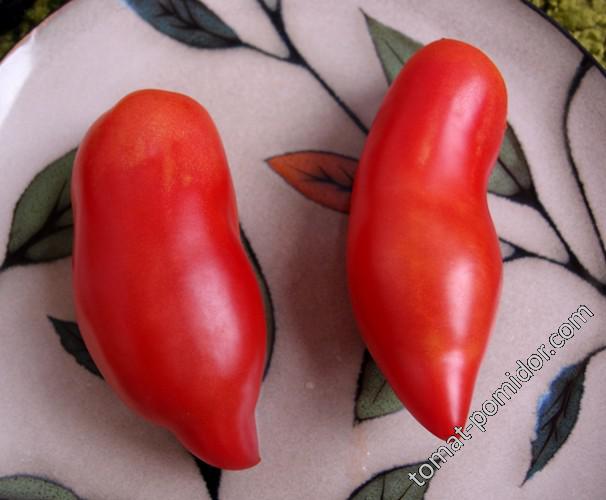
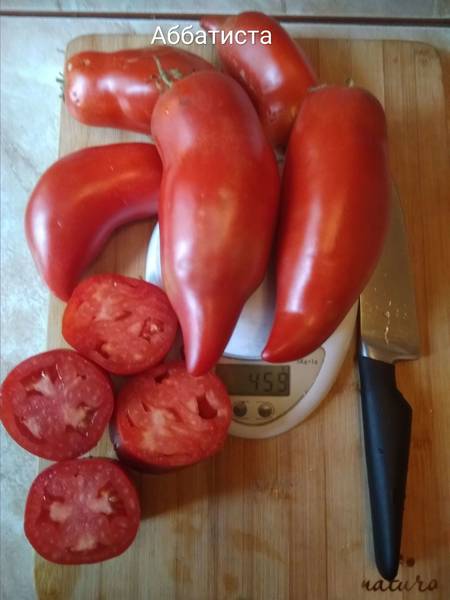
- 🍅 Fruit Characteristics: Large, red, elongated plum or “sausage-shaped” paste tomatoes, often with a slight curve or a little beak at the blossom end. They typically weigh 250–350g (8.8–12.3 oz). The flesh is incredibly dense, meaty, and contains very few seeds.
- 👅 Flavor: Universally praised by our community for its outstanding, sweet flavor. It lacks the blandness or hollow cavities often associated with large paste types.
- 🍽️ Culinary Use: While technically a paste tomato, it is so flavorful and juicy that growers love it for fresh eating, slicing on sandwiches, salads, and freezing. It is usually too large for whole-fruit canning.
The Abbattista variety suddenly changed one letter in its name among some foreign collectors this fall and became known as Abbittista. But for others, it has kept its original name—Abbattista.
It’s an indeterminate, mid-season variety with wispy foliage and a delicate bush structure. Despite this, the variety is hardy, with good yields even during the very cold summer of 2017. Grew in a greenhouse. The fruits are large, red, elongated curved plums, weighing 250-350 grams (8.8-12.3 oz). Very well-balanced taste with a predominance of sweetness, and the fruits have very few seeds.
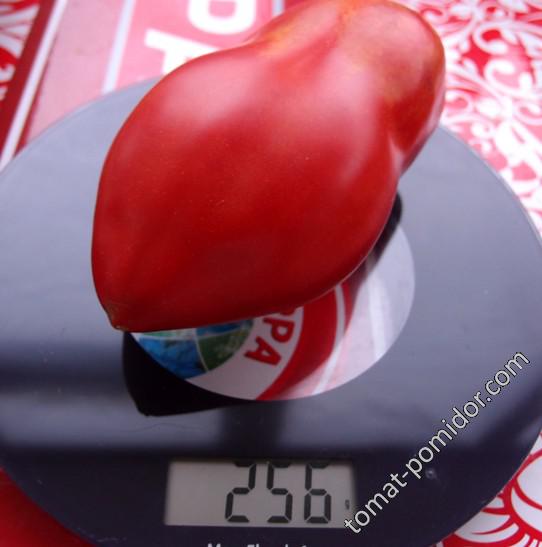
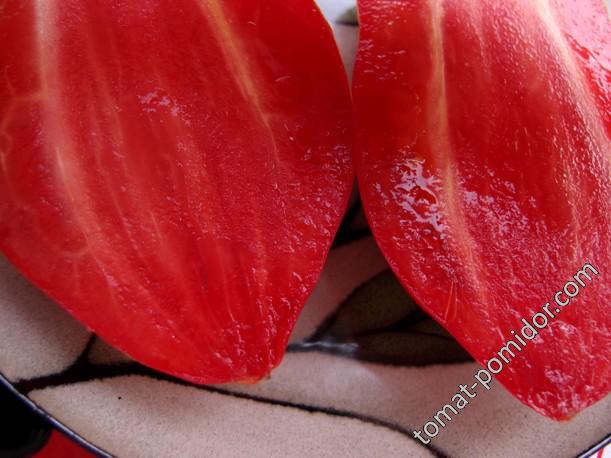
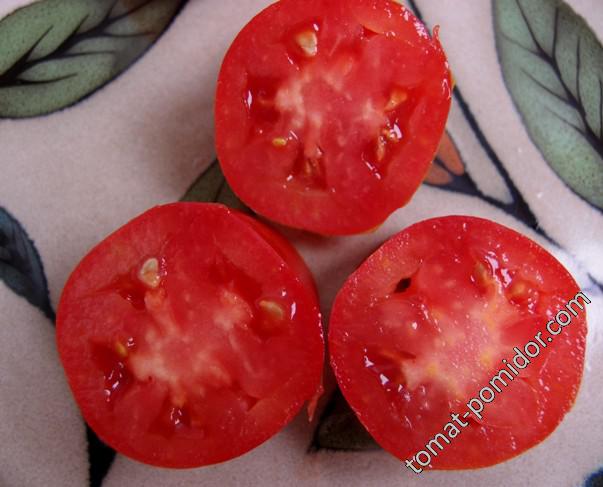
I couldn’t have said it better than Lena!
Here is my Abbattista from the same source, as of July 22 this year. This year, it dropped blossoms on the upper trusses, so only three out of six trusses fully formed. I usually don’t like tomatoes of this shape—they are typically bland and have hollow cavities. But I have zero complaints about this one, except maybe for the lack of seeds. I’m giving it a permanent spot on my grow list.
However, you need to be prepared for a stem length of 2.5 m (8.2 ft). It grew along the axis of my greenhouse at the end of the central aisle. The trusses are spaced almost 40 cm (15.5 inches) apart. Another plus is the weak suckers; it requires almost no attention.
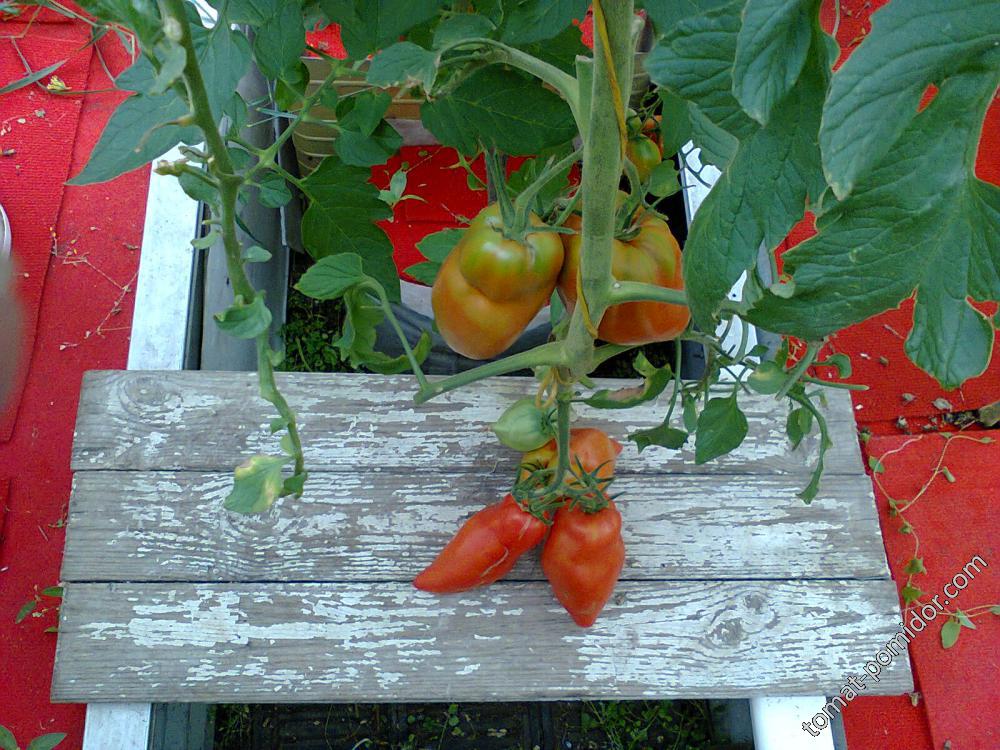
Abbattista is a very good variety! Indeterminate, grew in a greenhouse on 2 stems, good yield, beautiful fruits—large thick “icicles” with a little beak, meaty, few seeds, very good taste, weight up to 320g (11.2 oz).
Seeds are from Lena-Danko.
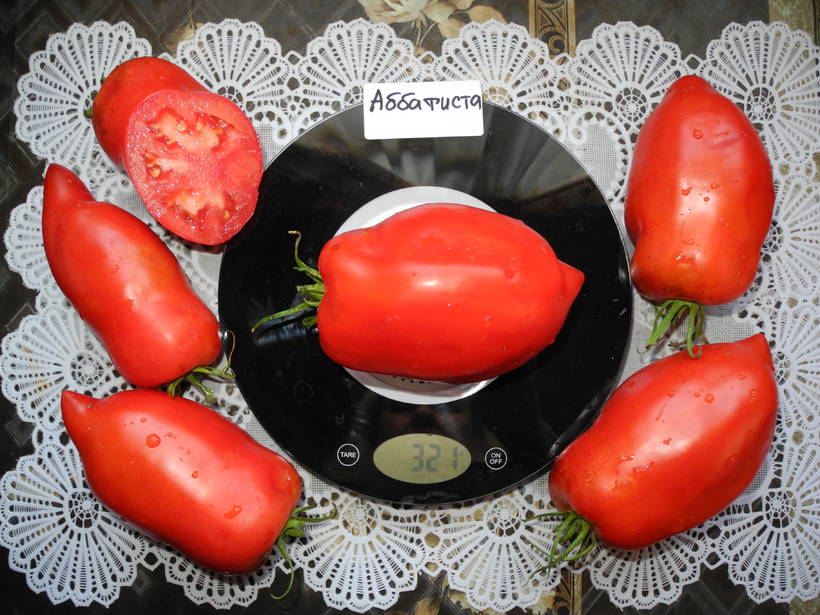
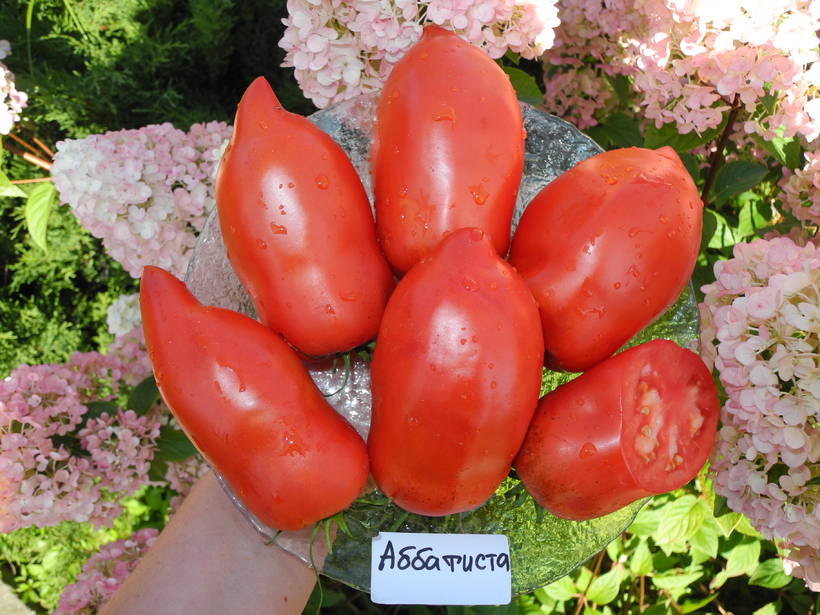
This year, 2 bushes of Abbattista grew in the open ground (outdoors). Seeds from Lena Danko. It grew on multiple stems—4, 5, or maybe 6. In the open ground, it’s more optimal for us to keep the bush lower, although naturally, pruning is harder the more stems you leave. Outdoors, with this type of pruning, it reached about 1.7m (5.5 ft).
It was very productive, and this was during its adaptation year! It set 9-11 full trusses, so it’s a quite heat-resistant variety. It caught just a tiny bit of blossom end rot (BER), but after spraying with calcium (Brexil Ca), it stopped. It cracked a little bit with our temperature swings, but nothing critical. A very, very sweet and tasty tomato.
The only thing is that most of them are too large for whole-canning in jars. The ones in the photo are actually the smaller fruits. I liked it, will grow it again next year from my own saved seeds. Mid-season for the open ground.
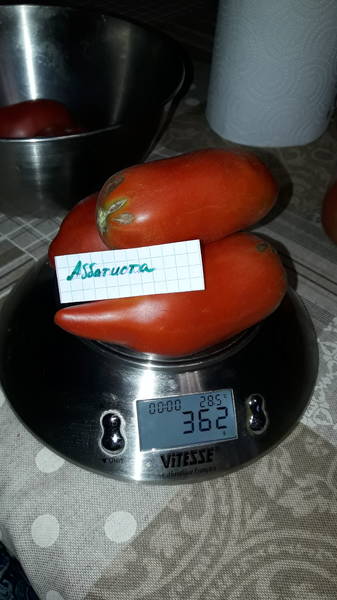
Here is a truss of Abbattista on the bush.
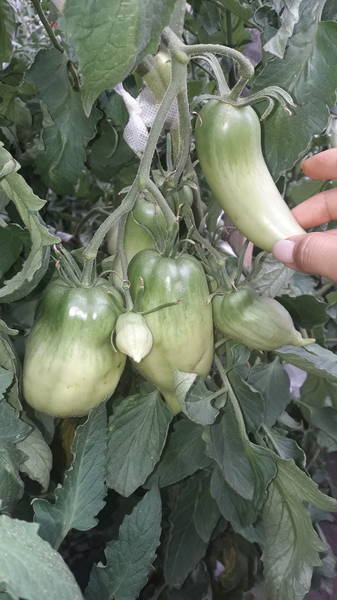
Could someone tell me, are Abbattista and Abbattista Paste the same variety?
Buketik said:
Could someone tell me, are Abbattista and Abbattista Paste the same variety?
I don’t know if they are the same or not, but the regular Abbattista is actually a paste tomato by its shape. In other words, a sausage-like icicle. Very elongated. Easy to eat.
Buketik said:
Could someone tell me, are Abbattista and Abbattista Paste the same variety?
They are different. Paste is a cocktail type and is not tall. It acts like a semi-determinate, reaching only about a meter (3.3 ft) in the greenhouse.
I liked the variety very much. Practically no downsides. It feels great in difficult climatic conditions. Productive, rather compact bush (in width). Very interesting fruits, varied in shape and size. The flesh is juicy with few seeds. Even here in the North, the taste is very pleasant, predominantly sweet. It outperformed the similar variety Siberian Cossack (Sibirskiy Kazak) growing nearby, both in earliness and yield.
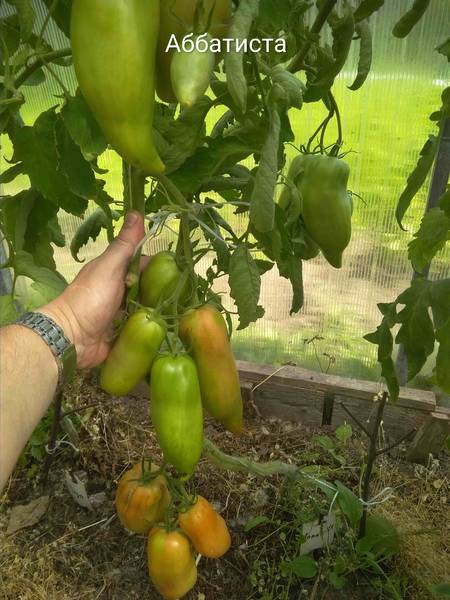
Here is what my Abbattista looked like. Seeds were from Sveta (@777), for which I am immensely grateful. A tasty and beautiful variety. It didn’t bury me in an avalanche of fruit, but the conditions were incredibly hot last summer.
This year I sowed it for a planting workshop at our local library. I wanted to show how to prick out tomato seedlings. I sowed on February 9, watered, covered with a bag, and went to visit my mom in Kyiv until February 23. Upon return, a few had sprouted and gotten very leggy. Then more popped up. Due to the quarantine, our class was canceled, and I ended up with a dozen and a half Abbattista seedlings. I planted 2 for myself, 6 in the community garden, and gave the rest to good friends. I am sure they will be surprised by its excellent taste!
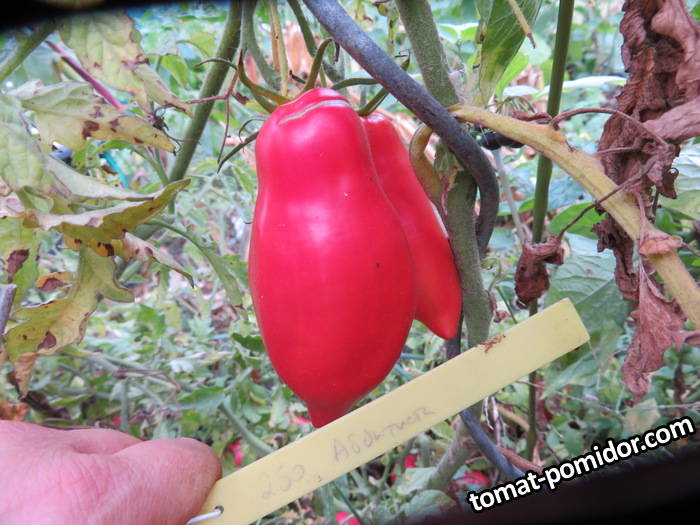
I loved Abbattista! Very good in salads, sliced for sandwiches, and frozen in rounds. A productive variety with large tomatoes.
Seeds from Elena (@Volchishka). Thank you very much!
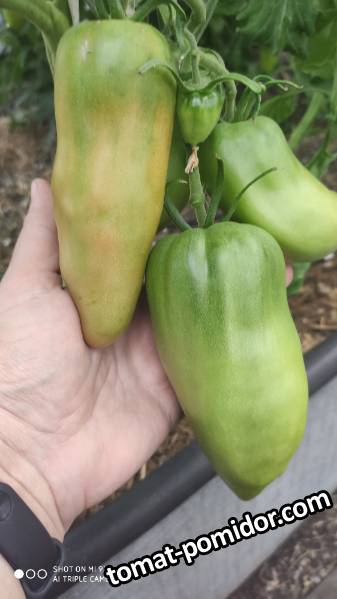
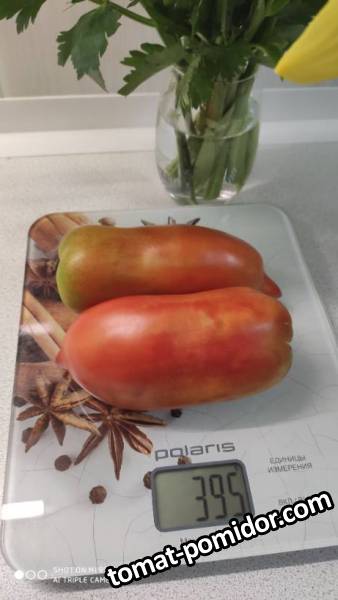
The variety confirmed its excellent characteristics again this season.
Among varieties of this type (I grew several), Abbattista and Largo de Jauja were the leaders in yield and earliness under the conditions of the Vologda region.
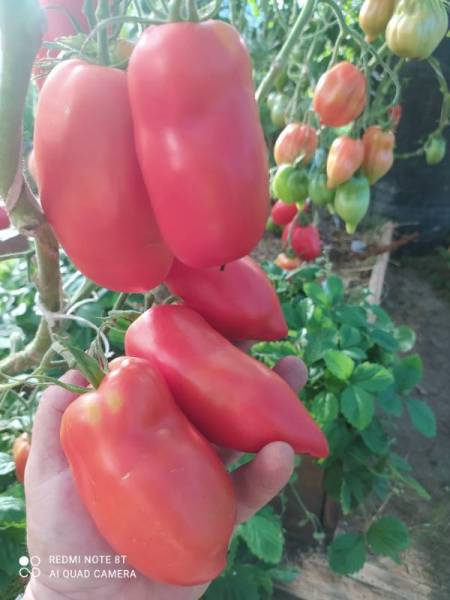
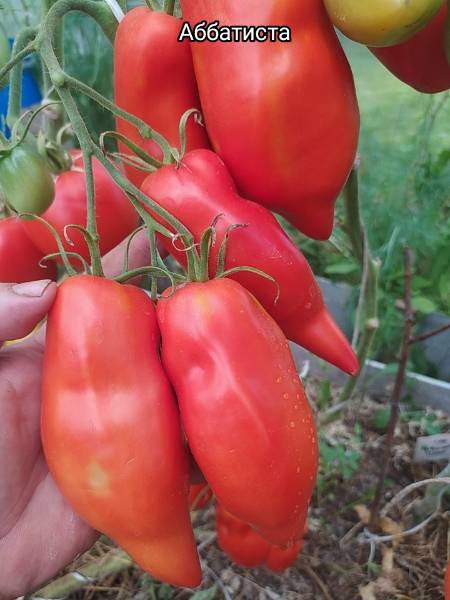
Svetikk said:
Indeterminate, grew in a greenhouse on 2 stems, good yield, beautiful fruits—large thick “icicles” with a little beak, meaty, few seeds, very good taste…
I agree. Productive and trouble-free despite its very elegant, delicate structure and weather conditions. Sown March 7, grown in a polycarbonate greenhouse.