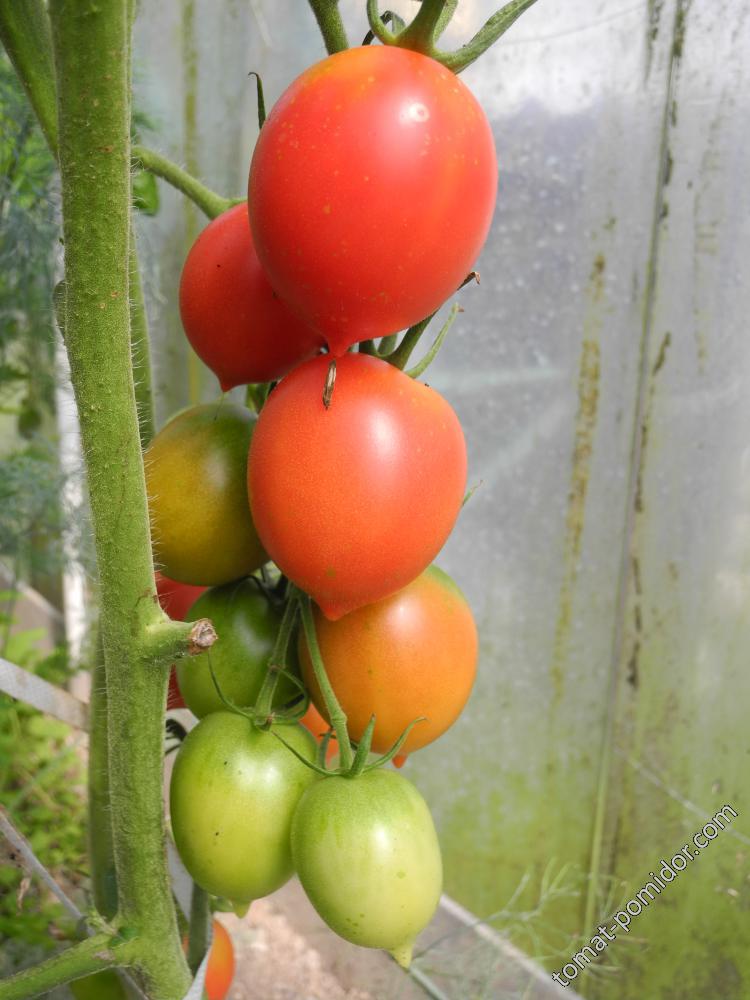
Growers’ Notes and Photos (USDA Zones 3-8 Experience)
Description from the seed packet: Ultra-early determinate tomato hybrid, 75-80 days from germination to first harvest. The plant has medium foliage. The first truss sets above the 5th or 6th leaf with 7-8 fruits. Fruits are round to oblate, red, with no green shoulders, weighing 3.8-4.5 oz (110-130 g), and dense. The taste is good. Resistant to fruit cracking and BER, tolerant to TMV, early blight (Alternaria), and late blight. Yield outdoors is 17.5-23 lbs/sq m (8-10.5 kg/m2), and in a greenhouse 28.5-33 lbs/sq m (13-15 kg/m2).
Photo credit: Tosya
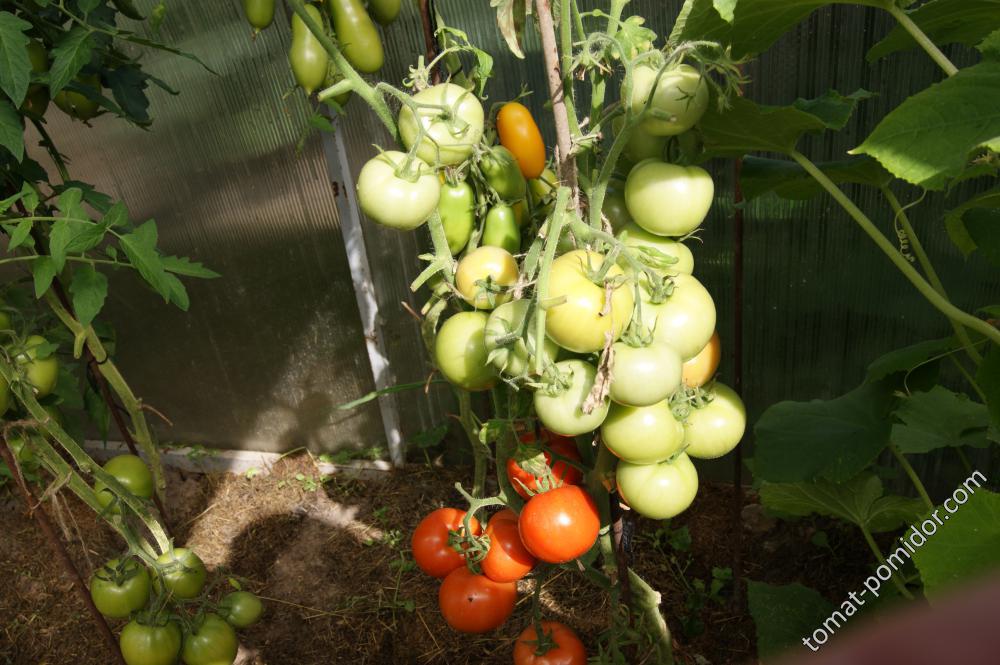
It really is a great variety. I’ve been growing it for about 8 years now. Every year it gives a good harvest, no matter what the weather throws at it.
Here is my Katya. Grew it in the greenhouse, but I want to try it outdoors in the dirt next time.
I grew 2 hybrids this year from seeds a friend gave me. Katya F1 from Semko. Had two identical twin plants just as a trial, and there was nothing to photograph except bare stalks and a couple of tomatoes.
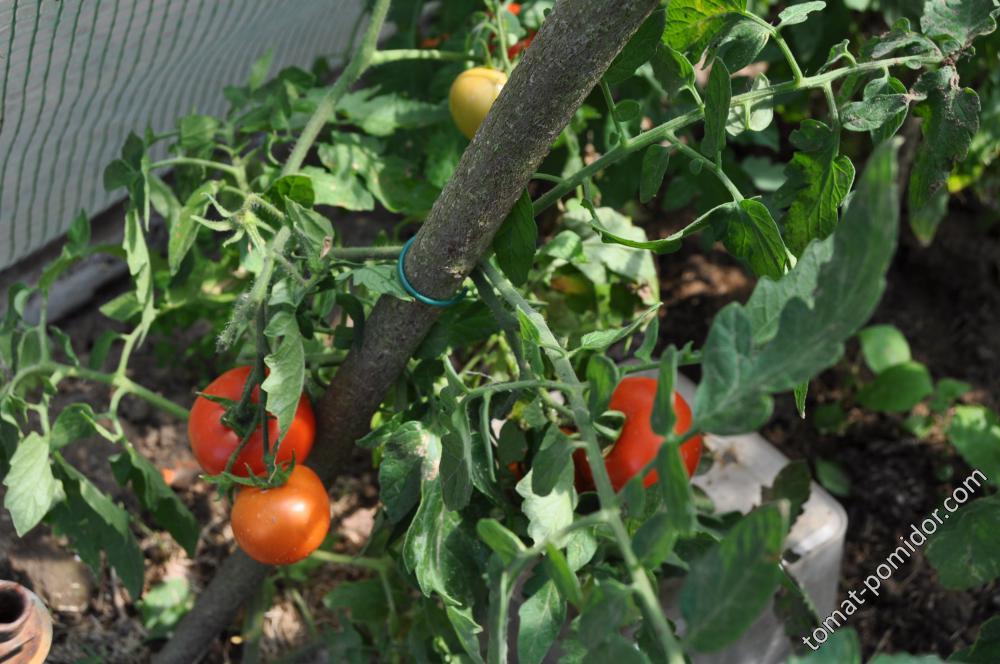
My Katya F1 from Semko grew outdoors. I really liked the hybrid. It truly is early, sets abundantly, and has good flavor. We ate them fresh. Photo taken July 25.

Good afternoon. Can someone tell me, are Katya F1 and Katyusha F1 different tomato varieties?
Indya wrote:
Good afternoon. Can someone tell me, are Katya F1 and Katyusha F1 different tomato varieties?
Judging by the descriptions, they are different varieties. Different fruit weights and different DTM (days to maturity).
Edited January 31, 2016 by Drosera
Indya wrote:
Good afternoon. Can someone tell me, are Katya F1 and Katyusha F1 different tomato varieties?
Katya has been a favorite of mine for many years, it has never let me down. These are the very first tomatoes we start eating, we also can them in jars, and we pick the last ones at the end of September. This year it was October 3rd (the last ones manage to grow from the suckers at the top). Found a photo of Katya, but the tomatoes are still green here.
Yes, KATYA and KATYUSHA are different varieties.
Edited January 31, 2016 by Drosera
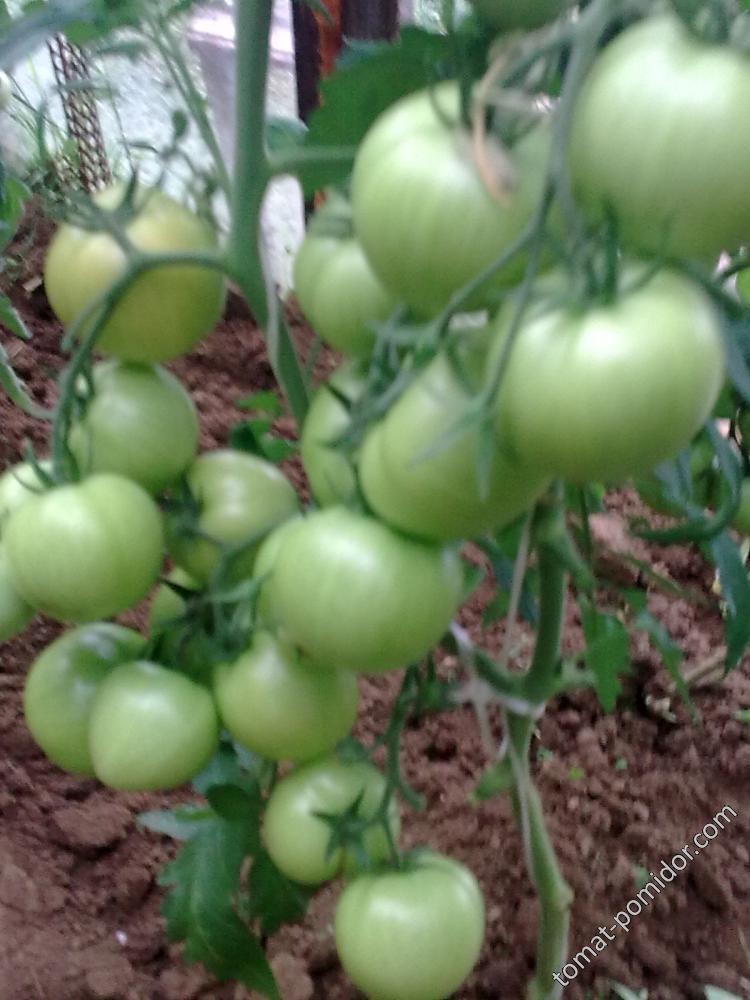
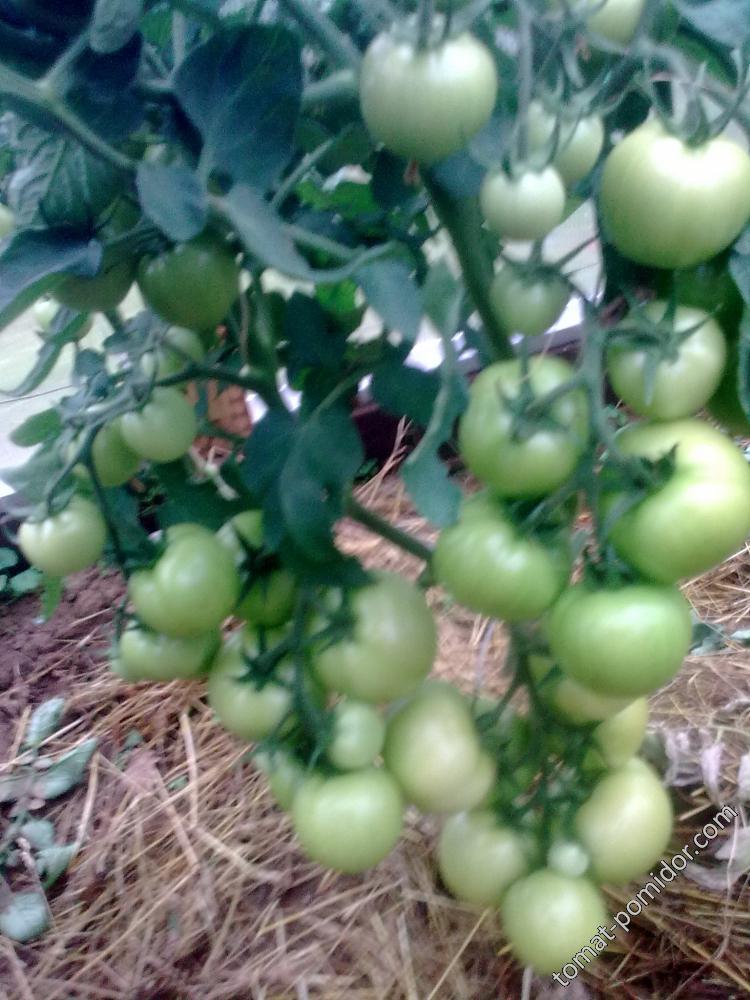
Katya… A lot of people praise it, but I was disappointed. Over 4 years (2012-15) I never saw a single ripe fruit on the vine outdoors. Yes, it’s productive, but strictly for canning. It throws out a truss on every single leaf, and sometimes two in a row. Last year, when ripening them indoors on the counter, they all developed early blight spots. EVERY SINGLE ONE! I decided to skip Katya this season.


Drosera wrote:
Katya… A lot of people praise it, but I was disappointed. Over 4 years (2012-15) I never saw a single ripe fruit on the vine outdoors. Yes, it’s productive, but strictly for canning. It throws out a truss on every single leaf, and sometimes two in a row. Last year, when ripening them indoors on the counter, they all developed early blight spots. EVERY SINGLE ONE!
I decided to skip Katya this season.
What are you going to replace it with? I definitely don’t want early blight either.
Zlato Leto wrote:
What are you going to replace it with? I definitely don’t want early blight either.
With Andromeda 🙈
Every year I plant 5 bushes just for an early harvest. They grow in the cucumber greenhouse in practically spartan conditions (the cucumbers get top priority). I prune them up to the first truss, don’t feed them, don’t loosen the soil, and water them rarely. I only spray them once with Ordan fungicide.
Edited December 20, 2016 by Lena
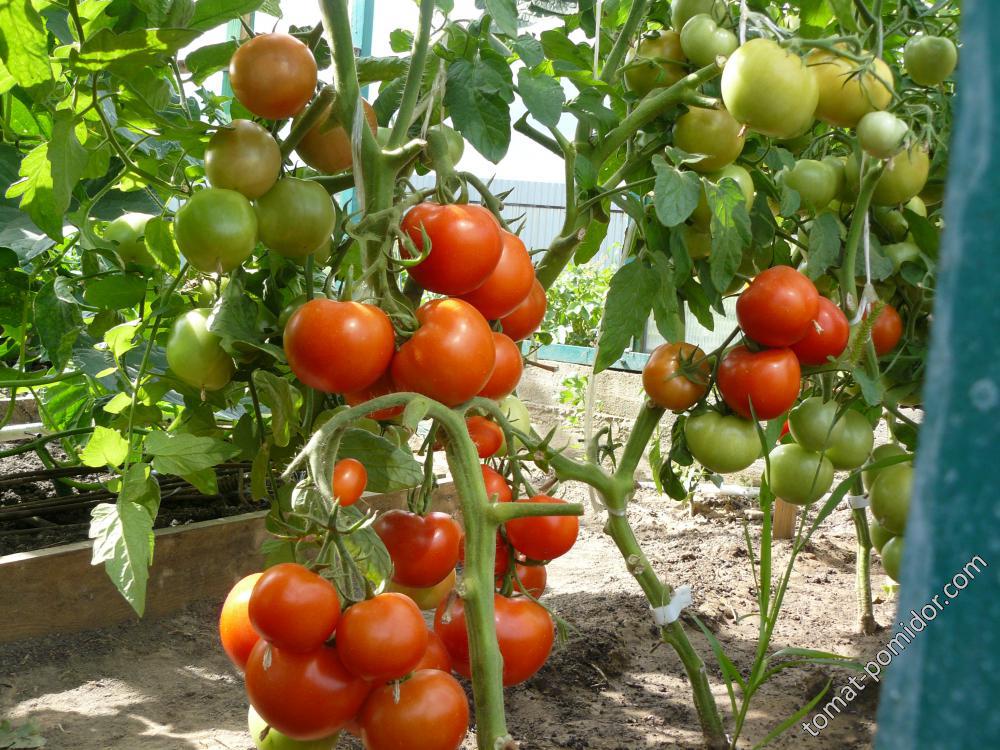
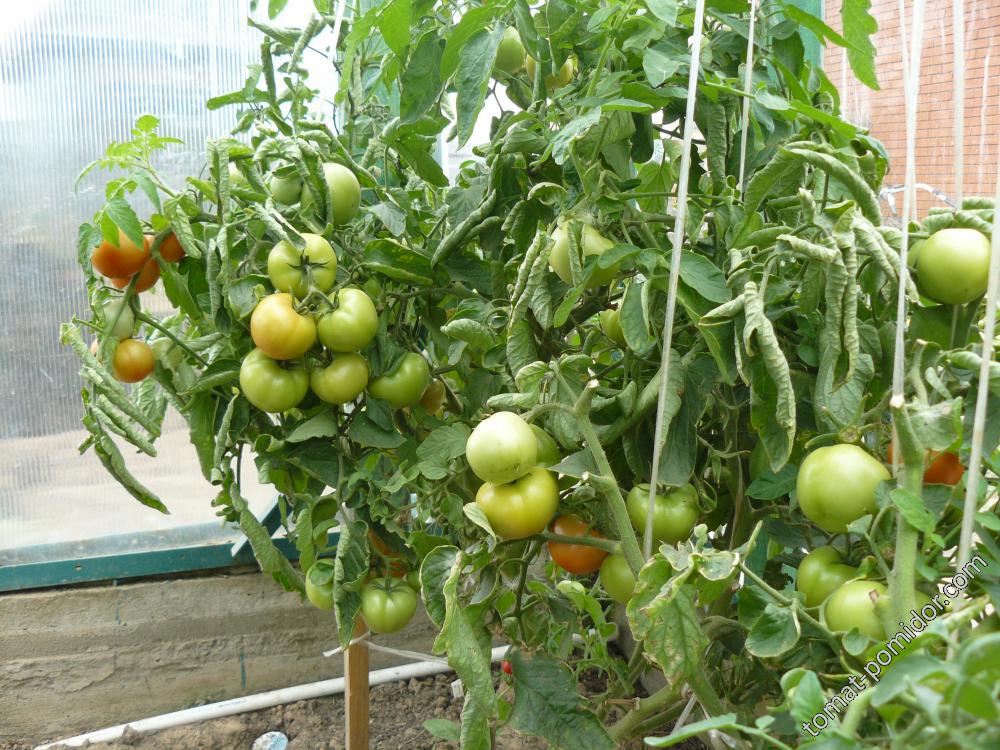
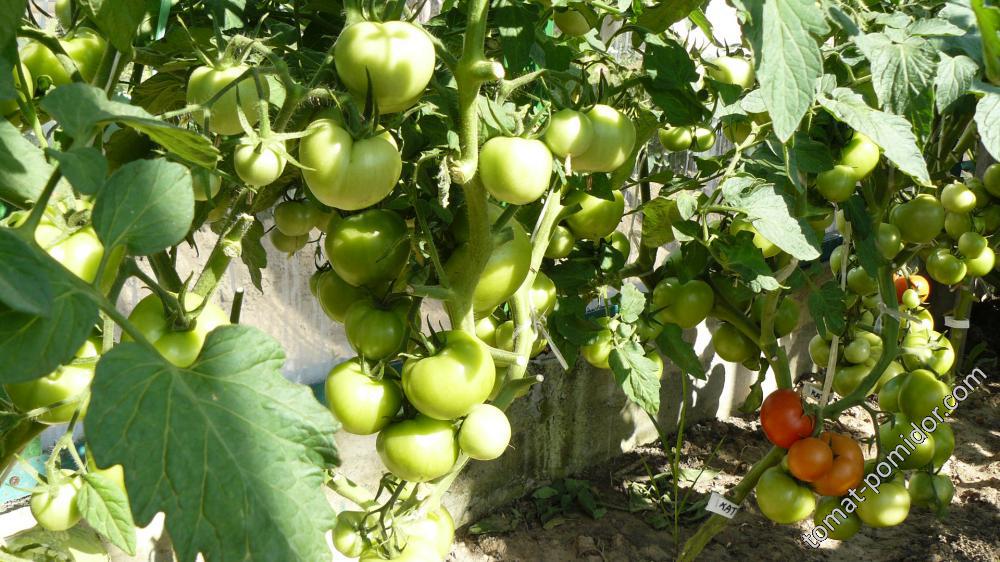
My photos are uploading kind of weird today 🤷♀️ Just wanted to say and show what a productive and low-maintenance hybrid this is 👍
Regarding ripening times. I sowed Katya F1 on May 14th, planted it outdoors 10 days later when the true leaves were just emerging. It gave me its harvest in late August, almost entirely ripe fruits. The first tomatoes started blushing in mid-August.
There are definitely more productive varieties for growing outdoors; Katya F1 is not a leader in that regard. The flavor is average, fits better for processing.
They grew equally well completely out in the dirt and in a mini hoop house. The fruits started ripening within a few days of each other in the last week of July. Yield in the hoop house was a bit over 4.4 lbs (2 kg), and outdoors about 3.3 lbs (1.5 kg) per plant. Average weight was 3.5 oz (100 g).
Tender, soft, juicy, sweet-tart, but nothing outstanding at all.
Just a standard workhorse. Hybrids are created just to give a harvest, not to blow your mind (just my two cents).
Olvia wrote:
Regarding ripening times. I sowed Katya F1 on May 14th, planted it outdoors 10 days later when the true leaves were just emerging. It gave me its harvest in late August, almost entirely ripe fruits. The first tomatoes started blushing in mid-August.There are definitely more productive varieties for growing outdoors; Katya F1 is not a leader in that regard. The flavor is average, fits better for processing.
Like the saying goes, “same seeds, different thumbs.”
Lena 18 wrote:
Like the saying goes, “same seeds, different thumbs.”
It’s not about the thumbs in this case. My goal was to test different varieties and hybrids.
I specifically picked varieties that are known to be early and low-maintenance by definition. I practically didn’t weed, there was no water until late July, no pruning, no fertilizer, no staking. My tomatoes outdoors just grew completely on their own, doing whatever they wanted. Katya F1 ended up not being the best based on those results, so naturally, I won’t be repeating it.
Everything is relative. One person grows the exact same variety year after year and can’t praise it enough, someone else prefers to compare several varieties. Everyone has different approaches and interests.
Hi Olya! Did you grow Katya outdoors? How tall was the bush?
Elena 62 wrote:
Hi Olya! Did you grow Katya outdoors? How tall was the bush?
Hi Lena! No taller than 20 inches (50 cm).
Olvia wrote:
Hi Lena! No taller than 20 inches (50 cm).
That yield seems really low then. Olya, how many stems did you leave when growing it outdoors? Maybe if you kept a few more it would produce better? They look really lovely and seem early. A friend is sending me seeds, I’m thinking about it. 🙂
I bought Pink Katya F1. They said it’s an improved version of Katya. Has anyone grown it?
Elena 62 wrote:
That yield seems really low then. Olya, how many stems did you leave when growing it outdoors? Maybe if you kept a few more it would produce better? They look really lovely and seem early. A friend is sending me seeds, I’m thinking about it. 🙂
Lena, I didn’t touch it or prune it at all, it grew with as many stems as it wanted. I had about 10 plants I think, some had 2 stems, some 3, some 4. It looked very similar to Shell’s photo. You’d be better off looking for Letniy Sad F1 (Summer Garden F1).
Tried to dehybridize Katya this year, the fruits perfectly matched the original on Sept 2, 2017.
Planted outdoors. Katya F2 gave 4.4 lbs (2 kg) from 22 fruits. The F1 original gave 2.4 lbs (1.1 kg) from 16 fruits.
I noticed an interesting trait: the F1 hybrid started setting fruit immediately when it was still tiny, while the F2 plant kept focusing on growing the bush. The harvest started 3 weeks later, but the yield ended up being double.
The exact same situation happened with another Semko hybrid called “Slot”.
Full Summary: Plant, Yield, Taste and Disease Resistance
- 🌿 Plant: Determinate, ultra-early (75-80 days). Compact bushes usually stay around 20 inches (50 cm) tall. It sets fruit quickly and often clusters tightly, sometimes forming trusses on every single leaf.
- 📈 Yield: Generally praised for good yields, especially given how small the plant is. It can pump out anywhere from 2.4 to 4.4 lbs (1-2 kg) per plant outdoors. It performs dependably in less-than-ideal weather and poor soil.
- 👅 Taste: Rated as average. Described as sweet-tart and soft, but nothing extraordinary. Growers agree it’s a “workhorse” variety meant for bulk production and early processing/canning, rather than gourmet fresh eating.
- 🍅 Fruit Size: Uniform red, round/oblate fruits weighing about 3.5-4.5 oz (100-130 g).
- 🛡️ Disease Resistance: The packet claims tolerance to early and late blight, but grower Drosera reported severe early blight (Alternaria) issues when attempting to ripen the fruits indoors on the counter.
- 🌱 Dehybridizing: Grower Pavel successfully saved F2 seeds from this F1. The F2 generation fruited 3 weeks later than the F1 because it focused on bush growth first, but ultimately doubled the yield while maintaining the original fruit shape and size.
In this thread, you’ll see a mention of Ordan. This is a common Russian commercial fungicide whose active ingredients are Copper oxychloride and Cymoxanil (similar to Curzate in the US). You will also see a mention of Andromeda, which is another famous early Russian determinate hybrid often grown as an alternative to Katya F1 in short-season regions.