Growers’ Notes and Photos
Indeterminate exotic mid-season slicer.
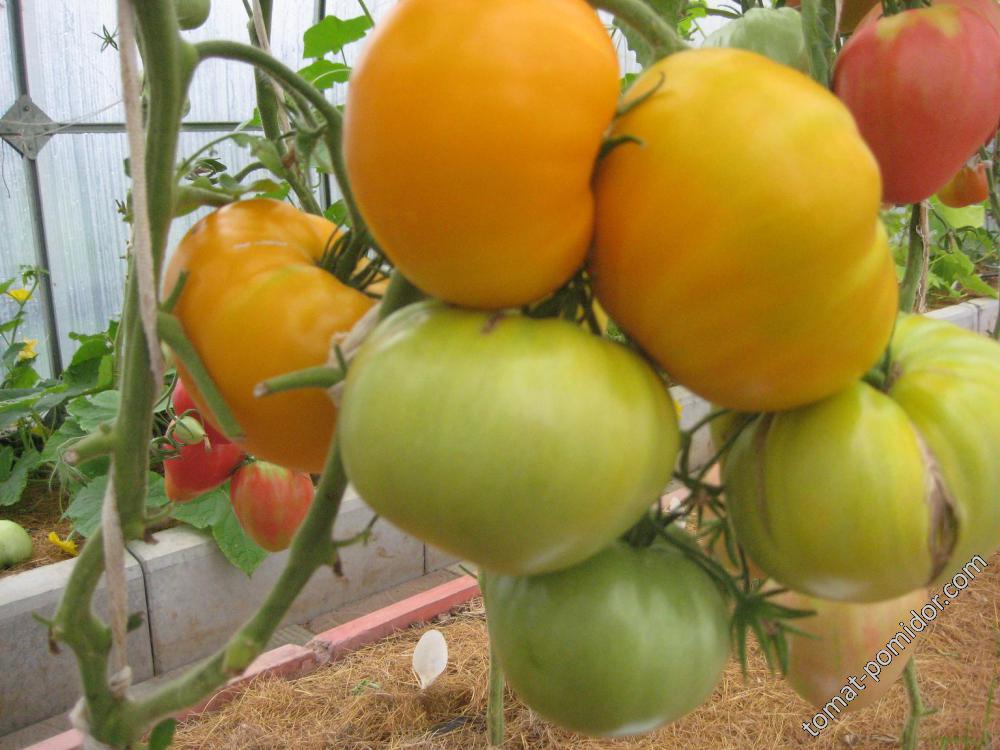
The fruits are medium to large orange-yellow beefsteaks with green stripes. The taste is a standard tomato flavor, but it has this weird, unusual spicy tang to it. According to the official description, the flavor is supposed to be excellent, so maybe my vine just lacked some nutrients, specifically potassium. Grew it outdoors, got a good yield, very low-maintenance variety.

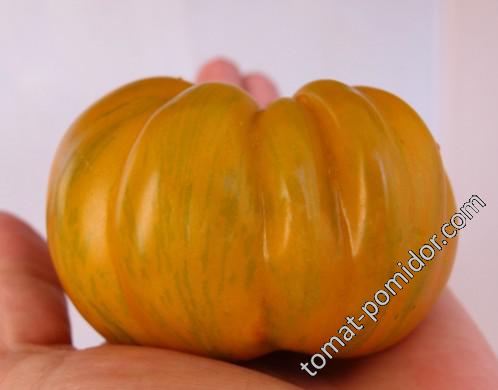
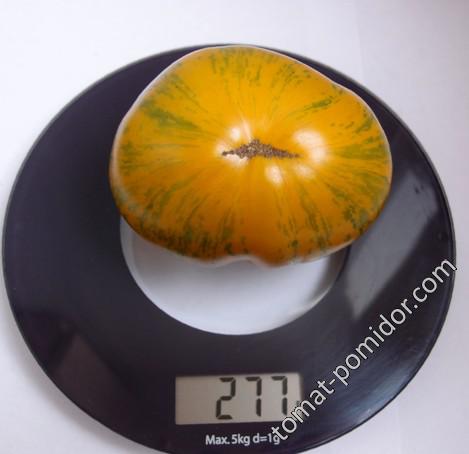

Kozula 179 (Zebra Zolta / Volta)
Bred by Anna Jankowski (Poland). Stabilized around 2015, but it can still throw off some variation. Mid-season, heavy-yielding indeterminate. The vine reached 5.2-5.5 ft (1.6-1.7 m) in my poly greenhouse. Ran it to two stems.
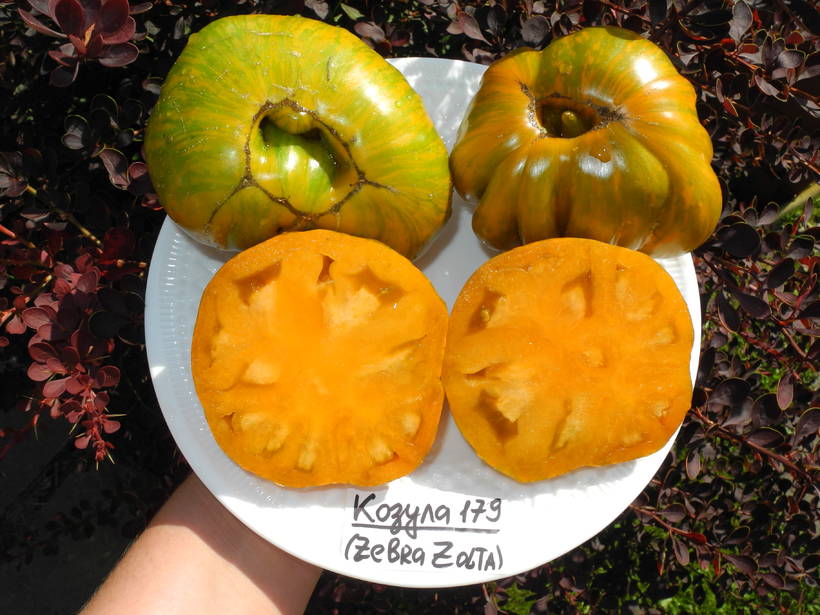
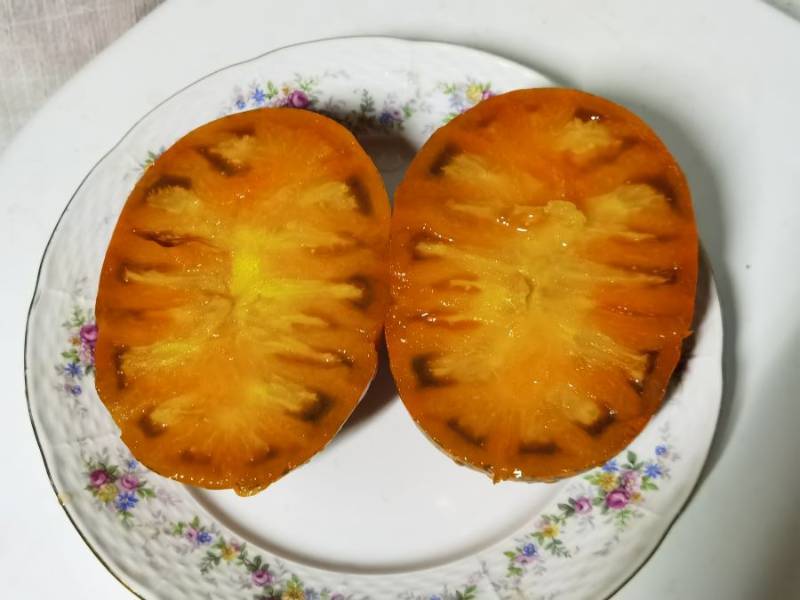
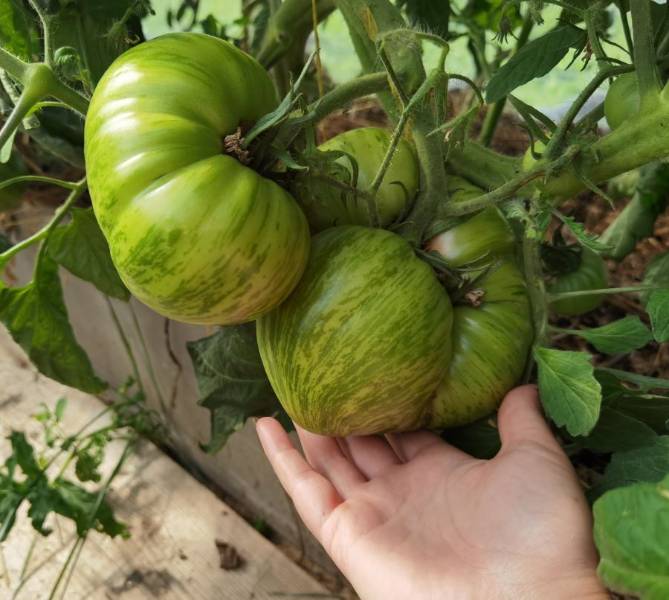
Fruits are large, oblate, slightly flattened near the stem, lightly ribbed, weighing 8.8-12.3 oz (250-350 g) and up. They are green with yellow-orange striping and turn much more orange as they fully ripen. Extremely meaty. The flesh is dense and orange with green seed gel.
The flavor of a fully vine-ripened fruit is rich, bold, and sweet. Plus, the fruits are just stunning to look at. Will definitely be growing this one again.
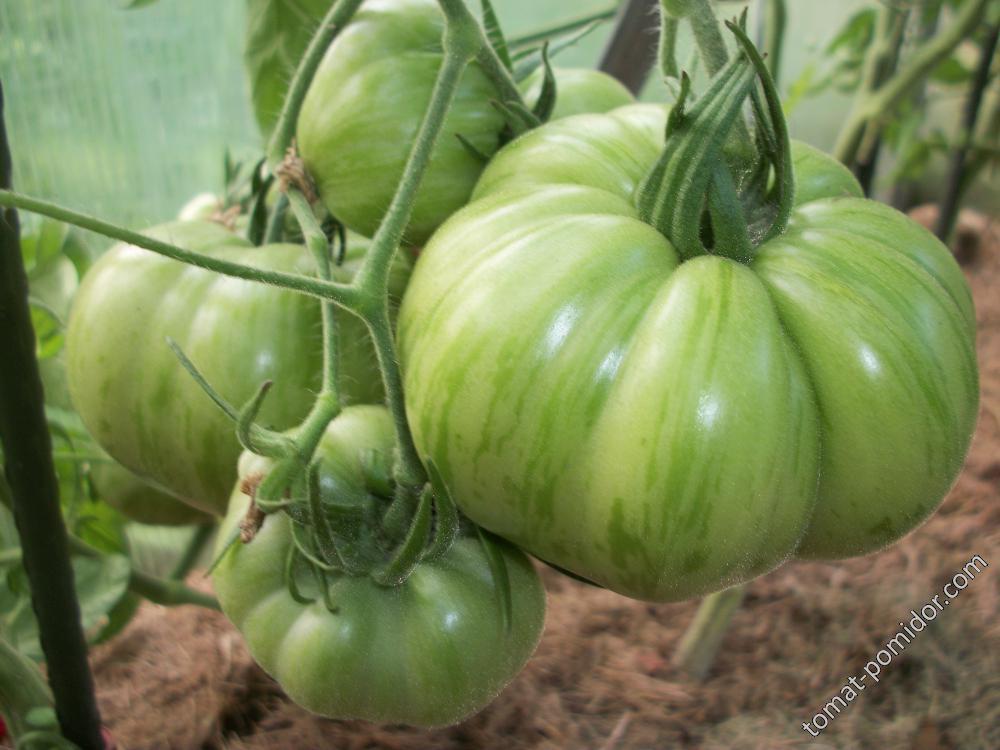
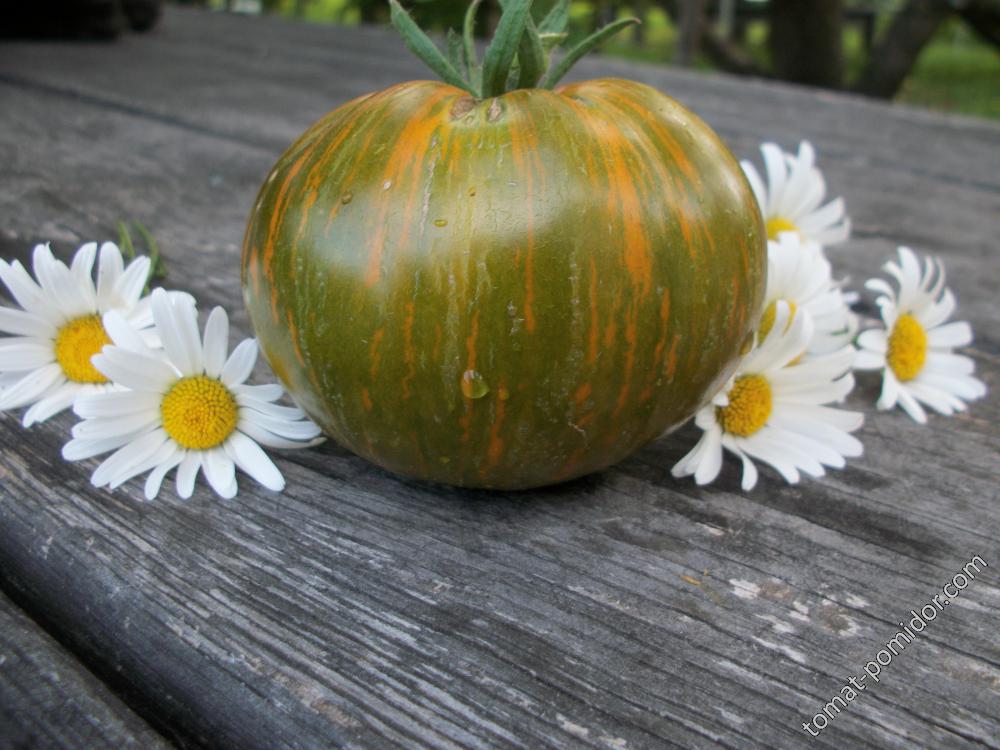
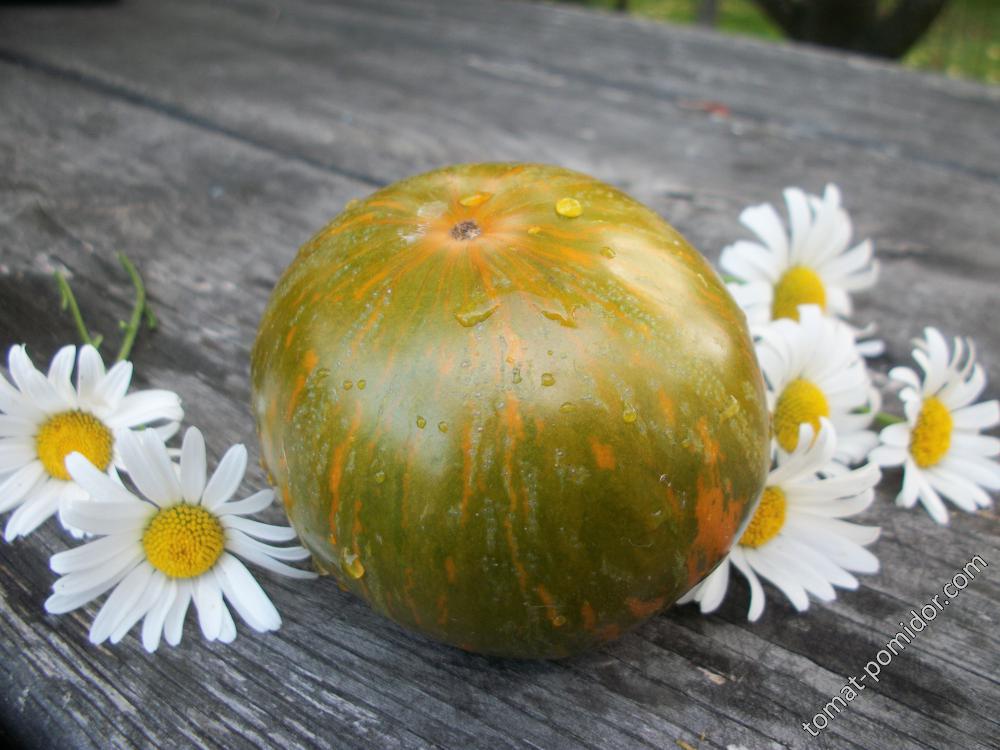
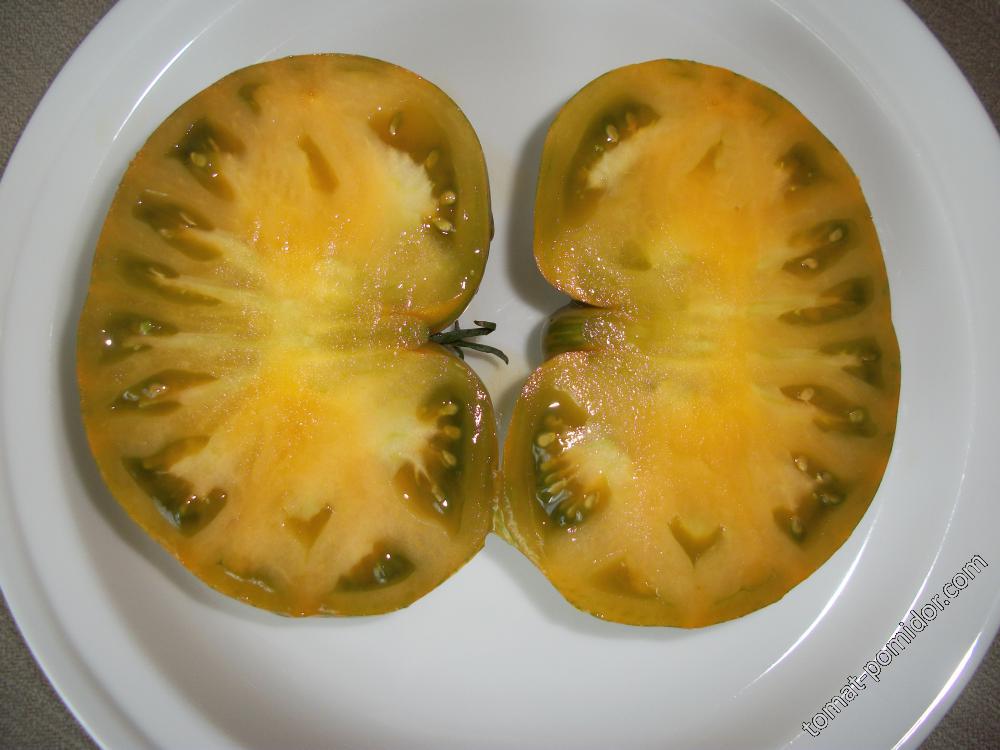
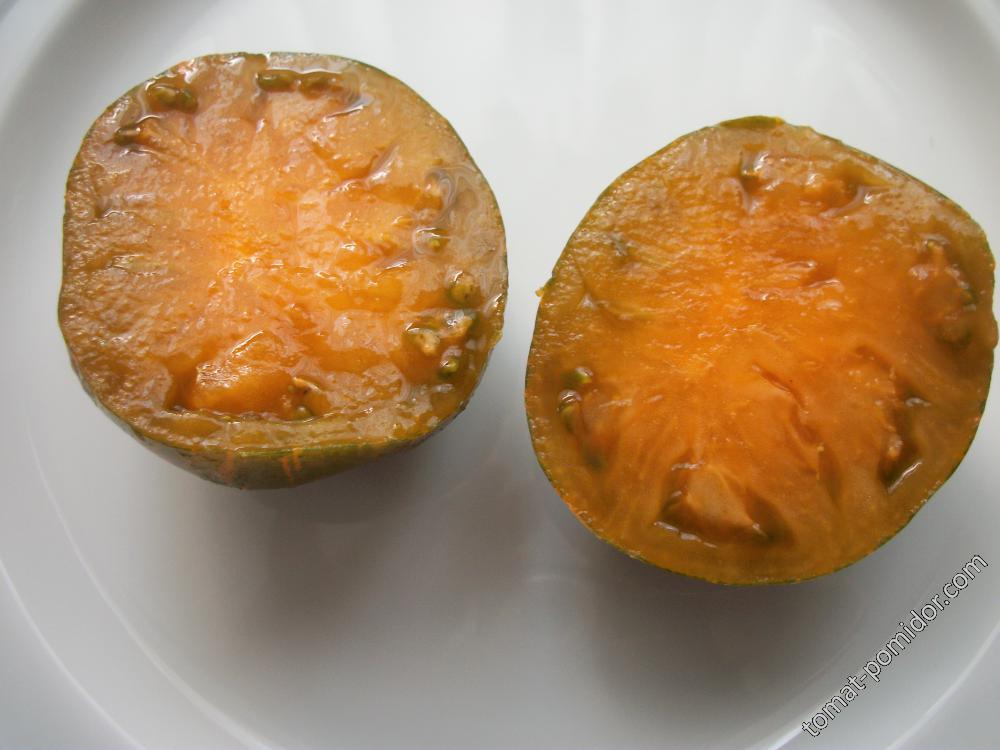
Beautiful 👍
Grew mine in the greenhouse. Dense, meaty flesh, very small seed cavities. Flavor was balanced with a slight tang to it. Maybe I should have let them hang on the vine a little longer? But I was too afraid of caterpillars, they had already ruined so many of my fruits.


Awesome variety. Tomatoes are huge, tasty, and incredibly beautiful. Yield is totally solid too.
Julia (@Tiffany), thank you for the seeds 🙏
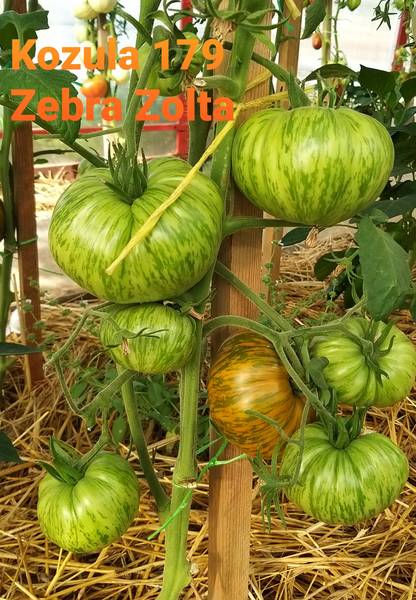
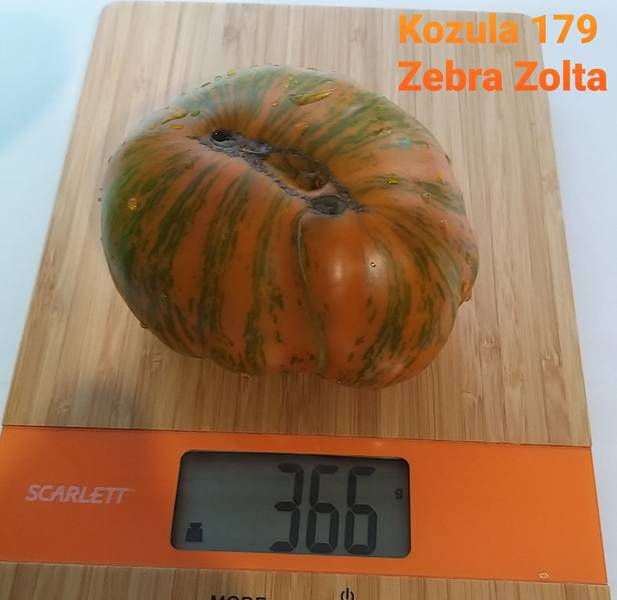
Grew it both in the greenhouse and outdoors. Pruned to 2 stems. The greenhouse vine was way more vigorous, even though I planted it out 9 days later. I guess the outdoor plant was pouring all its energy into feeding one absolutely giant tomato. But it definitely responds well to fertilizer and fattens up.
Foliage is large and sticks straight out. The stems in the greenhouse were super thick. Foliage density was around 40-50%. The width of a single-stemmed vine is about 20 inches (50 cm).
Flavor: In hot and sunny weather they might be sweet, but I just didn’t like the taste. In cloudy, cool weather they were straight-up sour. Barely even ate them. Won’t be planting this one again.
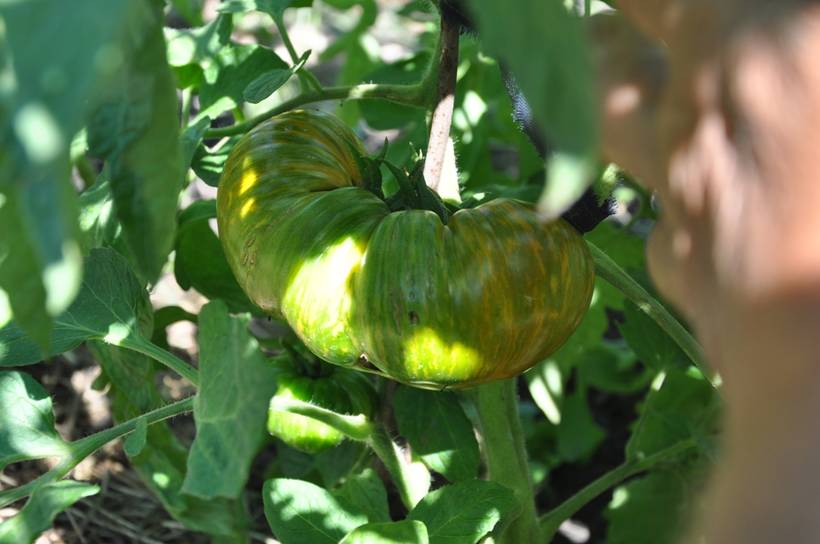
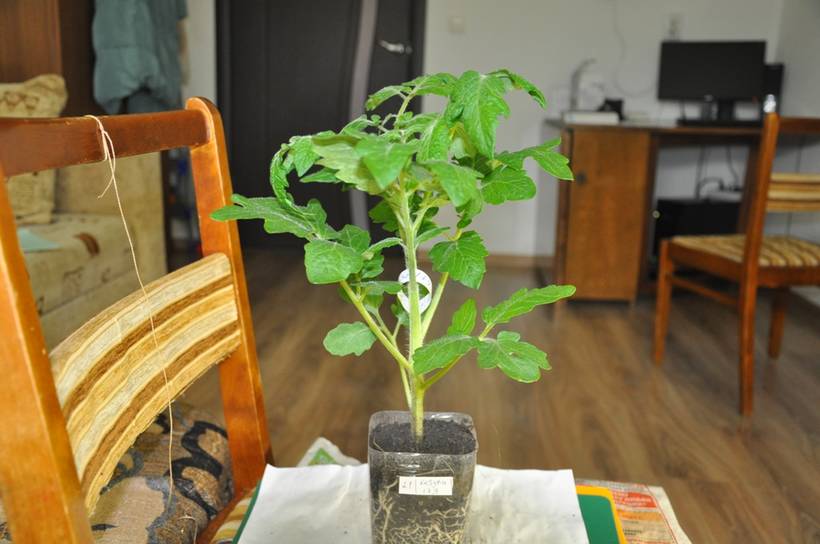
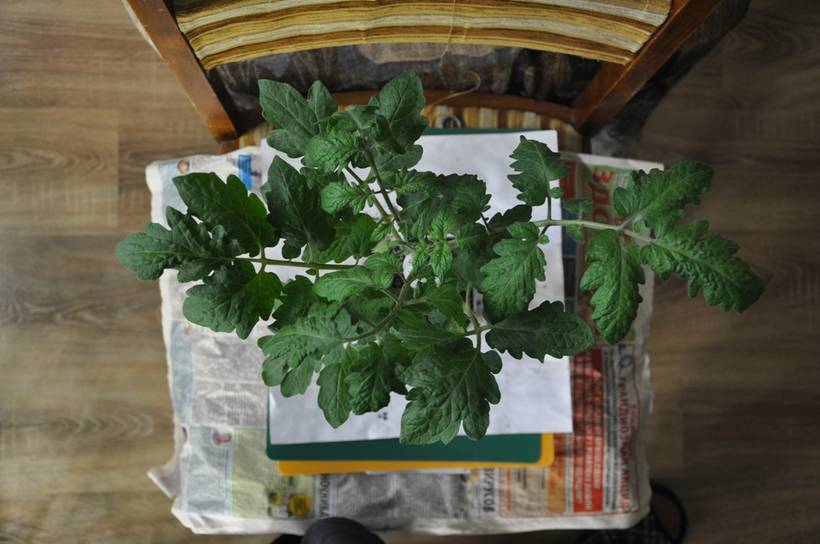
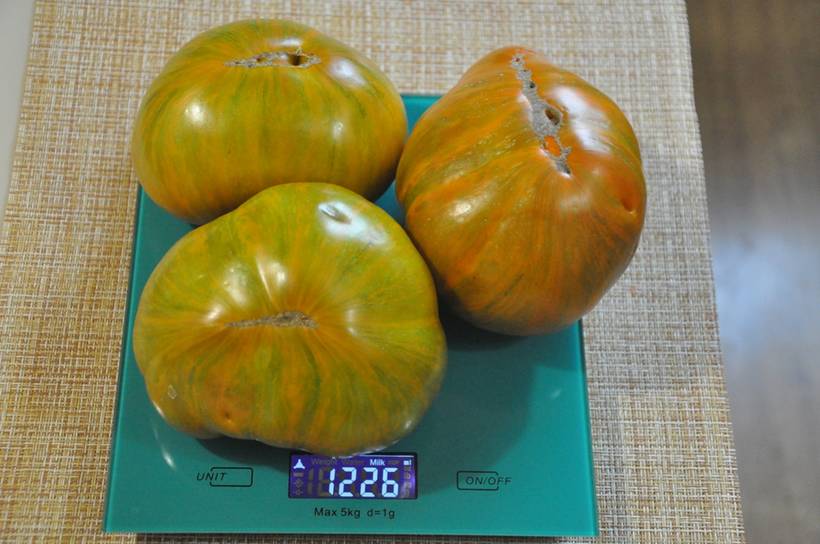
Kozula 179 (Zebra Zolta / Volta). Indeterminate, massive vine, ran it to two stems in the greenhouse, yield was pretty good. Large fruits around 12.3-14 oz (350-400 g), ochre-colored stripes.
I didn’t really get the flavor, though. Was expecting something smoky like Uluru Ochre, but alas. They probably just lacked something, like potassium or heat for instance. The fruits are incredibly dense, keep very well on the counter, but the flavor… well, it definitely didn’t make for good salads.
Honestly, it seems perfect for sun-drying or any sort of processing (high dry matter content, almost totally seedless), or cutting into chunks for canning.
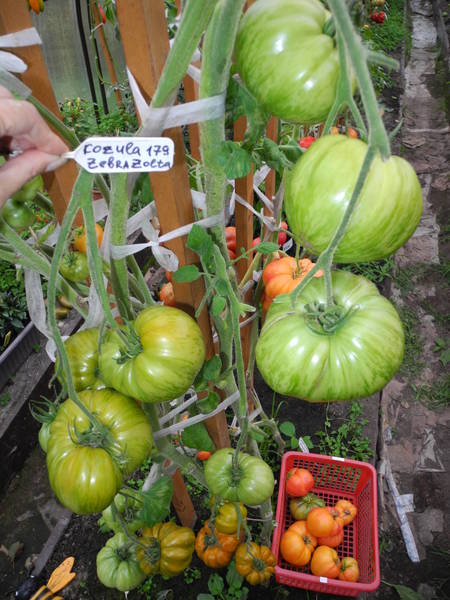
It turned out super productive for me. Still have fruits hanging on the vine. As for the taste… I agree with Svetikk. Though mine wasn’t super dry inside.
Honestly, it seems perfect for sun-drying or any sort of processing (high dry matter content)
Sveta! Completely agree that this is a processing variety. When I sliced it open, I immediately decided to make jam out of it. Added some bergamot and agar. Turned out delicious!
Ladies, it seems our Kozula 179s grew in completely different conditions. My tomatoes from this variety aren’t dry in the slightest. Quite the opposite, actually. You can see on the cut that the flesh is super juicy.
And it has plenty of seeds, too. It was one of the first to start ripening for me, and it’s still sitting in the greenhouse right now loaded with huge tomatoes. Tasty and productive.
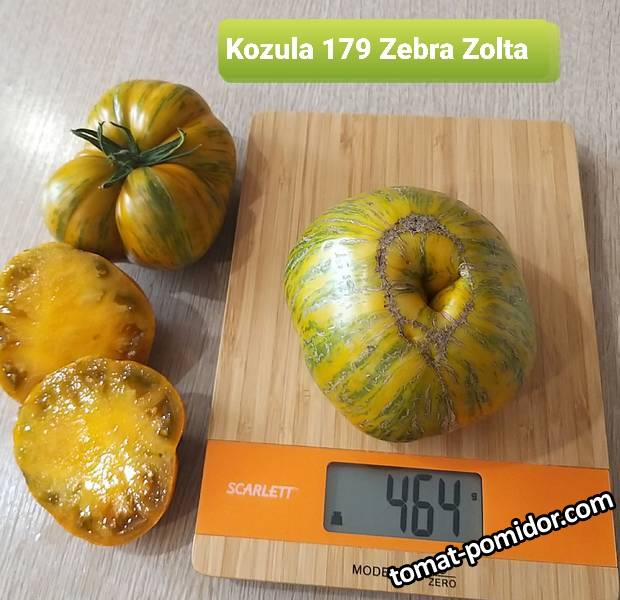
Ladies, it seems our Kozula 179s grew in completely different conditions
Inna! The layout of my seed cavities is totally different. The cavities are narrow and pushed deep inside the fruit. On some parts of the fruit, there are no cavities at all.
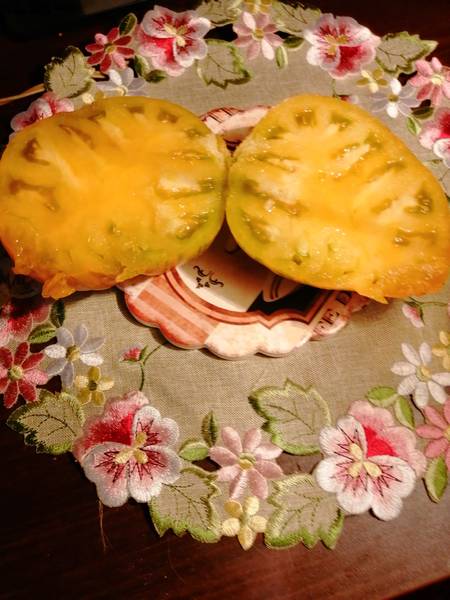
Ladies, it seems our Kozula 179s grew in completely different conditions. My tomatoes from this variety aren’t dry in the slightest. Quite the opposite, actually. You can see on the cut that the flesh is super juicy.
I think the exact same thing – conditions were completely different, especially at the start of the season. Looks like the fruits we got here in the Moscow region set during unfavorable conditions, and it totally tanked their juiciness.
It happens sometimes, right? You grow a delicious oxheart variety and a few of the fruits end up rock-hard and dry – meaning they definitely lacked something, be it potassium, heat, or whatever else…
Or maybe your seeds just came from a different source that had a luckier, more stable version of the line 🤷♀️
Mine turned out exactly like Inna’s. I got my seeds straight from Kozula originally, probably still have the original packets lying around somewhere.
The cavities are narrow and pushed deep inside the fruit
I mean, I obviously didn’t map out the seed cavities on every single fruit I picked. I just sliced open a rounder, more symmetrical tomato for the photo. Lyudmila, could it just be a fluke? I feel like if I had sliced open a really chubby, heavily ribbed beefsteak, the cavity layout probably would have looked exactly like yours.
probably would have looked exactly like yours.
Inna! Oh yeah, I’m not arguing, and I have no idea what causes it. I was just analyzing the cross-section photos that all the ladies posted in this thread.
I think the exact same thing – conditions were completely different, especially at the start of the season… Or maybe your seeds just came from a different source that had a luckier, more stable version of the line 🤷♀️
Evening, Sveta! My seeds came from Germany. The fruits were incredibly juicy and sweet. I sliced them across two different planes and you can clearly see the juicy flesh. Inna got her seeds from me. But we grew them in totally different climates, in different summer heat, and in different soil. Everyone I shared seeds with absolutely loved the variety. Looks like we did just get a lucky, stable version.
Inna! The layout of my seed cavities is totally different. The cavities are narrow and pushed deep inside the fruit.
Evening, Lyudmila! You can clearly see from the photos that we grew different-looking fruits. The ones you and Sveta grew look dense and dry, while ours are 🧀 dripping wet.
The ones you and Sveta grew look dense and dry, while ours are 🧀 dripping wet.
Julia, evening! Yep, exactly. Just yesterday I turned all of mine into jam. Barely any seeds, tiny cavities. Dense and dry, perfect for people who hate watery tomatoes. I got my seeds from Valdis.
Evening, Sveta! My seeds came from Germany. The fruits were incredibly juicy and sweet.
Mine were from a colleague (“Tomatoes from Victoria”). She doesn’t have a cross-section photo (but she has 6 photos of a single whole tomato), and her description says they’re tasty with a tender, buttery texture. But mine definitely didn’t turn out like that 🤦♀️
My Kozulas turned out massive and extremely productive, super gorgeous, but the flavor was completely average and uninspiring. I’m writing it off as bad placement—the vine set all its fruit on the shady side of the plant. Pretty sure they just didn’t get enough sun. Grew them outdoors in the dirt.
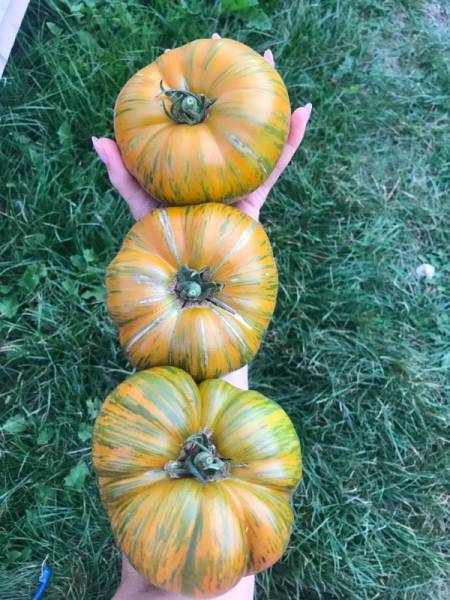
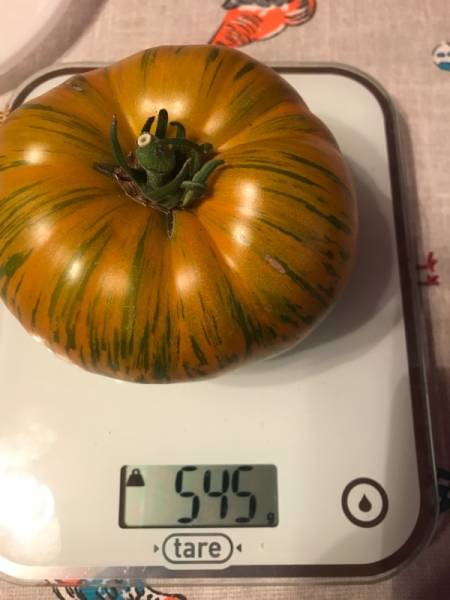
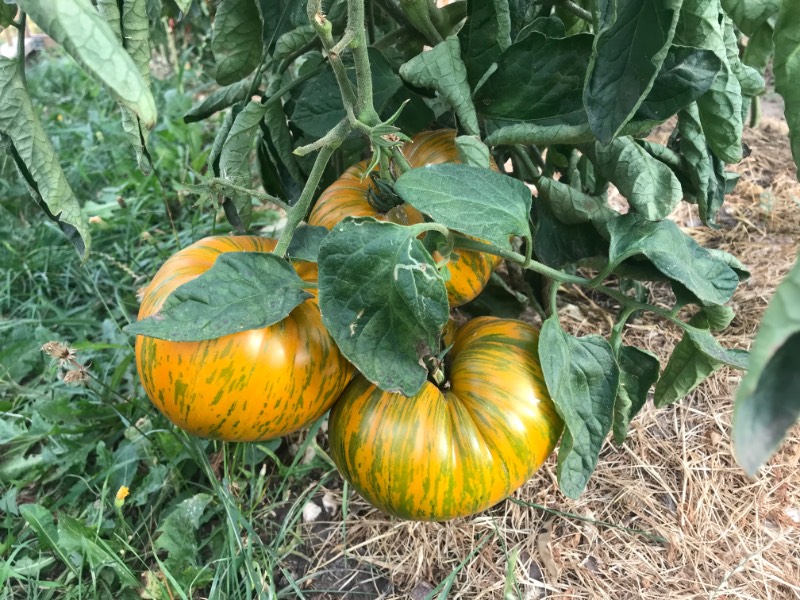

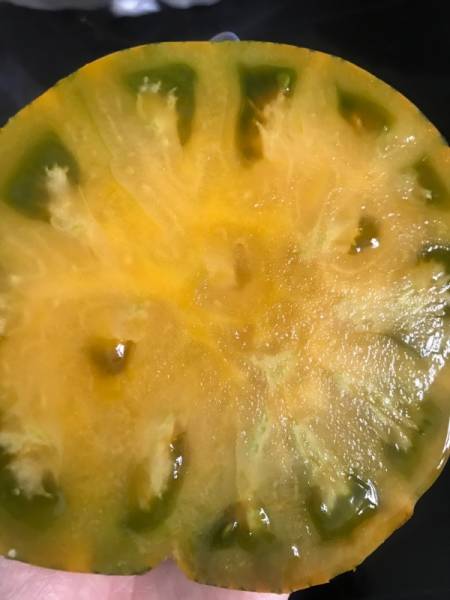
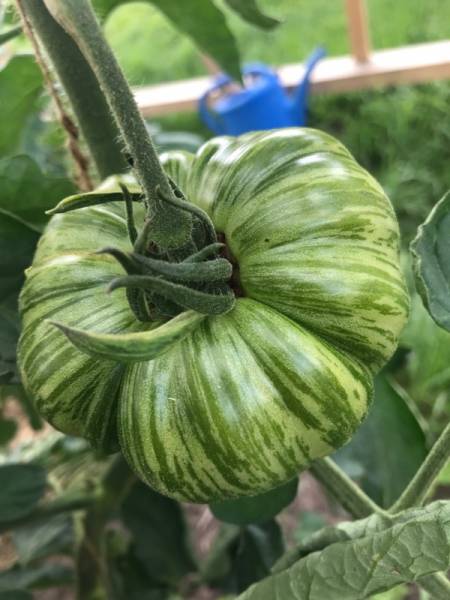
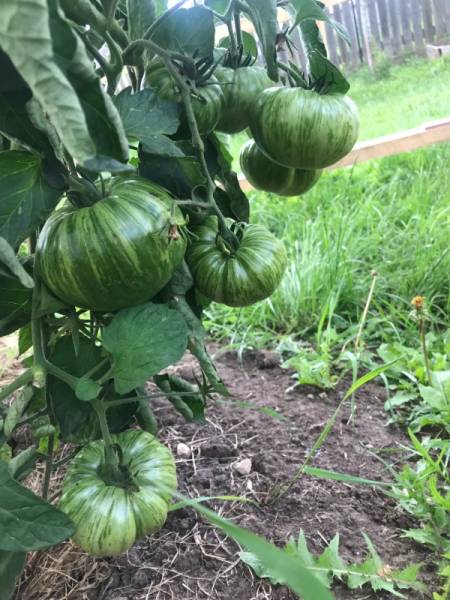
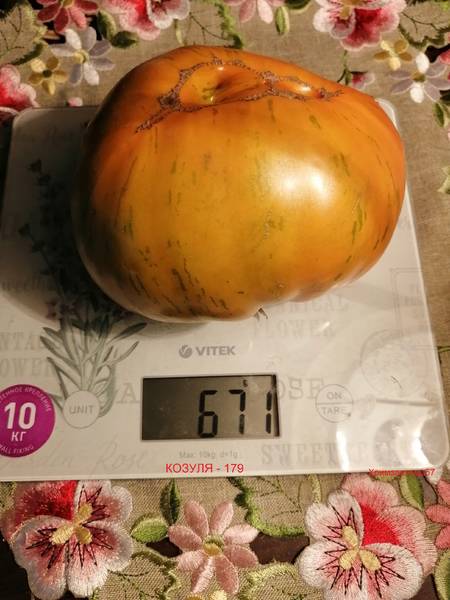
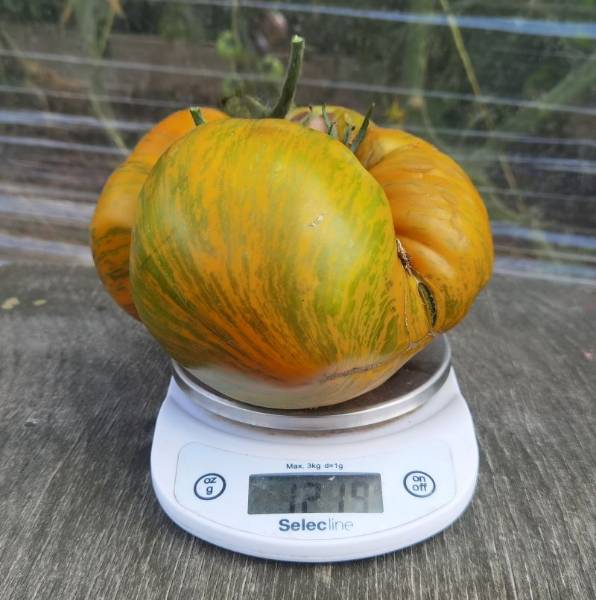
I grew one Kozula 179 vine in the shade, and one directly in the sun. The one in the sun was crazy productive, pumping out literal monsters. My largest tomato of the entire year came off that vine, weighing in at 2.7 lbs (1219 g) all by itself.
The flesh is dense, almost zero seeds. It was a massive struggle just to scrape together a few sad seeds from two whole plants. But I got enough to plant it again next year, so that’s a win. I officially put this variety in my Top 10 best-tasting tomatoes. The flesh is dense, but definitely not dry. Very soft when fully ripe. It’s a classic tomato flavor with its own unique twist. For me, it had a perfectly balanced flavor, sweet enough (I hate sour tomatoes, but I don’t like bland ones either). Only the underripe ones were sour. The Kozula flavor really stood out to me among everything else I grew this year. Very tasty.
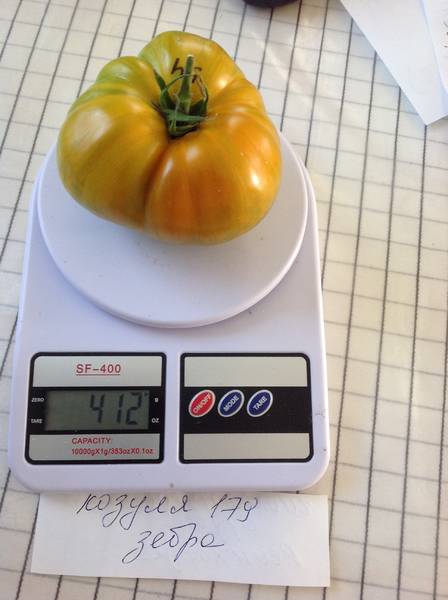
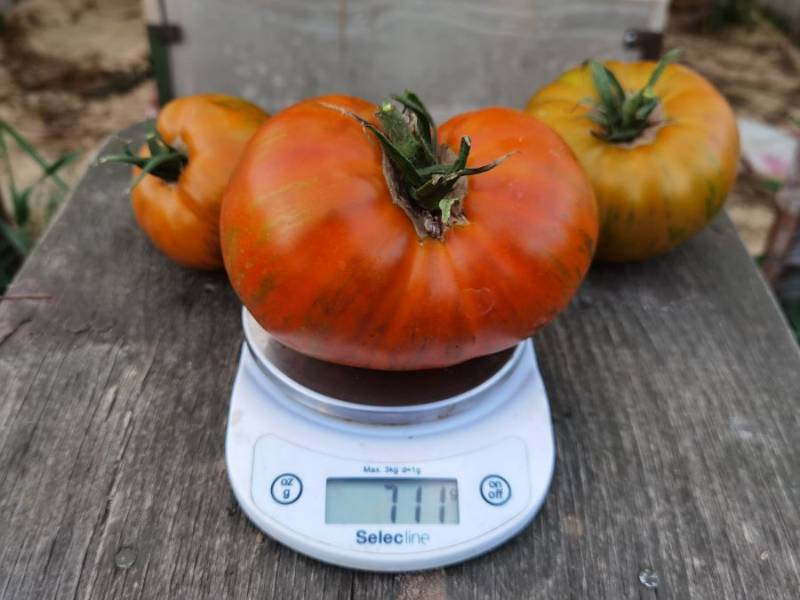
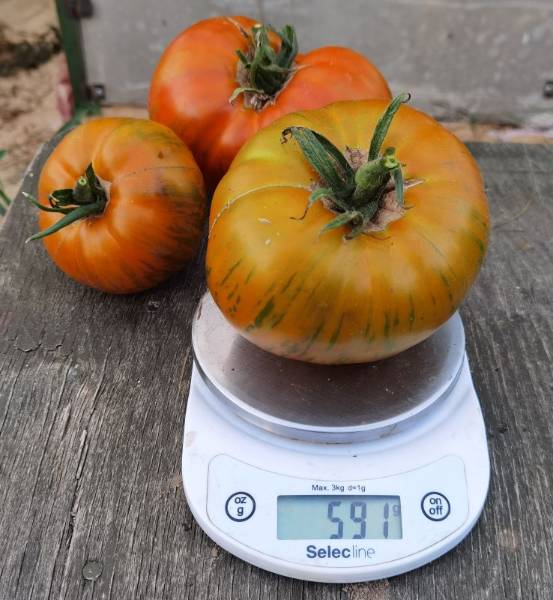
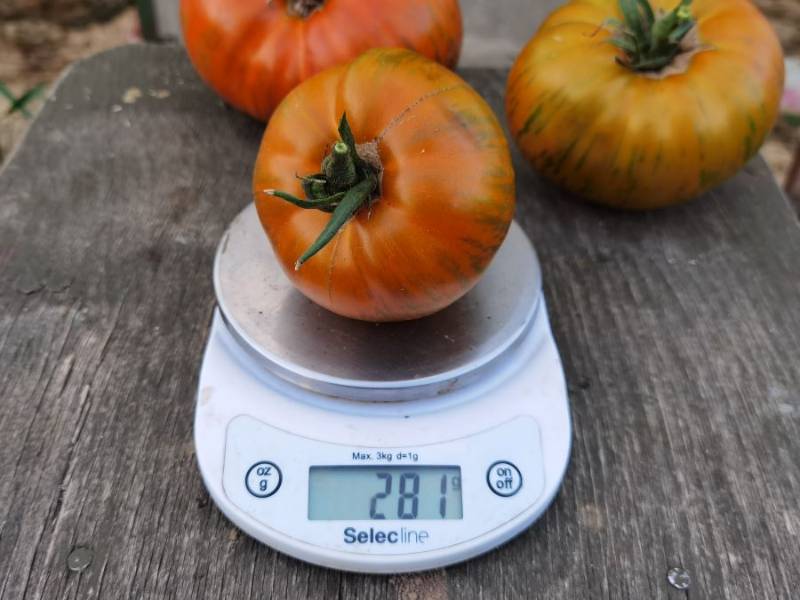
The photos below show the biggest and the smallest tomato off that sunny vine. The size variance was huge.
The vine on the shady side of the greenhouse had a lower yield, but the fruits were way more uniform, averaging 10.5-12.3 oz (300-350 g). The photos below are all from the second vine in the direct sun.
First year growing this, seeds came from Aelita.
Can anyone compare this to Jipaulia? They look incredibly similar based on the photos!
Full Summary: Plant, Yield, Taste and Storage
- 🌿 Plant: A vigorous, mid-season indeterminate vine with thick stems and large foliage. It handles both greenhouse and outdoor setups well, reaching over 5.5 ft (1.7 m) in a greenhouse. Responds strongly to pruning (2 stems) and heavy feeding. Needs full sun to develop its complex flavor.
- 📈 Yield: Rated consistently high across the board. Produces massive, ribbed, oblate fruits. Standard weight is 8.8-14 oz (250-400 g), but under optimal sun and feeding, it can push out absolute monsters reaching 2.7 lbs (1219 g).
- 👅 Taste & Texture: Highly variable due to unstable lines in circulation. Some growers report a dense, dry, almost seedless flesh that lacks flavor (best used for jam, sun-drying, or canning). Other growers report an incredibly juicy, sweet, and perfectly balanced beefsteak with green seed gel. The ideal flavor is described as rich and bold with a unique spicy tang.
- 🌎 Who Reviewed It: Extensively grown and debated across Russia, Belarus, and Europe, ranging from cool short-season climates (Ural Mountains, Kostroma) to warmer areas (Spain, Caucasus).