In this thread:
The Struggle with Lagenaria Germination
I gave up on using Lagenaria because of its terrible germination rates.
Galya, it does sprout! Almost at 100%! Out of 5 packs, I only had 2 or 3 seeds fail.
But you really have to baby them: soak the Lagenaria seeds in hot water, then keep them on a warm radiator for 24 hours before burying them in the soil. They will sprout, but very unevenly. That unpredictable behavior drove me crazy, which is why I tried growing my own Lagenaria gourd this year to harvest fresh seeds. I haven’t cracked it open yet, so I don’t know what’s inside.

Growing Your Own Gourds for Saved Seeds
On 12/13/2021 at 10:11 PM, gala7496 said:
I gave up on using Lagenaria because of its terrible germination rates.
You just need to grow it out yourself once. Then you will have your own fresh seeds with excellent germination, and they will last you a long time. You can plant it right alongside your pumpkins (at the same time and in the same spot).
I have been trying to grow it for two years now, but alas, I just get endless vines. It flowers, sets fruit, and then the tiny gourd just falls off. I tried putting it in the greenhouse this year, but got the exact same result. I don’t understand what I am doing wrong.
Last year, my outdoor Lagenaria failed too. I grew it on a compost pile right next to the zucchinis. It just didn’t have enough time to ripen. Up here in St. Pete, that is totally normal.
This year I put it inside the greenhouse. I tried to prune it aggressively, removing most of the side shoots. But the Lagenaria still spidered out at an insane speed. It even managed to completely choke out a melon growing next to it.
Also, as soon as you see a fruit starting to size up quickly, it is best to leave just one, maximum two on the vine. Pinch off all the others immediately. It is much better for the plant to push all its energy into ripening that one single gourd (it will have a ton of seeds inside) rather than wasting energy trying to form a bunch of new ones…
Switching to Pro Hybrids: Ferro & Cobalt
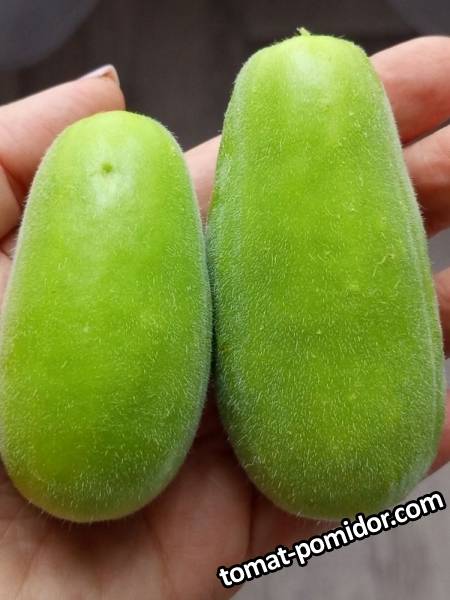
My Speckled Swan * gourds never ripened their seeds properly, but the standard bottle-shaped ones (like in the photo) produced great seeds.
For my own watermelon grafts, I decided to switch over to Ferro and Cobalt, and I am going to try Root Power too. I also picked up some new ones from Greenomica. The plants grafted onto Lagenaria just end up a bit weaker for me. Well, maybe I’ll graft a couple onto Laga again this year just to confirm beyond a doubt that I need to move fully to professional rootstocks.
By the way, I also grow Ferro separately on its own just like a squash–the fruits are actually very tasty, sweet, and store incredibly well.

I really loved how my watermelons did on Root Power this year. I used all my Cobalt rootstocks for melons, people say they pair really well together ☺️
Last year, all 11 of my watermelons were on Lagenaria, and only one was on Ferro. The difference was obvious! The Laga vines were flimsier, and the fruits didn’t pack on as much weight, all ending up around 9-11 lbs (4-5 kg). But Ferro is a monster. My only complaint was that the watermelon on it set fruit at a height of about 16 feet (5 m), and I got tired of coiling the vine into loops right under the ceiling. But that is probably more about the watermelon variety than the rootstock itself.
This year I only used pro rootstocks and ditched Lagenaria completely.
On 12/14/2021 at 8:32 AM, Mariya Suvorova said:
By the way, I also grow Ferro separately on its own just like a squash…
Does that mean I can just grow out Ferro and save my own seeds for grafting later?
Alas, it doesn’t set viable seeds *.
The Best Grafting Method: The Tongue Approach
Masha, what grafting method do you use? For watermelons and melons, only the tongue graft * works well for me. True, the graft union doesn’t look very aesthetic, but the survival rate is almost 100%.
Tanya, I only use the tongue approach graft too. Whenever I tried other methods, either the survival rate was worse, or the plants started developing much later.
👨🌾 Editor’s Notes
- Speckled Swan: A popular ornamental heirloom variety of Lagenaria siceraria in Eastern Europe, known for its distinct shape resembling a swan. However, because it requires a very long, hot season to fully mature its thick shell, growers in cold climates struggle to harvest viable seeds from it before frost hits.
- Tongue Graft (Approach Grafting): Also known as splicing or inarching. In this method, the grower cuts an upward slit in the rootstock stem and a downward slit in the scion stem, locking the two “tongues” together while both plants remain attached to their own root systems. Once the graft union heals, the scion’s original root system is severed. This is widely considered the most foolproof method for beginners.
- Saving Pro Hybrid Seeds: Commercial rootstocks like Ferro and Cobalt are F1 interspecific squash hybrids (usually a cross between Cucurbita maxima and Cucurbita moschata). Because of this complex crossing, the resulting plants are often sterile or fail to produce viable, true-to-type seeds, forcing growers to purchase fresh professional seeds every year.